Sending Flowers to Otradnoe from Abroad? Here Is What to Expect
You are sitting in Berlin, Toronto or Dubai, and someone you love is in Otradnoe — a quiet city on the Neva river, about forty kilometres east of Saint Petersburg. You want to send flowers that arrive fresh, feel personal and land at exactly the right moment. The distance feels like a problem, but it really is not. What matters is knowing a few practical things about timing, Russian gifting customs and the seasonal realities of a northern city, and then letting a florist who actually delivers there handle the rest.
Why Otradnoe Is Easier to Reach Than You Think
Otradnoe sits in the Leningrad Oblast, directly connected to Saint Petersburg by road and rail. That geography matters for flowers: a delivery that leaves a Saint Petersburg preparation facility in the morning can reach a recipient in Otradnoe within one to two hours, which is fast enough to keep roses tight and ranunculus from drooping. The city is not enormous, so drivers know the neighbourhoods well and can navigate residential addresses without the delays you would expect in a sprawling metropolitan area.
From a sender's perspective abroad, the process is straightforward. You place an order online, specify the recipient's full address in Russian or in transliterated Latin letters, choose a delivery window and pay in your preferred currency. No local knowledge is required on your end. What you do need is a working phone number for the recipient — Russian mobile numbers begin with +7, and having that number ready speeds up the handover considerably, especially when the recipient lives in a building with a code-locked entrance, which is common in Otradnoe's newer residential blocks.
The time zone difference is the one thing international senders consistently underestimate. Saint Petersburg runs on Moscow Time, which is UTC+3 year-round with no daylight saving shift. If you are in New York, that is eight hours ahead. A birthday that starts at nine in the morning local time means you need your order confirmed by one in the morning your time the night before. Building that buffer into your planning is the single most effective thing you can do to guarantee a morning delivery.
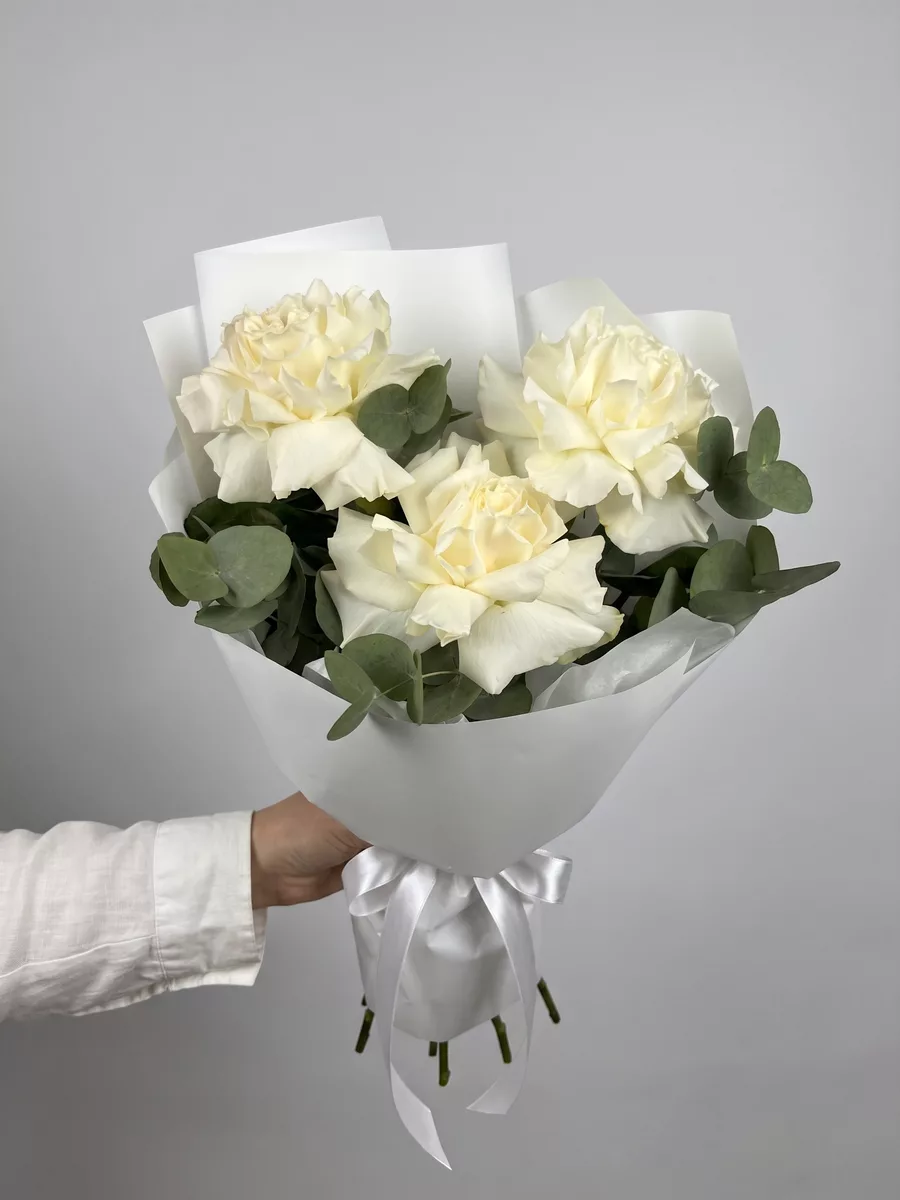
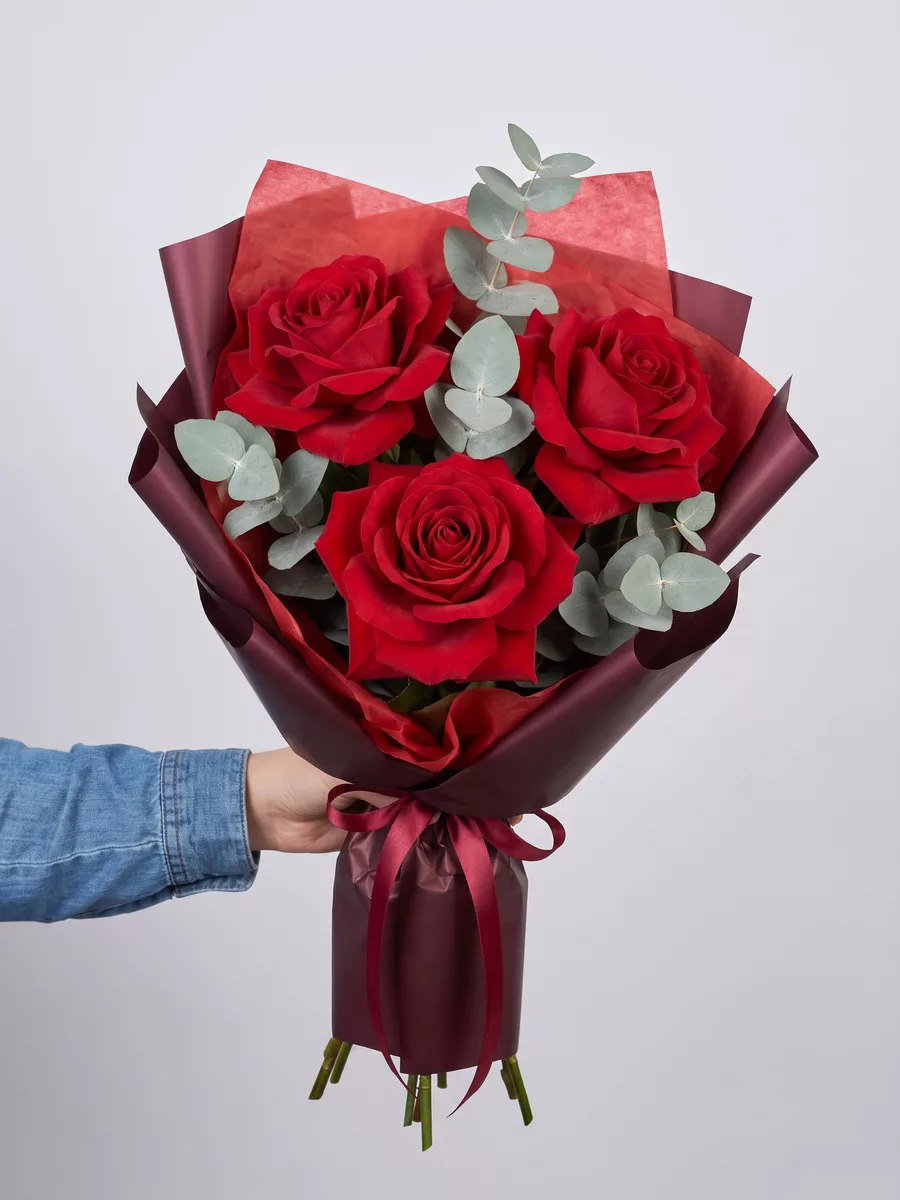
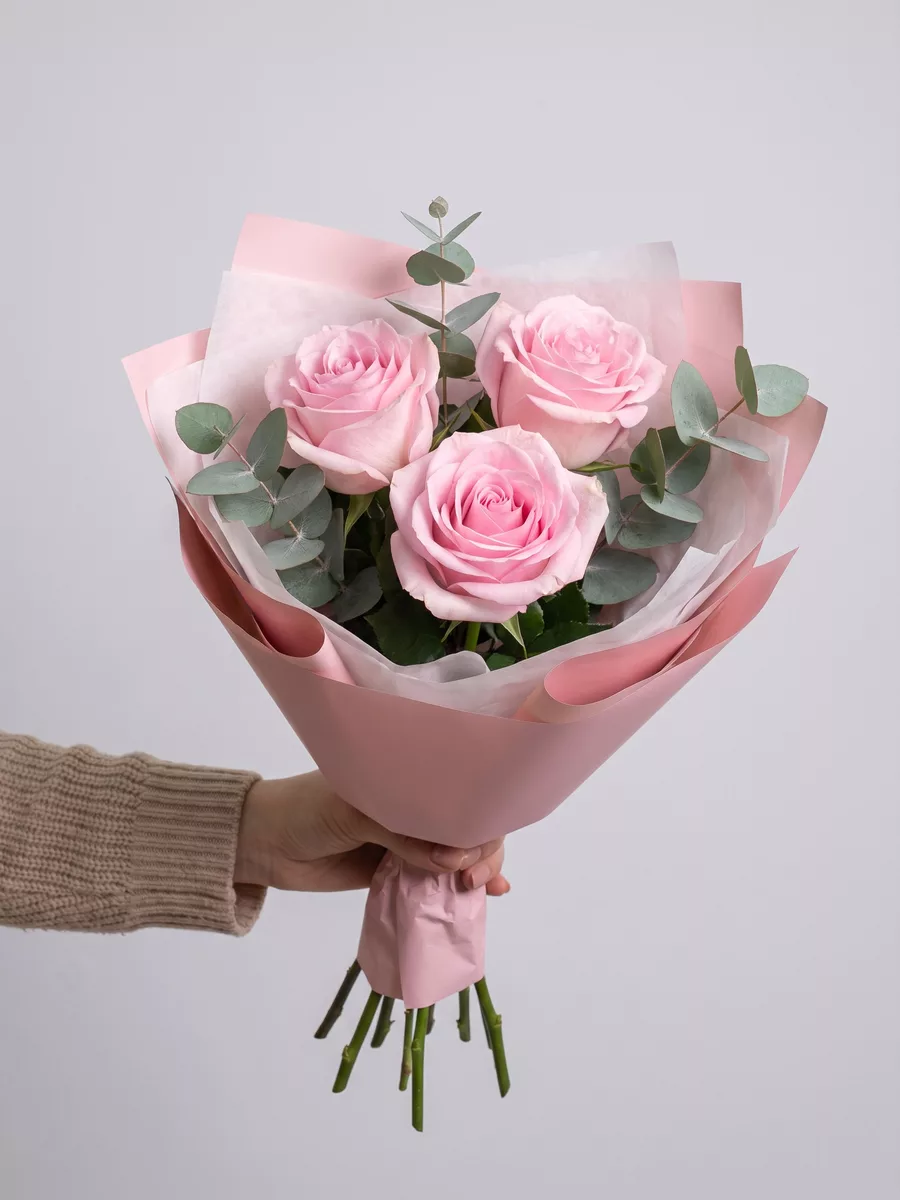
Bouquets we can deliver

Reading the Occasion Before You Choose a Single Stem
Russian gifting culture places enormous weight on the occasion itself, and flowers are expected to match it. A bouquet that feels appropriately celebratory in one context can feel oddly casual in another. Before you think about colour or variety, ask yourself what the recipient will feel the moment they open the door. Are they celebrating something they worked hard for — a graduation, a promotion, a new home? Or is this a quieter, more tender moment, like a birthday spent far from family or an anniversary that deserves acknowledgment even across thousands of kilometres?
For milestones with public significance — graduations, professional achievements, major anniversaries — Russian recipients expect something with presence. That means volume, height and a certain generosity of scale. A single-variety bouquet of twenty stems of white spray chrysanthemums reads as considered and elegant. A mixed arrangement with garden roses, lisianthus and eucalyptus reads as warm and abundant. Both are appropriate; the difference is in the emotional register you want to hit.
For quieter personal moments, intimacy beats scale. A compact arrangement of garden roses in blush and peach tones, finished with a few stems of wax flower for texture, feels like a handwritten letter rather than a public announcement. If the recipient is a woman celebrating a birthday, know that in Russia it is very common to give an odd number of stems — this is considered festive. Even numbers are traditionally reserved for somber occasions, so a bouquet of eleven roses or fifteen tulips always lands better than ten or twelve. This is one of those customs that surprises senders from abroad but matters quietly to the person receiving the gift.
Seasonal Realities in a Northern Russian City
Otradnoe experiences genuine winters. From November through March, outdoor temperatures regularly fall below minus ten degrees Celsius, and brief spikes to minus twenty are not unusual in January and February. This has a direct effect on which flowers travel well and which do not. Tropical and semi-tropical varieties — anthuriums, birds of paradise, certain orchid stems — are vulnerable to cold shock during the final stage of outdoor transit from van to door. In deep winter, the florist will wrap bouquets in insulating paper and move quickly, but it is still worth favouring cold-hardy varieties during those months.
Roses, carnations, alstroemeria, waxflower and spray chrysanthemums all handle cold transit reliably. Dutch tulips are a beautiful choice from January through April, when they are at peak availability and quality from growers. Lisianthus, which resembles a ruffled rose and comes in white, violet and deep purple, travels exceptionally well in cold weather and has a vase life of ten to fourteen days — an important detail when you cannot be there in person to replace wilted stems.
Spring in Otradnoe arrives slowly but the payoff is vivid. From late April through June, locally sourced peonies, lilacs and ranunculus become available, and these are the flowers that Russian recipients associate most strongly with warmth and celebration. Summer brings garden roses in full abundance. Autumn is the season of dahlias, sunflowers and bold foliage — arrangements in amber, rust and deep burgundy that suit the light of September and October perfectly. Matching your flower choice to the season is not just practical; it shows the recipient that someone thought carefully about the moment.
Choosing by Budget Without Losing the Feeling
The price of a bouquet matters, but what the recipient feels matters more. A smaller arrangement chosen with intention consistently outperforms a large generic one chosen by price point alone. The goal is to make every rouble of budget visible in the finished bouquet — through freshness, through thoughtful combination and through the way it is presented at the door.
At a modest budget, single-variety bouquets are your strongest option. Fifteen stems of alstroemeria in coral or white, wrapped in kraft paper with a ribbon, look clean and generous. Alstroemeria is one of the longest-lasting cut flowers available — up to two weeks in a vase — so the gift keeps giving long after the delivery day. Spray roses are another strong choice at this tier: each stem carries multiple small blooms, so the bouquet looks full without requiring a high stem count.
At a mid-range budget, combination becomes possible. Pairing garden roses with lisianthus and a few stems of eucalyptus or ruscus creates depth and fragrance. The greenery extends the visual life of the arrangement and gives the recipient something to rearrange as individual stems age at different rates. This is a detail that experienced florists build in deliberately.
At a higher budget, the conversation shifts to scale, rare varieties and presentation. Peonies when in season, garden roses in unusual colours like cappuccino or terracotta, or a structured arrangement in a ceramic vessel that the recipient keeps long after the flowers are gone — these are the choices that become memories. If the occasion is significant and the distance is great, investing in presentation is the most direct way to close the gap between being there and not being there.
Writing the Card When You Do Not Speak Russian
The card that accompanies a flower delivery in Russia is read carefully. It is not a formality. Recipients often keep cards from meaningful bouquets for years, tucked into books or pinned to notice boards. Writing something genuine matters more than writing something polished, and you do not need to write in Russian to achieve that.
Most florists who deliver internationally will accept card messages in English and can transliterate your name into Cyrillic if you want the signature to look familiar to a Russian reader. If you want to write a phrase in Russian but are not a speaker, keep it short and phonetically simple. A message like your name followed by a transliterated version of a short phrase is warmer than a long English paragraph the recipient may need to translate on their phone.
Avoid generic phrases. The most common mistake international senders make is writing something that could appear on any card — 'thinking of you,' 'with love,' 'happy birthday' — without any personal reference. Even one specific detail transforms the message: the name of a shared memory, a reference to something the recipient said recently, an acknowledgment of how far the flowers have travelled to reach them. That specificity is what makes a delivery feel like a presence rather than a transaction.
If the occasion is a Russian holiday — International Women's Day on March 8th, for instance, which is the single largest flower-giving day in Russia — a brief acknowledgment of the day in the card is expected and appreciated. Saying nothing about the occasion when it is culturally significant can feel like an oversight, even if the bouquet itself is beautiful.
Coordinating the Delivery When You Are Twelve Time Zones Away
The practical challenge of sending flowers from abroad is not the flowers — it is the coordination. You need the recipient to be home or reachable, you need to account for the time difference, and you need a delivery window that works for a person whose daily schedule you may only know loosely.
The most reliable approach is to communicate with the recipient in advance without revealing what is coming. You can tell someone you are sending them something and ask when they will be home without spoiling the surprise entirely. Most recipients in Otradnoe live in apartment buildings, and a missed delivery to a locked entrance means a rescheduled attempt — which is manageable, but it does delay the moment.
When you place your order, specify a delivery window rather than an exact time. A two-hour window — say, between noon and two in the afternoon — gives the driver flexibility and dramatically improves the success rate of first-attempt deliveries. If the recipient works from home, a midday window is ideal. If they have a standard office schedule, an evening window between six and eight is more practical.
Always provide the recipient's mobile number in international format. Russian mobile numbers typically begin with 9 after the country code, so a number written as +7 921 XXX XX XX is correctly formatted. The driver will call ahead, which is standard practice, and a working number is the single most important piece of logistics information you can provide. If the number you have is old or uncertain, it is worth confirming it before you place the order — a small step that prevents the most common delivery failure entirely.
Helping the Recipient Keep the Flowers Longer
You will not be there to trim the stems or change the water, but you can make sure the recipient has the information they need to keep the bouquet beautiful for as long as possible. A short note in the card with two or three care instructions is a genuinely useful gift within the gift — and it shows a level of thoughtfulness that recipients notice.
The most important step is the first one. Stems should be cut at a diagonal under running water or submerged in a basin before going into the vase. This removes the air bubble that forms at the cut end during transit and allows the stem to draw water immediately. A diagonal cut increases the surface area of the cut, which improves uptake further. Even recipients who have received flowers many times may not know this detail.
Vase water should be changed every two days, and the stems should be recut each time — just a centimetre is enough. Flowers last longest away from direct sunlight, heat sources and fruit bowls. Ripening fruit releases ethylene gas, which accelerates the aging of petals, particularly in roses and carnations. A windowsill that looks beautiful is often the worst place in a room for a bouquet in terms of temperature and light exposure.
Different varieties age at different rates within a mixed arrangement. Lisianthus and alstroemeria typically outlast roses by several days. When the roses begin to fade, the recipient can remove them and the remaining stems will continue to look arranged and intentional rather than depleted. Mentioning this in the card gives them permission to edit the bouquet rather than feeling they should discard everything at once — and it extends the life of your gift by nearly a week.
Sending flowers to Otradnoe from abroad is a genuinely achievable thing, and the distance stops being a barrier the moment you treat it as a logistics question rather than an emotional one. Know the time zone, match the flowers to the season and the occasion, write something personal on the card, and give the delivery team a working phone number. The recipient in Otradnoe will open the door to something fresh, considered and unmistakably from you — and that is exactly what flowers are for.
Frequently asked questions
Can I order flowers for Otradnoe from outside Russia without a Russian bank card?
Yes. Turboflora accepts international payment methods including major credit cards and some digital wallets. You complete the order in English, enter the recipient's address and phone number, and the payment is processed in your currency. No Russian bank account or local contact is needed on your end.
What is the latest I can place an order and still get same-day delivery to Otradnoe?
Orders confirmed by early afternoon Saint Petersburg time — roughly 2 to 3 p.m. local time — can typically be prepared and delivered the same day. Remember that Saint Petersburg is UTC+3 year-round. If you are in a significantly earlier time zone, place the order the evening before to guarantee a morning delivery window.
Is it true that flowers in Russia should come in odd numbers?
Yes, this is a genuine and widely observed custom. Odd numbers — seven, nine, eleven, fifteen — are considered festive and appropriate for celebrations. Even numbers are traditionally associated with mourning occasions. When in doubt, choose an odd stem count and you will always be on the right side of the custom, regardless of the occasion.
Which flowers hold up best in Otradnoe's cold winters during outdoor delivery?
Roses, carnations, alstroemeria, spray chrysanthemums, waxflower and lisianthus all tolerate cold transit well. Tulips are excellent from January through April. Tropical varieties like anthuriums are more sensitive to temperature shock and are better chosen in warmer months. A good florist will wrap arrangements in insulating paper for winter deliveries as standard practice.
What should I do if the recipient is not home when the flowers arrive?
The driver will call the recipient's mobile number before arrival. If there is no answer and entry is not possible, a second delivery attempt can be arranged. To avoid this entirely, confirm the recipient's current phone number before ordering and choose a delivery window when you know they are likely to be home or nearby.
Ready to send flowers?
Pick the city, choose the bouquet, and a local florist takes it from there.
Choose a city →