Sending Flowers to Otradny from Abroad — A Florist's Honest Advice
You are sitting in Berlin, Toronto or Dubai, and someone you love is spending their birthday, anniversary or just a difficult Tuesday in Otradny, Samara Oblast. You want flowers on their doorstep today, not a voucher in their inbox. The distance feels like a problem, but it really is not — if you know a few things about timing, Russian flower customs and what grows well through a Volga-region winter. This article walks you through exactly that.
Why Otradny Is Easier to Reach Than You Think
Otradny is a mid-sized industrial city in Samara Oblast, sitting roughly 120 kilometres northeast of Samara itself. Many senders abroad assume that any city outside Moscow or Saint Petersburg is too remote for same-day flower delivery, and that assumption costs people the chance to mark real moments in real time. Turboflora delivers to Otradny with the same 1–2 hour window it holds for larger cities, which means the gap between placing an order and a bouquet arriving at a door is genuinely short.
What matters more than geography is the time zone. Otradny operates on Moscow Time plus one hour, sitting in the UTC+4 zone. If you are ordering from Western Europe, that means Otradny is two or three hours ahead of you. If you are in North America, the difference is eight hours or more. Getting that arithmetic right is the single most practical step you can take before you even choose a flower.
The city itself has a working population used to practical gifts, but flowers are never considered impractical here. A bouquet handed to someone at the door of a Soviet-era apartment block or a newer private house carries the same emotional weight it would anywhere. Knowing the recipient's address precisely — street, building number, apartment number and the entry code if there is one — is essential, because Otradny addresses can be specific about which entrance of a large residential block to use.
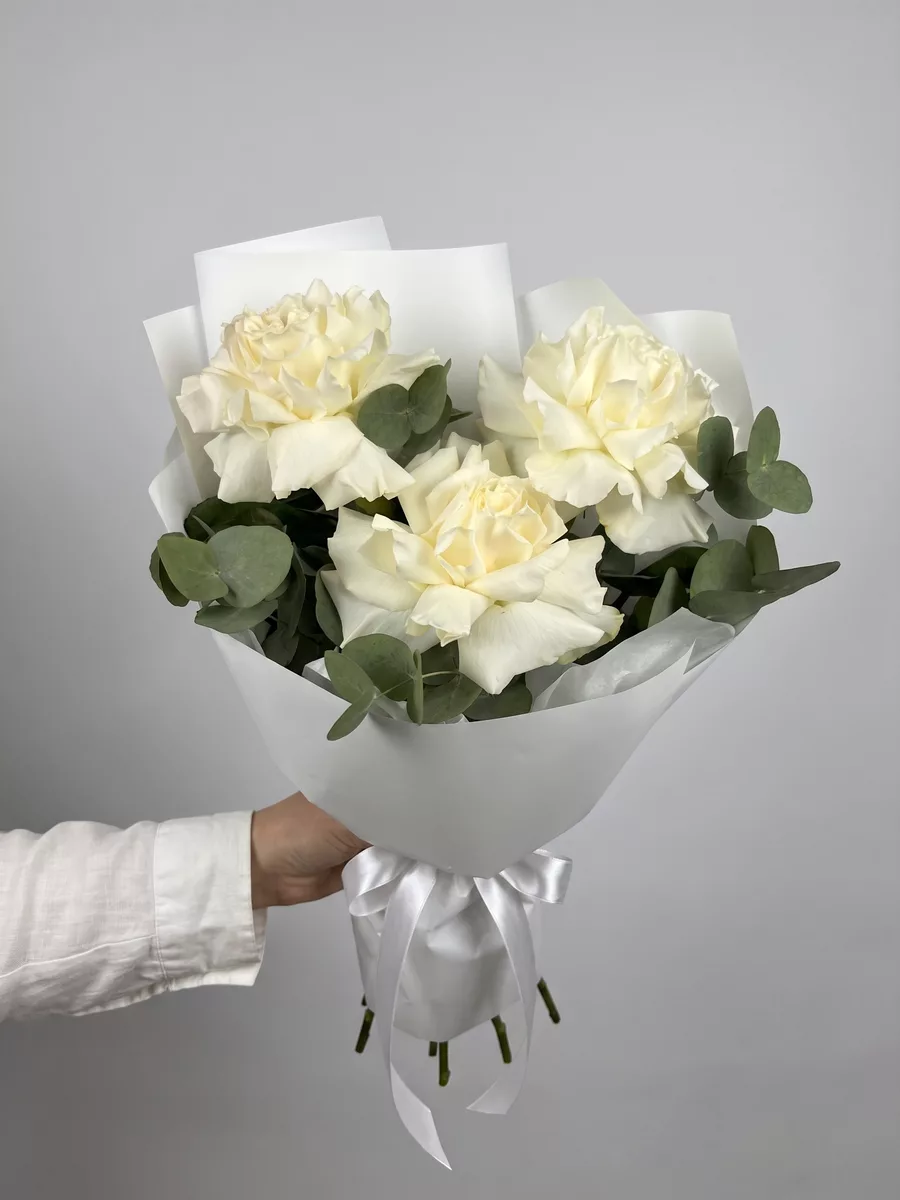
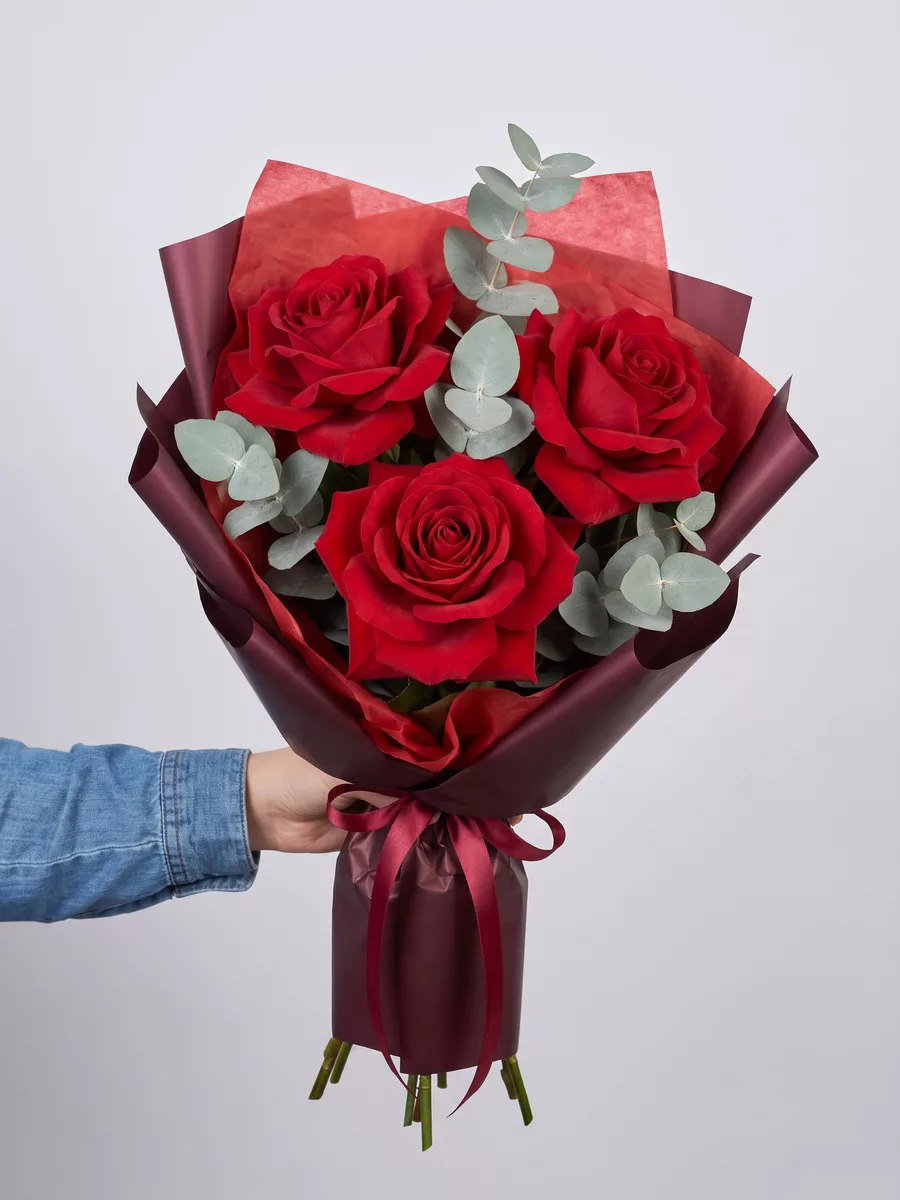
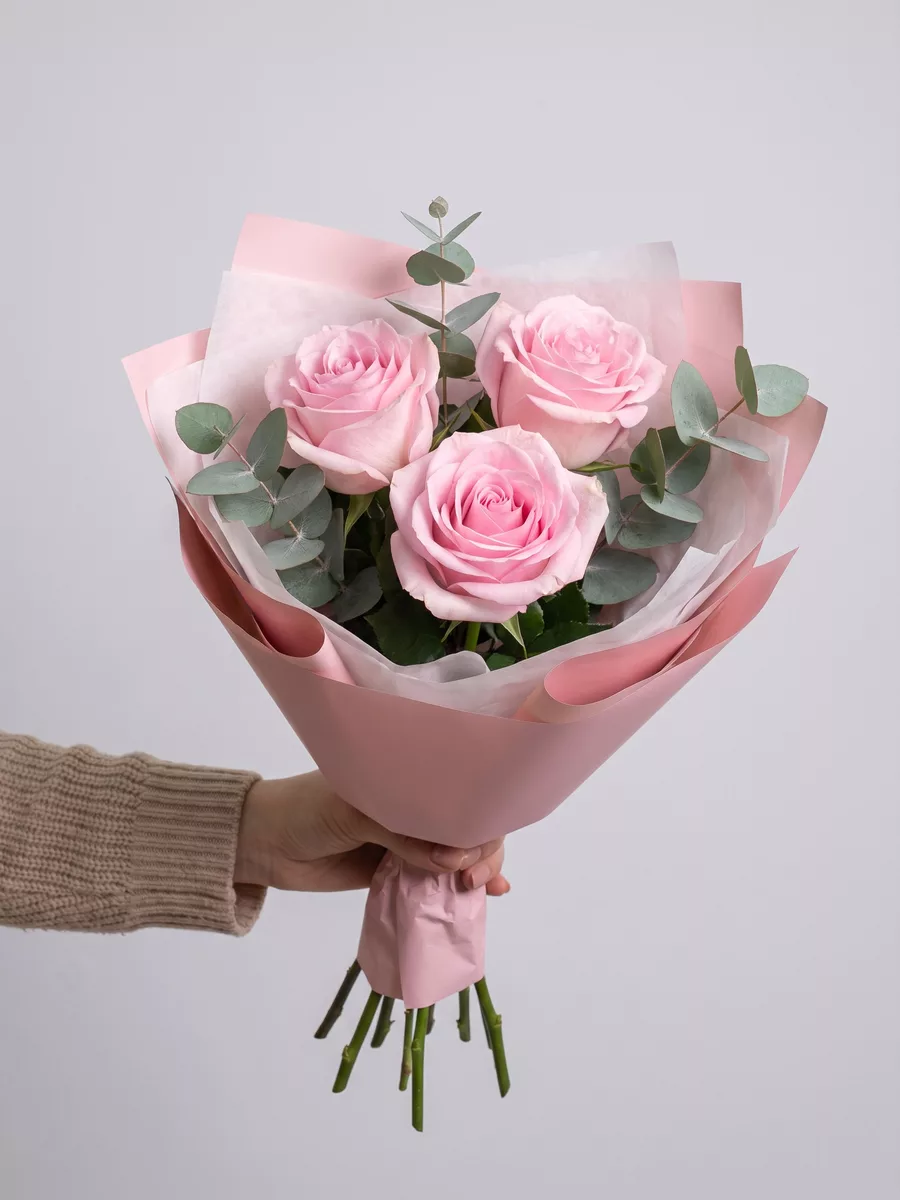
Bouquets we can deliver

Reading the Occasion Before You Pick a Single Stem
Russian flower customs reward those who pay attention to the occasion before they think about colour or variety. The most important rule, and the one most often broken by senders abroad, is the odd-number rule. Bouquets in Russia are always given in odd numbers — three roses, five tulips, eleven peonies — because even numbers are reserved for funerals. A beautiful arrangement of twelve red roses will unsettle a Russian recipient in a way that is hard to explain afterward.
Beyond that, think about what the person receiving the flowers will feel in the first ten seconds. A birthday calls for something abundant and a little celebratory — full-headed roses, spray chrysanthemums or lisianthus in soft purples and whites all read as festive without being loud. An anniversary, especially a significant one, tends to go better with something more considered: a mono-bouquet of garden roses in blush or cream, wrapped simply, says more than a mixed arrangement with too much going on.
For a new baby, pale yellow or white flowers are the warmest choice in Russian tradition — pink and blue coding for gender is less fixed here than in some Western countries, and a soft yellow freesia arrangement will be appreciated by almost any new parent. If the occasion is a professional achievement — a promotion, a defence of a thesis, a first day at a new job — go for something structured and a little formal: alstroemeria, eustoma or standard roses in red or deep orange signal respect alongside warmth. Matching the flower to the feeling the recipient will have is always more powerful than matching it to your own taste.
Seasonal Realities: What Arrives Fresh in Otradny
Otradny has a continental climate with cold winters and warm summers, and while most flowers travel through supply chains that insulate them from local weather, the season still shapes what is at its best on any given week. In January and February, roses from Ecuador and Colombia dominate — their stems are long, their heads are firm, and they travel well through the cold. Tulips from Dutch greenhouses appear in volume from late January and are excellent value through March. Trying to send something that is technically available but has been in transit stress — certain tropical varieties in deep winter, for example — is a florist's quiet mistake that shows up in vase life.
Spring is the easiest season. From March through May, the range expands dramatically: peonies arrive from late April, ranunculus and anemones are at their most vivid, and locally grown material starts to supplement imports. May 9th, Victory Day, is one of the most significant dates in the Russian calendar, and carnations — red ones especially — carry deep meaning on that day in a way that no other flower does.
Summer in Otradny can push above 30°C, which matters for delivery. Delicate flowers like sweet peas or garden-variety hydrangeas can struggle in that heat between the van and the door. Roses, sunflowers and gerberas handle summer temperatures better. Autumn brings back the full Dutch and Ecuadorian supply with chrysanthemums, dahlias and spray roses in warm oranges and burgundies — colours that suit the season and photograph beautifully inside a Russian apartment in October light.
Choosing by Budget Without Losing the Gesture
The amount you spend matters less than how the money is used. A modest budget spent on a single variety done well — seven white spray roses with eucalyptus, wrapped in kraft paper — will always outperform the same money spread across too many competing elements. The recipient sees the thought, not the invoice, and a clean, confident bouquet reads as more intentional than a crowded one.
At a mid-range budget, combinations start to open up. Roses paired with lisianthus give you two textures that complement each other without fighting. Tulips with muscari in early spring make a bouquet that looks like it came from a garden rather than a shop, which is exactly what most people respond to. Adding a filler like waxflower or ruscus is not about padding — it is about giving the eye somewhere to rest between the focal flowers.
At a higher budget, the question becomes one of scale and drama. A large arrangement of garden roses — varieties like David Austin-style blooms with their quartered, many-petalled heads — makes an immediate impression when someone opens their door. Peonies, when in season, have the same effect. These are flowers that fill a room with scent as well as colour, and that sensory layer is part of the gift.
Whatever the budget, avoid the temptation to add a stuffed toy or a box of chocolates as an afterthought. In Russian gifting culture, flowers stand on their own with complete dignity. A handwritten card message, translated into Russian if you can manage it, will do far more than any add-on to make the moment feel personal and considered.
Writing a Card Message Across a Language and a Distance
The card is where most international senders lose their nerve, and the result is either a blank space or a generic phrase that the recipient reads in two seconds and forgets. A message written in English is perfectly fine — most people in Otradny who receive flowers from abroad will understand the gesture even if their English is limited, and the effort itself communicates care. But if you can get even a sentence translated into Russian, the warmth it adds is disproportionate to the effort.
Keep the message specific. Instead of 'Happy Birthday, love from London,' try something that names a shared memory or a particular quality you admire in the person. 'I still think about the summer we spent in Sochi — wishing you a birthday as good as those days' is a message that cannot be given to anyone else. That specificity is what makes a card stay on the windowsill for a week rather than go in the recycling on the same day.
Russian endearments are worth knowing if you are sending to a partner or a close family member. 'Moya lyubov' means 'my love,' 'solnyshko' means 'little sun' and is used for children and romantic partners alike, and 'dorogoy' or 'dorogaya' means 'dear one,' masculine and feminine respectively. Using even one of these in an otherwise English message is a small act of linguistic affection that lands every time.
If you are sending flowers for a professional occasion — to a colleague's parent, to a business contact's spouse — keep the message warm but measured. Russians appreciate formality in professional contexts, and a short, sincere sentence is always better than a long one that tries too hard.
Getting the Delivery Details Right the First Time
Otradny addresses follow the standard Russian format: street name, building number, sometimes a corpus or block letter, then apartment number. Many residential buildings in the city are multi-entrance Soviet blocks where the entrance number — called a 'podyezd' — matters. If you do not know the entrance number, the recipient's phone number becomes critical, because the driver can call ahead to confirm. Always provide a working Russian mobile number for the recipient when you place an order.
Time windows are the other variable that international senders underestimate. Because you are ordering across time zones, it is easy to request a 3pm delivery in Otradny while it is 3pm where you are — which means you have actually requested a delivery in the middle of the night local time. Double-check the conversion before you confirm. If the recipient works office hours, a late-morning or lunchtime delivery is often the most welcome, because they are likely to be at their desk and the flowers will have the whole afternoon to be admired.
If you are sending to a workplace address, note that some Otradny industrial facilities have restricted entry. A home address is almost always simpler. If a home delivery is not possible, a note in the order comments explaining the building access situation helps enormously — for example, 'the intercom is broken, please call on arrival' is the kind of detail that prevents a failed delivery.
Failed deliveries are almost always caused by incomplete address information or an unreachable recipient phone number, not by distance. Getting those two things right removes almost every risk from the process.
Helping Your Flowers Last Once They Arrive
A bouquet that arrives in Otradny in January has traveled through cold air and then into a centrally heated Russian apartment, which can be very warm — Russian central heating is not subtle. That temperature shift is the biggest challenge to vase life, and knowing how to handle it helps the recipient get the most from your gift.
The first step is to let the bouquet rest in a cool room for thirty minutes before unwrapping it, if possible. This gives the stems time to adjust rather than going from cold to very warm in seconds. Then cut the stems at a diagonal — about two centimetres off the bottom — under running water or in a bowl of water, which prevents an air bubble from blocking water uptake. A sharp knife is better than scissors, which can crush the stem tissue.
Fresh water every two days matters more than most people realise. Bacteria build up quickly in a vase, and changing the water — and rinsing the vase — is the single most effective thing a recipient can do to extend the life of their flowers. Remove any leaves that sit below the waterline, because submerged foliage rots and accelerates bacterial growth.
Roses and lisianthus in good condition will last seven to ten days with this care. Tulips are shorter-lived but vivid — four to six days at their best. Chrysanthemums are the endurance champions of the flower world and can hold for two weeks or more. Letting the recipient know these timelines, perhaps in the card message, turns the bouquet into something they tend rather than just display, and that small act of care makes the gift feel like it continues long after delivery day.
Sending flowers to Otradny from abroad is less about overcoming distance and more about making a few good decisions before you click confirm. Get the time zone right, choose odd numbers, match the flower to the feeling, and write something on the card that only you could have written. Turboflora handles the rest — the cold chain, the timing, the door-to-door delivery within 1–2 hours — so that someone in a city on the Volga knows, without any doubt, that you were thinking of them today.
Frequently asked questions
Can I order flowers for Otradny if I do not speak Russian?
Yes, entirely. The order process at Turboflora works in English, and you can write your card message in any language you choose. The only Russian detail worth knowing is the recipient's address in its correct local format — street, building, apartment number — which the recipient themselves can usually provide if you ask them in advance.
What is the safest flower choice for a Russian recipient I do not know well?
A mono-bouquet of roses in a neutral colour — white, cream or soft pink — in an odd number is almost universally appropriate across occasions and age groups in Russia. It signals thought and respect without making assumptions about personal taste. Avoid red roses for non-romantic occasions, as they carry a strong romantic connotation in Russian culture.
How far in advance should I place an order for Otradny from abroad?
Same-day delivery is possible if you order with enough lead time accounting for the time zone difference. For a guaranteed specific time slot, ordering the evening before — your local evening, which may already be the next morning in Otradny — gives the most flexibility. For major dates like March 8th or birthdays, ordering two to three days ahead removes any uncertainty.
Are there dates in the Russian calendar I should know about when sending flowers?
March 8th, International Women's Day, is the single biggest flower occasion in Russia — demand is extremely high and advance ordering is essential. February 23rd, Defender of the Fatherland Day, is significant for men. May 9th, Victory Day, traditionally features red carnations. New Year's Eve is also a major gifting moment, larger in Russian culture than Christmas.
What happens if the recipient is not home when the flowers arrive?
The driver will call the recipient's phone number before or on arrival. This is why providing an active Russian mobile number is so important when placing an international order. If no contact is possible, delivery can be rescheduled. Leaving flowers unattended at a door in winter is not advisable, as cold temperatures can damage blooms within thirty minutes in sub-zero conditions.
Ready to send flowers?
Pick the city, choose the bouquet, and a local florist takes it from there.
Choose a city →