Sending Flowers to Peresvet from Abroad — a Sender's Practical Guide
You are sitting in Berlin, Toronto, or Dubai, and someone you love is in Peresvet — a quiet town in the Sergiev Posad district of Moscow Oblast, about 100 kilometres northeast of the capital. You want to send flowers that arrive fresh, look beautiful, and mean something. The distance feels like a problem, but it does not have to be. With the right florist and a little local knowledge, you can order from anywhere in the world and have a bouquet at the door within hours.
Why Peresvet Is Not a Difficult Destination
Peresvet sits along the Yaroslavl highway corridor, a well-connected route that makes logistics from Saint Petersburg and Moscow straightforward for a courier network covering all of Russia. The town is small — under twenty thousand residents — but it is not remote. Deliveries reach residential addresses, offices, and the local hospital with the same reliability you would expect in a larger city.
The surrounding region has a continental climate with cold winters and warm summers. That matters for flowers. In January and February, temperatures can drop to minus fifteen or lower, which means the courier keeps bouquets insulated during transit. In July and August, heat above thirty degrees Celsius is possible, so arrangements travel in cool conditions to prevent wilting before they arrive.
For a sender abroad, the key reassurance is this: you do not need a Russian phone number, a local bank card, or a Russian-language browser to place an order. The process is designed for international customers. You provide the recipient's address in Peresvet, a contact phone number for the recipient, and your own contact details — and the florist handles everything from there. The time zone difference is something to plan around, but it is not an obstacle.
Bouquets we can deliver


Choosing the Right Occasion Tone Before You Choose the Flowers
Russian flower-giving culture places strong emphasis on presentation and symbolic meaning, and getting the tone right matters more than picking the most expensive bouquet. Before you think about specific varieties, think about who will receive the flowers and what they should feel when the door opens.
For a birthday, Russians typically appreciate abundant, celebratory arrangements — roses in rich colours, lisianthus, alstroemeria, or spray chrysanthemums combined with greenery that gives the bouquet depth and movement. The feeling should be generous and warm, not restrained. A single stem is a gesture; a birthday calls for something that fills the arms.
For a romantic occasion — an anniversary, a reconciliation, Valentine's Day — red roses remain the classic choice, and they are classic for a reason. Peonies, when in season from late spring through early summer, carry a softer romantic weight. Ranunculus in blush and cream tones read as tender and considered rather than dramatic.
For a congratulation — a new job, a graduation, a new baby — whites and soft yellows with eucalyptus or ruscus feel fresh and forward-looking. Avoid dark or muted tones for celebratory moments; Russian recipients tend to associate those palettes with more solemn occasions. When in doubt, ask the florist to guide you: a working florist who knows the region will steer you correctly based on a single sentence about the person and the event.
What the Recipient Will Actually Experience on Delivery Day
Understanding the recipient's experience helps you set expectations when you message them — or decide to keep the delivery a surprise. In Peresvet, most deliveries are made to apartment buildings, private houses, or workplaces. The courier will call the recipient before arriving, which is standard practice across Russia. If you are planning a surprise, note that the call will come from a Russian number, so prepare your recipient to expect a call from an unknown number, or let them know something is coming without revealing what.
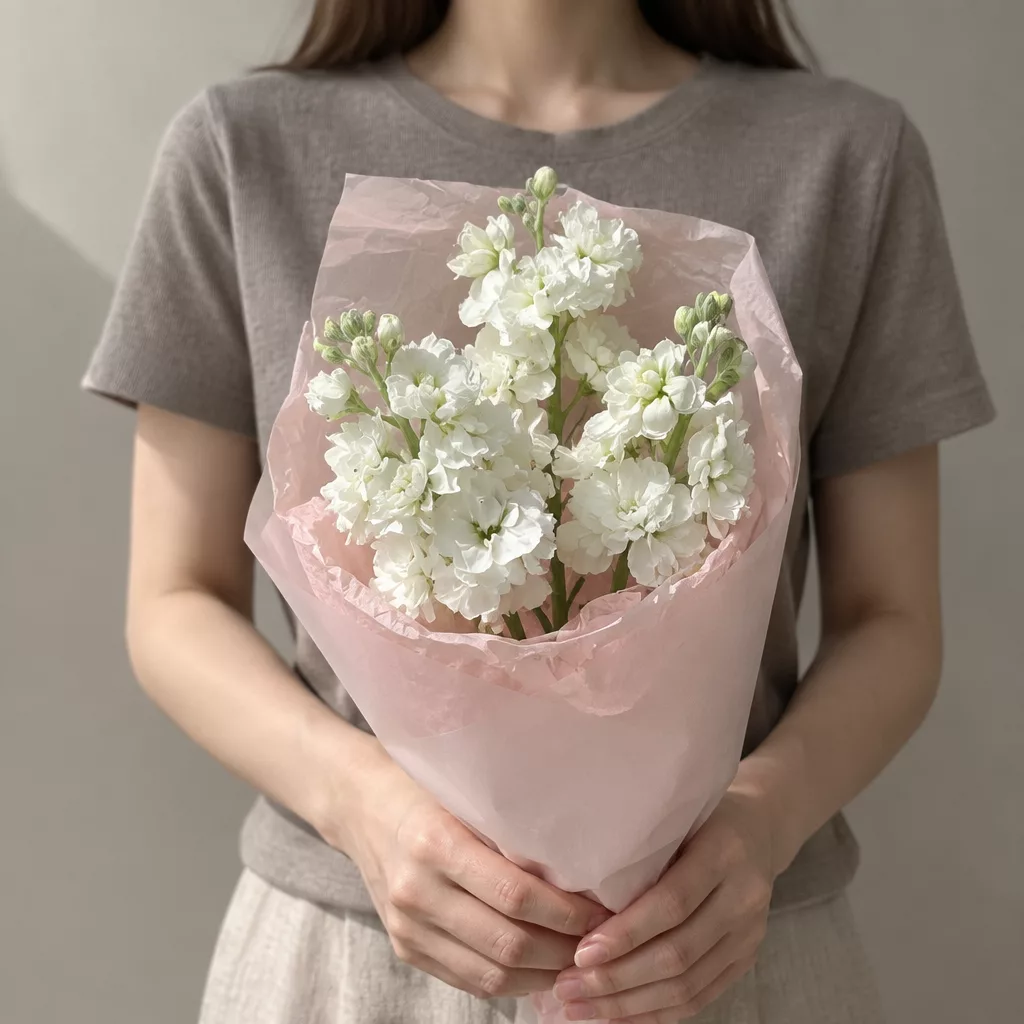
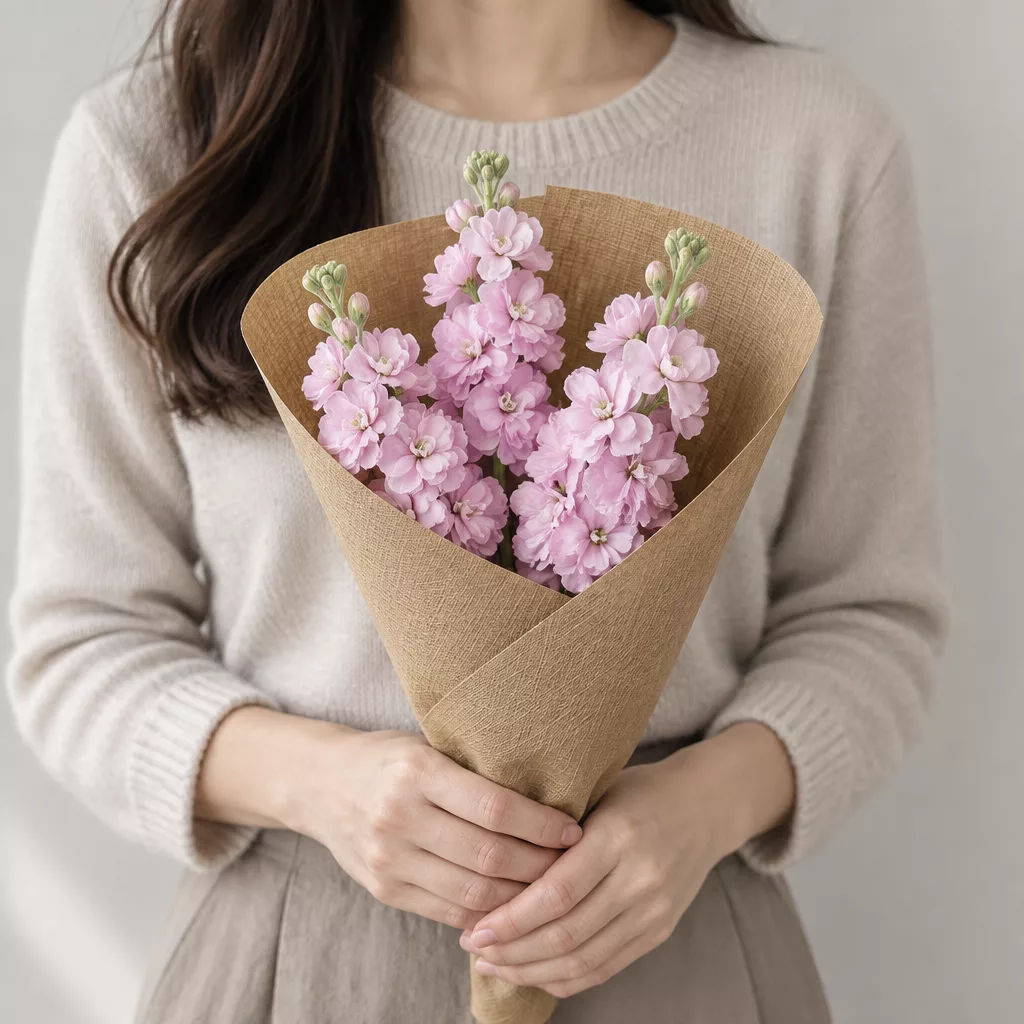
The bouquet arrives wrapped. Russian florists typically use kraft paper, fabric wrap, or a combination of both, tied with ribbon. The presentation is part of the gift — recipients often keep the wrapping on the table while they find a vase, because the package itself signals care and occasion. If you want a specific colour of wrap or a particular style of ribbon, mention it when you order.
A handwritten card or a printed note in the bouquet is standard, and for an international sender this carries extra weight. If you write your message in English, the florist can include it exactly as written — most recipients in Russia today read at least some English, and a message in the sender's own language feels personal rather than translated. If you prefer a Russian message, you can write it in English and ask the florist to translate it, or write it in Russian yourself if you are comfortable doing so.
Timing Your Order Across Time Zones
Peresvet follows Moscow Standard Time, which is UTC plus three hours and does not observe daylight saving. That means if you are in London, you are three hours behind. New York is eight hours behind in winter and seven in summer. Dubai is one hour ahead. Sydney is between six and eight hours ahead depending on the season. These gaps shape when you need to place your order.
Same-day delivery within Russia typically requires the order to be placed before a cut-off time in the afternoon Moscow time. If you want flowers delivered in the morning — which is a lovely touch for a birthday — place your order the evening before your time, which will be early morning Moscow time. This gives the florist time to prepare the arrangement fresh rather than rushing.
Avoid placing orders in the middle of the night Moscow time and expecting immediate same-day service. While Turboflora operates across extended hours, fresh flowers need preparation time. A bouquet assembled carefully at six in the morning will always look better than one rushed together because the order arrived at four.
For major Russian holidays — International Women's Day on the eighth of March, New Year, and Valentine's Day — order at least two to three days in advance. These are the busiest flower days in Russia, comparable to Mother's Day in the West. Demand is extremely high, delivery windows fill quickly, and popular varieties like red roses and white tulips sell out. Planning ahead is not overcaution; it is the difference between the bouquet you imagined and whatever remains.
Picking by Budget: What Different Spending Levels Look Like
You do not need to know Russian flower prices to make a good decision. Think instead about what different budget levels produce in terms of visual impact and variety selection, then let the florist build within that range.
At a modest level, a single-variety bouquet of seasonal flowers — tulips in spring, chrysanthemums in autumn, carnations year-round — arrives looking clean and intentional. A mono-bouquet of fifteen white tulips, for example, is a classic Russian gift that never reads as cheap. The key is choosing flowers that are genuinely in season, because seasonal flowers are fresher, last longer, and look more vibrant than imported varieties forced out of their natural cycle.
At a mid-range level, you can combine two or three varieties with complementary foliage. Roses with eucalyptus and lisianthus, for instance, or alstroemeria with spray roses and pittosporum. These combinations have depth and texture. They photograph well, which matters because the recipient will almost certainly send you a photo the moment the flowers arrive.
At a higher budget, the arrangement expands in volume and can include premium varieties: garden roses, imported peonies when in season, orchid stems added to a mixed bouquet, or a large mono-bouquet of long-stemmed roses in a high stem count. Presentation at this level often includes a hat box or a designer wrap that itself becomes part of the décor. Whatever your budget, tell the florist the occasion and the recipient's personality — that information shapes the result more than the number alone.
Vase Life and Care Instructions for the Recipient
One thing international senders rarely think about is what happens after delivery. The bouquet arrives, the recipient is delighted, and then — if no one tells them how to care for the flowers — the arrangement wilts within two days when it could have lasted ten. A short care note tucked into the bouquet is a practical kindness.
The most important step is the first cut. Stems should be trimmed at a diagonal angle, about two centimetres from the bottom, immediately before placing them in water. This opens the stem's vascular tissue and allows the flower to drink. Scissors compress the stem; a sharp knife or proper floral shears are better. Roses and chrysanthemums especially benefit from this.
Water temperature matters. Lukewarm water is absorbed more efficiently than cold water for most varieties. Change the water every two days and re-trim the stems at the same time. Remove any leaves that fall below the waterline immediately — submerged foliage rots and introduces bacteria that shorten vase life dramatically.
Keep the vase away from direct sunlight, heating radiators, and fruit bowls. Ripening fruit releases ethylene gas, which accelerates flower ageing. In a Peresvet apartment in winter, the radiators run hot — placing the bouquet near a window on the cool side of the room extends its life noticeably. Tulips and anemones prefer cool rooms and will last longest near a window in winter. Roses and lisianthus are more tolerant of warmth but still benefit from distance from direct heat sources.
Common Mistakes International Senders Make — and How to Avoid Them
The most frequent mistake is providing an incomplete address. Russian addresses follow a specific format: city, street, building number, apartment number, and sometimes a building entrance code (called a domofon code). If the recipient lives in an apartment block — which is very common in Russian towns including Peresvet — missing the apartment number or entrance code means the courier cannot complete the delivery. Ask your recipient for their full address in advance, or confirm it carefully.
The second mistake is choosing flowers based on what looks impressive in a photo rather than what travels well. Delicate open blooms — fully open garden roses, for instance, or open peonies — are beautiful but fragile. A florist will send flowers at the right stage of opening so they arrive in good condition and then bloom fully over the following days. Trust the florist's judgment on bud stage.
The third mistake is ignoring the card message. Many senders skip it or write something generic because they feel awkward. But for a recipient in Russia receiving flowers from someone abroad, the card is the emotional centrepiece of the whole gift. Write something real — a specific memory, a direct expression of feeling, a private joke. It does not need to be long. Four honest sentences will mean more than a beautiful bouquet with a blank card.
Finally, do not assume that more is always better. A thoughtfully chosen bouquet of twelve roses in a perfect colour for the recipient will land harder than a massive arrangement chosen at random. Know your person, and let that knowledge guide the order.
Sending flowers to Peresvet from the other side of the world is genuinely possible, and when it goes well, it goes very well. The recipient opens the door to something fresh and considered that crossed thousands of kilometres because someone took the time to arrange it. That is not a small thing. The practical side — address details, timing, seasonal choices, care instructions — is manageable once you know what to pay attention to. The emotional side is entirely yours: you know the person, the occasion, and what you want them to feel. Put those two things together, and the distance stops being the story.
Frequently asked questions
Can I order flowers for Peresvet if I do not speak Russian?
Yes. The ordering process at Turboflora is available in English, and you can write your card message in English too. You need the recipient's full Russian address — street, building number, apartment number, and any entrance code — but you do not need to navigate anything in Russian yourself. Customer support can assist if you have questions about the address format.
How far in advance should I order for a birthday delivery in Peresvet?
For a standard birthday, ordering the day before or on the morning of the birthday works well for most dates. For birthdays falling on or near the eighth of March, New Year, or Valentine's Day, order two to three days ahead. Delivery slots fill quickly on major Russian holidays, and popular varieties like red roses and tulips sell out faster than you might expect.
What flowers are available for delivery to Peresvet in winter?
Roses, chrysanthemums, carnations, alstroemeria, and lisianthus are available year-round regardless of season. Tulips arrive in abundance from late January onward. In deep winter, tropical varieties like anthuriums and orchid stems also travel well and add colour. Your florist will advise on what is freshest and best suited to cold-weather transit on the day of your order.
Will the courier call the recipient before arriving? Can I keep it a surprise?
Yes, couriers call ahead — this is standard in Russia. If you want the delivery to be a surprise, let your recipient know to expect a call from an unknown Russian number without telling them what it is about. Alternatively, you can leave a note in the order asking the courier to send an SMS rather than call, which some recipients find easier to manage discreetly.
What payment methods are accepted for international orders?
International credit and debit cards are accepted for orders placed through the Turboflora website. You do not need a Russian bank account or a Russian payment system. The transaction processes in the standard way for online retail. If you encounter any issue with your card at checkout, contact support directly — international billing addresses occasionally require manual confirmation.
Ready to send flowers?
Pick the city, choose the bouquet, and a local florist takes it from there.
Choose a city →