Sending Flowers to Ruza from Abroad? Here Is Everything That Matters
Ruza is a quiet town in Moscow Oblast, roughly a hundred kilometres west of the capital, and when someone you love lives there, distance should not mean an empty table on their birthday or anniversary. Ordering flowers from London, Berlin, New York or Dubai feels complicated at first — time zones, language barriers, payment methods, and the simple worry that nothing fresh will actually arrive. This guide walks you through every step from a florist's point of view, so the bouquet that leaves our Saint Petersburg hub reaches your recipient in Ruza looking exactly the way you imagined it.
Why Ruza Is Reachable and What That Means for Your Order
Ruza sits within Moscow Oblast, which means it falls inside the delivery network that Turboflora operates across Russia. The town is small enough that many international senders assume it is off-limits, but that assumption is wrong. We deliver to addresses throughout the region, including residential streets, private houses with land plots, and apartment buildings in the town centre.
What this geography does affect is timing. Ruza is not a major city, so deliveries are routed carefully to make sure the flowers travel the final stretch in a refrigerated or climate-controlled environment rather than sitting in an unventilated vehicle. That detail matters enormously for roses and peonies in summer, when outside temperatures in the Moscow region can reach 30 degrees Celsius and above.
When you place an order from abroad, you are essentially coordinating across two or three time zones depending on where you are. A sender in Los Angeles is nine hours behind Moscow time. Someone in Berlin is two hours behind. Knowing this helps you plan the delivery window so the recipient is actually home, or at least reachable. We always recommend choosing a delivery slot that lands in the afternoon local Ruza time, which gives the morning rush a chance to clear and ensures someone is likely to answer the door.
The practical takeaway: Ruza is deliverable, the route is established, and the main variables in your hands are timing and flower choice. Everything else we handle from our side.
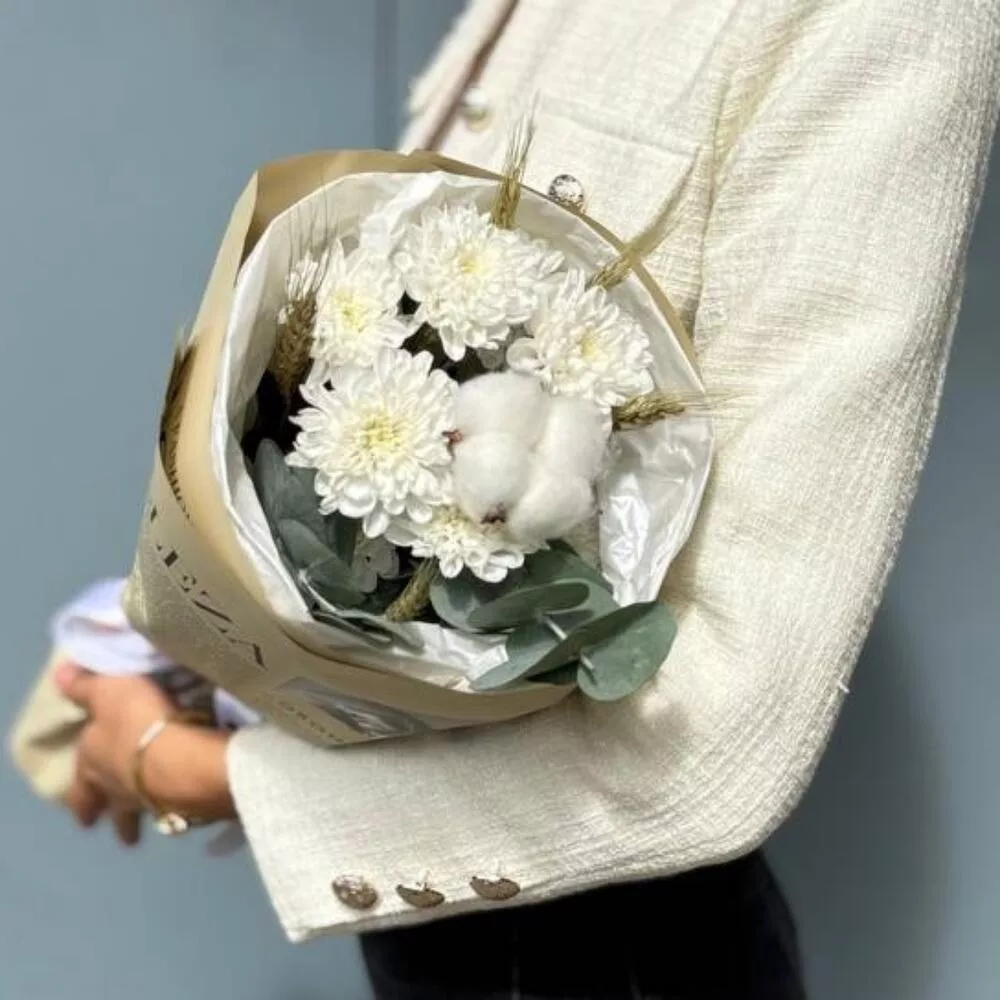
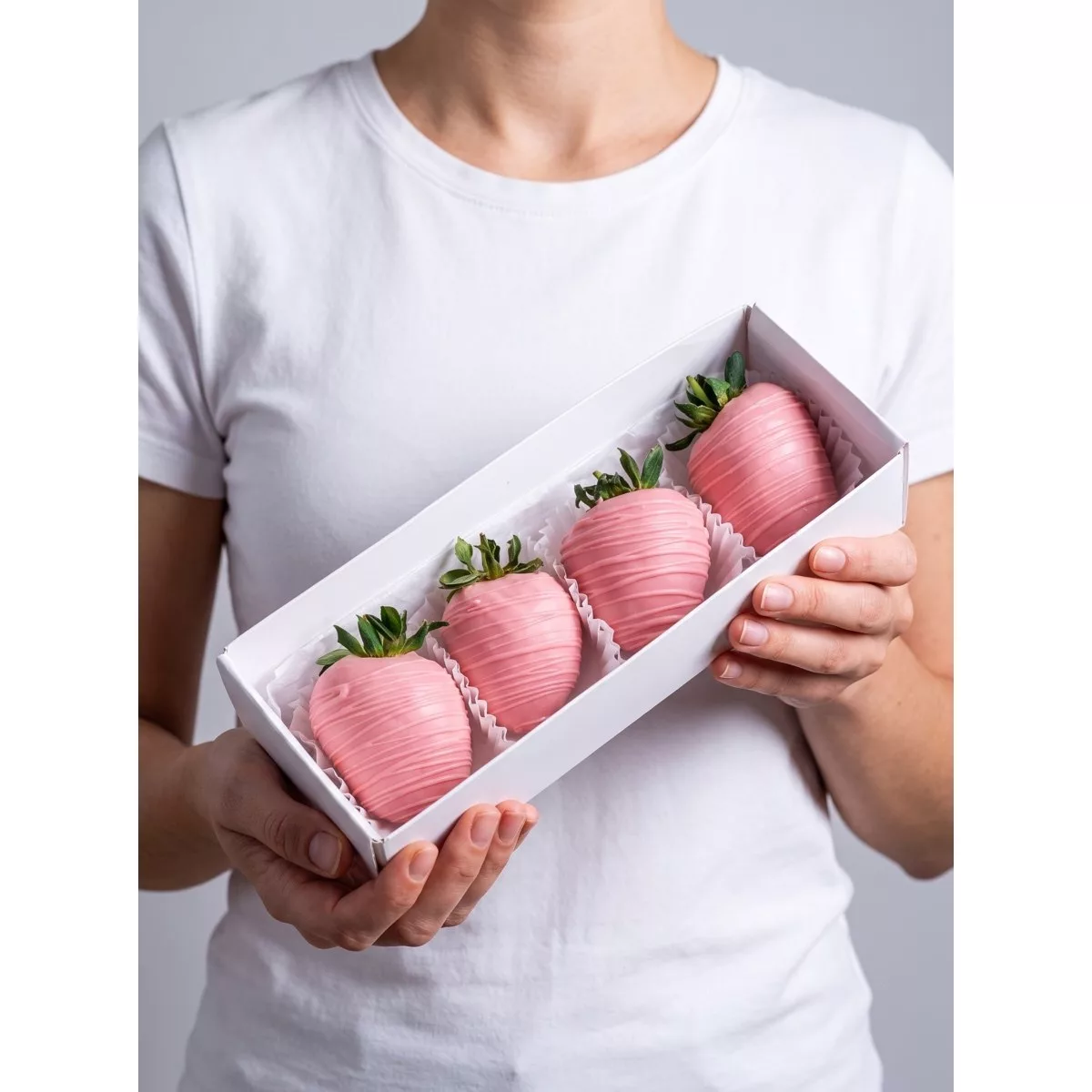
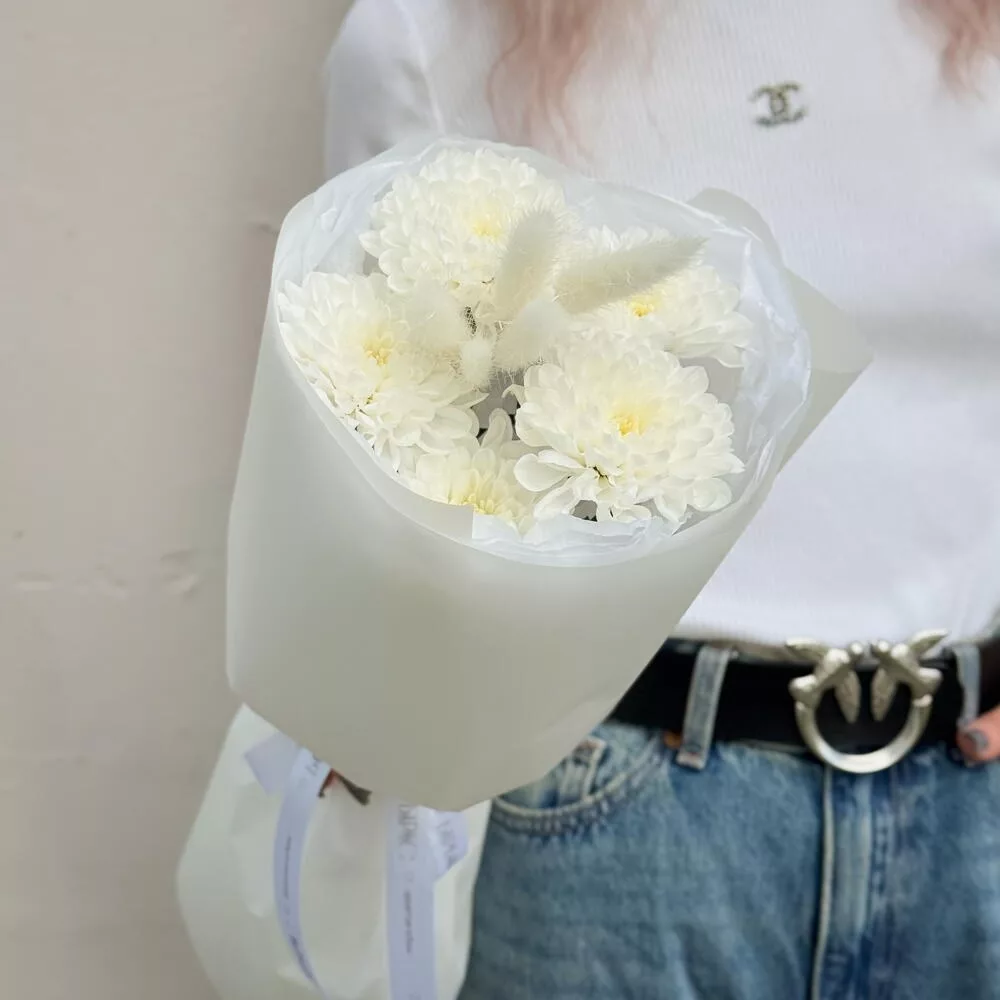
Bouquets we can deliver

Choosing Flowers for the Person, Not Just the Occasion
The best bouquet for someone in Ruza is the one that fits who they are, not just what day it is. A grandmother celebrating a birthday in July will respond differently to a hand-tied arrangement of garden dahlias and white lisianthus than she would to a tight, cellophane-wrapped bunch of red spray roses. A young woman receiving flowers from a partner overseas might love something bold — sunflowers mixed with orange gerberas and eucalyptus — or something soft and romantic like blush ranunculus layered with cream freesia.
Start by thinking about the recipient's home. Ruza has a strong tradition of private houses with gardens, so many residents there are genuinely knowledgeable about flowers. They will notice if a rose has been stored too long or if the stems were cut carelessly. That is not a reason to be anxious — it is a reason to order something that is genuinely fresh and well-composed.
For men, which is a question international senders often ask about, Russian custom is more open than many expect. Giving flowers to a man is perfectly normal in Russia, especially for milestone birthdays, professional achievements, or as a warm gesture of respect. Single-variety bouquets of tulips, irises, or even a structural arrangement using anthuriums work well.
For children, bright colours are always right: gerberas in yellow and coral, small sunflowers, or a simple posy of mixed seasonal blooms. Keep the arrangement low and cheerful rather than tall and formal. The mood of the bouquet should match the mood of the moment.
Seasonal Realities: What Grows Well and What Travels Well
Russia's climate means that what looks stunning in a European florist's window in February may not be the right choice for a delivery to Ruza in January. Understanding the seasons helps you order something that will actually thrive after arrival rather than wilting within a day.
Winter in the Moscow region, from November through March, is cold and dry indoors due to central heating. Apartments and houses are often kept at 22 to 24 degrees Celsius, which shortens the vase life of delicate flowers like anemones and garden roses. In winter, opt for chrysanthemums, alstroemeria, carnations, or spray roses — all of which handle warm indoor air much better and can last ten to fourteen days with proper care.
Spring brings tulips, which are enormously popular in Russia and peak around early March, just before International Women's Day on the eighth. If you are sending flowers for that date, order several days in advance because demand is extremely high. Daffodils and hyacinths also travel well in spring and carry a lovely scent that fills a room.
Summer is peony season in Russia, roughly May through June, and peonies are deeply beloved. They are generous, fragrant, and look lavish even in a simple glass vase. Later in summer, dahlias, lisianthus, and zinnias come into their own.
Autumn is the season of chrysanthemums, eustoma, and rich-toned roses in burgundy, terracotta, and deep orange. These colours suit the season and tend to photograph beautifully, which matters when your recipient wants to share the moment.
Navigating the Order Process from Outside Russia
Placing an international order for delivery inside Russia has a few steps that differ from ordering locally, and knowing them in advance makes the process smooth rather than stressful.
The most important piece of information you will need is a precise delivery address in Russian or in a transliterated format that our team can verify. Ruza addresses follow the standard Russian format: street name, building number, apartment number if applicable. If your recipient lives in a private house, note any gate codes or access instructions. A wrong building number in a small town can cause a delay that ruins the timing of a surprise.
Payment from abroad is handled through international card processing, and our checkout accepts major cards including those issued outside Russia. If you encounter any issue, our customer support team can assist via email or chat in English.
The card message is something many international senders underestimate. In Russian culture, a handwritten-style card tucked into the bouquet carries real emotional weight. Write your message in English if you prefer — the recipient will understand it as a personal touch from abroad — or ask us to translate a short phrase into Russian for you. Keep it genuine and brief: two or three sentences land better than a long paragraph.
Finally, confirm the recipient's phone number when ordering. Our courier will call ahead in Russian, but a brief heads-up text from you to your recipient — telling them to expect a call from an unknown number — removes any confusion and ensures the delivery actually reaches their hands.
Budgeting by Feel: Small Gestures and Generous Ones
One of the most common questions from international senders is how much to spend without either underwhelming the recipient or feeling like they are overdoing it. The honest florist's answer is that the quality and thoughtfulness of the composition matter far more than the stem count.
A modest arrangement of seven stems — say, three garden roses, two lisianthus, and a couple of eucalyptus branches — presented in a kraft wrap with a ribbon looks genuinely beautiful and carries real emotion. It is not a budget afterthought; it is a considered choice. The recipient in Ruza will not count stems. They will feel the care in the selection.
A mid-range bouquet might include fifteen to nineteen stems across two or three complementary varieties. Think blush peonies with white freesia and silver brunia, or warm-toned dahlias with terracotta spray roses and dried pampas grass for texture. This is the range most popular for birthdays and anniversaries from overseas senders.
For significant occasions — a fiftieth birthday, a wedding anniversary, a major professional milestone — a large round bouquet or a hatbox arrangement creates a moment of genuine surprise. Hatboxes travel particularly well because the flowers are stabilised inside and arrive looking composed rather than travel-worn.
Avoid ordering the cheapest available option purely on impulse. A very small bouquet sent across twelve time zones can feel like a minimal gesture even when the intention behind it is warm. Let the composition do the emotional work, and trust the florist's eye for balance over raw quantity.
What Happens After Delivery: Vase Life and Care in a Russian Home
Your job ends at checkout, but the bouquet's life continues for days after delivery, and a few words of advice to your recipient can make a real difference to how long they enjoy it.
The first thing to do upon receiving flowers is cut the stems at an angle, about two centimetres from the base, using a sharp knife rather than scissors. Scissors crush the vascular tissue of the stem and reduce water uptake. A clean diagonal cut maximises the surface area in contact with water.
In Russian homes, central heating runs continuously through the cold months, creating warm, dry air that shortens vase life significantly. Placing the vase away from radiators and out of direct sunlight adds several days to the arrangement. A cool hallway or a spot near a window that does not get afternoon sun is ideal.
Change the water every two days and re-cut the stems each time. Remove any leaves that fall below the waterline, as they decay quickly and cloud the water, which introduces bacteria that block the stems.
Different flowers have different lifespans even within the same bouquet. Alstroemeria and chrysanthemums can last two weeks or more. Roses and peonies typically last seven to ten days if cared for properly. Tulips are shorter-lived, usually five to seven days, but they continue to grow and move in the vase in a way that many people find charming.
If your recipient mentions that the flowers arrived with tight buds — which is actually ideal for freshness — let them know that placing the stems in slightly warm water in a warm room will encourage the blooms to open within a few hours.
Russian Flower Customs Worth Knowing Before You Order
If you are not familiar with Russian traditions around flowers, a few customs are worth understanding so your order lands exactly right.
The most widely known rule is the odd-number convention. In Russia, even numbers of flowers are associated with mourning and are traditionally brought to cemeteries. Always order an odd number of stems: seven, nine, eleven, fifteen, and so on. This is not a superstition that only older generations follow — it is observed across all ages and feels genuinely important to most recipients.
Colour carries meaning too, though less rigidly than the stem count rule. Yellow flowers were once associated with separation or jealousy in Soviet-era popular culture, and some older recipients still hold this association. For a safe choice, combine yellow with other colours rather than sending a purely yellow bouquet to someone you know is more traditional. That said, sunflowers are universally adored in Russia regardless of this association, perhaps because they feel festive and warm rather than purely yellow.
White flowers are elegant and appropriate for almost any positive occasion — birthdays, congratulations, new arrivals. Red roses are romantic and direct, understood the same way they are in most of the world.
Bringing flowers when visiting someone's home is standard courtesy in Russia. Since your recipient will be receiving the bouquet at home, the gesture itself aligns perfectly with local expectations. The delivery of flowers to a door is seen as a warm, personal act, and an international sender going to the effort of arranging it from thousands of kilometres away makes the gesture even more meaningful.
Sending flowers to Ruza from abroad is entirely possible, and when it is done thoughtfully — with the right timing, the right varieties for the season, and a genuine card message — it lands as one of the most personal gifts a person can receive across distance. The logistics are ours to handle. Your part is simply knowing what your recipient loves and trusting that a well-chosen bouquet, delivered fresh and on time, will say exactly what you mean it to say.
Frequently asked questions
Can I order flowers for delivery to Ruza if I live outside Russia?
Yes, completely. Turboflora accepts international orders and processes payments from cards issued outside Russia. You will need the recipient's full address in Ruza and their phone number so our courier can coordinate the handover. The checkout and customer support are available in English, making the process straightforward even if you have never ordered to Russia before.
Why does the odd number of flowers matter so much in Russia?
In Russian tradition, even numbers of flowers are reserved for funerals and are placed at graves. Giving an even number to a living recipient is considered inauspicious and can genuinely upset some people. Always choose an odd count — seven, nine, eleven, fifteen — regardless of the occasion. This single rule makes more difference to how your gift is received than almost any other detail.
How far in advance should I order for a specific date like a birthday?
For regular dates, placing your order one to two days ahead is usually sufficient. For high-demand periods like International Women's Day on March 8th or Valentine's Day, order at least four to five days in advance. Ruza is a smaller town, so delivery slots fill up during peak periods. Earlier ordering also gives you more flexibility in choosing the exact delivery time window.
What flowers last longest in a warm Russian apartment in winter?
Chrysanthemums, alstroemeria, and carnations are the most resilient choices for heated indoor environments. They can last ten to fourteen days with basic care. Roses and lisianthus also perform well if the stems are re-cut and the water is changed every two days. Avoid delicate varieties like sweet peas or garden anemones in winter, as central heating shortens their vase life considerably.
Can I include a card message in English, or should it be in Russian?
English is perfectly fine and often adds a personal touch that emphasises the international distance you crossed to send the gift. If you would like the message translated into Russian, mention it when placing your order and our team can help with a short phrase. Keep the message brief — two or three sincere sentences carry more warmth than a long paragraph, in any language.
Ready to send flowers?
Pick the city, choose the bouquet, and a local florist takes it from there.
Choose a city →