Sending Flowers to Shebekino from Abroad? Read This First
You are somewhere outside Russia — maybe London, Berlin, Dubai or New York — and someone you love is in Shebekino. You want to send them flowers, something real and fresh that arrives at their door and makes them feel remembered. The distance feels enormous, but the gesture does not have to be complicated. Here is everything a sender abroad needs to know to get it right.
Why Shebekino Is a Particular Destination to Plan For
Shebekino is a small city in the Belgorod region of southwestern Russia, close to the Ukrainian border. That geography matters when you are planning a flower delivery from abroad, because the city sits in a climate zone with genuinely cold winters and warm, sometimes dry summers. The temperature swings between seasons are wide — winter lows can drop well below minus fifteen degrees Celsius, while July and August regularly reach thirty degrees or above. Both extremes affect how flowers travel and how long they last once delivered.
Because Shebekino is not a large metropolitan centre, the range of locally available flowers can be narrower than in Moscow or Saint Petersburg. Ordering through a service that ships from a central hub means the bouquet is assembled from a fuller, fresher stock and driven or couriered directly to the address. This is the model Turboflora uses: flowers leave our Saint Petersburg base and reach the recipient within the promised window.
For a sender abroad, the key planning factor is time zones. Shebekino runs on Moscow Time, which is UTC plus three, with no daylight saving adjustment. If you are placing an order from Western Europe you are two hours behind; from the US East Coast you are eight hours behind. A morning delivery in Shebekino may need to be ordered the previous evening your time. Building that calculation into your planning prevents the most common mistake international senders make: placing an order and expecting same-hour delivery without accounting for the clock difference.
Bouquets we can deliver

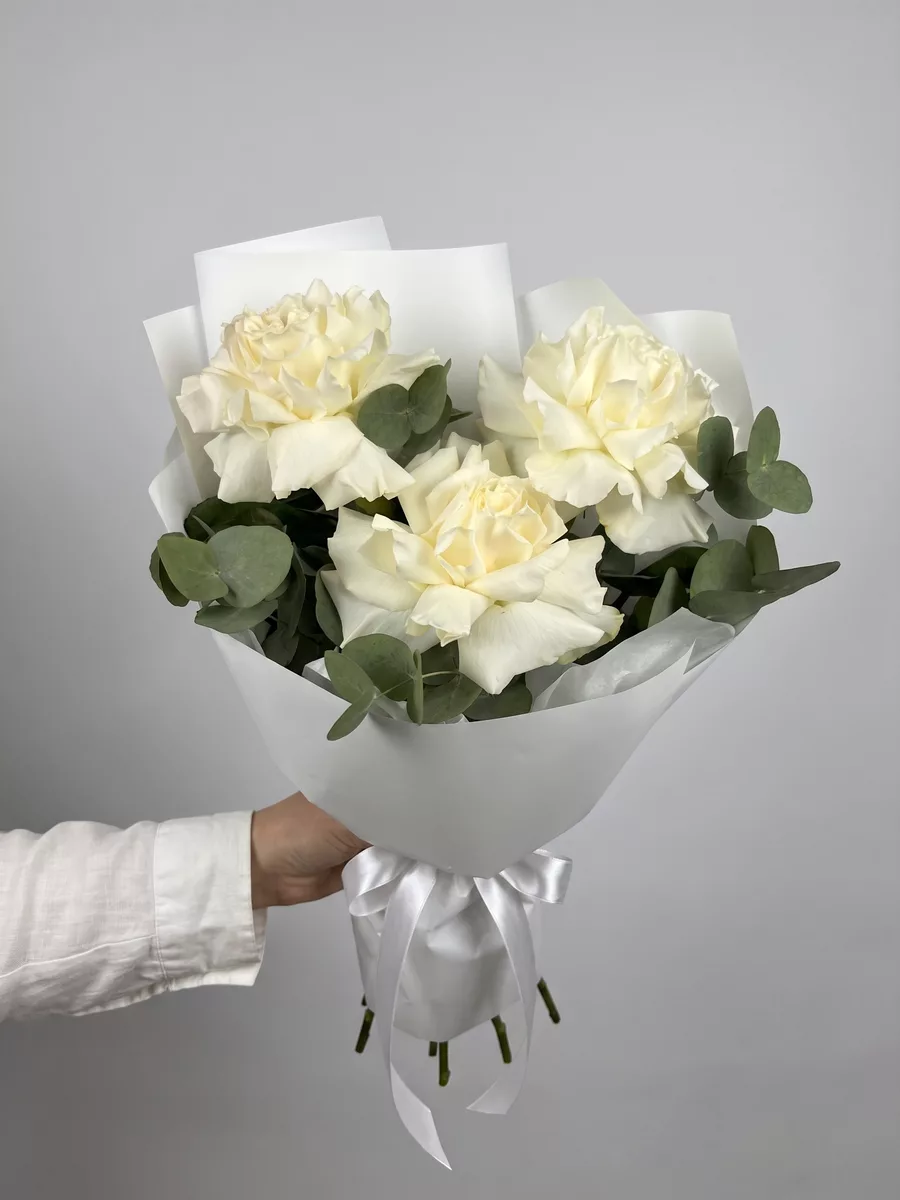
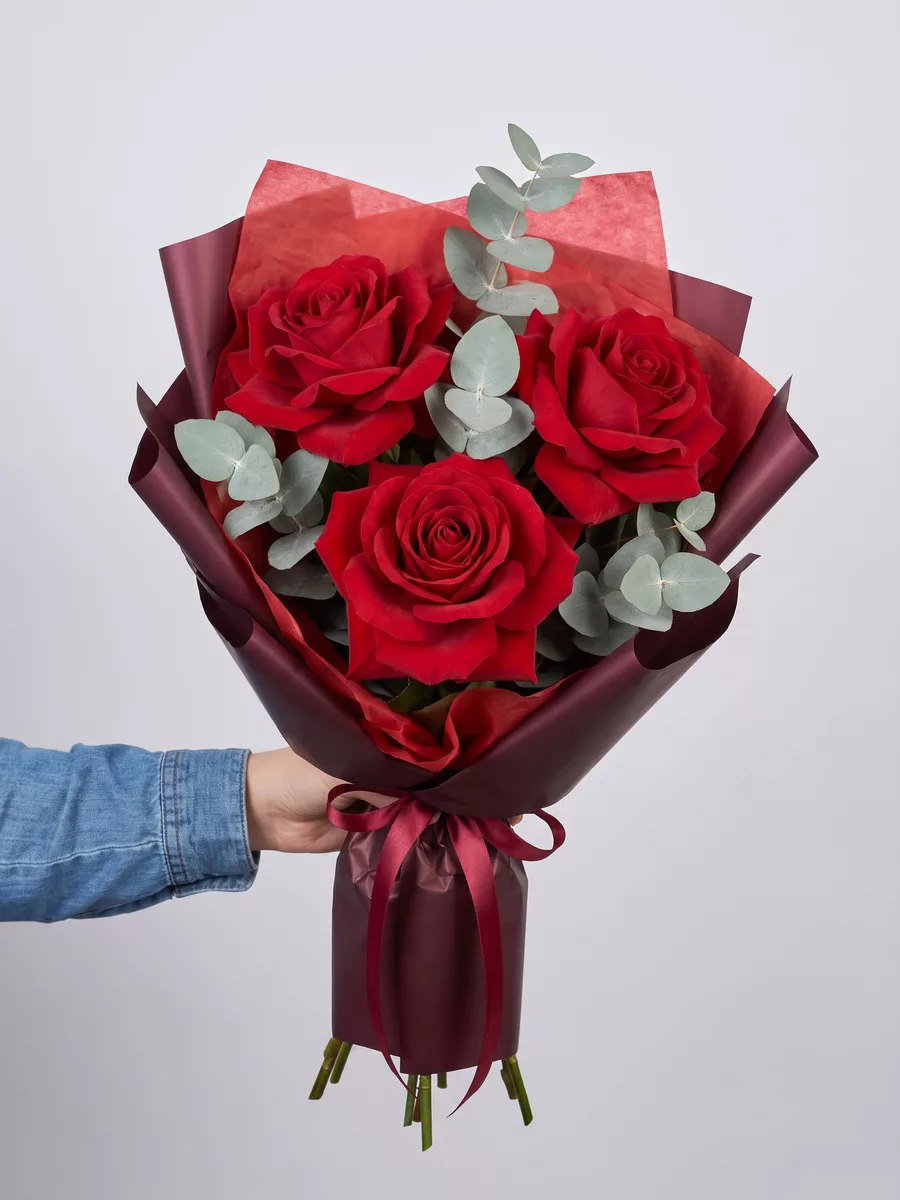
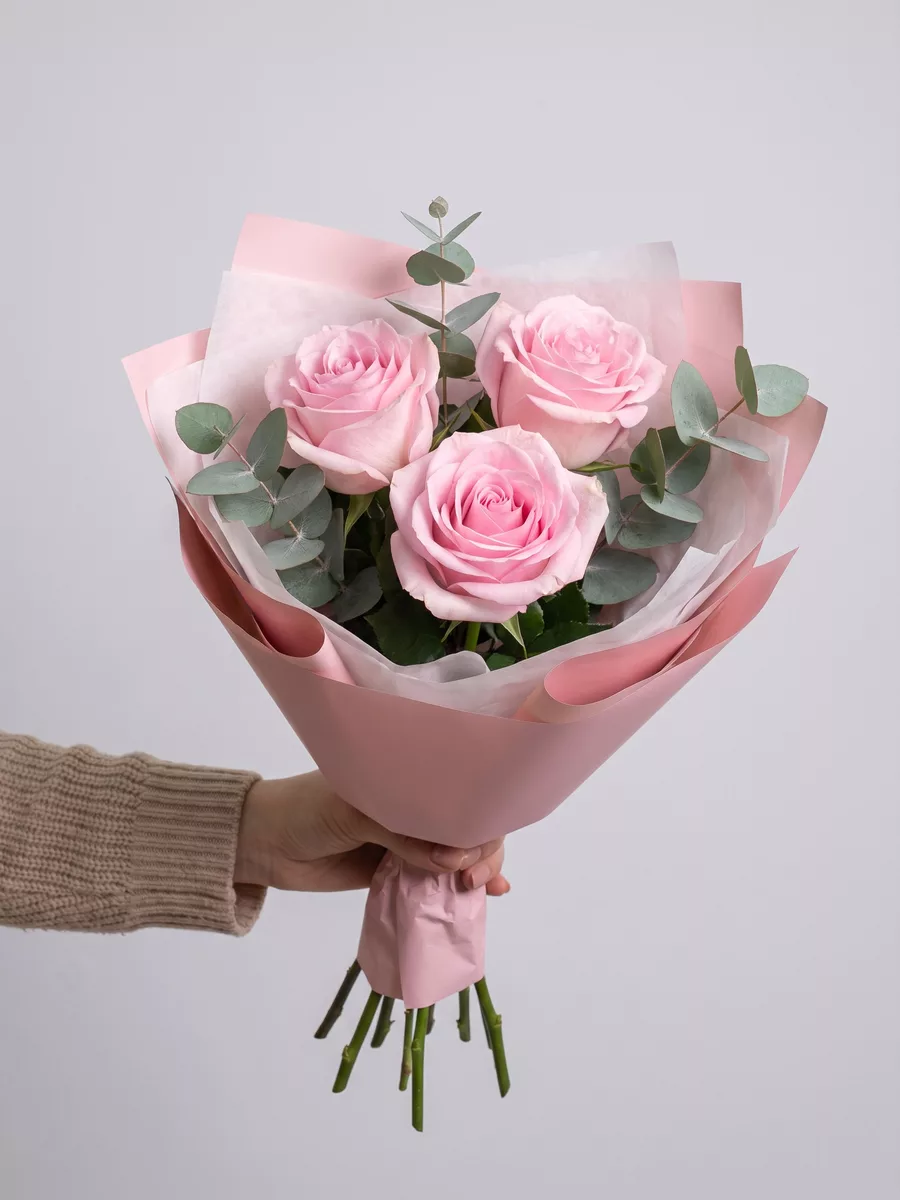
Choosing the Right Flowers for the Person, Not Just the Occasion
Before you think about varieties, think about the recipient. A grandmother in Shebekino who keeps a traditional Russian home will likely treasure a lush, classic arrangement — think garden roses in cream or blush, accented with alstroemeria and eucalyptus. A younger woman celebrating a birthday might love something bolder: deep burgundy peonies in season, or a sculptural arrangement of protea and anthuriums that she has probably never received before. The flowers should feel chosen for her, not picked from a generic list.
For men — and yes, flowers for men are entirely normal in Russian culture — sunflowers carry a particular warmth and directness that lands well. A generous bundle of sunflowers with some greenery and a few spray chrysanthemums reads as cheerful and uncomplicated. It does not need to be fussy to be meaningful.
Children respond to colour above everything else. Bright gerberas in mixed shades, tulips in spring, or a small arrangement with ranunculus in orange and yellow will delight a child far more than a sophisticated monochrome bouquet. If you are sending to a family, consider a design that has visual energy and does not look like it belongs only in a formal living room.
One principle that experienced florists return to constantly: a bouquet that suits the recipient's personality will always outlast a bouquet that merely fits the occasion. Ask yourself what this person's home looks like, what colours they wear, whether they prefer things simple or abundant. That answer will guide your choice better than any seasonal catalogue.
Seasonal Timing and What Is Actually Fresh When You Order
Russia's flower market is heavily import-dependent, so many varieties are available year-round regardless of local season — roses, carnations, chrysanthemums, and lilies come primarily from Ecuador, Colombia, Kenya and the Netherlands and can be sourced in any month. But seasonal availability still matters for certain flowers, and knowing this saves you from disappointment.
Peonies, which are enormously popular in Russia, have a genuine peak season from late May through June. Outside that window they become harder to source and far more expensive; the quality also drops noticeably. If you want peonies for a summer birthday, June is the sweet spot. Tulips are at their best and most affordable from February through April, which is why they dominate around International Women's Day on the eighth of March — the single biggest flower-giving date in the Russian calendar.
Summer in Shebekino brings heat that is genuinely challenging for cut flowers. Arrangements delivered in July or August need to be hardy: roses, alstroemeria, and chrysanthemums hold up well; sweet peas and anemones do not. If you are sending in warm months, ask for varieties with good vase life and make sure the recipient knows to place the flowers away from direct sunlight and any air conditioning vent that blows warm air.
Winter deliveries face the opposite challenge. Flowers can freeze during the last stretch of outdoor transport. Packaging matters enormously: a well-wrapped bouquet in insulating paper survives a brief cold exposure, but anything left on an unheated doorstep for more than a few minutes in minus-twenty weather will suffer. Coordinate so someone is home to receive the delivery.
Budget Ranges and What Each Level Looks Like in Practice
Sending flowers internationally always involves a currency question. You will be paying in roubles or having the equivalent charged to your card, and exchange rates shift. Rather than quoting specific figures, it helps to think in tiers and understand what each tier actually delivers in terms of volume, variety and presentation.
At the entry level, you are looking at a modest but genuinely fresh bouquet — perhaps seven to nine stems of a single variety like roses or chrysanthemums, wrapped simply. This is perfectly appropriate for a thank-you, a get-well gesture, or a small birthday acknowledgement. It should never feel like a compromise; a tight bundle of nine perfect garden roses in a single colour is elegant and classic.
The mid-range opens up considerably. You can combine two or three varieties, add textural greenery like ruscus or pittosporum, and move into a proper mixed arrangement. This tier suits birthdays, anniversaries and any occasion where you want the recipient to feel genuinely celebrated. A combination of spray roses, lisianthus and alstroemeria in complementary tones is a reliable choice that photographs beautifully and lasts well.
At the higher end, you are working with premium roses — varieties like Explorer or Avalanche in large heads — alongside statement flowers such as orchid stems, peonies in season, or calla lilies. These arrangements have real presence in a room. They suit significant anniversaries, milestone birthdays, or moments when you want the flowers to serve as a centrepiece rather than simply a gift. Adding a vase or a small accompanying gift is common at this level and feels natural rather than excessive.
How to Place an Order from Outside Russia Without Confusion
The practical mechanics of ordering from abroad are simpler than many people expect, but a few specific points prevent the most common friction. First, the delivery address needs to be complete and in a format the courier can use. Russian addresses follow a specific order: city, street, building number, apartment number. If the recipient lives in a multi-entrance building — which is common in Russian residential blocks — the entrance number and floor are helpful additions. A missing apartment number or entrance number is the single most frequent cause of delayed deliveries.
Payment from abroad typically goes through international card processing. Most major cards are accepted, though some Russian payment systems have restrictions following 2022. Check at checkout which cards are supported; Visa and Mastercard issued outside Russia may have varying acceptance depending on the issuing bank's policies. If you encounter an issue, contacting the shop directly by email or messenger before the order date gives time to find a solution.
The message card is worth thinking about carefully. If you write your message in English, it will be delivered as written — the recipient will receive it in English. If you want the message in Russian and do not speak the language, keep it short and use a translation tool for a simple sentence; florists can sometimes assist but should not be relied upon to translate lengthy personal notes. A message like "With love from [name], thinking of you" translates cleanly and arrives with full warmth intact.
Confirm the recipient's phone number when ordering. The courier will call ahead in most cases, and a reachable number prevents a failed delivery.
Russian Flower Customs an International Sender Should Understand
Russia has a few flower customs that differ enough from Western norms to be worth knowing before you order. The most important is the rule about even and odd numbers of stems. In Russian tradition, even numbers of flowers are associated with mourning and are given at funerals. When you send flowers to a living person for any celebratory or affectionate reason, the bouquet should contain an odd number of stems: five, seven, nine, eleven, and so on. Reputable florists follow this automatically, but if you are specifying a custom quantity, keep this in mind.
The eighth of March — International Women's Day — is treated in Russia as one of the most significant gift-giving occasions of the year, far more so than in most Western countries. Every woman in a man's life receives flowers: mothers, grandmothers, colleagues, teachers, friends. If you are sending around this date, order well in advance; delivery windows fill up quickly and the demand across Russia is enormous for the week surrounding the holiday.
White flowers carry no particular negative association in Russia the way they might in some East Asian cultures. White roses, white lisianthus, and white tulips are all perfectly appropriate for joyful occasions. Red roses do carry a romantic connotation, so sending a large red rose bouquet to a colleague or a grandmother might feel slightly awkward — softer tones like blush, peach or yellow are more universally neutral.
Finally, presenting flowers without removing the wrapping paper entirely is normal. In Russia, bouquets are often kept partly wrapped in the decorative paper as part of the aesthetic. The recipient will unwrap as they choose.
Keeping the Flowers Fresh After Delivery: What to Tell the Recipient
A beautiful bouquet deserves a long life, and the care taken in the first hour after delivery determines most of what follows. Because the recipient in Shebekino may not be expecting flowers or may not know the basics, it is worth including simple care instructions with your order — or sending a quick message yourself.
The first step is always a fresh diagonal cut on each stem, about two centimetres from the bottom, made with a sharp knife rather than scissors. Scissors can crush the stem's vascular tissue and reduce water uptake. The cut should happen while the stem is submerged in water if possible, or immediately before placing it in the vase. This single step extends vase life by several days for most varieties.
Water temperature matters more than most people realise. Room-temperature water is suitable for most flowers. Tulips are an exception — they prefer cool water and will open very quickly in warm conditions. Roses and chrysanthemums are tolerant of a range of temperatures but benefit from cool overnight storage if the room is warm.
The vase location is critical in Shebekino's summer heat. Keep flowers away from south-facing windowsills, away from radiators in winter, and away from fruit bowls — ripening fruit emits ethylene gas, which accelerates petal drop in roses and carnations noticeably. A spot with indirect light and stable temperature is ideal.
Change the water every two days and re-cut the stems each time. Remove any leaves that fall below the waterline, as they decompose and cloud the water with bacteria. With this routine, roses should last seven to ten days, chrysanthemums up to two weeks, and alstroemeria ten days or more.
Sending flowers to Shebekino from abroad is a genuinely achievable gesture when you plan around the time zone, the season, and the person waiting at the other end. The distance between you and the recipient does not diminish what fresh flowers communicate — it often makes the arrival more moving, precisely because it required effort across borders. Choose varieties that suit the weather and the person, get the address details right, include a message in whatever language feels most like you, and let the flowers do the rest.
Frequently asked questions
Does Shebekino's location near the Ukrainian border affect whether my order can be delivered?
Delivery to Shebekino is possible and we complete orders there regularly. The city's geography means logistics require careful routing, and lead times can occasionally be slightly longer than for larger Russian cities. Building in an extra day when you place the order is sensible, particularly for time-sensitive occasions like birthdays or anniversaries.
Which flowers survive the journey to Shebekino in winter without arriving frost-damaged?
Roses, chrysanthemums and carnations handle cold transit well when packed correctly with insulating wrap. Tropical stems like orchids and anthuriums are more vulnerable to temperature shock below minus ten. In deep winter we recommend a compact, dense arrangement rather than a loose one — tighter bouquets retain warmth better during the final delivery leg from vehicle to door.
Can I include a message card in a language other than Russian?
Yes. You can write your message in English, German, French or another language and we print it as supplied. Many recipients in Shebekino appreciate receiving a card in the sender's own language — it makes the personal distance feel present rather than translated away. If you would like a Russian version alongside it, note that in your order comments.
What should I choose if I want the bouquet to feel appropriate for a small city rather than a showy metropolitan arrangement?
Lean toward classic combinations — garden roses with greenery, mixed seasonal stems, or a single-variety bouquet in a soft colour. Elaborate sculptural arrangements can feel out of place in a traditional home. A well-proportioned bouquet in blush, white or warm yellow reads as generous and thoughtful without overwhelming a smaller living space.
How do I know the flowers were actually delivered if I am in a different time zone and cannot follow up easily?
We send a delivery confirmation once the order reaches the recipient, so you do not need to stay awake waiting. If a delivery attempt is unsuccessful — for example the recipient is out — we contact you with options rather than leaving the bouquet unattended. That confirmation comes to the email address you provide at checkout.
Ready to send flowers?
Pick the city, choose the bouquet, and a local florist takes it from there.
Choose a city →