Sending Flowers to Sim from Abroad: Your Practical Florist's Advice
You are sitting in Berlin, Toronto, or Dubai, and someone you love is celebrating a birthday in Sim — a quiet town in the Chelyabinsk region of the southern Urals. You want flowers on their doorstep, fresh and beautiful, without the usual anxiety of not knowing whether they actually arrived. This article walks you through everything a sender outside Russia needs to think about: timing, seasonal choices, Russian gifting customs, and the small details that turn a delivery into a real moment.
Understanding Sim and Why Location Matters for Freshness
Sim is a small town in the Chelyabinsk region, nestled in the southern Ural Mountains at around 500 metres above sea level. It is not a major city, which means the logistics of flower delivery require a florist with genuine reach into smaller Russian towns rather than just the large urban centres. When you order from abroad, the flowers travel from a refrigerated preparation point and are dispatched by courier directly to the recipient's address — no waiting at a collection point, no confusion for someone who may not expect a parcel.
The Ural region experiences sharp continental seasons. In January and February, outdoor temperatures regularly fall to minus 20 degrees Celsius or colder. In July and August, they can climb above 30 degrees. Both extremes matter for flowers. In deep winter, blooms must be wrapped in insulating sleeve packaging to survive even a short walk from the van to the front door. In summer heat, the window between leaving the cooler and reaching the vase is shorter than most senders realise.
This is not a reason to hesitate — it is a reason to choose a florist who knows how to handle those conditions. The right packaging, the right departure time, and the right variety selection all compensate for the climate. Knowing that Sim has these characteristics helps you ask the right questions and set realistic expectations about which flowers will look their best on arrival.
Bouquets we can deliver

What Russian Flower Gifting Customs Mean for Your Order
If you grew up outside Russia, a few local customs around flowers are worth knowing before you order. The most important one: always send an odd number of stems. Even numbers of flowers are traditionally associated with mourning and are brought to cemeteries. A bouquet of twelve roses, however beautiful it looks in a photograph, will feel wrong to a Russian recipient. Eleven, thirteen, or fifteen — these are the numbers that signal celebration and affection. Your florist should handle this automatically, but it is worth double-checking when you place the order.
Russians tend to appreciate generous, full bouquets rather than minimalist arrangements. A single stem is a Western aesthetic that does not carry the same warmth in Russian gifting culture. If you are sending for a birthday, anniversary, or professional milestone, a bouquet that looks abundant and well-composed will land better than something spare and architectural. Think layers: a central flower, supporting blooms, and greenery that gives the whole thing depth.
Colour choices also carry some weight. Red roses are romantic and universally understood. White flowers are elegant and work well for congratulations or new beginnings — a graduation, a new job, a newborn. Yellow flowers were once considered unlucky in Soviet-era superstition, though this feeling has softened considerably among younger generations. If you are sending to someone older or more traditional, it is still safer to avoid a purely yellow bouquet. A florist who knows the region will guide you through these nuances without making the process feel complicated.
Choosing Flowers for the Person, Not Just the Occasion
Before you think about which varieties hold up best in transit, think about the person receiving the flowers. A grandmother in Sim who tends a dacha garden every summer will respond differently to a bouquet than a young professional who has just moved into a new flat. The first might love garden-style arrangements with lisianthus, alstroemeria, and eucalyptus — things that feel close to nature. The second might appreciate something more structured: spray roses, waxflower, and a bold central peony or ranunculus.
For romantic occasions, garden roses such as David Austin varieties carry a soft, layered look that photographs beautifully and feels genuinely luxurious. Standard roses — long-stemmed, classic, in red or deep pink — remain the most recognisable symbol of love and are never wrong for a partner or spouse. For a mother's birthday, consider mixing chrysanthemums with alstroemeria and some seasonal greenery: these are flowers that last well and feel warm rather than formal.
For congratulations — a promotion, a new baby, an anniversary — freesia adds a scent that fills a room within hours of the bouquet opening up. Scent is something photographs cannot capture, and a recipient in Sim who opens the door to a bouquet of freesia and white roses experiences something immediate and physical that goes beyond the visual. When you are ordering from thousands of kilometres away, choosing flowers with fragrance is one of the most powerful things you can do to close that distance.
Timing Your Order Across Time Zones
Sim operates on Yekaterinburg Time, which is UTC plus five hours. If you are ordering from London, that is a seven-hour gap in winter and six in summer. From New York, it is ten or eleven hours. From Dubai, it is one hour behind Sim. These differences matter because flower delivery in Russia typically operates between approximately nine in the morning and nine in the evening local time. An order placed at eleven at night in London is actually early morning in Sim — well within the preparation window for a same-day delivery.
The safest approach is to place your order at least four to six hours before you want the flowers to arrive. This gives the florist time to compose the bouquet, pack it correctly for the current temperature, and dispatch the courier. For landmark moments — a birthday morning, an anniversary dinner — specify the delivery window when you order. Most florists will offer morning, afternoon, or evening slots. A bouquet that arrives at eight in the morning on a birthday creates a completely different feeling than one that arrives at six in the evening.
If the occasion falls on a Russian public holiday, order a day in advance. Russian public holiday calendars differ from Western ones — the New Year holiday period, for example, runs from January 1st through January 8th, and demand for flowers is very high during that window. International Women's Day on March 8th is arguably the single busiest flower day in Russia. Planning even two days ahead for these dates is not excessive — it is simply sensible.
Which Varieties Travel Best to the Ural Region
Not every flower is equally suited to a long delivery chain in a continental climate. Some varieties are naturally robust; others are sensitive to even small temperature fluctuations. Knowing the difference helps you make a choice that still looks fresh when the door opens.
Roses are the most reliable option year-round, provided they are properly hydrated before dispatch. Chrysanthemums are exceptionally hardy and hold their shape and colour well even after several hours in transit — they are underrated for long-distance gifting. Alstroemeria is another strong choice: the buds continue to open after delivery, meaning the bouquet looks better on day three than it did on day one. Carnations, despite their unfashionable reputation in some Western markets, are genuinely long-lasting and travel without complaint.
Flowers that require more care in transit include hydrangeas, which wilt quickly if they lose moisture, and tulips, which continue to grow after cutting and can become floppy if not arranged in a tall, supportive vase. In summer, peonies are glorious but have a shorter vase life than roses — five to seven days at most. In winter, they are typically not available fresh from domestic sources and must be imported, which adds cost and handling time.
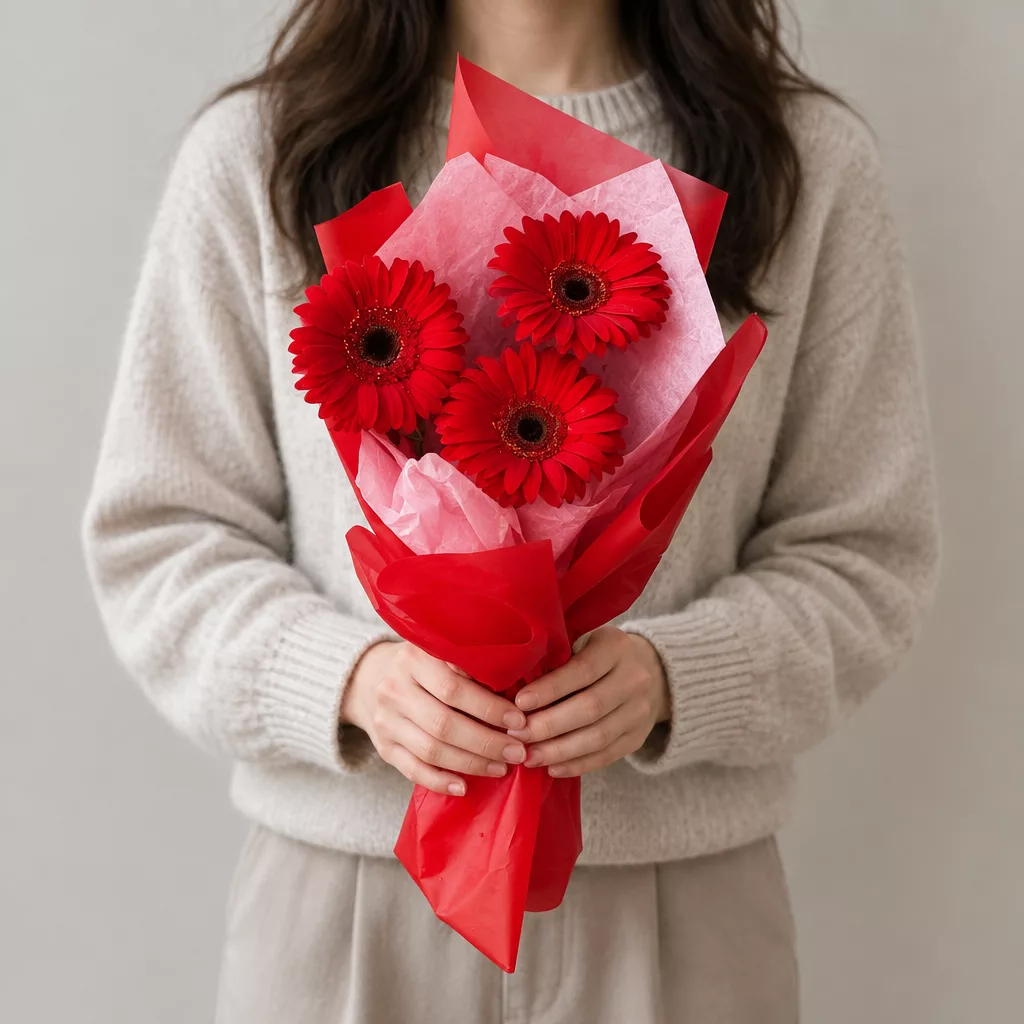
For winter orders specifically, gerberas are a cheerful and resilient choice that adds colour during the grey Ural months. Lisianthus holds beautifully in cold conditions and has a delicate, ruffled appearance that looks far more expensive than it is. When in doubt, a mixed bouquet built around roses with alstroemeria and eucalyptus is the most dependable combination in any season.
How to Write a Message That Lands Across the Distance
The card that accompanies the flowers is the part of the delivery that the recipient will read more than once. It deserves more thought than a quick line typed into a text box. When you are sending from abroad, the message also carries the weight of the physical distance — it is your voice arriving with the flowers.
Keep the message personal and specific. Instead of writing 'Happy Birthday, thinking of you,' try something that references a shared memory or names something you admire about the person. 'I remember how you always made the kitchen smell like pies on cold days — I hope these flowers make your flat feel just as warm today.' A message like that costs nothing extra and means everything.
If you are writing in English and the recipient reads Russian, consider writing a line in both languages — or asking someone to help you with a short Russian phrase. Even a simple 's dnyom rozhdeniya' (s dnyom rozhdeniya — Happy Birthday) written in the Latin alphabet shows effort that Russian recipients genuinely notice and appreciate. You do not need to be fluent; you need to show that you tried.
For professional or formal occasions — congratulating a colleague on a milestone, thanking someone for hospitality — keep the tone warm but measured. Avoid overly effusive language, which can feel awkward in a Russian professional context. A clear, sincere sentence or two is more powerful than three paragraphs of superlatives. The flowers do the emotional work; the card anchors the meaning.
Caring for the Bouquet After Delivery: What to Tell the Recipient
When you order flowers for someone in Sim, you are also, in a small way, responsible for what happens after the door closes. Passing on a few simple care instructions — either in the card or in a message — means the bouquet lasts as long as it should rather than wilting within two days from avoidable mistakes.
The first step after receiving a bouquet is to trim the stems at an angle under running water and place them immediately in a clean vase with fresh, cool water. Warm water shortens vase life noticeably. The diagonal cut increases the surface area available for water uptake, which is particularly important for roses and chrysanthemums. Any leaves that would sit below the waterline should be removed, as they decay quickly and cloud the water.
Keep the vase away from direct sunlight, radiators, and fruit bowls. Ripening fruit releases ethylene gas, which accelerates the ageing of flowers — a bowl of apples on the kitchen table can shorten a bouquet's life by two or three days. In a Sim apartment in winter, the heating is often quite intense, so positioning the vase near a window on the cooler side of the room helps considerably.
Change the water every two days and re-trim the stems each time. With this care, roses and chrysanthemums will last seven to ten days. Alstroemeria can go twelve to fourteen days as the buds continue to open in sequence. Lisianthus holds for about a week. Telling the recipient these simple things — perhaps in a follow-up message after the delivery is confirmed — turns a one-day gift into something that stays beautiful for nearly two weeks.
Sending flowers to Sim from abroad is not complicated once you understand the geography, the climate, and the customs that shape how flowers are received in Russia. Choose varieties that travel well, order with the time difference in mind, follow the odd-number rule, and write a card that says something real. The distance between you and the person in Sim does not disappear when the flowers arrive — but for a moment, standing in a doorway holding a fresh bouquet, it feels considerably shorter.
Frequently asked questions
Can I order flowers for Sim if I do not speak Russian?
Yes. Turboflora's ordering process works in English, and you can write your card message in any language. If you want a Russian phrase included, simply note it in the order comments and we will ensure it is written correctly on the accompanying card. The recipient's address should be provided in Russian transliteration if possible, which helps the courier navigate without delays.
How far in advance should I order for a birthday in Sim?
For a standard weekday delivery, four to six hours before your desired delivery time is usually sufficient. For major Russian holidays such as March 8th or the New Year period, order one to two days ahead. If you want a specific morning delivery — flowers waiting when the recipient wakes up — placing the order the evening before your own local time is the safest approach given the time zone difference.
Why should I avoid even numbers of flowers when sending to Russia?
In Russian tradition, even-numbered bouquets are associated with mourning and are typically brought to graves or given at funerals. An odd number — seven, nine, eleven, fifteen — signals celebration and goodwill. This custom is widely observed across generations and regions, including the Ural area. Turboflora always composes bouquets in odd numbers for gifting occasions, but it is worth confirming when you place your order.
What happens to the flowers if the recipient is not home at delivery?
Our courier will contact the recipient by phone before arriving. If there is no answer, we will coordinate a second delivery attempt or leave the bouquet with a neighbour or building concierge as agreed with the recipient. We always confirm delivery details at the time of order so that the recipient is expected and the flowers are not left unattended in temperature extremes, particularly important during Sim's cold winters.
Which flowers are available in Sim during winter months?
In winter, the most reliably available and well-travelling options are roses, chrysanthemums, alstroemeria, carnations, gerberas, and lisianthus. Peonies and some tropical varieties are available but come via import, which affects freshness. We recommend building winter bouquets around roses or chrysanthemums as the primary flower, with alstroemeria and eucalyptus for fullness and texture. These combinations look generous and hold up well in cold transit conditions.
Ready to send flowers?
Pick the city, choose the bouquet, and a local florist takes it from there.
Choose a city →