Sending Flowers to Sovetsky from Abroad? Read This First
You are somewhere outside Russia — maybe in Berlin, Dubai, or Toronto — and someone you care about is in Sovetsky, a town in the Khanty-Mansiysk Autonomous Okrug of western Siberia. You want to send them flowers, but you are not sure how distance, time zones, Russian customs, or Siberian winters fit into that plan. This article walks you through everything a sender abroad needs to think about, from choosing the right bouquet for the occasion to making sure the roses actually open on the kitchen table rather than wilting in a cold hallway.
Understanding Sovetsky: Climate, Distance and What That Means for Your Order
Sovetsky sits in the taiga belt of western Siberia, roughly 1,000 kilometres northeast of Yekaterinburg. Winters are long and genuinely cold — January temperatures regularly drop below minus 25 degrees Celsius — and even spring arrives later than in European Russia. This matters for flowers because cold air is one of the fastest ways to damage delicate petals. A bouquet of garden roses or ranunculus left on an unheated porch for even ten minutes at those temperatures will show bruising and translucent patches within hours.
When you order from abroad through Turboflora, the flowers travel from Saint Petersburg with temperature-controlled logistics, and the local delivery leg is handled carefully with insulated packaging. That said, you as the sender can help by giving a complete indoor delivery address — an apartment number, a floor, a working intercom code — so the courier does not have to leave the bouquet exposed outside while waiting.
Sovetsky is also two hours ahead of Moscow standard time, which is already three hours ahead of Central European Time and six hours ahead of Greenwich Mean Time. When you place an order at noon in London, it is already early evening in Sovetsky. Keeping this arithmetic in mind prevents the common mistake of ordering same-day delivery when the recipient's day is nearly over. Planning one day ahead from abroad is almost always the smarter move.
Bouquets we can deliver

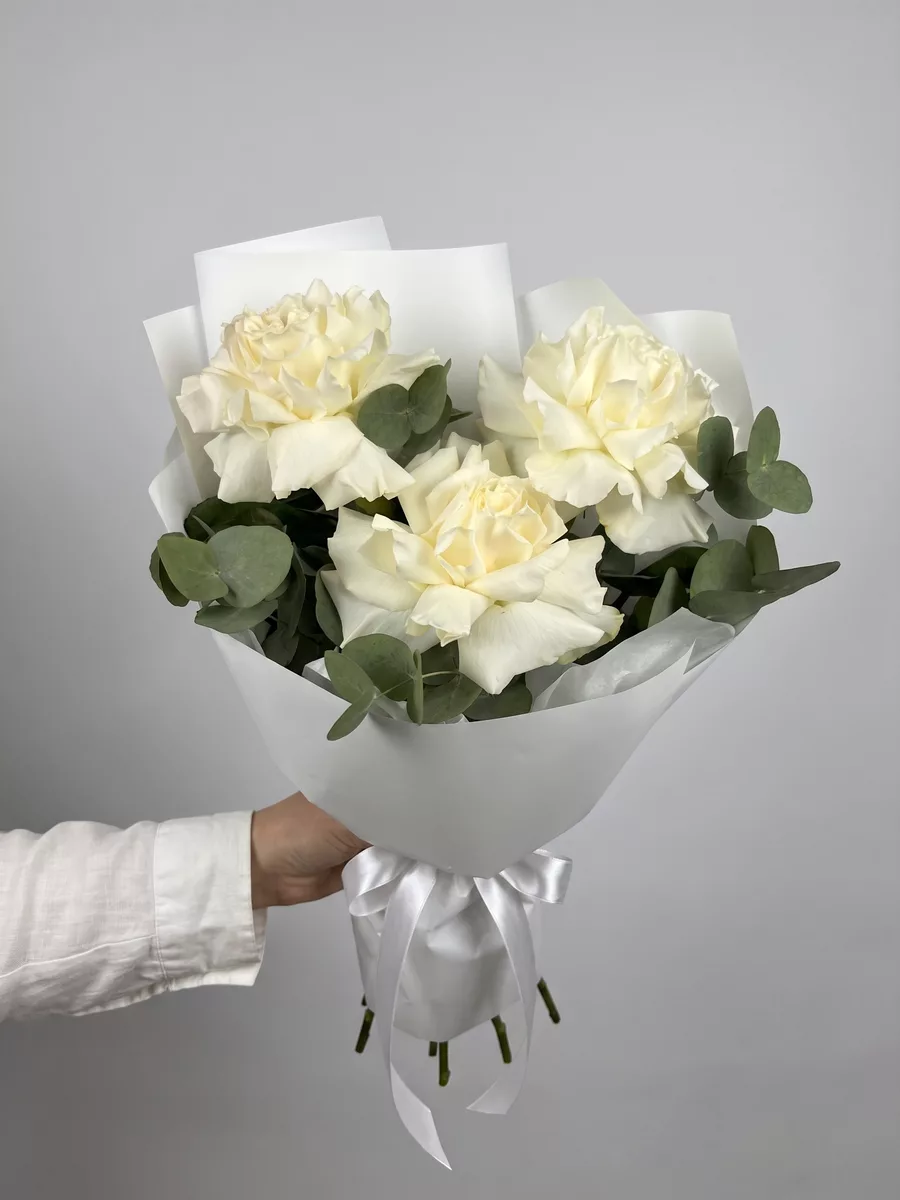
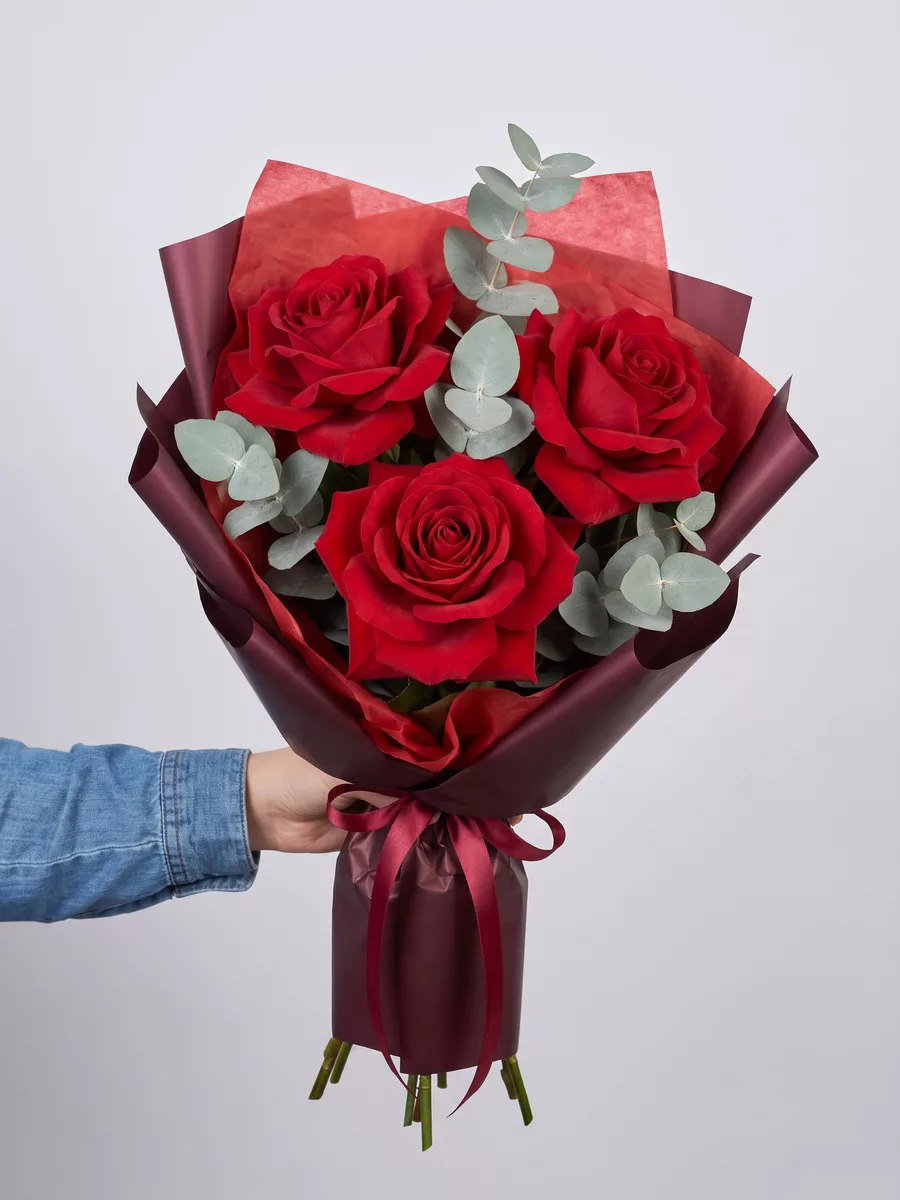
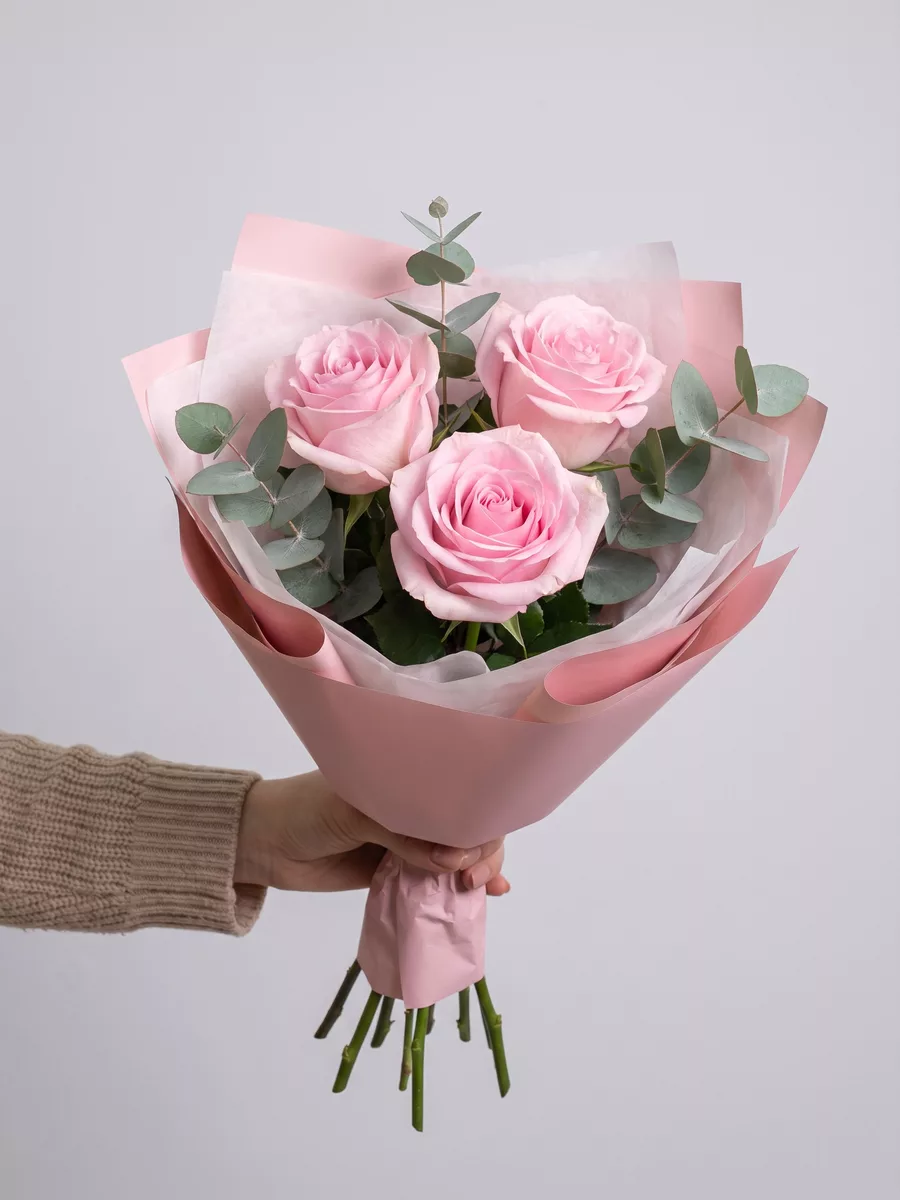
Choosing Flowers for the Person, Not Just the Occasion
Before you think about colours or budget, think about the person receiving the bouquet. In Russian gift culture, flowers carry a quiet emotional weight that goes beyond decoration. A bouquet handed to a colleague is read differently from one left at a neighbour's door, and the same chrysanthemum that looks cheerful in one context can feel impersonal in another. Ask yourself what you want the recipient to feel when they open the door: surprised and delighted, quietly moved, celebrated, or simply reminded that someone far away is thinking of them.
For a woman receiving flowers from a partner abroad, lush and romantic compositions work well — garden roses in blush or deep red, combined with eucalyptus and wax flower, give a sense of generosity and care that reads clearly even without a long note. For a parent or grandparent, something softer and more traditional tends to land better: spray carnations, alstroemeria, or solidago in warm yellows and oranges feel familiar and welcoming rather than showy.
For a friend celebrating a birthday or a new job, you have more creative freedom. Bright gerberas, sunflowers, or a mixed seasonal bouquet with lisianthus and statice say congratulations without feeling formal. In Russia, odd numbers of flowers in a bouquet are the standard for celebratory gifts — this is one custom worth knowing, and Turboflora's florists follow it automatically, so you do not need to count or specify.
Seasonal Varieties That Travel Well to Siberia
Not every flower handles a long journey in cold conditions equally well. Roses are among the most reliable — particularly varieties with tightly cupped heads like Avalanche, Explorer, or Mondial, which open slowly and hold their shape through transit. Alstroemeria is another excellent traveller: its stems are sturdy, its petals resist bruising, and a single bunch can last two weeks in a vase when cut properly. Chrysanthemums, both spray and single-stem varieties, are almost indestructible in transit and arrive looking fresh even after significant distances.
Delicate flowers need more thought. Tulips, for example, are beautiful and very popular in Russia — they are practically the national flower of spring celebration — but they move quickly once they warm up. In winter months they travel well because the cold actually slows them down, but in May or June they can open fully within twelve hours of delivery. If you are sending tulips to Sovetsky in warmer months, request that the florist send them in bud stage so the recipient gets to watch them open.
Lilies are another case worth noting. Oriental lilies like Stargazer or Casa Blanca have a strong fragrance that some people find overwhelming in a small apartment, which is common in Sovetsky as in most Russian towns. If you are not certain about the recipient's preferences, ask for Asiatic lily varieties instead — they are scentless, brightly coloured, and just as striking in a vase. Seasonal greenery like ruscus, pittosporum, and leather leaf adds volume and freshness to any composition and holds up beautifully in cold-weather delivery.
Navigating Time Zones and Delivery Windows from Abroad
The time zone gap is the single most common source of confusion for international senders. Sovetsky operates on Yekaterinburg Time, which is UTC plus five. That means if you are placing an order from the United States East Coast, you are working across an eight-hour gap. A morning order placed at nine in New York arrives in the system when it is already five in the afternoon in Sovetsky — workable, but leaving little margin for same-day delivery.
Turboflora's ordering system accepts orders around the clock, and you can specify a delivery window rather than an exact time. This flexibility is especially useful when you cannot predict exactly when the recipient will be home. In Russian residential culture, many people work standard office hours and are home by seven in the evening, so a delivery window of five to eight in the evening local time tends to work well for weekday surprises.
For important dates — a birthday, an anniversary, the eighth of March — place your order at least twenty-four hours in advance and ideally forty-eight hours ahead if you want to request a specific composition or colour palette. This gives the florists time to source exactly what you have in mind rather than working with whatever is on hand that morning. Include a note in your order about the time zone you are in if you have any questions about timing — the team is used to coordinating with senders from Europe, the Middle East, and further afield, and a quick clarification prevents misunderstandings before they happen.
Writing the Card: Language, Tone and Russian Customs
A handwritten card or a printed note tucked into the bouquet is expected in Russian flower culture — arriving without any message can feel slightly cold, as if the flowers were sent mechanically rather than with intention. You do not need to write in Russian. A sincere message in English, French, or any other language you share with the recipient is perfectly fine and often makes the gesture feel more personal and international.
If you would like to include a few words in Russian, some simple phrases go a long way. "S dnyom rozhdeniya" means happy birthday. "Ya skuchayu po tebe" means I miss you. "Spasibo za vsyo" means thank you for everything. Even phonetic approximations of these phrases on a card tend to delight Russian recipients because they show effort and warmth.
In terms of tone, Russian card culture tends toward sincerity over wit. A heartfelt two or three sentences lands better than a clever one-liner, especially for older recipients or formal relationships. Avoid anything that could read as ironic or ambiguous — tone is harder to read on paper than in conversation, and sincerity is never misunderstood.
Turboflora can print your message in the card exactly as you write it in the order notes, in any language using the Latin alphabet. If you write in Cyrillic in the notes field, that works too. Keep the message under one hundred words so it fits comfortably on a standard card without crowding — a brief, warm note is always more powerful than a long one that has to be squeezed onto the page.
Budget Ranges and What They Actually Look Like in the Vase
When you are ordering from abroad, it can be difficult to picture what a given price point produces in real terms. A modest budget in Sovetsky still buys something genuinely beautiful — this is not a city with inflated metropolitan pricing, and the flowers themselves are the same quality that Turboflora sends across Russia from Saint Petersburg.
At an entry-level spend, you are looking at a clean, well-composed mono-bouquet: seven stems of alstroemeria, or a dozen spray chrysanthemums in white and yellow, wrapped simply with a ribbon. This is not a compromise — a single-variety bouquet done well is a classic in Russian floral tradition and never reads as cheap if the stems are fresh and the wrapping is neat.
A mid-range budget opens up mixed compositions: roses combined with lisianthus and eucalyptus, or a garden-style arrangement with ranunculus, wax flower, and ruscus. These bouquets have more visual complexity and last well in a vase, which matters when the recipient lives alone and wants something to enjoy for a week.
At a higher spend, you can request specific varieties, larger stem counts, or premium additions like protea, orchid stems, or imported garden roses that are not always in standard rotation. You can also ask for a presentation box rather than a wrapped bouquet, which adds a sense of occasion to the unboxing moment. Whatever your budget, describe the person and the occasion in the order notes — the florists will use that information to make the best possible choices within your range.
Helping the Recipient Care for Their Flowers
Flowers sent from far away feel more meaningful when they last. The best thing you can do as a sender is include a few care instructions with the bouquet — either in your card message or as a separate note. Most people in Russia know the basics, but a gentle reminder never hurts, especially for recipients who do not often receive flowers.
The single most important step is recutting the stems at an angle as soon as the bouquet arrives, removing at least two centimetres from the bottom. This reopens the vascular tissue that closes during transit and allows the flower to drink properly. Stems should be cut under running water or submerged in a bowl if possible, which prevents air from entering the cut end.
Vase water should be changed every two days, and the vase itself rinsed each time to remove bacteria. Flowers last longest away from direct sunlight, radiators, and fruit bowls — ethylene gas released by ripening fruit accelerates petal drop in roses and tulips noticeably. In Sovetsky's dry indoor climate, which comes from central heating running most of the year, a light misting of the petals in the morning extends freshness by a day or two.
Roses and alstroemeria typically last seven to ten days with good care. Chrysanthemums can go two weeks. Tulips are shorter-lived at five to seven days but are so cheerful in that window that the brevity is forgivable. Lilies will continue to open bud by bud over the course of a week, which gives the recipient a changing display rather than a static one — a detail worth mentioning in your card so they know to look forward to it.
Sending flowers to Sovetsky from abroad is not complicated once you understand the geography, the time zones, and the small cultural details that make a bouquet feel genuinely thoughtful rather than transactional. The distance between you and the recipient is real, but a well-chosen, carefully timed bouquet closes that gap in a way that a message or a call simply cannot. Think about the person first, the occasion second, and the logistics third — and let Turboflora handle the cold Siberian air between the door and the vase.
Frequently asked questions
What flower varieties actually hold up during the final delivery leg in Sovetsky's climate?
Chrysanthemums, spray roses, alstroemeria, and carnations are the most resilient choices for Sovetsky winters. They tolerate brief cold exposure far better than garden roses, ranunculus, or tropical stems. If the occasion calls for something more delicate, order a day ahead so the courier can deliver during daylight hours when temperatures are slightly less punishing.
My recipient lives in a Sovetsky apartment block with an unreliable intercom — what should I do?
Call or message your recipient's neighbour, a family member, or the recipient themselves to arrange someone to meet the courier. Alternatively, leave a mobile number in the order notes. Couriers in smaller Siberian towns will make genuine efforts to complete delivery, but an exposed bouquet in a shared entryway in January will not survive long.
The person I am sending to is originally from another region of Russia — do Sovetsky florists still follow traditional Russian flower customs?
Yes. The assembled bouquets follow conventions common across Russia, including odd stem counts and colour choices appropriate to the occasion. Whether your recipient grew up in Sovetsky or moved there for work, receiving a correctly composed bouquet signals that the sender paid attention, which matters more than regional differences.
Can I describe the feeling I want the bouquet to express rather than naming specific flowers?
Absolutely, and florists often prefer it. Leaving a note in the order such as warm and cheerful for a birthday or quiet and sincere for a difficult moment gives the local florist room to work with what is freshest and most suitable that day. A bouquet built around an emotion usually looks more considered than one assembled from a strict checklist.
How do I work out the latest safe time to place an order from abroad so it arrives the same Sovetsky day?
Sovetsky is five hours ahead of Central European Time and eight hours ahead of Greenwich Mean Time. If your florist stops accepting same-day orders at six in the evening local Sovetsky time, that is one in the afternoon in Berlin or ten in the morning in London. When in doubt, order the evening before — it removes the time-zone arithmetic entirely.
Ready to send flowers?
Pick the city, choose the bouquet, and a local florist takes it from there.
Choose a city →