Sending Flowers to Stroitel from Abroad? Here Is What to Actually Expect
You are somewhere outside Russia — maybe in Berlin, Dubai, or Toronto — and someone you love is in Stroitel, a quiet town in the Belgorod region, waiting for a moment that feels special. You want flowers to arrive at their door, fresh and beautiful, without the usual anxiety of not knowing what is happening on the other side. This article is your honest briefing: timing, seasonal realities, Russian flower customs, and everything else that makes the difference between a delivery that lands perfectly and one that misses the mark.
Who Receives Flowers in Stroitel and What the Moment Means to Them
Stroitel is a modest, close-knit town, and flowers arrive there as something genuinely remarkable. For the person receiving them, a bouquet delivered to their door — especially one ordered from abroad — carries a very clear message: you thought of them specifically, you made an effort, and the distance between you did not stop you. That emotional weight is real, and it shapes how you should choose.
If you are sending to a mother or grandmother, warmth and abundance matter more than trend. Roses in deep red or soft peach, paired with lisianthus or alstroemeria, create the kind of fullness that feels like a proper gift rather than a token gesture. If the recipient is younger — a partner, a friend, a sibling — you have more room to play with texture and colour: ranunculus mixed with spray roses, or tulips in a gradient of shades.
For a colleague or a professional occasion, restraint is appreciated. A clean arrangement of white or cream flowers, perhaps freesia with eucalyptus, communicates respect without overstepping. Russian workplace culture values composure, and an over-the-top bouquet can feel awkward rather than generous in that context.
Think about where the flowers will land: a small apartment, a private house with a garden, an office. A tall arrangement works in a home with space; a compact, rounded bouquet travels better and sits more comfortably on a desk or kitchen table. The occasion matters, but so does the physical reality of the recipient's world.
Bouquets we can deliver

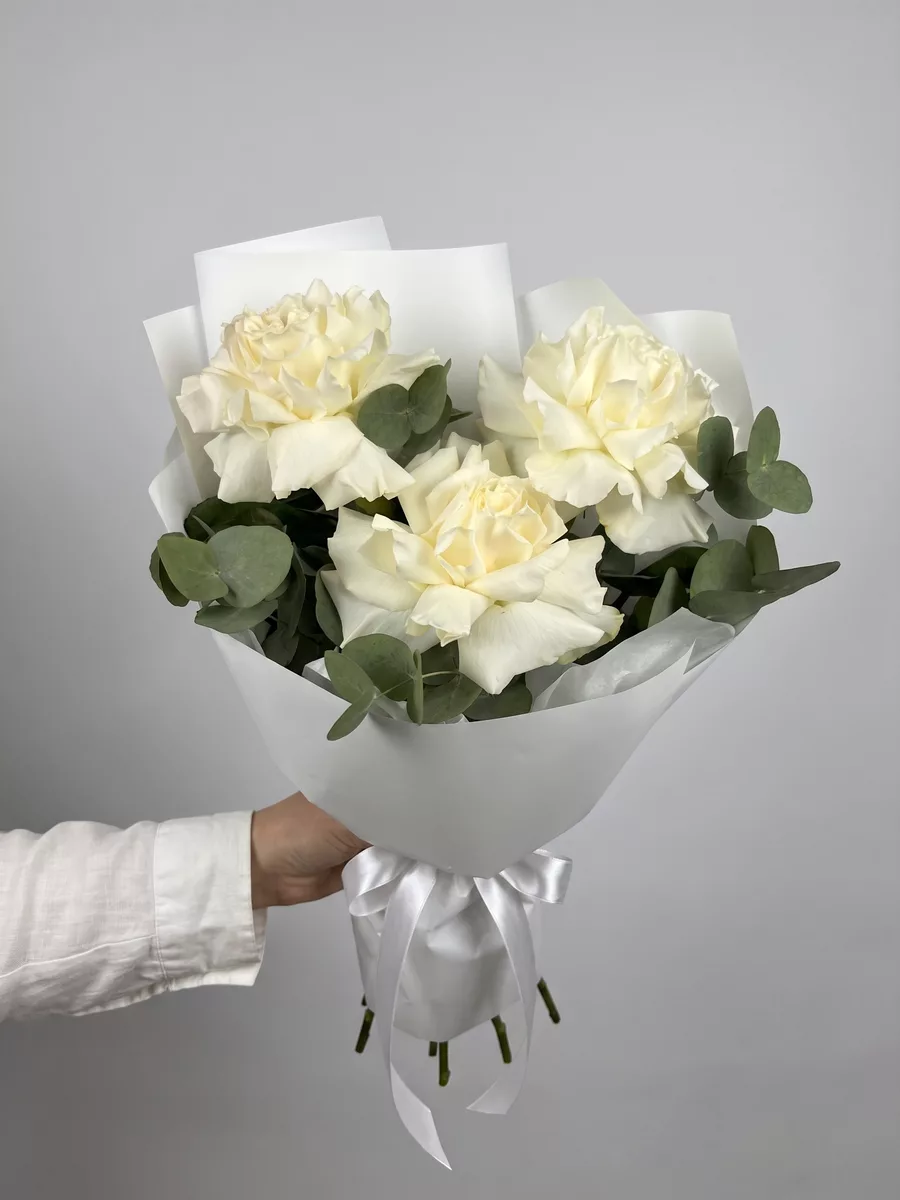
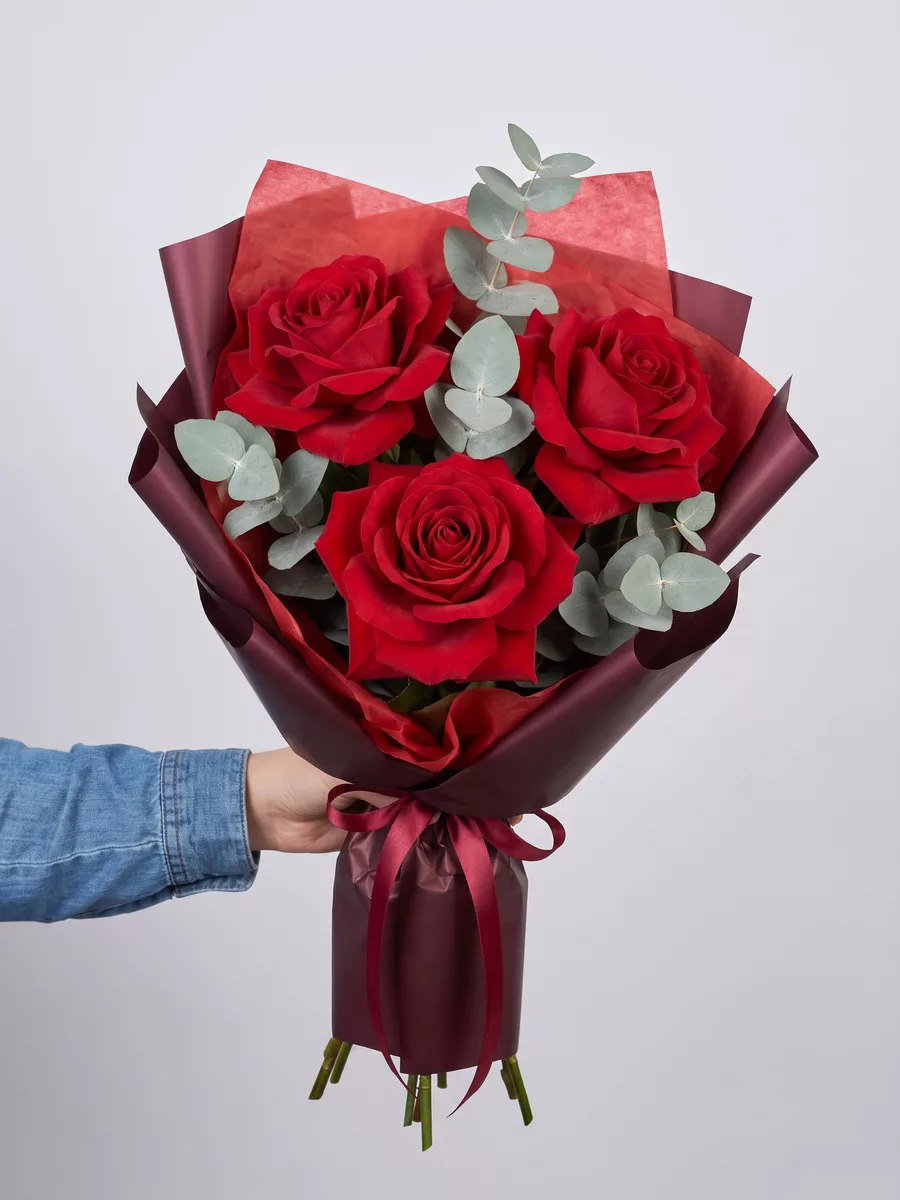
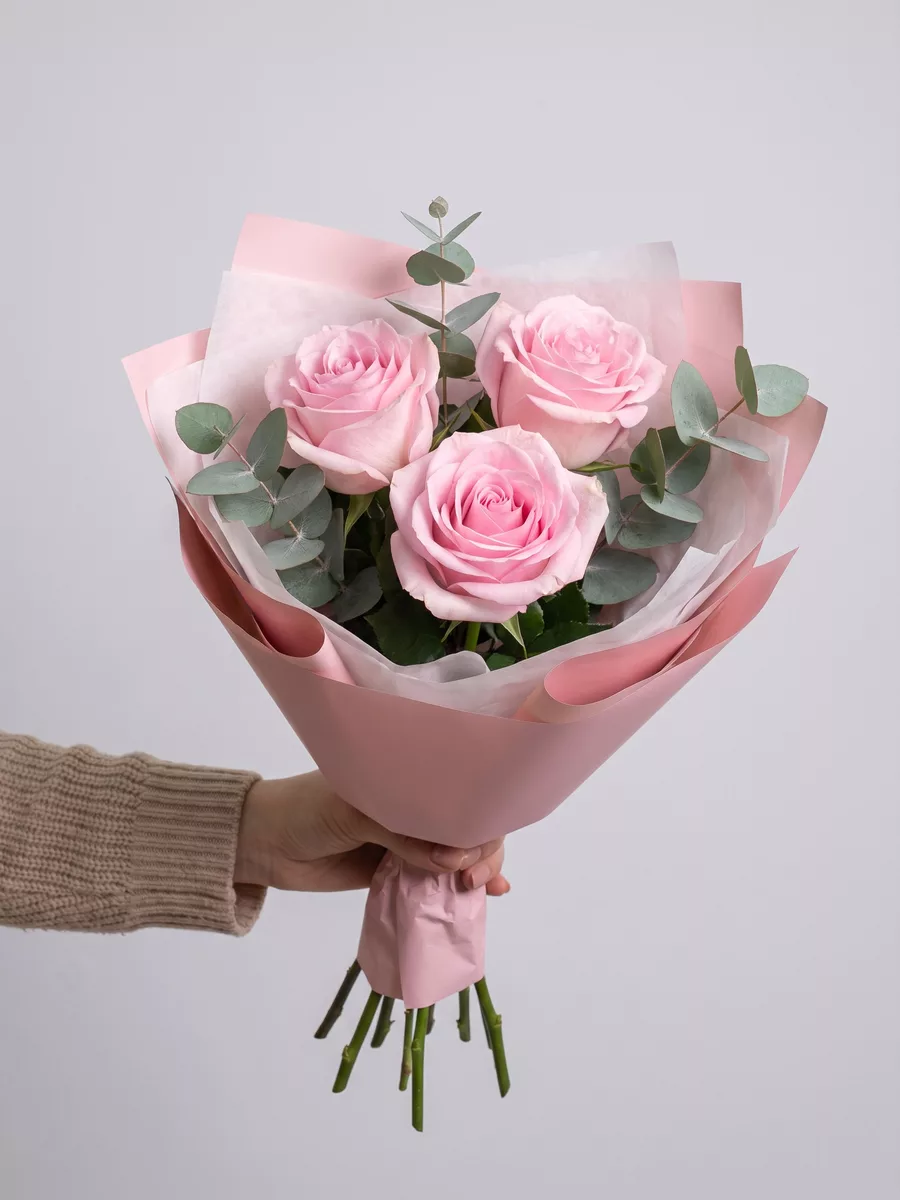
Understanding Russian Flower Customs Before You Order
If you have not sent flowers to Russia before, a few customs are worth knowing so your order feels right rather than accidentally awkward. The most important rule is the odd number: bouquets in Russia are always made with an odd number of stems — three, five, seven, nine, eleven, and so on. Even numbers of flowers are associated with mourning and are placed at graves. Any florist working properly in Russia will follow this automatically, but it is useful for you to understand why it matters.
Colour carries meaning too, though not rigidly. Yellow flowers were once considered a symbol of separation or farewell in Soviet-era culture, and some older recipients still hold this association. If you are sending to someone over sixty and want to be safe, choose warm pinks, reds, whites, or mixed seasonal palettes and simply skip yellow as the dominant colour. Younger recipients generally have no such associations.
Red roses remain the most classic romantic gesture in Russia, far more so than in many Western countries where they can feel clichéd. For a partner or spouse, a bouquet built around red roses — particularly long-stemmed varieties like Explorer or Freedom — is never the wrong choice. It reads as sincere and generous, not predictable.
White flowers are universally appropriate and widely loved. They work for birthdays, anniversaries, and professional occasions alike. Mixed bouquets are popular for birthdays specifically — Russians tend to enjoy colour and variety on celebratory days, so a combination of several flower types in complementary tones often feels more festive than a single-variety arrangement.
Choosing the Right Flowers for the Season in Stroitel
Stroitel sits in the Belgorod region of central Russia, where winters are genuinely cold — temperatures regularly drop below minus ten Celsius between December and February — and summers are warm and dry. The season you are ordering in directly affects which flowers will arrive in the best condition and which ones are fragile risks.
In winter, cold-hardy varieties are your safest choices. Chrysanthemums, carnations, alstroemeria, and roses all travel well in low temperatures when handled correctly. Gerberas and tropical flowers like strelitzia can suffer if exposed to frost even briefly during the last-metre delivery, so they are better avoided from November through March unless the recipient lives in a heated building lobby or the delivery is timed carefully.
Spring is the most joyful season for flower sending. From March onward, tulips flood the Russian market — they are the flower of March 8th, International Women's Day, which is the single biggest flower holiday in Russia. If you are ordering around that date, plan ahead by at least three to four days, as demand surges sharply. Daffodils, hyacinths, and muscari are also available and make beautiful, fragrant additions to spring arrangements.
Summer brings peonies, which Russians adore deeply. A peony bouquet in June is one of the most appreciated gifts you can send. Lisianthus, sunflowers, and garden roses are also at their best. Autumn calls for dahlias, chrysanthemums, and branches with berries or rosehips — arrangements that feel rich and seasonal rather than fighting against what is naturally available. Working with the season always produces a better result than insisting on a flower that is out of its natural window.
Placing Your Order from Outside Russia: Timing and Logistics
The practical question most international senders ask first is simple: can this actually work from where I am? The answer is yes, and it is more straightforward than you might expect, provided you plan for a few realities specific to cross-border ordering.
Time zones matter significantly. Stroitel operates on Moscow Time, which is UTC plus three, with no daylight saving adjustment. If you are in New York, that is eight hours behind Moscow Time in winter and seven in summer. If you are in London, it is three hours behind in winter and two in summer. Place your order early enough in your day that it falls within working hours on the Russian side. An order placed at eleven in the morning New York time on a weekday arrives on the Russian side in the early afternoon — workable. An order placed at nine in the evening your time may not be processed until the following morning.
Delivery to Stroitel itself takes one to two hours from the moment the order is confirmed and the bouquet is assembled. That assembly time is part of the process — flowers are prepared fresh, not pulled from a shelf. Factor in roughly thirty to sixty minutes of preparation before the clock on delivery starts.
For time-sensitive occasions like birthdays or anniversaries, ordering the day before is a sensible buffer. It gives you room to communicate any special requests, confirm the address, and ensure nothing is rushed. Addresses in Russian format can sometimes be unfamiliar to international senders — the structure goes from largest to smallest: country, region, city, street, building, apartment. Having the full address written out in this order, ideally in Russian or transliterated clearly, prevents delays.
Combinations and Presentation That Make the Difference
A single flower type in a large quantity has its own drama and elegance — fifty red roses, for instance, make an unmistakable statement. But for most occasions and most budgets, it is the combination of flowers and the way they are presented that creates something genuinely memorable.
Roses paired with lisianthus is a classic for a reason: the ruffled, layered texture of lisianthus softens the formality of roses and adds volume without competing. Add a few stems of eucalyptus or pittosporum for a green frame, and the bouquet feels complete and professionally composed. This combination works across seasons and for almost any recipient.
For something more garden-style and relaxed, mix ranunculus with sweet peas when they are in season, or with spray roses and astilbe. This kind of arrangement feels less formal and more personal — like flowers gathered from a garden rather than assembled from a catalogue. It suits creative recipients, younger women, and occasions that are more about affection than ceremony.
Presentation choices also carry meaning. A bouquet wrapped in kraft paper with a linen ribbon reads as thoughtful and slightly artisanal. Cellophane wrapping with a bow is more traditional and festive — many Russian recipients, particularly older ones, associate this with proper celebration. If the recipient lives alone, a bouquet that arrives with a small card in Russian — even just a transliterated version of your message — adds a layer of warmth that a plain order cannot replicate.
Avoid overly minimalist arrangements for Russian recipients who value abundance. Fullness and generosity are appreciated aesthetics in Russian flower culture — a bouquet that looks generous signals that the sender cared enough to give properly.
How to Write Your Message When Sending from Abroad
The card that accompanies flowers is often the part that stays with the recipient long after the petals have faded. When you are ordering from abroad, writing that message deserves at least a few minutes of thought, because it is doing work that your physical presence cannot.
If you write in English and the recipient reads English, there is no problem — keep it warm and specific. Generic messages like 'Happy Birthday' or 'Congratulations' are fine, but a sentence that references something real — a shared memory, a specific quality you admire, a joke only you two would understand — transforms the card from a formality into something kept.
If the recipient does not read English well, consider writing your message in Russian or asking someone who speaks Russian to help you translate it. A brief, heartfelt sentence in Russian — even imperfect — is received with far more warmth than a polished English message that requires effort to decode. When you place your order, you can provide the message in your own language and note that you would like it rendered in Russian on the card.
Avoid very long messages on delivery cards — the physical card is small, and a paragraph of text becomes difficult to read. Two or three sentences that say something true are far more effective than a lengthy declaration. State who the flowers are from clearly, especially if the recipient might not immediately know — a surprise is lovely, but confusion is not.
If the occasion is significant — a major birthday, an anniversary, a long-awaited reunion — consider pairing the flowers with a voice message or video call timed to arrive around the same moment as the delivery. Flowers and a live face on a screen together create a moment the recipient will genuinely remember.
Caring for the Flowers Once They Arrive in Stroitel
Your role as the sender ends at the door, but passing along a few care notes — either through the card message or a quick text — means the flowers last longer and the recipient gets the full value of what you sent. Fresh flowers delivered properly can last anywhere from five to fourteen days depending on the variety, and the difference is almost entirely in how they are handled in the first hour.
The first step is always a fresh cut. The stems should be trimmed at an angle under water or immediately before being placed in water — this prevents an air bubble from forming at the cut end and blocking water uptake. A sharp knife is better than scissors, which can crush the stem tissue. Even two centimetres removed from the base makes a meaningful difference.
Water temperature matters by flower type. Most cut flowers prefer cool or room-temperature water. Tulips are an exception — they continue to grow after cutting and will bend dramatically toward light if left in warm water. Keep tulips in a cool spot and change their water every two days. Roses benefit from having their lower leaves removed so no foliage sits below the waterline, which causes bacterial growth and shortens vase life.
In winter, the apartment heating in Russian homes tends to run high and dry, which accelerates wilting. Placing the vase away from radiators and direct sunlight, and misting the petals lightly every day, extends freshness noticeably. In summer, a cool kitchen or hallway is better than a sunny windowsill. Changing the water every two days and re-trimming the stems every three keeps the arrangement looking its best for the full duration of the flowers' natural life.
Sending flowers to Stroitel from abroad is not complicated once you understand the rhythm of it — the time zones, the seasonal logic, the customs that make a bouquet feel right rather than foreign. The distance between you and the person receiving those flowers is real, but a fresh, well-chosen bouquet delivered to their door closes that distance in a way that a message or a transfer cannot. You are not just sending flowers; you are sending proof that you remembered, that you made an effort, and that the occasion mattered enough to act on. Get the details right, and that is exactly what they will feel when they open the door.
Frequently asked questions
Can I order flowers to Stroitel from outside Russia if I do not speak Russian?
Yes, completely. You can place your order in English through turboflora.com. If you want the card message written in Russian for the recipient, simply provide your text in English and note the request — we will handle the translation so the card reads naturally and warmly in Russian.
How far in advance should I order if I am sending from a very different time zone?
For same-day delivery, place your order early enough that it reaches us during working hours in Moscow Time, which is UTC plus three. For important occasions like birthdays or anniversaries, ordering the day before gives you a comfortable buffer for any adjustments and guarantees the flowers are ready exactly when you need them.
Are there flowers I should avoid sending to Russia for cultural reasons?
The main consideration is the number of stems — always odd in Russia, never even. Yellow flowers as the dominant colour can feel uncomfortable to some older recipients due to historical associations with farewell. Beyond these two points, most varieties and colours are genuinely welcome, and a well-composed bouquet in any palette will be appreciated.
What happens to the flowers if the recipient is not home when delivery arrives?
Our delivery team will contact the recipient directly to coordinate. We always confirm a delivery window before the courier sets out, so the recipient knows to expect us. If timing needs to shift slightly, we work with the recipient to find a moment that suits them rather than leaving flowers unattended.
Which flowers last the longest in a Stroitel apartment during winter heating season?
Chrysanthemums and alstroemeria are the most resilient in heated, dry indoor conditions and can last ten to fourteen days with basic care. Carnations also hold up well. Roses and lisianthus last beautifully when placed away from radiators and given fresh water every two days. Tulips are shorter-lived but remain a favourite for their impact.
Ready to send flowers?
Pick the city, choose the bouquet, and a local florist takes it from there.
Choose a city →