Sending Flowers to Usolie-Sibirskoye from Abroad? Here Is What You Need to Know
You are sitting in Berlin, Toronto, or Dubai, and someone you love is in Usolie-Sibirskoye — a city in the Irkutsk region of Siberia, roughly five hours ahead of Moscow and thousands of kilometres from you. You want to send flowers that arrive fresh, feel generous, and land at exactly the right moment. That gap between intention and delivery is exactly what this article closes.
Understanding Usolie-Sibirskoye Before You Order
Usolie-Sibirskoye sits on the Angara River in the Irkutsk Oblast, a region known for its sharp continental climate. Winters are long and genuinely cold — temperatures regularly fall below minus twenty Celsius from November through February. Summers are short but warm, with July averaging around eighteen to twenty degrees. This matters for flowers, because a bouquet travelling through that climate needs to be packed and timed with those conditions in mind.
The city itself has a population of around seventy thousand people. It is an industrial town with strong community ties, and flowers carry real social weight here — birthdays, anniversaries, school graduations, and professional milestones are all occasions where arriving with a bouquet is expected and appreciated. If you are sending from abroad, you are participating in a local custom that your recipient will immediately recognise and value.
The time zone is UTC plus eight, which means Usolie-Sibirskoye is five hours ahead of Moscow. When you place an order from Western Europe, you may be working across a six- or seven-hour difference from your own location. That arithmetic matters when you are aiming for a morning delivery or trying to coordinate a surprise. Build in that calculation before you choose a delivery window, and always confirm the recipient's address in full, including the apartment number and building entrance code if there is one.
Bouquets we can deliver



What the Occasion Tells You About the Right Bouquet
Before you think about which flowers to choose, think about who is receiving them and what they will feel when the door opens. A mother receiving flowers from her child living abroad will feel the distance collapse for a moment — she wants warmth, softness, and colour that feels personal. A colleague celebrating a promotion wants something polished and confident. A partner marking an anniversary wants to feel remembered with intention, not just convenience.
For warm, emotional occasions like birthdays and family milestones, roses in blush, coral, or deep red work beautifully, especially when combined with soft filler flowers like waxflower or spray chrysanthemums that add texture without competing for attention. Alstroemeria is an excellent choice for senders on a moderate budget — it opens gradually over days, so the recipient enjoys the bouquet evolving rather than peaking and fading quickly.
For professional or celebratory occasions, a structured arrangement with gerberas, lisianthus, or standard chrysanthemums in white and yellow reads as generous and appropriate without being overly romantic. Lisianthus in particular has a refined look that photographs well, which matters if your recipient is likely to share the moment on social media.
If the person is young — a student, a niece or nephew, a friend in their twenties — do not default to formal red roses. Bright sunflowers, ranunculus in mixed tones, or a loose garden-style arrangement with eucalyptus and seasonal blooms will feel far more in tune with their personality and age.
Timing Your Order Across Time Zones
Ordering from abroad means you are working across at least one significant time gap, and in the case of Usolie-Sibirskoye, possibly several. The city runs on UTC plus eight. If you are in London, that is a six-hour difference in winter and five in summer. If you are in New York, you are looking at eleven or twelve hours behind. This is not a reason to panic — it is simply a reason to plan.
The most reliable approach is to place your order the evening before the delivery date by your own local time. That gives the florist full preparation time during the morning hours in Usolie-Sibirskoye, and it means the bouquet can be assembled fresh and dispatched without rushing. Same-day orders from abroad are possible, but they depend on the time of day in Siberia when the order actually arrives in the system.
For surprise deliveries, coordinate the timing carefully. A bouquet arriving at seven in the morning when the recipient is still asleep, or at nine in the evening when they have already left for a dinner, loses much of its impact. Aim for mid-morning or early afternoon delivery — between ten and one o'clock local Usolie-Sibirskoye time — when most people are at home or at work and able to receive the delivery properly.
Always double-check whether the delivery date you select on the website reflects Moscow time or local Irkutsk region time. Confirming this one detail prevents the most common timing mistake senders from abroad make.
Choosing Flowers That Survive a Siberian Winter
Siberian winters are not hostile to flower delivery — they simply require the right preparation. When outdoor temperatures drop below minus fifteen or minus twenty Celsius, exposed stems and petals can suffer frost damage within minutes. The answer is professional cold-weather packaging: insulated wrapping, heat-retaining sleeves, and fast transit from vehicle to door. This is standard practice for any experienced florist working in the region.
As the sender, your job is to choose varieties that are naturally robust. Roses are more resilient than they look when properly conditioned — they travel well in cold if the water content in the stems is balanced before packaging. Chrysanthemums are exceptionally cold-tolerant and hold their shape even after a brief temperature shock. Carnations, often underestimated, are among the hardiest cut flowers available and last ten to fourteen days in a vase when trimmed correctly.
Flowers to approach with more caution in deep winter include tropical varieties like strelitzia or anthurium, which are sensitive to cold and can show blackening on petals if exposed to frost even briefly. Delicate open garden roses, while beautiful, have more exposed petals that can bruise in transit. If you are ordering in January or February, lean toward tighter buds — roses and lisianthus that are not yet fully open will travel better and then bloom beautifully in the warmth of the recipient's home.
In summer, the concern reverses slightly. Heat above twenty-five degrees can accelerate wilting, so summer orders should also use insulated packaging and be delivered in the cooler parts of the day.
Navigating Payment and Communication from Outside Russia
One of the practical realities of ordering from abroad is that standard international payment cards do not always work smoothly with Russian websites. This is not a reflection of the shop's system — it is a consequence of international banking restrictions that have affected card processing since 2022. The most reliable approach is to use the payment options specifically listed for international customers on the ordering page, which typically include alternatives designed for cross-border transactions.
When you fill in the order form, write the delivery address in transliterated Russian if you can — that means spelling the street name phonetically in Latin letters as it would sound in Russian. For example, Ulitsa Lenina rather than Lenin Street. This reduces the chance of address confusion during dispatch. If you are not sure how to transliterate, write the address as clearly as possible in English and add a note in the comments field explaining that you are ordering from abroad.
The message card is an important detail that many senders overlook. You can write your message in English — it will be printed or handwritten exactly as you submit it. If you want the message in Russian, consider writing it yourself in your own language and having a friend or online tool translate it, then paste the Cyrillic text into the message field. A card that reads in the recipient's own language feels more intimate and considered.
Customer support is available to help with order questions, and for international senders, it is worth reaching out to confirm the order was received and the delivery window is correctly set.
Flower Care Instructions to Pass Along to Your Recipient
Part of sending flowers from far away is making sure they last long enough for the gesture to be fully felt. A bouquet that wilts after two days is a small disappointment; one that stays open and fragrant for a week becomes a lasting reminder of you. Passing along simple care instructions — either in the card message or in a follow-up message — makes a real difference.
The first step is always a fresh cut. The recipient should trim about two centimetres from the bottom of each stem at a diagonal angle, ideally under running water or while the stem tip is submerged. This prevents an air bubble from forming at the cut and blocking water uptake. Using a sharp knife rather than scissors causes less cell damage and keeps the stem channel open.
The vase water should be cool and clean. Roses and lisianthus prefer water that is not too warm — room temperature or slightly cooler is ideal. Chrysanthemums and carnations are less fussy. The flower food sachet that comes with the bouquet should be dissolved in the water before the stems go in. It contains a mild bactericide, a sugar source, and an acidifier that together extend vase life significantly.
Keep the arrangement away from direct sunlight, radiators, and fruit bowls. Ripening fruit releases ethylene gas, which accelerates petal drop in roses and lisianthus particularly. A cool spot — a hallway or a room that is not overheated — will add two to three extra days of vase life compared to a warm, sunny windowsill. Change the water every two days and re-trim the stems each time.
Making the Moment Feel Personal Across the Distance
The mechanics of ordering are straightforward once you know them. What takes more thought is making the bouquet feel like it came from you specifically, not from a generic sender. A few deliberate choices transform a flower delivery into something the recipient will talk about.
Colour is the easiest place to personalise. If you know the recipient's favourite colour, build the bouquet around it. A person who loves purple will be moved by a combination of deep violet lisianthus and lavender-toned roses in a way that a standard mixed bouquet simply cannot match. If you are not sure of their colour preferences, warm tones — peach, coral, soft yellow — read as joyful and generous without being presumptuous.
The size of the bouquet sends a message too. A small, tightly composed arrangement of seven or nine stems can feel more curated and intentional than a large mixed bunch. Odd numbers are traditional in Russian floral custom — even numbers of flowers are associated with mourning, so always aim for seven, nine, eleven, fifteen, or more stems when counting individual blooms. This is one of the most important customs to know as a sender unfamiliar with Russian traditions.
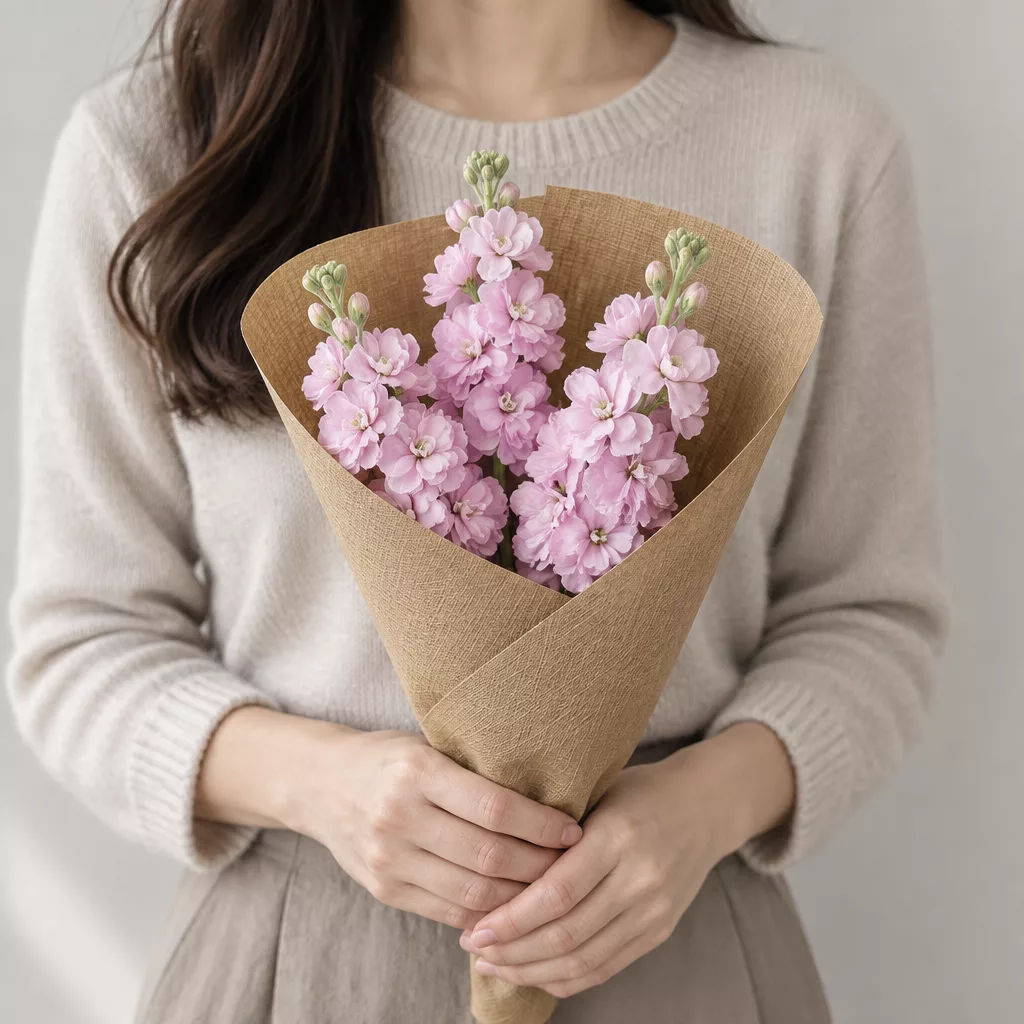
Finally, consider the packaging. A bouquet wrapped in kraft paper with a ribbon reads as artisan and warm. A box arrangement — flowers laid in a hatbox or gift box — feels more luxurious and is easier for the recipient to display without immediately needing a vase. If you are sending to someone in a small apartment or a workplace, a box arrangement is often the more practical and impressive choice.
Usolie-Sibirskoye may be one of the furthest points from where you are sitting right now, but the distance stops mattering the moment the door opens and your recipient sees a fresh bouquet with your name on the card. Get the timing right, choose varieties suited to the season, respect the local custom of odd-numbered stems, and pass along a few simple care tips — that is everything you need to make the delivery feel as close and considered as if you had handed the flowers over yourself.
Frequently asked questions
Can I order flowers to Usolie-Sibirskoye if I do not speak Russian?
Yes, entirely. The order form accepts addresses and messages in Latin letters, and you can write your card message in English. It will be delivered exactly as written. If you want the message in Russian, you can translate it beforehand and paste the Cyrillic text into the message field. The ordering process itself does not require any Russian language knowledge.
How many flowers should I include in a bouquet sent to Russia?
Always choose an odd number — seven, nine, eleven, fifteen, or more individual stems. In Russian tradition, even numbers of flowers are associated with mourning and are brought to cemeteries, not given as gifts. This applies to counting the main blooms; filler greenery and decorative elements are not counted. Most standard bouquet sizes already follow this convention, but it is worth confirming when customising your order.
What happens to flowers during a Siberian winter delivery?
Flowers are packed in insulated, cold-protective wrapping before leaving the preparation area, and delivery is made by vehicle with fast door-to-door handoff. Hardy varieties like roses, chrysanthemums, and carnations travel well in cold conditions when properly prepared. Avoid ordering tropical varieties such as anthurium in January or February, as they are more sensitive to temperature shock even with protective packaging.
How far in advance should I place my order from abroad?
Placing your order the evening before the intended delivery date — by your own local time — is the most reliable approach. This accounts for the time zone difference and gives the florist full preparation time during the morning in Usolie-Sibirskoye. Same-day orders from abroad are sometimes possible depending on what time it is locally when the order arrives, but advance ordering removes all uncertainty.
Can I include a gift with the flowers, or just a card?
A card with a personalised message is included with every bouquet. Depending on what is available at the time of ordering, additional items such as a box of chocolates or a soft toy can sometimes be added to the delivery. Check the current options on the website when placing your order. Keep the message warm and specific — a card that references a shared memory or uses the recipient's name feels far more meaningful than a generic greeting.
Ready to send flowers?
Pick the city, choose the bouquet, and a local florist takes it from there.
Choose a city →