Sending Flowers to Ust-Dzheguta from Abroad: What You Need to Know
You are somewhere far from Russia — London, Dubai, New York, Almaty — and someone you love is in Ust-Dzheguta. Maybe it is her birthday, maybe it is a wedding anniversary, maybe you simply want her to open the door and feel remembered. The distance between you does not have to show in the flowers. With the right preparation, a bouquet can arrive in Ust-Dzheguta looking as though you handed it over yourself.
What Ust-Dzheguta Is Like and Why It Matters for Your Order
Ust-Dzheguta is a city in the Karachay-Cherkess Republic in southern Russia, sitting in a river valley at the foot of the Caucasus mountains. The altitude and the continental mountain climate mean temperatures can swing dramatically between seasons — from freezing winters to warm, dry summers. That range matters when you are ordering flowers from abroad, because the season on the ground affects which varieties travel best and how long they last once delivered.
In summer, midday heat can exceed 30 degrees Celsius, which shortens the vase life of delicate blooms like garden roses and sweet peas unless the recipient moves them into a cool room immediately. In winter, the opposite problem applies: bouquets carried across cold air can suffer petal damage if left even briefly in a freezing hallway. Knowing the season when you place your order helps you choose varieties that are genuinely suited to the conditions waiting at the other end.
The city has a predominantly Karachay population with strong local traditions around hospitality and celebration. Flowers are a warmly received gift here, particularly for birthdays, graduations, weddings and national holidays. Arriving with an impressive, generously sized bouquet signals real care, so do not underestimate the presentation. A single stem wrapped in tissue reads differently in this cultural context than it might in a minimalist European city.
Bouquets we can deliver

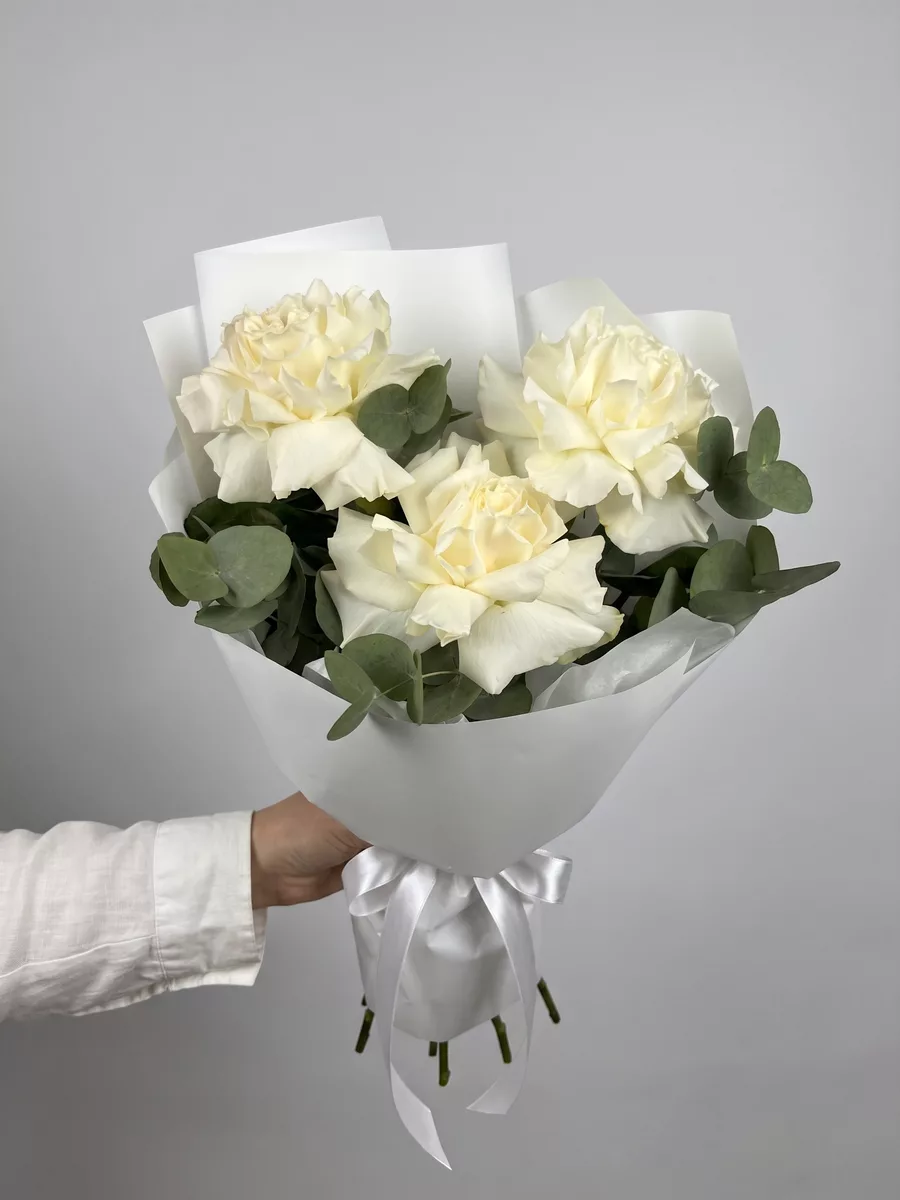
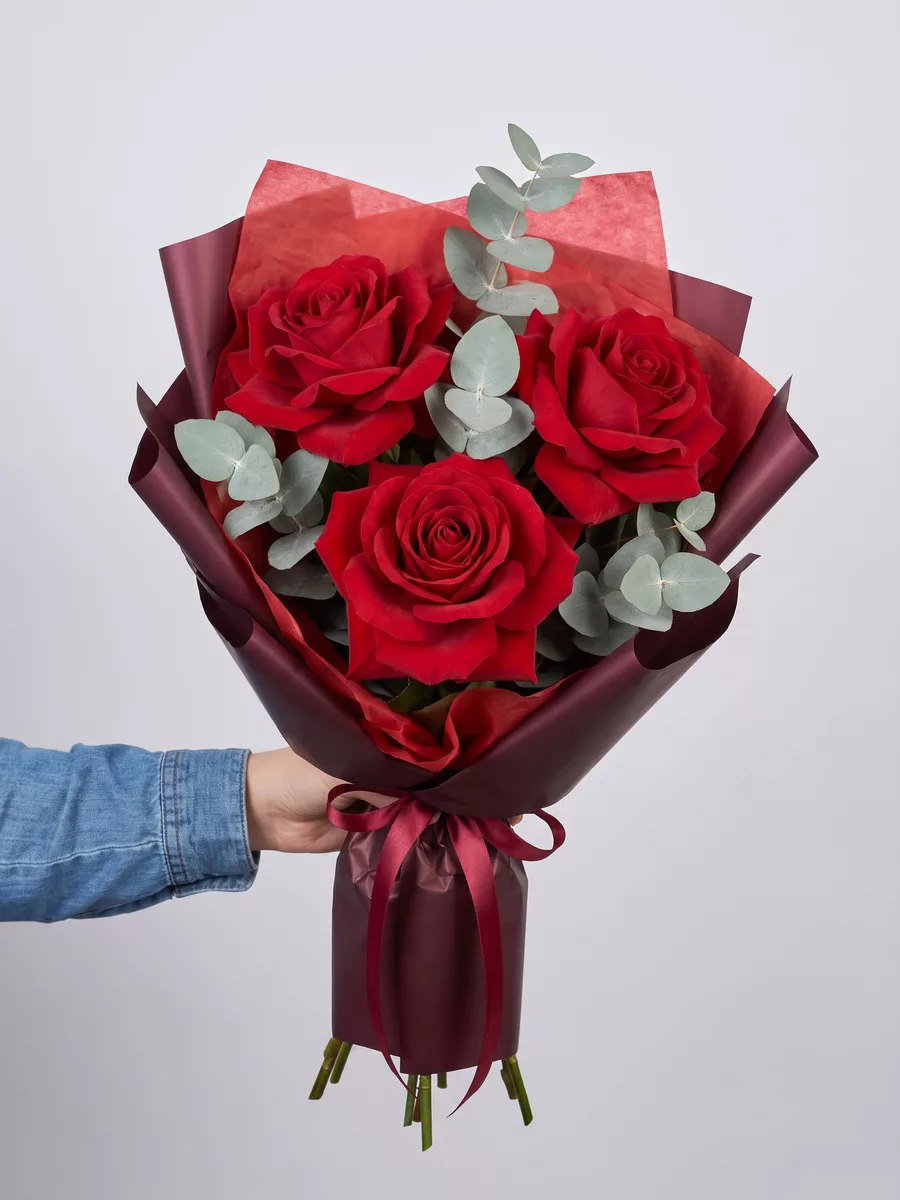
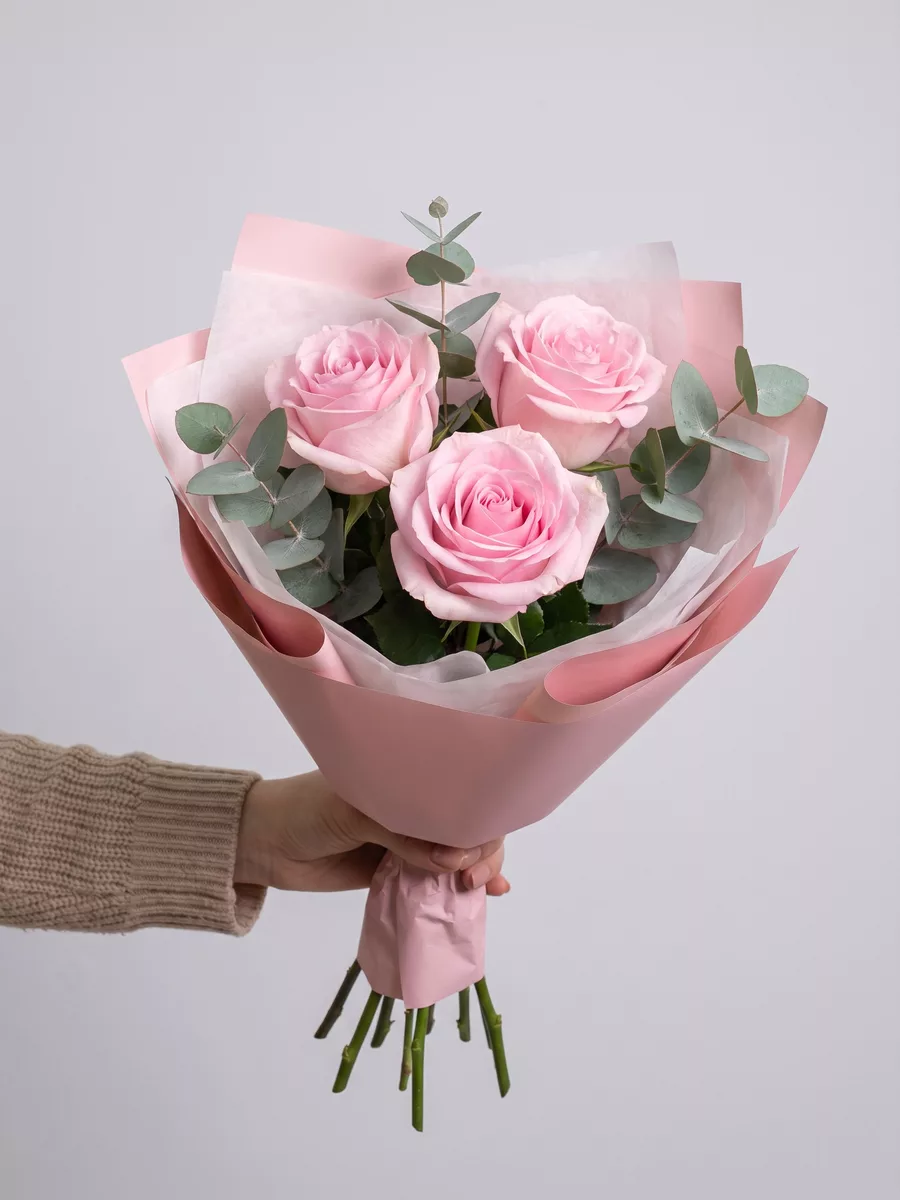
Choosing the Right Occasion and Reading the Moment Correctly
Before you think about varieties or colours, think about who is receiving the flowers and what they will feel when the door opens. A grandmother celebrating her seventieth birthday wants something that looks abundant and joyful — full garden roses in cream and blush, lisianthus, eucalyptus branches. A young woman finishing her university exams wants energy and brightness — sunflowers, bright gerberas, maybe a spray of solidago for texture. The occasion shapes everything else.
For weddings and engagements, white and ivory combinations carry universal elegance and align with local preferences for formal celebrations. Chrysanthemums in white are popular and practical — they are exceptionally long-lasting, which matters when the bouquet will be displayed at a gathering for several hours. Avoid red roses for a first congratulatory gesture to someone you do not know well; in many Russian and Caucasian contexts, red roses signal romantic love specifically, so they can feel presumptuous sent to a colleague or a friend's mother.
Birthdays are the most common reason people send flowers from abroad, and here you have the most freedom. Odd numbers of stems are the traditional Russian convention for living recipients — seven, nine, eleven, fifteen. This is not superstition to dismiss; your recipient will notice and appreciate that you followed it. Even numbers are reserved for memorial occasions, so always confirm your bouquet count before finalising the order. Getting this detail right tells the recipient that whoever sent these flowers truly understood the culture.
Varieties That Perform Well in Ust-Dzheguta's Climate
Not every flower handles a long delivery journey or a warm southern interior equally well. When ordering for Ust-Dzheguta in summer months, lean toward varieties with naturally firm, waxy petals and strong stems. Alstroemeria is an excellent choice — it is robust, comes in a wide range of colours from pale peach to deep burgundy, and holds beautifully for ten days or more with basic care. Chrysanthemums, both spray and single-headed varieties, are similarly resilient and suit the generous, full-bodied aesthetic that reads as celebratory here.
Freesias carry a distinctive fragrance that many recipients in the region love, and they travel well when cut at the right stage — buds just beginning to open rather than fully bloomed. Roses remain the most requested flower regardless of season, but choose varieties with tightly petalled heads: David Austin-style garden roses with many petals can bruise in transit, whereas classic high-centred roses like Explorer or similar commercial varieties with firm outer petals are far more reliable across a delivery journey.
In cooler months, tulips and ranunculus become genuinely beautiful options. Ranunculus in particular — with its layered, papery petals in coral, rose, white and orange — photographs magnificently and feels luxurious without being stiff. Avoid flowers with hollow stems, like anemones, if the recipient is unlikely to recut and water them within an hour of arrival. For mixed bouquets, a structural filler like ruscus or pittosporum adds depth and protects the feature blooms during handling.
Timing Your Order Across Time Zones
This is where most international senders make their first mistake. Ust-Dzheguta runs on Moscow Standard Time, which is UTC plus three hours and does not observe daylight saving. If you are in London, that is three hours ahead of you in winter and two hours ahead in summer. If you are in Dubai, Moscow time is one hour behind you. If you are on the US East Coast, Moscow time is eight hours ahead. Do the arithmetic before you choose a delivery window, not after.
Flower deliveries within Russia typically operate from early morning until late evening, but the most reliable windows for a recipient who is at home are mid-morning and early afternoon. If you want a birthday bouquet to arrive before your recipient leaves for celebrations, place your order the evening before your local time — which may already be the morning of the delivery day in Russia. Cutting it close by ordering on the same morning as the event, from a time zone that is several hours behind Moscow, is the single most common reason a delivery misses its moment.
Also consider national holidays in Russia, which can affect logistics. Major holidays like New Year, International Women's Day on the eighth of March, and Victory Day on the ninth of May see a significant surge in flower orders. Placing your order two to three days in advance during these periods is not overcautious — it is simply practical. The flowers will be fresher, the delivery window more precise, and the whole experience calmer for you.
What Information You Need to Provide as a Sender Abroad
International senders sometimes assume that a name and a neighbourhood is enough. In practice, a precise Russian address is essential for a smooth delivery. You need the full street name written in Russian characters, the building number, the apartment or house number if applicable, and ideally the entrance number and floor for apartment buildings. Russian addresses follow a specific format that differs from Western conventions: the city and region come first, then the street, then the building number. If your recipient lives in a large residential block, the entrance code or intercom number is genuinely useful.
Ask your recipient or a mutual contact to send you their address in Russian before you place the order. Do not rely on transliteration or Google Maps romanisation — these can produce address strings that are unrecognisable to a delivery driver. A copy-pasted address directly from the recipient or from a Russian postal confirmation is the most reliable option.
You will also need a working Russian mobile number for the recipient. The florist will call or message ahead of arrival, which is standard practice in Russia and allows the recipient to come to the door or buzz the delivery in. If your recipient does not have a Russian number — for example, if they are visiting from abroad — provide an alternative contact in the building or ask a neighbour to receive the bouquet. Without a reachable number, delivery complications multiply quickly, and no one wants a beautiful arrangement sitting undelivered.
Presentation Choices That Make the Bouquet Feel Personal
The wrapping and presentation of a bouquet communicates as much as the flowers themselves. In Russian flower culture, elaborate wrapping is not excessive — it is expected. A bouquet arriving in a simple kraft paper cone feels casual; one wrapped in layered tissue, decorative paper and finished with a wide satin ribbon feels like an event. When ordering from abroad, specify the presentation style rather than leaving it to default, because the default may not match what your recipient's circle considers festive.
For birthdays and celebrations, request a full wrap with a decorative outer layer. Soft matte papers in champagne, dusty rose or sage green work beautifully with most flower palettes and feel current without being trend-dependent. Avoid shiny cellophane if you want the arrangement to feel considered rather than commercial. A hand-tied bouquet with a visible stem bundle, finished with raffia, is another option that reads as artisan and warm — particularly suited to wildflower-style mixes with cosmos, scabiosa and ammi.
A handwritten card is worth including even if you are sending a message digitally as well. The physical card stays with the bouquet and gets placed on a shelf or table alongside the flowers — it becomes part of the display. Write your message in whichever language your recipient speaks best. If they read Russian, a few words in Russian, even imperfect, are received with genuine warmth. If they prefer English or another language, write naturally. The sentiment matters more than the grammar, and a card in your own handwriting — or a printed card with your exact words — carries weight that a default greeting cannot replicate.
Care Instructions to Pass Along to Your Recipient
Once the bouquet arrives, its lifespan depends almost entirely on what happens in the first thirty minutes. Let your recipient know in advance — via a message before delivery — that flowers need immediate attention. The stems should be recut at an angle under running water, removing about two centimetres from the bottom. This reopens the vascular channels that transport water and makes a significant difference to how long the flowers last.
The vase should be clean, filled with fresh cool water, and placed away from direct sunlight, radiators and fruit bowls. Fruit releases ethylene gas as it ripens, which accelerates petal drop in roses, carnations and lilies. This is not common knowledge outside florist circles, but it is one of the most practical tips you can share. A bouquet sitting next to a bowl of apples on a warm kitchen counter can lose two or three days of vase life unnecessarily.
Change the water every two days and recut the stems each time. Remove any leaves that fall below the waterline, as they decompose quickly and cloud the water with bacteria. With this basic routine, roses typically last seven to ten days, alstroemeria and chrysanthemums ten to fourteen days, and tulips five to seven days depending on room temperature. In a warm Ust-Dzheguta summer apartment, lean toward the shorter end of those ranges. In a cool winter interior, flowers can surprise you with their staying power. Passing these tips along transforms a beautiful delivery into a two-week reminder of your thoughtfulness.
Sending flowers to Ust-Dzheguta from abroad asks a little more of you than a local order — the time zones, the address format, the cultural details — but none of it is complicated once you know what to look for. Think first about the person and the moment, choose varieties suited to the season, get the address right, and allow enough lead time across the hours that separate you. The flowers that arrive are not just flowers. They are proof that the distance between you is something you actively chose to cross.
Frequently asked questions
Can I order flowers for Ust-Dzheguta delivery if I am paying from a foreign bank card?
Yes. Turboflora accepts international payment methods through its website. If you encounter any difficulty with your card, contact us directly and we will find a solution. Many customers paying from Europe, the Gulf and Central Asia complete orders without any issues. The key is to ensure your billing details match your card exactly as registered with your bank.
How far in advance should I order for a specific delivery time in Ust-Dzheguta?
For a precise delivery window — say, before noon on a birthday — place your order at least the evening before, accounting for the time difference. During peak periods like International Women's Day on March eighth or New Year, order two to three days ahead. Same-day delivery is available but works best when placed in the morning Moscow time, not late afternoon.
Is it acceptable to send flowers to a man in Ust-Dzheguta, or is it only a gift for women?
Flowers for men are becoming increasingly common in Russia and the Caucasus region, particularly for significant birthdays, professional achievements or graduations. Choose bold, structured arrangements — large sunflowers, strong-stemmed roses in deep red or orange, or tropical varieties like anthuriums. Avoid overly soft pastel palettes, which are more closely associated with feminine celebrations in this cultural context.
What happens if my recipient is not home when the bouquet arrives?
The delivery driver will call the recipient's mobile number before arriving. If there is no answer, a second attempt is made. We strongly recommend providing a working Russian mobile number and letting your recipient know a delivery is coming, even without revealing the surprise. Alternatively, a neighbour or building administrator can receive the bouquet and keep it in a cool space until the recipient returns.
Are there any flower colours or types I should avoid for a celebratory gift in this region?
Even numbers of stems are associated with memorial occasions in Russian tradition, so always choose an odd number for a living recipient. Yellow flowers carry mixed associations in some parts of Russia — they are not universally negative, but if you are unsure, mixing yellow with white or orange avoids any ambiguity. All-white bouquets can feel formal rather than festive in some contexts, so adding a warm accent colour lifts the mood considerably.
Ready to send flowers?
Pick the city, choose the bouquet, and a local florist takes it from there.
Choose a city →