Sending Flowers to Vyazniki from Abroad Without the Guesswork
You are sitting in Berlin, Toronto or Dubai, and someone you care about is in Vyazniki — a quiet city on the Klyazma River in Vladimir Oblast, about 300 kilometres east of Moscow. You want them to open their door to something beautiful, something that says you were thinking of them despite the distance. The mechanics of making that happen from another country feel uncertain, but they do not have to be. Here is everything a sender outside Russia genuinely needs to know.
Why Vyazniki Is Not a Difficult Destination
Vyazniki sits in Vladimir Oblast, a region with solid road infrastructure connecting it to the larger logistics network of central Russia. The city itself is modest in size, which actually works in your favour — delivery routes are straightforward, and a bouquet does not spend hours sitting in traffic the way it might in a major metropolitan area. Fresh flowers can reach a recipient there within the standard one-to-two-hour window that Turboflora operates on across Russia.
Many senders assume that smaller Russian cities mean slower or less reliable service. In practice, the challenge is not geography but timing and communication. Knowing the recipient's exact address, including the apartment number and entry code if there is one, matters far more than the city's size. A building in Vyazniki often has a keypad entrance, and a courier who cannot get through the front door cannot deliver a bouquet, no matter how fresh it is.
The other thing worth understanding is that Vyazniki has genuine seasons. Winters are cold and proper — temperatures regularly drop well below zero from November through March. Summers are warm and humid. The season you are ordering in shapes everything from which flowers travel well to how the bouquet should be wrapped for the final stretch of its journey. Starting with that awareness puts you ahead of most international senders.
Bouquets we can deliver

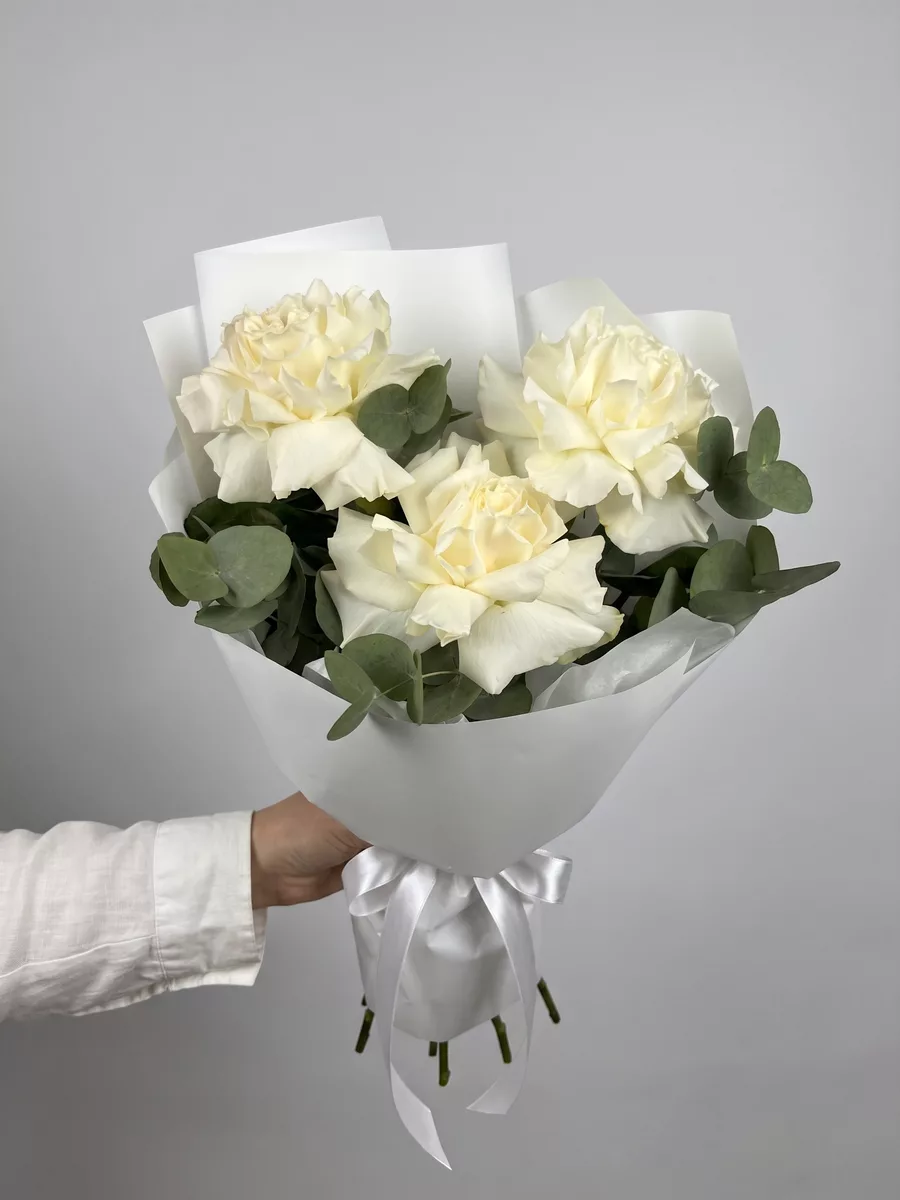
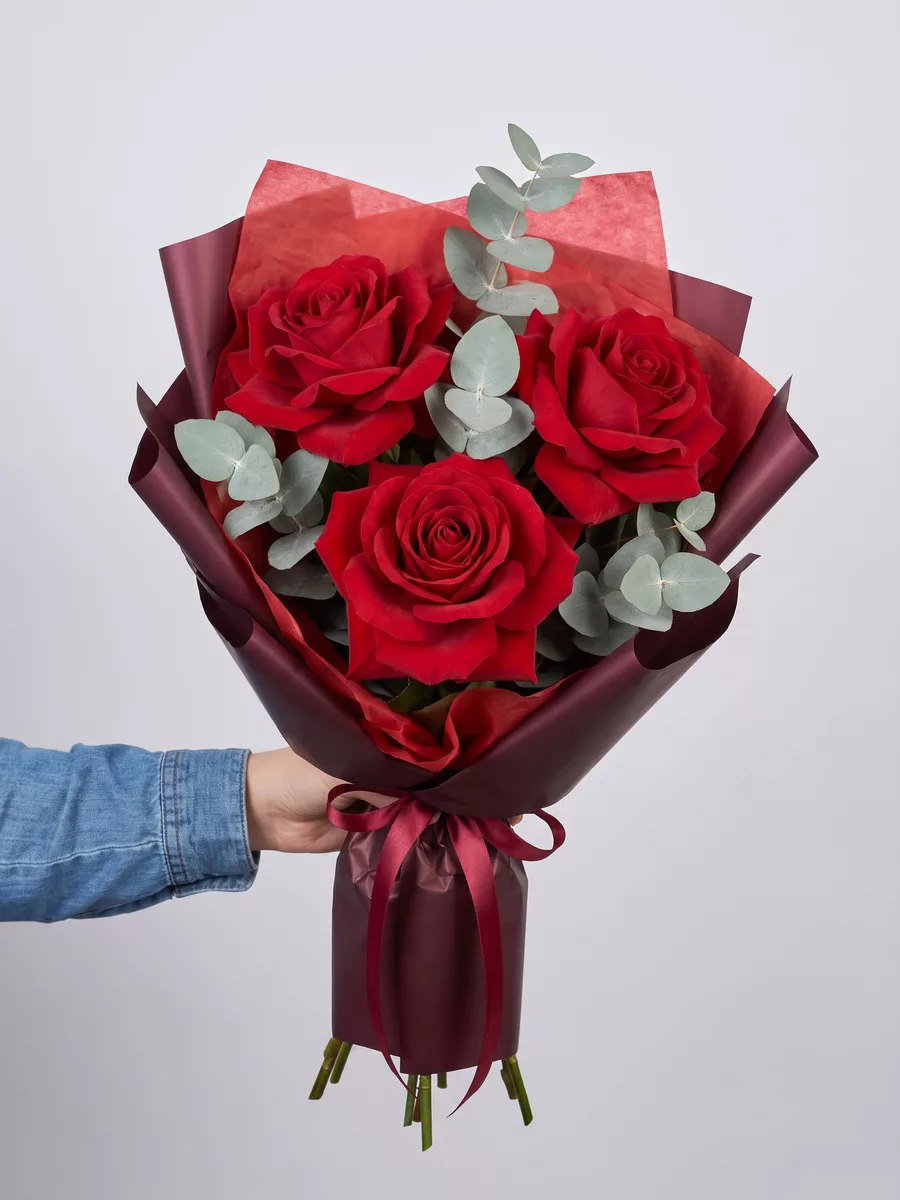
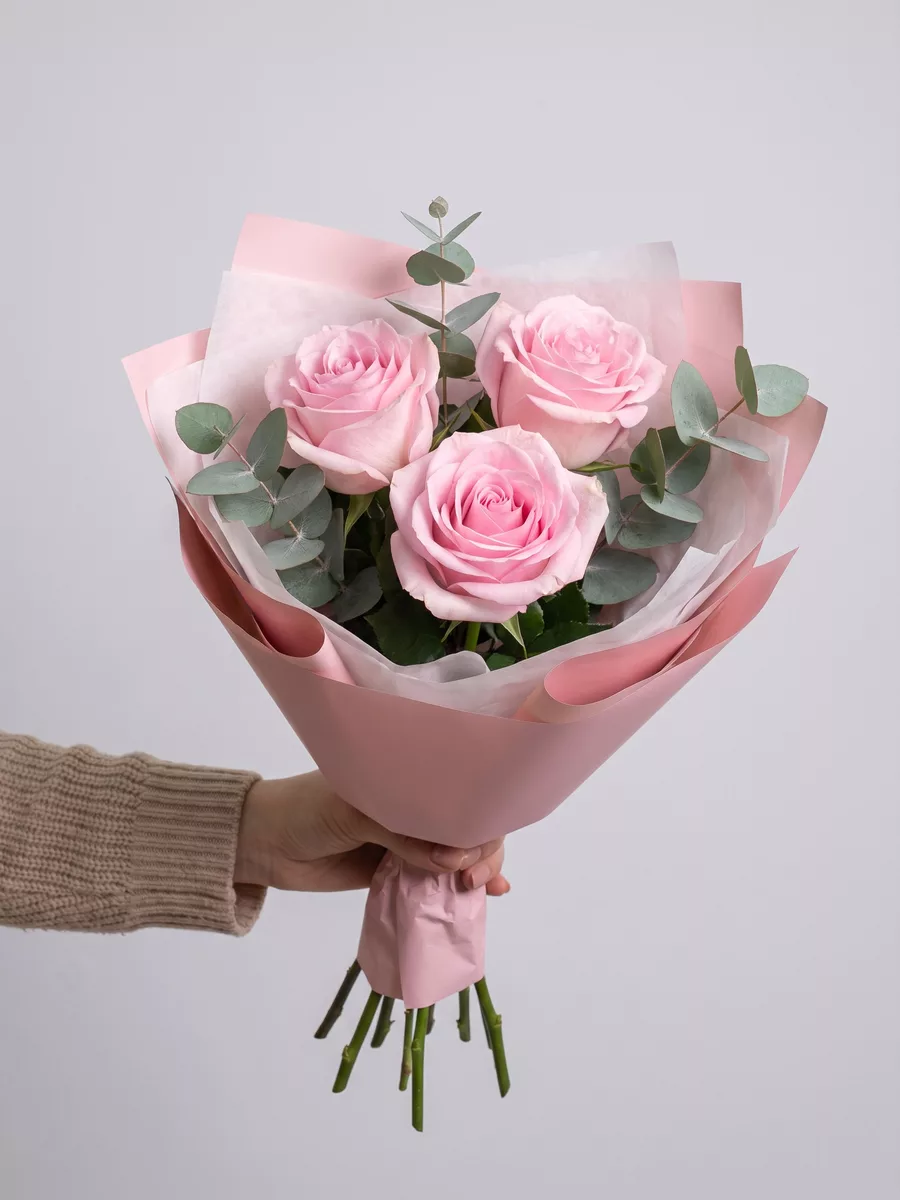
Choosing Flowers for Someone You Cannot Hand Over Yourself
When you give flowers in person, you read the room — you see the apartment, the mood, the occasion in real time. Ordering from abroad means making that read in advance, and the way to do it well is to think first about the recipient rather than the arrangement. Ask yourself what this person's home looks like, what colours they gravitate toward, whether they prefer something dramatic or something gentle. That mental image will guide every choice more reliably than browsing through categories.
For a recipient who lives alone and may not have a large vase, single-variety bouquets of roses or spray chrysanthemums are practical and elegant. Roses — particularly garden varieties like David Austin-style blooms if they are in season — open slowly and give the recipient several days of changing beauty. Spray chrysanthemums are remarkably long-lived, often staying fresh for two weeks with basic care, which matters when no one is there to refresh the water daily.
If you want something more expressive, consider a mixed bouquet built around a focal flower — alstroemeria paired with lisianthus, for example, or tulips with muscari in spring. These combinations feel considered rather than assembled. Avoid flowers that are heavily scented if you are unsure whether the recipient has allergies or sensitivities; lilies in an enclosed apartment can be overwhelming. Peonies, ranunculus and freesia offer fragrance that is pleasant without being intense, and they photograph beautifully, which matters when the recipient wants to send you a thank-you picture.
Reading the Occasion the Russian Way
Russian flower-giving culture has a few conventions that are worth knowing if you want the bouquet to land exactly right. The most important one is the odd-number rule. Bouquets in Russia are traditionally given in odd numbers — five roses, seven stems, eleven tulips. Even numbers are associated with mourning and are brought to cemeteries. If you are ordering a set number of stems, keep this in mind. Most florists follow this automatically, but it is worth confirming when you place your order.
Colour carries meaning too, though the associations are less rigid than the odd-number rule. Red roses communicate romantic love clearly and universally. White flowers are associated with purity and are popular for weddings and new beginnings, but they are also used at solemn occasions, so context matters. Yellow flowers had a historical association with separation or jealousy in Soviet-era culture, though younger generations have largely moved past this. If you are sending to someone over sixty and want to be safe, a warm yellow paired with orange or peach tones reads as cheerful rather than ambiguous.
Birthdays are the single most common occasion for flower delivery in Russia, and Russians take them seriously. A birthday bouquet should feel generous and celebratory — this is not the moment for a minimal three-stem arrangement. Women's Day on March 8th is the country's biggest flower holiday, comparable to Valentine's Day in volume, and demand spikes sharply. If you are planning a delivery around that date, order several days in advance. Name days, promotions, new apartments and new babies are all valid and appreciated reasons to send flowers, and a Russian recipient will understand each of these without explanation.
Timing Your Order Across Time Zones
Vyazniki operates on Moscow Time, which is UTC plus three hours and does not observe daylight saving. If you are in New York, that means a nine-to-ten-hour gap depending on the time of year. If you are in London, it is three hours. Sydney sits about eight hours behind Moscow Time. These gaps matter because a delivery window you choose has to make sense for the recipient's actual day, not your local clock.
The most reliable approach is to work backwards from when you want the recipient to receive the bouquet. If you want flowers delivered at noon Vyazniki time on a Tuesday, calculate what time that is where you are, and place the order with enough lead time for the florist to prepare the arrangement. Same-day delivery is genuinely possible, but only if the order arrives early enough in the local morning. Placing an order at 11 pm your time, which translates to 7 am Moscow Time, gives a much better window than placing it at 3 pm your time, which lands at 1 am locally.
For significant occasions — anniversaries, milestone birthdays, Women's Day — place the order twenty-four to forty-eight hours ahead. This is not about logistics being slow; it is about giving yourself a buffer if you need to clarify the address, choose a different variety, or add a card message. International payments occasionally require an extra verification step, and having time on your side means a small delay does not become a missed moment. Early orders also mean the flowers are cut and prepared at the optimal point in their bloom cycle rather than whatever is left at the end of a busy day.
What Happens to Flowers in Russian Winter
If you are sending flowers to Vyazniki between November and March, cold weather is a real factor in the outcome. Temperatures in Vladimir Oblast regularly fall to minus fifteen or even minus twenty Celsius during the coldest weeks. Flowers are living things, and a bouquet exposed to that kind of cold for even a few minutes can suffer cell damage — petals turn translucent, stems go limp, and the whole arrangement collapses within hours of reaching warmth.
Professional couriers in Russia use insulated packaging for cold-weather deliveries, wrapping bouquets in layers of craft paper and thermal material that buffer the flowers against temperature shock. This is standard practice, not an upgrade. What matters on the recipient's end is how quickly they bring the bouquet inside and allow it to adjust. Unwrapping flowers immediately in a very warm room after they have been outside in the cold can cause condensation damage. Leaving them in a cool hallway for ten to fifteen minutes before unwrapping is better.
In summer, the challenge reverses. Vyazniki summers can reach thirty degrees Celsius or above, and a bouquet sitting in a warm entrance hall while the recipient is at work will fade quickly. Summer deliveries benefit from being timed to when someone is actually home to receive them. Flowers like roses and peonies are especially sensitive to heat — their petals open rapidly and the bloom cycle shortens significantly. Spray chrysanthemums, carnations and alstroemeria handle summer heat more gracefully and are worth considering if you cannot guarantee a recipient will be home within the hour.
Writing the Card Message When You Are Far Away
A card message from abroad carries a particular weight. The recipient knows you thought about them across a significant distance, and the words you choose either amplify that feeling or flatten it. The most common mistake international senders make is writing something generic — 'thinking of you' or 'happy birthday' — when a specific, personal detail would mean so much more. Mention something only you and the recipient share: a place you visited together, an inside phrase, a memory tied to the occasion.
If you are writing in English and the recipient reads Russian better, consider writing your message in both languages. Even a short phrase in Russian — something you have had translated or know personally — signals effort and affection. It does not need to be long. Two sentences in Russian followed by two in English is warm and readable.
Card messages in Russia tend to be more formal in tone than in some Western cultures, particularly for recipients over fifty. Addressing someone by their first name and patronymic — for example, 'Dear Elena Ivanovna' — is a mark of respect that older recipients genuinely appreciate. Younger recipients are comfortable with first names only. If you are unsure which generation you are writing to, a slightly more formal opening followed by warm, personal content strikes the right balance.
Avoid humour that depends on cultural references the recipient might not share. What reads as playful in one culture can land as strange in another. Warmth, specificity and sincerity travel across languages and cultures without needing translation. Keep the message to three or four sentences — enough to be meaningful, short enough to be read in full on a small card.
Caring for the Bouquet After It Arrives
Part of giving flowers well is giving the recipient the information they need to keep them alive. Many people in Russia know the basics, but a note with your order — or a message you send separately — that includes simple care instructions is a thoughtful addition, especially if the recipient is older or does not regularly receive fresh flowers.
The fundamentals are straightforward. Stems should be cut at an angle with a sharp knife or scissors, not torn, and the cut should happen while the stem is submerged in water or immediately before placing in a vase. This prevents an air bubble from forming at the base, which blocks water uptake. Remove any leaves that fall below the waterline — they rot quickly and cloud the water, shortening the life of the whole bouquet.
Vase water should be changed every two days, and the stems should be recut each time. A clean vase matters more than most people realise — bacteria accumulate on the glass and travel up the stems. Cool water is better than warm for most cut flowers, and keeping the bouquet away from direct sunlight, heating vents and fruit bowls extends its life noticeably. Fruit releases ethylene gas as it ripens, which accelerates the ageing of flowers.
For specific varieties: roses benefit from being placed in a bucket of deep water up to their necks for an hour before arranging, which allows them to hydrate fully. Tulips continue to grow in the vase and will lean toward light, so rotating the vase daily keeps them upright. Lisianthus and alstroemeria are among the longest-lasting cut flowers and reward basic care with ten days to two weeks of good looks. Sharing these details with your recipient turns a beautiful gift into one that lasts.
Sending flowers to Vyazniki from another country is less complicated than it sounds once you understand the pieces. The distance is real, but it does not have to show in the result. A bouquet that arrives fresh, on time, with a card that says exactly what you mean — that is what the recipient experiences, and that is what they will remember. The time zones, the cold weather protocols, the odd-number traditions: these are details you handle on your end so that your recipient simply opens the door to something beautiful.
Frequently asked questions
Can I order flowers for Vyazniki delivery if I do not speak Russian?
Yes. Turboflora's ordering process works in English, and you can write your card message in English or any language your recipient reads. The delivery address and recipient's phone number are the only details that need to be accurate. If you are unsure how to format a Russian address, customer support can help you structure it correctly before the order is confirmed.
How far in advance should I order for a birthday delivery in Vyazniki?
For a standard birthday, placing your order the evening before or early on the morning of delivery day is usually sufficient. For major dates like March 8th or New Year, order two to three days ahead. International payments occasionally take slightly longer to process, so building in a small buffer protects you from a last-minute delay turning into a missed occasion.
What flowers last longest if the recipient is away from home for part of the day?
Spray chrysanthemums, alstroemeria and carnations are your most resilient options. They tolerate a few hours at room temperature without significant deterioration and can last up to two weeks with basic care. Roses and peonies are more sensitive to warmth and are better suited to deliveries where someone will be home to place them in water promptly.
Is it appropriate to send flowers to a man in Russia?
Yes, though it is less common than sending to women. Flowers for men in Russia tend to be bold and structured — single-variety bouquets of dark red roses, anthuriums or tropical arrangements work well. Avoid pastel or delicate arrangements, which carry a strong feminine association in Russian culture. A confident, graphic bouquet reads as a genuine and respectful gesture for a male recipient.
What should I do if the recipient is not home at the time of delivery?
Provide the recipient's mobile number when you order. The courier will call ahead, and if the recipient is briefly unavailable, a new delivery window can often be arranged. For apartment buildings, having the entry code or intercom number in the order notes helps the courier reach the door. Avoid scheduling delivery to an address where no one will be home for several hours, particularly in summer.
Ready to send flowers?
Pick the city, choose the bouquet, and a local florist takes it from there.
Choose a city →