Sending Flowers to Zima from Abroad? Here Is Everything That Matters
Zima is a small city in Irkutsk Oblast, sitting deep in Siberia along the Trans-Siberian Railway. When you are thousands of kilometres away — in Berlin, Toronto, Dubai or Tokyo — and you want someone there to open their door to a beautiful bouquet, the distance feels enormous. It does not have to. With the right florist, the right flowers and a clear sense of what to expect, you can make someone in Zima feel genuinely seen and celebrated, no matter where you are placing the order from.
Why Zima's Climate Changes Everything About Your Flower Choice
Zima experiences a sharply continental Siberian climate. Winters are long and severe, with temperatures regularly dropping to minus twenty-five or even minus thirty degrees Celsius between November and March. Summers are short, warm and sometimes surprisingly bright. This is not background information — it directly shapes which flowers will survive the journey from the delivery vehicle to your recipient's hands.
In deep winter, delicate open blooms like garden roses with many petals or fully open peonies can freeze within minutes of leaving a warm vehicle. A florist who understands Zima will choose tighter buds that open gradually indoors, and will wrap the bouquet in multiple layers of protective paper or insulated sleeve. Roses in bud stage, spray chrysanthemums, alstroemeria and sturdy carnations all handle cold transit far better than open tropical blooms.
In summer, the concern flips. Zima can reach twenty-five to thirty degrees Celsius in July, and flowers left in direct sun or a warm entrance hall will wilt quickly. Hydrangeas and gerberas are especially vulnerable to heat stress. Choosing flowers with a naturally longer vase life — lisianthus, alstroemeria, statice — gives your recipient more days of enjoyment even if conditions at home are not perfectly controlled.
Telling your florist the season and even the approximate indoor conditions of your recipient's home is genuinely useful. A first-floor flat with south-facing windows in July needs a different bouquet than a cool apartment in February. These details are not fussy — they are the difference between a bouquet that lasts ten days and one that wilts by morning.
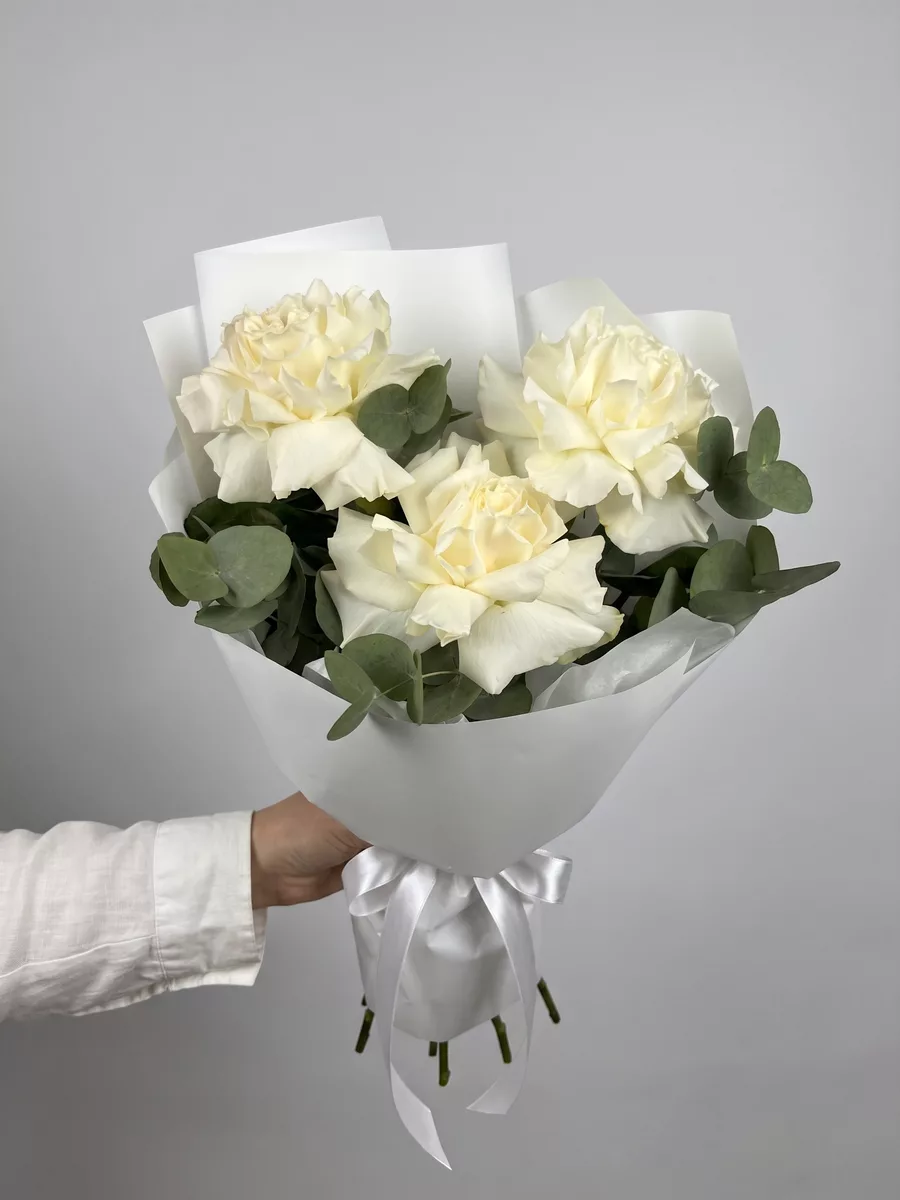
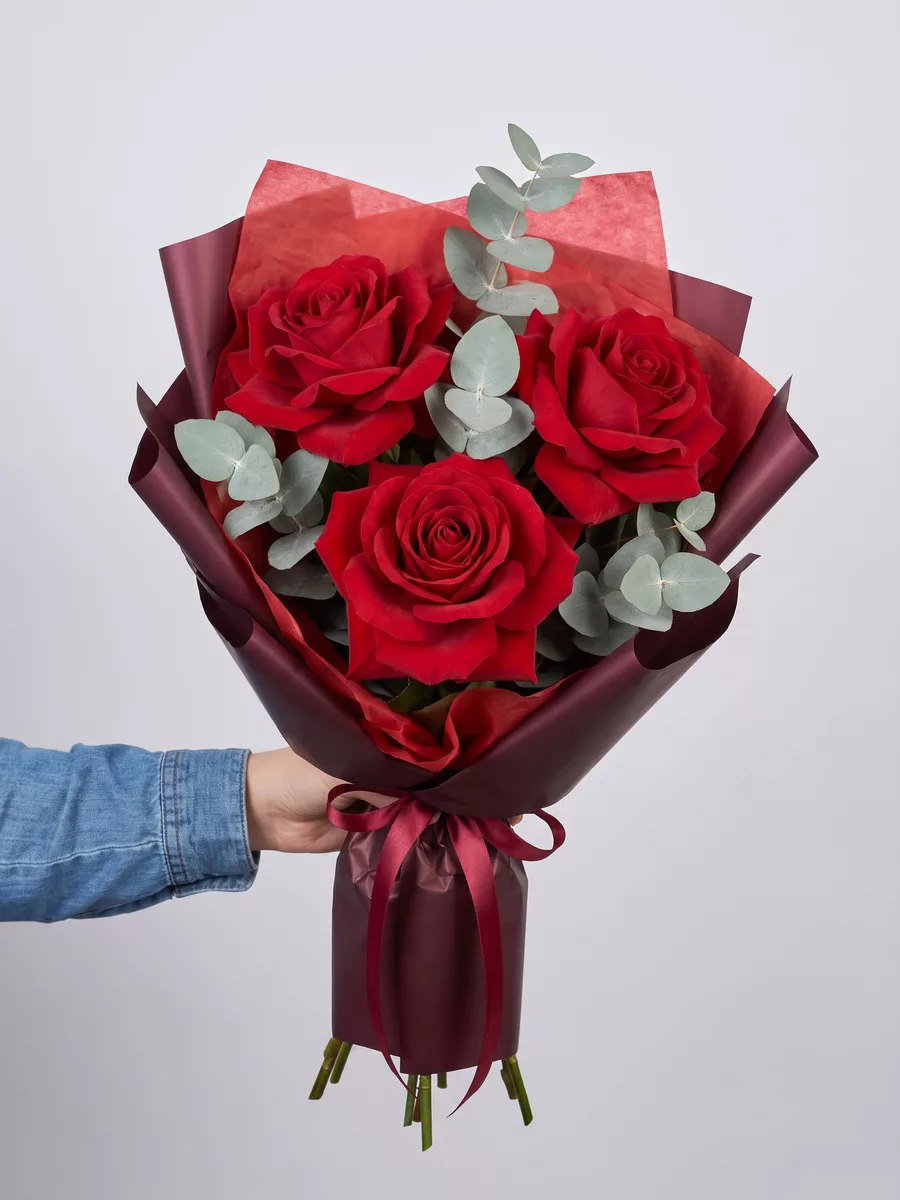
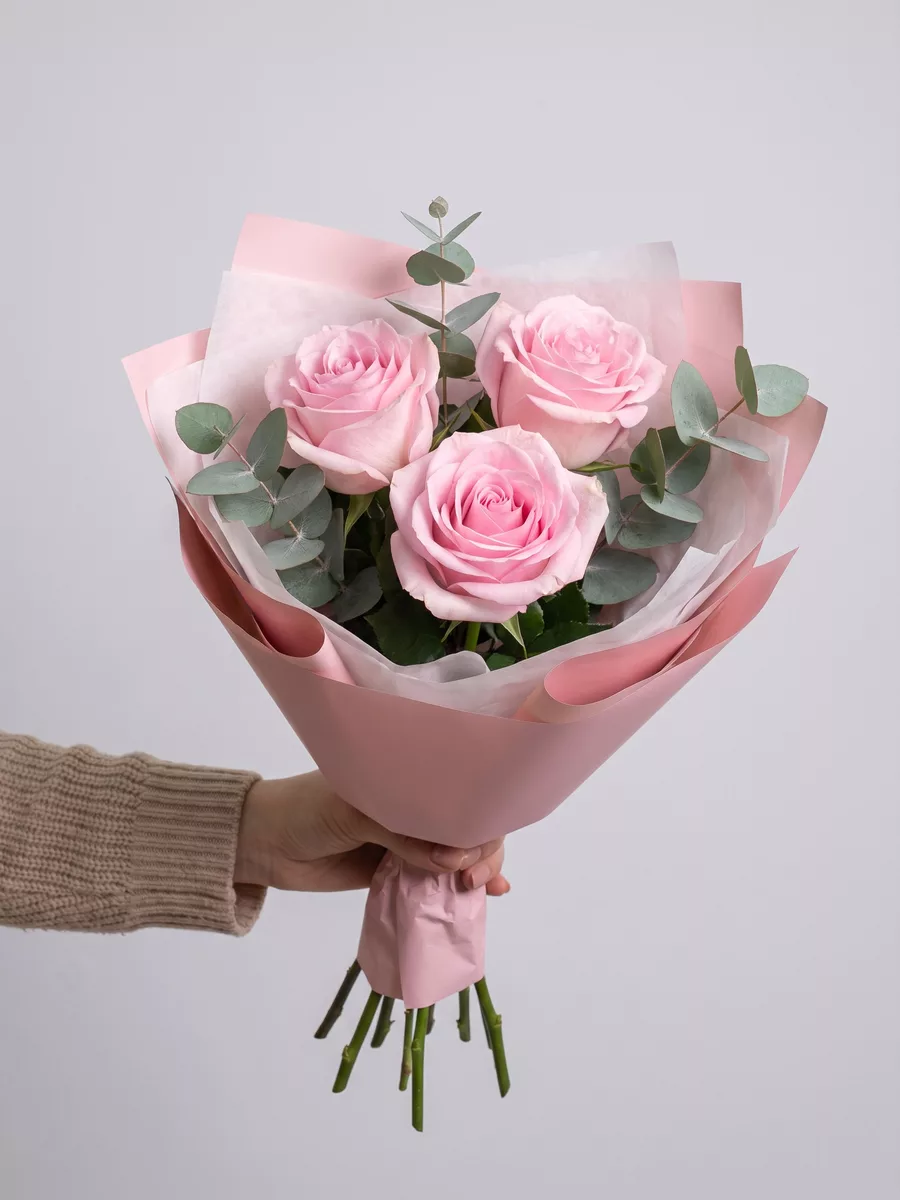
Bouquets we can deliver

Choosing Flowers for the Person, Not Just the Occasion
Before you think about what looks impressive, think about who is receiving the flowers and how they will feel when they unwrap them. A grandmother in Zima who tends her own garden every summer will notice the difference between a bouquet of stiff, uniform stems and one that has texture, movement and a little wildness to it — something with waxflower, eucalyptus or veronica woven between the main blooms.
A young woman celebrating a birthday will likely respond to colour and volume. Bright spray roses in coral or fuchsia, mixed with lemon-yellow solidago and a few stems of blue delphinium, create a joyful, generous feeling. A man receiving flowers — yes, men in Russia receive flowers too, especially on professional milestones or significant birthdays — often appreciates something architectural and unfussy: tall white lilies, bold sunflowers or a clean single-variety bundle of burgundy roses.
For a couple marking an anniversary, think about what the combination says. Red roses are classic and will always be understood, but a mix of garden-style roses in blush and cream with touches of greenery reads as more intimate and considered. It says you thought about them specifically, not just about the occasion.
Children receiving flowers — for a school performance or a graduation — love bright, cheerful colours. Gerberas in mixed shades, sunflowers and chamomile-type blooms feel accessible and fun rather than formal. Whatever the recipient's age, a bouquet that looks like it was chosen for them personally lands far more warmly than one that looks like it was chosen from a list.
Russian Gifting Customs Worth Knowing Before You Order
If you did not grow up in Russia, a few local customs around flowers are worth understanding so your gift lands exactly as intended. The most important one: always send an odd number of stems. Even numbers of flowers are traditionally associated with mourning and funerals in Russian culture, so a bouquet of ten roses would feel wrong to many recipients, even if they cannot immediately explain why. Eleven, fifteen, nineteen, twenty-one — these are the numbers to aim for.
Yellow flowers carry a complicated reputation in Russia. Many people, particularly older generations, associate yellow blooms with separation, infidelity or bad luck in a relationship. If you are sending to someone you know well and they love yellow, it is fine — but if you are unsure, it is safer to avoid a predominantly yellow bouquet for a romantic occasion. Yellow as an accent within a mixed arrangement is generally fine.
Name days, or imeniny, are celebrated alongside birthdays in Russia and can be just as meaningful. If you know your recipient's name day is approaching, a bouquet is a perfectly appropriate and thoughtful gesture. Many Russians also celebrate professional holidays — Teacher's Day in October, for example, or Defender of the Fatherland Day on the twenty-third of February for men, and International Women's Day on the eighth of March for women. These dates are major gifting moments and orders placed in advance are strongly recommended.
Including a card message in Russian, even if it is just a simple greeting, is always appreciated. Most recipients will treasure the effort, even if your Russian is imperfect.
Timing Your Order Across Time Zones
Zima sits in the Irkutsk time zone, which is UTC plus eight. If you are ordering from Western Europe, that is a six or seven hour difference depending on daylight saving. From the East Coast of North America, the gap is eleven or twelve hours. From the Gulf states, it is four or five hours. These numbers matter because you want the flowers to arrive when your recipient is actually home and awake — not at midnight or during a working day when nobody is there to receive them.
The clearest approach is to think about when you want the delivery to happen in Zima's local time, then work backwards to figure out when you need to place the order. For a midday delivery in Zima, someone in Paris would need to place the order by around six in the morning their time. Someone in New York would need to order the previous evening. Planning even one day ahead removes almost all the stress from this calculation.
Turboflora delivers within one to two hours of order confirmation, which gives you a precise window to aim for. If you want the bouquet to arrive at seven in the evening Zima time — perhaps as a surprise when your recipient comes home from work — you simply calculate backward from that moment.
For major holidays like March eighth or February fourteenth, order at least two to three days in advance. Demand spikes sharply on these dates and the earlier you place your order, the more variety and availability you have to work with. A well-timed bouquet on a meaningful day is always more powerful than a beautiful one that arrives a day late.
Bouquet Sizes and Budgets: What the Ranges Actually Mean
When you are ordering from abroad and looking at bouquet options, size descriptions can feel abstract. A small bouquet in florist language typically means nine to eleven stems arranged with some greenery — it is a warm, genuine gesture, perfectly appropriate for a thank-you or a casual birthday. It will not fill a room, but it will sit beautifully on a kitchen table and make someone smile.
A medium bouquet — usually fifteen to nineteen stems — has real presence. It reads as a considered, generous gift. For most occasions, this is the range that feels both meaningful and proportionate. A large or grand bouquet, twenty-five stems and above, makes a statement. It is the choice for significant milestones: a major birthday, a professional achievement, a long-awaited reunion.
Beyond stem count, presentation adds enormously to perceived value. A bouquet wrapped in layered kraft paper with a satin ribbon and a handwritten card feels luxurious even at a modest stem count. Flowers presented in a box or a hat box with water-retaining foam feel especially special because the recipient does not need a vase immediately — the arrangement is self-contained and ready to display.
If your recipient has a small apartment — common in Siberian cities — a compact, well-structured arrangement in a box can actually be more welcome than a large, sprawling bouquet that requires finding a tall vase and a clear surface. Think about where the flowers will live, not just how they will look in the delivery photograph. A thoughtfully scaled bouquet in the right container is almost always the better choice over sheer volume.
Helping Your Recipient Get the Most from Their Flowers
Flowers sent across a distance deserve to last as long as possible, and a few simple care steps make a significant difference. If you are including a card, it is worth adding a line or two about care — most people appreciate the guidance, especially if they do not often receive fresh flowers at home.
The most important step is re-cutting the stems as soon as the bouquet arrives. Using a sharp knife or scissors, cut each stem at a forty-five degree angle — this maximises the surface area drawing up water. Cutting under running water or in a bowl of water prevents air bubbles from forming in the stem and blocking hydration. Even one centimetre of fresh cut makes a noticeable difference to vase life.
Vase water should be cool and clean. Changing it every two days and re-cutting stems at the same time can extend the life of roses and lilies by several days. Keep the bouquet away from direct sunlight, radiators and fruit bowls — ripening fruit releases ethylene gas, which accelerates flower ageing. In Zima's cold winters, a cool room is actually ideal for flowers: lower temperatures slow cellular breakdown and keep blooms fresh longer.
Different flowers in a mixed bouquet have different lifespans. Alstroemeria and chrysanthemums typically last twelve to fourteen days with good care. Roses and lisianthus usually give seven to ten days. Gerberas are beautiful but shorter-lived, typically five to seven days. Knowing this helps your recipient enjoy the bouquet in stages — removing spent stems as others continue to open, so the arrangement always looks intentional rather than faded.
Writing a Message That Feels Right Across the Distance
The card message is often the last thing an international sender thinks about and the first thing a recipient reads. It deserves real attention. A generic message — 'Happy Birthday, thinking of you' — is fine, but a specific one is far more memorable. Reference something real: a shared memory, a quality you genuinely admire, a hope for what comes next in their life.
In Russian culture, warmth and directness coexist comfortably. Russians are not embarrassed by sincere, heartfelt expressions between people who care about each other. You do not need to be reserved or formal. Saying 'I miss you and I wanted you to know it' is not excessive — it is honest, and it will be received that way.
If you want to write part of the message in Russian, even a simple phrase like 'S dnyom rozhdeniya' (Happy Birthday) or 'S prazdnikom' (Congratulations on the holiday) shows effort and will genuinely touch your recipient. You can write the rest in English or your own language — the gesture of trying is what matters.
For professional occasions, a tone of respect and recognition works well. Acknowledge what they have achieved specifically. For family members, warmth and informality are always appropriate. For romantic partners, do not underestimate the power of saying plainly what you feel — distance makes honest words more valuable, not less.
Turboflora can include your message exactly as you write it, in any language, on a card with the bouquet. Take the time to write something real. The flowers will be beautiful for ten days. The right words will be remembered much longer than that.
Sending flowers to Zima from abroad is not complicated when you understand the climate, the customs and the timing. Choose varieties suited to the season, order with the time difference in mind, observe the tradition of odd stem numbers, and write a message that says something true. The distance between you and your recipient is real, but a bouquet that arrives at exactly the right moment — wrapped carefully, chosen thoughtfully, accompanied by words that mean something — closes that distance in a way that very few other gestures can.
Frequently asked questions
Can I order flowers for delivery to Zima if I do not speak Russian?
Yes, entirely. You can place your order and write your card message in English or any other language. Turboflora handles the logistics on the Russian end. Your card message will be included exactly as you write it, so your recipient receives your words in whatever language feels most natural and genuine between the two of you.
What happens to the flowers if the recipient is not home when they arrive?
When placing your order, include your recipient's phone number so the courier can call ahead or coordinate a delivery window. It is worth messaging your recipient in advance to let them know a surprise is coming — without revealing too much — so they are available. In Zima's colder months especially, flowers left outside even briefly can be damaged by frost.
Is it appropriate to send flowers to a man in Russia?
Absolutely. Flowers for men are common and well-accepted in Russian culture, particularly for significant birthdays, professional achievements or the national holiday on the twenty-third of February. Single-variety bouquets in bold colours — sunflowers, burgundy roses, white lilies — tend to feel most natural. The gesture is always appreciated when it comes from a genuine place.
Which flowers last longest in a Siberian winter home?
Alstroemeria, spray chrysanthemums and lisianthus consistently offer the longest vase life and handle temperature fluctuations well. Carnations are also surprisingly durable. Standard roses in bud stage last well if stems are re-cut on arrival and water is changed regularly. Avoid open tropical blooms like anthuriums if your recipient's home tends to be dry from central heating.
How far in advance should I order for major Russian holidays like March 8th?
For International Women's Day on March eighth, Valentine's Day and New Year, place your order at least two to three days ahead. These are the busiest gifting dates in Russia and demand is extremely high. Ordering early guarantees better variety availability and lets you specify an exact delivery window rather than accepting whatever slot remains closest to the date.
Ready to send flowers?
Pick the city, choose the bouquet, and a local florist takes it from there.
Choose a city →