Sending Flowers for Knowledge Day: What to Choose and When to Order
In Russia, September 1 is not just the first day of school — it is a full ceremony, complete with a pressed uniform, a brand-new backpack, and a bouquet that the child carries proudly to the schoolyard. If you are a parent living abroad, or a relative who wants to be part of that morning even from a distance, sending flowers in time for the ceremony is one of the most meaningful things you can do. This guide will walk you through the tradition, the right flowers for the occasion, and exactly how to make sure the bouquet arrives before the bell rings.
What Knowledge Day Actually Looks Like in Russia
Knowledge Day, or Den Znaniy, falls on September 1 every year and marks the official start of the school year across Russia. It is a public celebration rather than a quiet administrative morning. Schools hold outdoor line-up ceremonies called lineyki, where students gather class by class, teachers give short speeches, and a bell is rung — often carried by a first-grader on the shoulder of an older student — to signal the beginning of the academic year.
Children dress formally, almost as if attending a recital. Girls typically wear white hair ribbons and dark pinafores; boys wear dark trousers and white shirts. The bouquet the child brings is part of the outfit in a very real sense. It is carried to the ceremony, presented to the teacher at the end, and photographed alongside the child as a record of the day.
For families who have moved abroad or who live in a different city, this ceremony can feel frustratingly far away. Sending a bouquet that arrives at the door before the family leaves for school is a way of saying you are present, even when you cannot be. The gesture lands differently than a message or a video call — it is something the child holds in their hands and carries into the school photograph.
Bouquets we can deliver



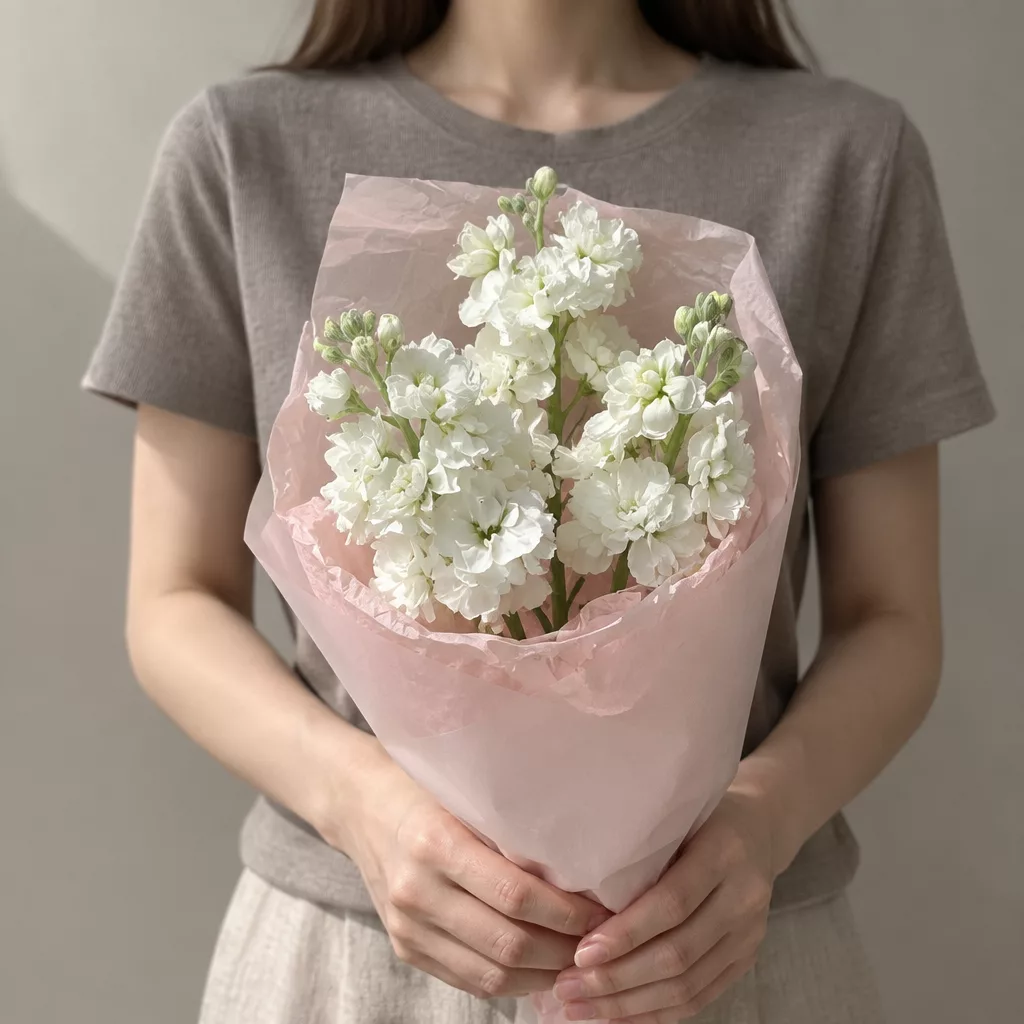
Why Gladioli Became the Flower of September 1
The gladiolus became the signature flower of Knowledge Day for reasons that are partly practical and partly poetic. In the Soviet era, gladioli were one of the few cut flowers reliably available in late August and early September. They grew in home gardens across the country, bloomed exactly at the right time of year, and could be cut and bundled into impressive, upright bouquets without much fuss.
The flower's shape also suited the occasion. A tall gladiolus spike — sometimes reaching seventy or eighty centimetres — looks authoritative and celebratory in a child's arms. The most common varieties used for Knowledge Day bouquets are the large-flowered types in white, cream, soft pink, and deep red. White gladioli in particular have become almost synonymous with the holiday: they read as clean, hopeful, and a little formal, which matches the mood of the morning perfectly.
Today the tradition holds even as the range of available flowers has expanded enormously. Many families still choose gladioli out of genuine affection for the custom, not just habit. A child walking to school on September 1 with a sheaf of white gladioli is participating in something that their parents and grandparents did before them. For relatives sending flowers from abroad, choosing gladioli signals that you know the tradition — that you understand what the day means, not just that you wanted to send something pretty.
Choosing the Right Bouquet for the Child's Age and Role
The occasion calls for slightly different approaches depending on whether the child is a first-grader or an older student. First-graders, called pervoklasskniki, are the stars of Knowledge Day. Everything about their bouquet should feel a little grander: a full gladiolus arrangement with ten to twelve stems, perhaps combined with white chrysanthemums or lisianthus for texture, wrapped in craft paper with a wide satin ribbon. The size matters because this bouquet will be photographed and will be handed to the teacher as a formal gift.
For children in middle or upper school, the bouquet can be a little more personal and a little less ceremonial. A mixed arrangement built around five or seven gladiolus stems combined with seasonal flowers — white or blush alstroemeria, spray roses, or eucalyptus — feels more grown-up without abandoning the tradition. Teenagers often appreciate something that looks less like a school-ceremony prop and more like a genuinely beautiful arrangement.
Teachers also receive flowers on this day, and if you are sending a bouquet intended for the teacher rather than the child, lean toward richer colours: deep burgundy gladioli, orange gerbera, or warm yellow freesia create a more sophisticated effect. Whatever the recipient, keep the arrangement upright and structured — floppy, loose bouquets do not survive being carried through a schoolyard crowd. A well-wrapped, firmly tied bouquet with a water sachet at the base will stay fresh through the ceremony and beyond.
Gladioli and Alternatives: Seasonal Flowers That Work in September
Late August and early September are genuinely good weeks for cut flowers in Russia. Temperatures begin to drop from summer peaks, which means flowers transported and stored in a cool environment hold well. Gladioli are at their natural seasonal peak: the florets open progressively from the bottom of the spike upward, which means a stem that looks partially open on delivery will continue to bloom beautifully over the following week.
If the recipient prefers something other than gladioli, or if you want to build a more layered arrangement, September offers excellent supporting options. White or cream lisianthus adds a ruffled, romantic quality and lasts remarkably well in a vase — up to ten days with clean water and a cool room. Spray chrysanthemums in white or soft yellow are sturdy, long-lasting, and carry their own traditional resonance in Russian flower culture. Alstroemeria in blush or peach tones adds colour without competing with the gladioli.
Avoid flowers that wilt quickly in transitional weather, such as garden roses without refrigerated handling or open peonies, which are largely out of season by September anyway. Sunflowers are cheerful and widely loved but feel more summery than ceremonial — they work better in a casual congratulatory bouquet than in the formal Knowledge Day context. If you are unsure, a gladiolus-forward arrangement with one or two complementary accent flowers is always appropriate. It reads as intentional and informed rather than generic, which is exactly the impression you want to make when sending from a distance.
Timing Your Order So the Bouquet Arrives Before the Bell
This is the detail that most people underestimate, and it is the one that matters most. Knowledge Day ceremonies typically begin between eight and nine in the morning. Families leave their homes thirty to forty-five minutes before the ceremony starts, which means the bouquet must be at the door no later than seven-thirty, and ideally by seven o'clock to give the family time to unwrap it, photograph it, and get the child ready to carry it.
Turboflora delivers across Russia within one to two hours, which means a same-day order placed at five or six in the morning can realistically arrive on time. However, September 1 is the single busiest flower delivery day of the year in Russia — demand spikes sharply in the days leading up to it and peaks on the morning itself. Placing your order the evening before, with a scheduled delivery window of six to eight in the morning, is strongly recommended. Orders placed on the morning of September 1 after seven o'clock risk missing the ceremony entirely.
When you place the order, specify the delivery window explicitly and include a note about the occasion so the recipient knows to expect an early ring of the doorbell. If the recipient lives in a building with a security entry system, include the intercom code or a phone number in the delivery instructions. A bouquet left in a lobby or at a door without refrigeration on a warm late-summer morning will deteriorate faster than one handed directly to the recipient.
Writing a Card That Means Something Across the Distance
A bouquet without a card is a missed opportunity, especially when it is being sent from another country. The card is where the distance collapses — it is the moment the child or parent understands that someone far away was thinking of them at exactly this moment, on this specific morning.
For a first-grader, keep the message simple and warm. Something like: 'Your very first school day — I am so proud of you and I wish I could be there to see you carry this bouquet. Have a wonderful day.' Children this age respond to directness and affection. Avoid anything abstract or overly formal.
For older students, you can acknowledge the milestone more specifically — a new grade, a subject they are excited about, or a goal they have mentioned. A card that references something real and personal carries far more weight than a generic congratulation.
If you are sending flowers to a teacher, a brief and sincere note works best: 'Thank you for everything you do. Wishing you a wonderful new school year.' Teachers receive many bouquets on this day; a card that is specific and genuine stands out.
Write the card in Russian if you can, even imperfectly — the effort is noticed and appreciated. If you are not confident in Russian, writing in your own language is completely fine. The sentiment travels across any language barrier. When you place your order, you can include the card message in the order notes, and it will be printed and attached to the arrangement before delivery.
Keeping the Bouquet Fresh After the Ceremony
Gladioli are rewarding flowers to care for because they continue to open after cutting, giving you several days of changing beauty rather than a single peak moment. Once the bouquet arrives home from the ceremony, the stems should be cut at an angle — about two centimetres from the bottom — using a sharp knife rather than scissors, which can crush the stem tissue and reduce water uptake. The flowers should go into a clean vase filled with fresh, cool water.
Gladioli prefer a cool room and indirect light. Kept away from direct sun and heat sources, they will typically last seven to ten days. Remove the lowest florets as they fade to keep the arrangement looking fresh — the upper buds will continue to open and replace them. Change the water every two days and re-cut the stems each time.
For mixed arrangements that include lisianthus or alstroemeria alongside gladioli, the same principles apply. Remove any leaves that sit below the waterline, as submerged foliage rots quickly and clouds the water. A small amount of flower food dissolved in the water helps, but clean water changed regularly is more important than any additive.
One common mistake is placing the bouquet near a fruit bowl. Ripening fruit releases ethylene gas, which accelerates petal drop and yellowing in cut flowers. Moving the vase to the other side of the room can meaningfully extend vase life. For a child who wants to keep their Knowledge Day flowers as long as possible, these small habits make a real difference.
Knowledge Day is one of those Russian occasions that rewards being thought about in advance. The tradition is specific, the timing is tight, and the gesture — a bouquet at the door before the school bell rings — is one that a child will remember long after the morning is over. Whether you are sending gladioli in the classic white, a mixed seasonal arrangement for an older student, or something warm and colourful for a beloved teacher, the most important thing is that it arrives on time and that it carries a message written by you. Order the evening before, choose the delivery window carefully, and let the flowers do the rest.
Frequently asked questions
Is it appropriate to send flowers for Knowledge Day if we are not Russian?
Absolutely. Knowledge Day is a warm, inclusive celebration, and sending flowers shows that you respect and want to participate in the tradition. Choosing gladioli signals that you understand the custom, which will be noticed and appreciated by the family. The gesture needs no explanation — a bouquet on the doorstep on September 1 morning speaks for itself.
Can I send a bouquet to a city outside Saint Petersburg?
Yes. Turboflora delivers fresh flowers across Russia, not only in Saint Petersburg. When placing your order, specify the recipient's full address including city, and choose the delivery window carefully based on the local ceremony time. Morning ceremonies typically begin between eight and nine, so a delivery window of six to seven-thirty is safest for Knowledge Day.
What if the child is allergic to pollen — are there low-pollen options?
Gladioli are generally considered low-allergen flowers because their pollen is heavy and does not become airborne easily. Lisianthus and alstroemeria are also good choices for sensitive recipients. Avoid strongly scented flowers like lilies or freesia in large quantities if the child has known sensitivities. Mention any allergy concerns in your order notes and we will compose the arrangement accordingly.
How many stems should a Knowledge Day bouquet have?
For first-graders, ten to twelve stems makes a generous, photogenic bouquet that suits the ceremony. For older students, seven to nine stems is entirely appropriate and easier to carry. Odd numbers are traditional in Russian flower culture — even-numbered bouquets are associated with mourning — so keep that in mind when choosing a quantity outside of a pre-made arrangement.
What time should I place my order to guarantee morning delivery on September 1?
Place your order the evening before — ideally by nine or ten in the evening on August 31 — and schedule delivery for the six to eight in the morning window. September 1 is the busiest flower delivery day of the year in Russia, and same-day morning orders placed after seven o'clock risk arriving after the family has already left for the ceremony.
Ready to send flowers?
Pick the city, choose the bouquet, and a local florist takes it from there.
Choose a city →