Sending Flowers to Employees in Russia: A Manager's Playbook
When your team is spread across Russian offices and you are coordinating from Amsterdam, Toronto, or Seoul, a birthday bouquet for an employee in Saint Petersburg or a milestone arrangement for a Moscow colleague can feel logistically daunting. It does not have to be. With the right preparation, flower gifts arrive fresh, on time, and in a way that genuinely moves the person receiving them — which is the only outcome that matters.
What Flowers Mean in a Russian Workplace
Flowers carry real emotional weight in Russian professional culture. Receiving a bouquet at your desk on your birthday or work anniversary is not a small gesture — it is a public acknowledgment that the company sees you as a person, not just a function. This distinction matters enormously, especially in larger corporations where employees can feel anonymous.
One custom to know immediately: always send an odd number of stems. Even numbers are reserved for mourning and funerals, and sending twelve roses instead of eleven or thirteen will create an uncomfortable moment no manager intends. This rule applies regardless of the flower type, so brief your team before they place any order.
Colour also carries meaning, though it is more nuanced than the odd-number rule. Red roses between colleagues can read as romantic rather than professional, so they are better avoided in a workplace context unless the recipient is a close friend. Warm whites, soft pinks, corals, yellows, and lilacs all read as celebratory and appropriate. Mixed seasonal bouquets with greenery feel generous and thoughtful without crossing any social line.
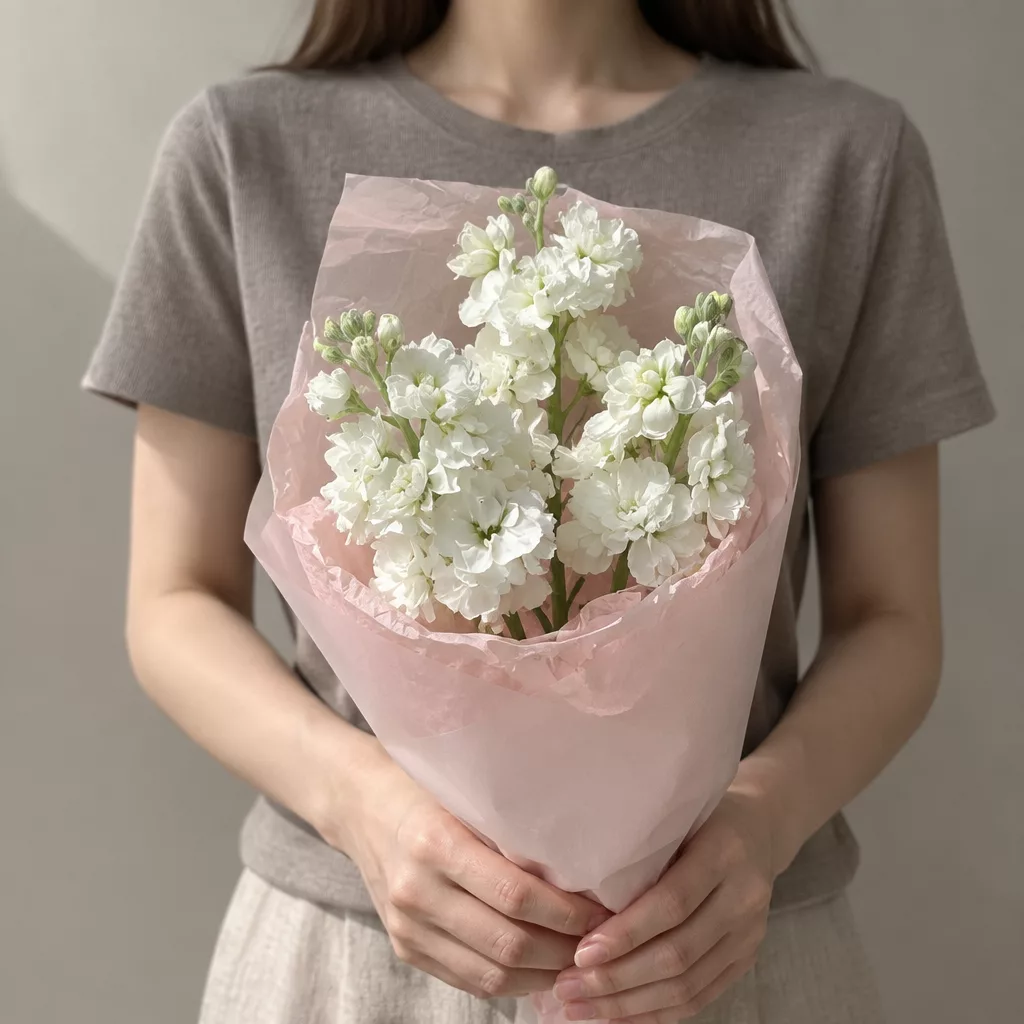
Finally, presentation matters to Russian recipients. A bouquet that arrives in a kraft wrapper tied with a ribbon, or nestled in a hatbox, signals care. Loose stems handed over in plastic feel careless by comparison. When you order, choose a presentation format that reflects the occasion's importance.
Bouquets we can deliver



Choosing Flowers for the Right Occasion
Employee birthdays, work anniversaries, and company milestones each call for a slightly different approach, and understanding that difference helps you avoid the generic and land on the memorable.
For a birthday, the goal is personal warmth. If you know the employee's favourite colour, use it as your anchor. If you do not, a mixed bouquet built around garden roses, lisianthus, and seasonal fillers like waxflower or eucalyptus reads as thoughtful rather than formulaic. Peonies in season — late May through July — are universally beloved and feel like a genuine treat.
Work anniversaries deserve something a little more structured and lasting. Monobouquets, meaning a single variety in abundance, feel sophisticated and intentional. Fifty stems of white spray chrysanthemums, or a generous bunch of alstroemeria in a single colour, communicates that this is a considered gift, not a last-minute order. If the anniversary marks five or ten years, scale up the volume — a larger arrangement signals that the milestone has been genuinely noticed.
Company milestones — a product launch, a successful audit, a record quarter — are group moments. Here, arrangements for the office space itself make more sense than individual desk bouquets. A tall arrangement of gladioli or sunflowers placed at the reception or in a meeting room creates a shared experience. You can complement it with smaller posies for team leads so that individual contributions are also recognised. Layering the gift this way costs less per person and creates more visible impact.
Planning Bulk Orders Across Multiple Russian Cities
Coordinating flower gifts across several Russian offices on the same day requires a simple system set up well in advance. The biggest mistake international HR teams make is treating it like a single-city order scaled up. It is not. Each city has its own delivery window, its own office hours, and its own building access quirks that affect whether a bouquet reaches a person's hands or sits at a security desk for three hours.
Start by building a shared document that lists each recipient's full name, their office address including floor and room number, their direct phone number, and the date of the occasion. Russian addresses require a specific format — city, street, building number, and apartment or office number — and incomplete addresses are the single most common cause of delayed deliveries. A missing corpus number or an unspecified entrance can cost an hour.
Book at least 48 hours ahead for standard occasions, and 72 hours or more for large milestone orders involving ten or more bouquets in one city. This gives the florist time to source the right volumes without substituting varieties. If you are ordering for a Monday, place the order by Friday noon, because weekend sourcing from wholesale markets operates on different schedules and affects freshness.
For recurring events like monthly birthdays, set a standing order template. Define the bouquet style, budget tier, and presentation format once, then simply update the recipient details each month. This reduces decision fatigue for your team and ensures consistency — employees notice when the gift quality varies, and consistency signals fairness.
Budget Tiers and What Each Delivers
You do not need an extravagant budget to send something beautiful, but you do need a realistic sense of what different investment levels actually produce so that expectations are managed correctly across your HR team.
At an entry level, a compact hand-tied bouquet of five to seven stems — think spray roses, alstroemeria, and a few stems of ruscus — is tidy, fresh, and cheerful. It works well for a monthly birthday programme where volume is high and the gesture itself is the priority. The bouquet is desk-sized, easy to carry home, and will last seven to ten days with basic care.
At a mid-range level, you move into fuller arrangements of fifteen to twenty stems with a mix of focal flowers and supporting varieties. A combination of garden roses, lisianthus, and eucalyptus in a kraft wrap with a ribbon sits in this tier. This is the sweet spot for work anniversaries up to three years and for team leaders receiving recognition. It photographs well, which matters because employees often share these moments on social media and internally.
At a premium level, you get volume, variety, and a presentation format that makes an impression the moment it arrives — a hatbox arrangement, a large hand-tied bouquet of thirty or more stems, or a floral composition in a ceramic vessel the recipient keeps. Peonies, garden roses, and ranunculus together in a generously filled hatbox represent this tier in peak season. Reserve this for five-year and ten-year anniversaries, senior leadership birthdays, and milestone occasions where the gift should visibly reflect the company's regard for the individual.
Delivery Timing and Seasonal Freshness in Russia
Russia's climate creates conditions that international managers sometimes underestimate. Saint Petersburg and Moscow both experience winters where outdoor temperatures drop well below freezing, and summers where heat can spike unexpectedly. Both extremes affect flowers in transit.
In winter, from November through March, cold is the primary risk. Flowers transported without insulated packaging suffer petal damage from frost within minutes at minus fifteen degrees Celsius or lower. A reputable florist wraps bouquets in insulating paper layers and moves them in climate-controlled vehicles. If you are ordering in January or February, confirm that the delivery method accounts for cold exposure, particularly for delicate varieties like ranunculus or anemones, which bruise at low temperatures.
In summer, heat above twenty-five degrees Celsius shortens vase life significantly if flowers sit unrefrigerated. Ordering for a morning delivery rather than an afternoon slot reduces the time flowers spend in a warm vehicle or lobby. For outdoor events or rooftop celebrations, choose hardy varieties: alstroemeria, chrysanthemums, and carnations tolerate heat far better than hydrangeas or sweet peas.
Spring and early autumn are the most forgiving seasons for bulk orders. Temperatures are moderate, seasonal flowers are abundant, and substitutions are rarely needed. If you are planning a company anniversary event and have flexibility on the date, scheduling it in late April, May, or September gives you the widest variety choice and the best natural vase life — typically eight to twelve days for mixed arrangements when recipients follow basic care instructions.
Writing the Card: What to Say in a Russian Context
The card that accompanies a flower gift is often the most remembered part of the gesture, and getting the tone right across a cultural boundary requires a little thought. Russian workplace culture values sincerity over formality, but it also respects dignity — an overly casual or jokey message from a senior manager can land awkwardly, especially if the relationship is primarily professional.
For a birthday, a message that acknowledges the person's specific contribution to the team is far more powerful than a generic happy birthday. Something like 'Your work on the logistics project this year made a real difference to the whole team — thank you, and enjoy your day' takes thirty seconds to write and will be remembered for years. Specificity is the difference between a card that gets kept and one that gets discarded with the wrapping.
For a work anniversary, name the years explicitly and acknowledge growth. Russian employees who have stayed with a company through difficult economic periods — and Russia has had several in recent decades — feel that loyalty deserves recognition beyond a number on a certificate. A line that says 'Five years of your expertise and commitment have shaped this team' resonates more than a standard congratulations.
If you are writing in English for a Russian recipient, keep sentences short and clear. Most professional employees in Russian offices read English at a working level, but overly idiomatic phrases or cultural references can create confusion. Warmth translates across language barriers when the language itself is simple and direct. If the company has a Russian-speaking HR contact in the local office, ask them to review the card text before it is printed — a small step that prevents well-meaning messages from misfiring.
Flower Care Instructions for Office Recipients
A beautiful bouquet that wilts by the next morning reflects badly on the gift, even when the flowers were perfect at the moment of delivery. Sharing simple care instructions with recipients — either on the card or in a follow-up message — extends vase life significantly and keeps the gesture visible on the desk for longer.
The first step is the most commonly skipped: cutting the stems at a forty-five degree angle before placing them in water. This increases the surface area available for water uptake. Stems should be cut under running water or immediately submerged, because stems exposed to air for even a few seconds begin to seal. A sharp knife is better than scissors, which can crush the stem tissue.
Water temperature matters more than most people realise. Lukewarm water at around twenty degrees Celsius encourages uptake better than cold water for most cut flowers, with the exception of bulb flowers like tulips and hyacinths, which prefer cool water. Change the water every two days and rinse the vase each time to prevent bacterial build-up, which is the primary cause of early wilting.
Office environments present a specific challenge: heating systems in Russian offices, particularly in winter, create very dry air. Flowers near radiators or heating vents deteriorate rapidly. Advise recipients to place their bouquet away from direct heat sources and away from draughts from windows and air conditioning units. A spot on a desk away from the window, in indirect light, is ideal. With these steps, most mixed arrangements will last eight to eleven days, which means the bouquet is still visible and fresh well into the following week.
Sending flowers to employees across Russian offices is one of the most direct ways an international company can demonstrate that distance does not diminish care. When the bouquet arrives on time, the stems are fresh, the number is odd, and the card says something true and specific, the message lands exactly as intended: this person matters, and the company took the time to show it. Build the system once — the address templates, the standing order formats, the seasonal calendar — and the ongoing effort becomes small while the cumulative effect on team morale becomes significant.
Frequently asked questions
Can Turboflora deliver to multiple Russian cities on the same day?
Yes. We deliver across Russia and can fulfil orders to different cities simultaneously. The key is placing the order at least 48 to 72 hours in advance, providing complete addresses for each recipient including office number and a direct phone contact. This preparation ensures every bouquet reaches the right person within the delivery window without delays at building security.
Why does the number of stems matter so much in Russia?
In Russian culture, even numbers of flowers are associated with mourning and are brought to funerals. Sending an even-numbered bouquet to a colleague, however unintentionally, creates a deeply uncomfortable moment. Always order an odd number of stems — one, three, five, seven, eleven, thirteen, or more. This single rule is the most important thing an international manager can learn before sending flowers to Russia.
Which flowers hold up best in Russian winter conditions during delivery?
Alstroemeria, spray chrysanthemums, and carnations are the most cold-tolerant cut flowers and travel well even in sub-zero temperatures when properly wrapped. Ranunculus, anemones, and hydrangeas are the most vulnerable to frost damage and require careful insulated packaging. For winter bulk orders, we recommend building arrangements around hardier varieties as the base, with delicate blooms used sparingly as accents.
How far in advance should we set up a recurring monthly birthday programme?
Set up the programme at least two weeks before the first delivery date. This gives time to agree on the bouquet style, confirm the address format for your offices, and establish a communication routine for updating recipient details each month. Once the template is in place, monthly updates take only a few minutes and the quality remains consistent, which employees notice and appreciate over time.
Is it appropriate to send flowers to male employees in a Russian office?
Yes, absolutely. Flowers are given to men in Russia on professional occasions, particularly birthdays and anniversaries. For male recipients, compact and structured arrangements tend to feel more fitting than large romantic bouquets — think a neat monobouquet of sunflowers, a clean arrangement of white chrysanthemums, or a small potted plant paired with cut stems. The gesture is always appreciated when the presentation is considered.
Ready to send flowers?
Pick the city, choose the bouquet, and a local florist takes it from there.
Choose a city →