Statice in Russia: A Dried-Look Bloom That Stays Fresh for Weeks
Pick up a stem of statice and you will swear it has already been dried. The tiny papery florets crinkle between your fingers, the colour holds without fading, and the whole branch feels almost too perfect to be fresh from a bucket of water. Yet it is completely alive, and it will stay that way — on a table, in a vase, or tucked into a bouquet — for two to three weeks with almost no effort from the person receiving it. That combination of texture, longevity, and a very accessible price point has made statice one of the quiet workhorses of Russian floristry, present in arrangements from Kaliningrad to Vladivostok without ever stealing the spotlight.
What Statice Actually Is and Why It Feels Different
Statice belongs to the genus Limonium, and the variety you find in virtually every Russian flower market is Limonium sinuatum — the annual species with winged stems and clusters of tiny funnel-shaped calyxes that hold their shape and colour even as the plant dries naturally on the stem. Those calyxes are the part you are actually looking at when you admire the colour: the true petal inside is usually white and barely visible. This is why statice looks the same whether it arrived yesterday or three weeks ago.
The texture is genuinely papery, not waxy like an anthurium or silky like a rose. Run your thumb across a cluster and it makes a faint rustling sound. For a recipient who has never seen it before, the first reaction is almost always to ask whether it is artificial. It is not — it is simply a flower that has evolved to hold moisture inside a tough outer layer, which is what gives it that dried appearance while the stem is still drinking water.
In Russian floristry, statice is used almost exclusively as a filler or accent rather than a focal flower. It adds visual weight, separates larger blooms, and introduces a texture that neither greenery nor baby's breath can replicate. Because it does not compete for attention, it works behind roses, next to sunflowers, and around peonies without changing the mood of the arrangement — it simply makes everything around it look more considered and complete.
Bouquets we can deliver



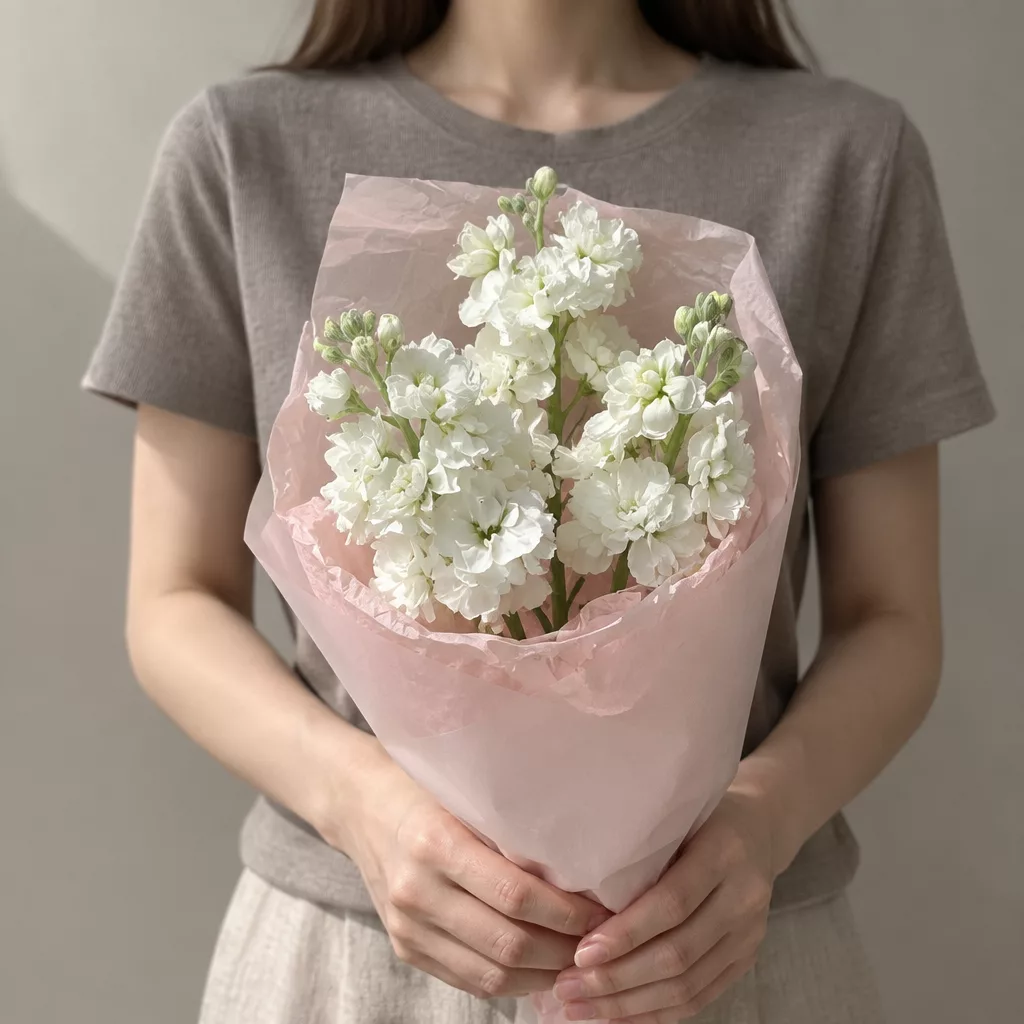
Availability Across Russia and What to Expect by Season
Statice is available in Russia throughout the year, which sets it apart from many seasonal flowers. The bulk of what reaches Saint Petersburg, Moscow, and other major cities comes through the Netherlands via the main Dutch auction at Aalsmeer, with smaller volumes arriving from Ecuador and domestic greenhouse growers in the Krasnodar region. Because it travels well — the papery calyxes do not bruise, and the stems tolerate temperature swings better than, say, tulips — it arrives in good condition even after a long logistics chain.
Domestic greenhouse production has grown noticeably over the past several years, particularly in southern Russia where the climate allows for longer growing seasons. This means that in summer and early autumn, locally grown statice is often fresher and slightly more vibrant than imported stock, simply because it has spent less time in transit. In winter, imported Dutch stems dominate, and quality remains consistent because statice is one of the easier flowers to cold-store without damage.
For anyone ordering flowers for delivery across Russia, statice is one of the most reliably available accent flowers regardless of the city or the time of year. It does not have the dramatic seasonal gaps that affect peonies in January or tulips in August. The colour range shifts slightly — pastel lilac and white dominate winter stock, while deeper purple and yellow varieties appear more often in summer — but the flower itself is almost always on hand. This reliability is part of what makes it such a practical choice for florists building arrangements that need to look consistent week after week.
Choosing Statice for the Person and the Occasion
Statice works best when the recipient values longevity over drama. If you are sending flowers to someone who travels frequently, works long hours, or simply forgets to change vase water every day, statice is genuinely one of the kindest choices you can make. It will not collapse into a drooping mess on day three the way garden roses sometimes do. The arrangement will look essentially the same on day fourteen as it did when it arrived, which matters a great deal for someone who wants a living reminder of a kind gesture rather than a reminder to throw dead flowers away.
For occasions, statice fits naturally into thank-you bouquets, teacher appreciation arrangements, and gifts for colleagues — situations where you want something warm and lasting without the formality of a single-variety rose bouquet. It also suits new home gifts beautifully, since a bouquet with statice will outlast the chaos of moving boxes and still be on the table when the recipient finally has a moment to enjoy it.
In Russia, it is common to bring flowers when visiting someone's home for the first time, and statice-accented bouquets are a thoughtful choice for that custom because they signal care without being extravagant. The same logic applies to name day celebrations, which are observed by many Russians alongside birthdays — a bouquet that lasts through the week of celebration feels more generous than one that wilts after two days. Statice quietly extends that generosity without adding to the cost.
Colour Combinations That Actually Work in a Bouquet
The most common statice colour in Russian floristry is lilac-purple, and it pairs instinctively with white flowers — white spray roses, white lisianthus, white alstroemeria. That combination feels clean and slightly romantic without being overpowering. The purple statice adds depth to what could otherwise be a flat all-white arrangement, giving the eye somewhere interesting to rest between the larger blooms.
White statice, the second most available variety, behaves differently. It reads as texture rather than colour, so it blends into arrangements without shifting the palette at all. Use white statice when you want the filler to disappear visually and simply add fullness — around bright orange gerberas, for instance, or inside a dense coral peony bouquet where extra colour would create competition.
Yellow statice is less common but worth seeking out in summer. It pairs well with sunflowers and chamomile-type blooms, reinforcing the warm tones without duplicating them. The papery quality of yellow statice next to the velvety face of a sunflower creates a contrast in texture that makes both flowers look more interesting.
One combination to avoid: purple statice with red roses in a tight, round bouquet. The two colours fight rather than complement, and the arrangement can look muddled. If red roses are the centrepiece, white statice or simple greenery will serve them better. The general principle is to treat statice as a supporting player that echoes one tone in the arrangement rather than introducing a competing one. When it works in that supporting role, the whole bouquet gains a handmade, considered quality that customers notice and remember.
Price Point and What It Means for Bouquet Building
Statice is one of the least expensive flowers available in Russia by stem, which is not a secret and does not need to be treated as one. Its low cost is simply a reflection of how efficiently it grows and ships, not of any lesser beauty or usefulness. For anyone building a bouquet on a budget, statice is the filler that makes the arrangement look fuller and more intentional without meaningfully increasing the total spend.
The practical effect is significant. A modest bouquet of five roses looks sparse and a little apologetic. The same five roses surrounded by three or four branches of statice and some eucalyptus looks considered and complete. The recipient sees a full, layered arrangement; the statice is doing structural and visual work that would otherwise require more expensive flowers to achieve.
For larger celebration bouquets — the kind given at graduations, anniversaries, or the Russian tradition of presenting flowers at the end of a school year to teachers — statice allows volume without cost escalation. Russian school graduation season in late May and early June sees enormous demand for flowers, and statice is a reliable way to build impressive-looking bouquets that a family can afford to give to multiple teachers on the same day.
It is worth noting that low price does not mean low quality expectation. Customers who receive statice in a bouquet and later learn it is inexpensive sometimes feel that the gesture was less thoughtful. The solution is presentation: when statice is used well, integrated into a design rather than stuffed in as obvious padding, it reads as a deliberate and skilled choice rather than a cost-cutting measure.
Vase Life, Care, and the Mistakes People Make
Statice in a vase will last two to three weeks under normal indoor conditions, and in a cool room — around 18 to 20 degrees Celsius — it can push beyond that. The stems continue drinking water, so the vase should not be left to run dry, but statice is far more forgiving than most flowers if you forget for a day or two. The calyxes will not wilt dramatically the way a tulip does; they simply begin to dry in place, which often looks intentional and attractive.
The most common mistake people make is cutting the stems too short before placing them in the vase. Statice branches are naturally long and airy, and that height is part of what gives them visual presence. Cut them to the same length as the roses they accompany and the arrangement suddenly looks flat. Leave them slightly taller, or at least at the same height, and the statice creates a soft cloud above the main blooms that adds depth.
A second mistake is overcrowding. Because statice is branching and bushy, it needs some air around it to look its best. Cramming too many stems into a narrow vase collapses all that airy texture into a dense mass, and the papery quality disappears. A wider-mouthed vase or a generous jar suits statice better than a tall, narrow cylinder.
Water should be changed every two to three days. Remove any leaves that fall below the waterline, as they will rot and shorten the life of the whole arrangement. No special flower food is required, though a clean vase and fresh water are always the single most effective care steps for any fresh flower, statice included.
When Statice Becomes the Main Event, Not Just the Filler
Most of the time statice plays a supporting role, but there are arrangements where it earns the lead. A large, loose bouquet built almost entirely from statice in two or three colours — deep purple, white, and pale yellow — has a wildflower quality that feels effortlessly stylish. It is the kind of arrangement that looks as though it was gathered from a summer field, and it holds that appearance for weeks rather than days.
These single-variety or near-single-variety statice bouquets suit recipients who have strong personal style and appreciate something unexpected. They are not the conventional choice, which is exactly what makes them memorable. For a friend who decorates her home with dried flowers and vintage textiles, a generous bunch of fresh statice is a more thoughtful gift than a standard rose arrangement, because it fits her world and will continue to look beautiful as it slowly dries in the vase.
Statice also works as the primary flower in arrangements designed to transition from fresh to dried without any intervention from the recipient. Simply leave the bouquet in the vase without water once the stems have fully dried, and it becomes a permanent decoration. This is particularly appealing for recipients who love the look of dried flowers but do not want to manage the drying process themselves. The bouquet does the work on its own.
In the Russian context, where many people appreciate flowers that last and that can be displayed long after the occasion that prompted them, this self-drying quality is a genuine selling point. A gift that is still beautiful two months later carries the warmth of the original gesture forward in a way that a three-day flower simply cannot match.
Statice earns its place in Russian floristry not by being spectacular but by being genuinely useful and quietly beautiful. It extends the life of an arrangement, adds texture that no other filler quite replicates, and brings a handmade quality to bouquets that customers feel even when they cannot name the reason. For the person receiving flowers, statice means the gift will still be on the table when the week gets busy and nobody has time to think about it — and that kind of lasting presence is its own form of warmth. We deliver bouquets across Russia in 1–2 hours.
Frequently asked questions
Is statice a fresh flower or a dried flower?
Statice sold by florists is a fresh-cut flower, though its papery calyxes give it a dried appearance. It is placed in water like any fresh stem and continues drinking throughout its vase life. Over time it dries naturally in place, so the same bouquet can transition from fresh to dried without any effort from the recipient.
How long does statice last in a vase?
Under normal indoor conditions of around 18 to 20 degrees Celsius, statice lasts two to three weeks in a vase. Change the water every two to three days and keep the vase away from direct sunlight and heating vents. It is considerably more forgiving than roses or tulips if you occasionally forget to top up the water.
What flowers combine well with statice in a bouquet?
Purple statice pairs naturally with white roses, lisianthus, and alstroemeria. White statice blends invisibly into almost any arrangement, adding texture without shifting the colour palette. Yellow statice suits sunflowers and warm-toned summer bouquets. Avoid pairing purple statice with red roses in tight arrangements, as the colours tend to compete rather than complement.
Is statice available for delivery across Russia year-round?
Yes. Statice is one of the most reliably available accent flowers in Russia regardless of season. It is imported through Dutch auction channels and also grown domestically in southern Russia. It travels well and cold-stores without damage, which means consistent availability in major cities and regional centres throughout the year.
Can statice be left to dry naturally after the fresh stage?
It can, and many people do this intentionally. Once the stems have dried fully, simply remove them from the vase and display them without water. The colour and shape hold well for months. This makes statice a practical gift for anyone who loves dried flower arrangements but does not want to manage a separate drying process.
Ready to send flowers?
Pick the city, choose the bouquet, and a local florist takes it from there.
Choose a city →