Teacher's Day Flowers in Russia: What Parents and Students Give
Every year on October 5, school corridors across Russia fill with the scent of chrysanthemums, roses and autumn garden stems as children arrive carrying bouquets for their teachers. If you are a parent organising a gift for the first time, or a student who wants to do something a little more thoughtful than the standard class collection, this article explains exactly what is customary, which flowers work best, and how to make sure the bouquet still looks beautiful by the time the school day ends.
Why October 5 Matters More Than You Might Expect
Teacher's Day in Russia falls on October 5, aligned with the international date established by UNESCO. In Russian schools it is taken seriously — not as a formality but as a genuine expression of respect for educators who are often underpaid and overworked. Flowers are the central gesture, far more than cards or chocolates, and arriving without one can feel conspicuous in a classroom where every other desk holds a bouquet.
The tradition has roots in Soviet school culture, when collective gift-giving was the norm. Today it is more personal. Parents often coordinate within a class group chat to pool contributions, while older students — teenagers especially — sometimes choose and pay for their own flowers independently. Both approaches are completely accepted.
What makes this day different from, say, a birthday gift is the setting. The teacher will receive multiple bouquets throughout the morning, carry them between lessons and eventually transport them home on public transport or by car. A bouquet that is too large, too fragile or too loosely wrapped becomes a burden rather than a pleasure. Florists who understand this tradition design Teacher's Day bouquets with a compact, upright structure and firm wrapping that holds its shape for six to eight hours without water. That practical consideration shapes every recommendation in this article.
Bouquets we can deliver



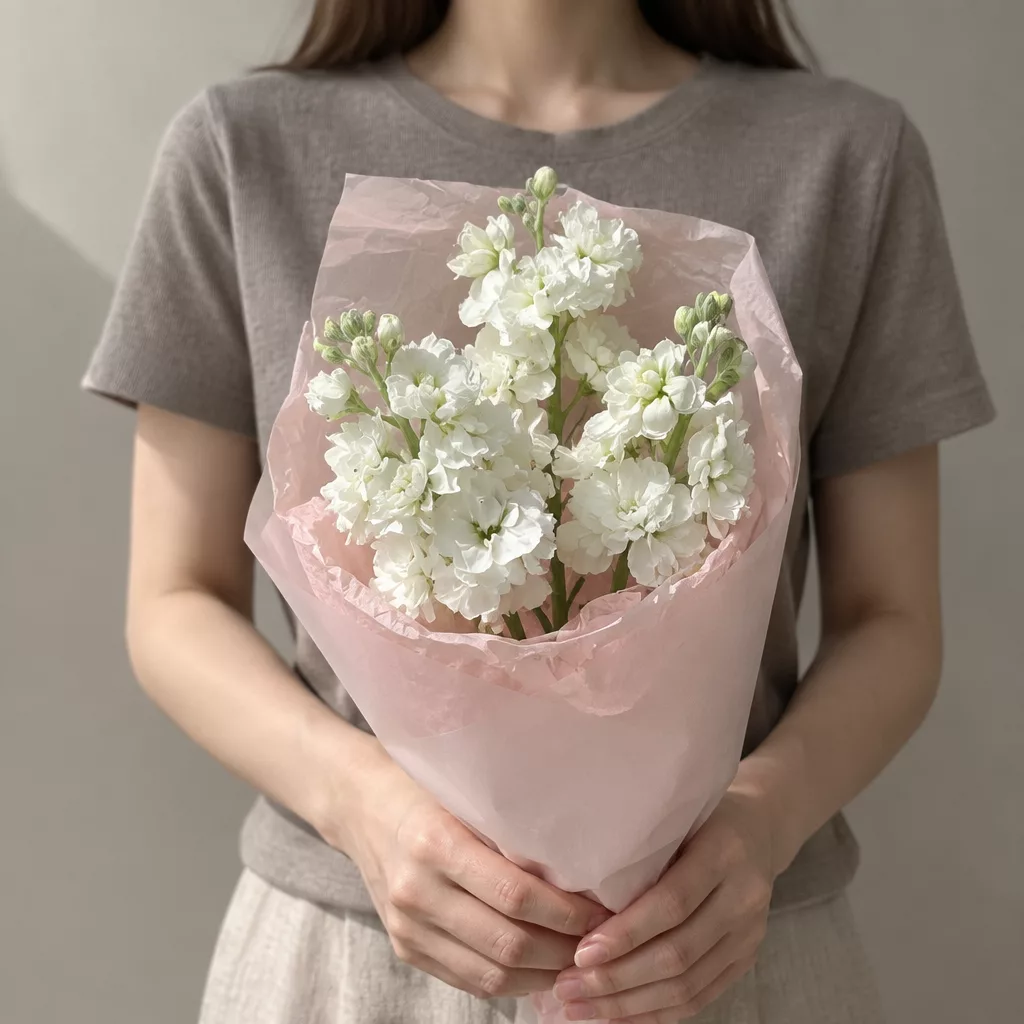
The Flowers Russian Schools Expect to See
Chrysanthemums are the defining flower of Teacher's Day in Russia, and this is not a coincidence. October falls right in the middle of the chrysanthemum season, when spray varieties and large-headed blooms are at their freshest and most affordable. A single-variety bouquet of white or yellow spray chrysanthemums is considered entirely appropriate and is still given widely, especially in primary schools.
Roses remain the prestige option. Red roses carry a romantic association in some contexts, so most florists and parents steer toward cream, peach, coral or deep burgundy tones for teachers. These colours read as warm and respectful rather than intimate. A bouquet of seven or eleven roses — odd numbers are the Russian convention for living recipients — in a tightly gathered round form is a classic choice that never causes awkwardness.
Gerberas are popular with younger children because of their bright, cheerful faces and relatively low cost. They work well in mixed bouquets alongside greenery or small filler flowers like waxflower. Alstroemeria is another practical favourite: the stems are sturdy, the flowers last well out of water, and the colour range is wide enough to suit any teacher's taste.
What you will almost never see on Teacher's Day is a single flower. In Russian gift culture, one stem is associated with mourning. Even a modest budget should produce at least five stems, and most bouquets fall in the seven-to-fifteen range. The number matters more than the variety.
Colours and Combinations That Feel Right for an Educator
Russian flower-giving has a strong colour vocabulary, and Teacher's Day sits in the warm, respectful register rather than the celebratory or romantic one. That means the palette tends toward creams, whites, soft yellows, peachy corals and rich burgundies. Bright reds and hot pinks are not wrong, but they push the bouquet toward a birthday or romantic feeling that can seem slightly off-tone.
Autumn combinations work beautifully because the season provides them naturally. Think cream chrysanthemums with rust-coloured gerberas and a few stems of eucalyptus. Or coral roses paired with white alstroemeria and dark green ruscus. These pairings feel seasonally honest and photograph well, which matters because many teachers share their Teacher's Day flowers on social media.
For younger teachers or those known to have bold taste, a monochromatic bouquet in a single saturated colour — deep purple lisianthus, for example, or a full mass of orange gerberas — makes a stronger impression than a mixed arrangement. It takes confidence to give, which is exactly what makes it memorable.
Avoid mixing too many varieties without a clear colour anchor. A bouquet of five different flowers in five different colours looks confused rather than generous. A working florist's rule of thumb: choose one hero flower, one supporting variety and one foliage or filler element. That structure keeps even a small bouquet looking intentional and composed. If you are ordering online the day before, mention the teacher's approximate age and whether the school is primary or secondary — a good florist uses that information.
Choosing a Bouquet by Budget Without Losing Dignity
Teacher's Day is a day when almost every family in a class participates, which means budgets vary enormously and florists see every price point. The honest truth is that a well-chosen, freshly cut bouquet of five chrysanthemum stems wrapped neatly in kraft paper makes a better impression than a carelessly assembled large arrangement. Freshness and presentation carry more weight than size.
At the modest end of the budget, spray chrysanthemums in a single colour are your best ally. Ask for the stems to be cut to an even length, the lower leaves removed and the wrapping kept clean. A simple satin ribbon in a complementary colour completes the look without adding cost. This is a respectable gift in any Russian school.
In the mid range, a mixed bouquet of seven stems — perhaps five roses and two stems of alstroemeria with eucalyptus — gives the teacher something that will open and develop over several days at home. Roses at this stage of freshness are tight-budded, which is actually ideal: they will not wilt during the school day and will open beautifully in a vase that evening.
For class collections where many families contribute, the bouquet can be larger and more elaborate. A round hand-tied arrangement of fifteen to twenty stems with mixed textures — lisianthus, roses, waxflower, greenery — feels genuinely celebratory. In this case, ask the florist to pack it in a box rather than loose wrapping, so it travels safely through the school morning without losing petals or shape. Box presentation also photographs beautifully for the class group chat.
Ordering Ahead: Timing and What Can Go Wrong
October 5 is a predictable surge day for every flower shop in Russia, and the morning hours between seven and nine are the busiest window. Parents who leave ordering until the evening of October 4 often find that the most popular varieties — spray chrysanthemums, cream roses, peach gerberas — are already sold out or available only in colours they did not want. Ordering two to three days in advance is the safest approach.
If you are ordering delivery to an address so the bouquet arrives before the child leaves for school, specify the earliest available slot. A bouquet delivered at ten in the morning is useless if lessons begin at eight-thirty. Turboflora delivers across Saint Petersburg within one to two hours, but on Teacher's Day it is worth placing the order the evening before and scheduling the delivery for early morning rather than relying on a same-day rush slot.
One common mistake is specifying the school address as the delivery point. Most Russian schools do not accept flower deliveries at the entrance — the logistics are chaotic on this particular day. Deliver to the home address instead, so the child carries the bouquet to school themselves. This is also the more traditional approach: the child presenting the flowers personally is part of the gesture.
Temperature matters in October. Saint Petersburg mornings can drop to five or six degrees Celsius by early October, which is actually good news for cut flowers — the cold slows wilting. But a bouquet left in a warm car for an hour will age quickly. Keep it in a cool entrance hall or carry it outside rather than on a heated back seat.
What Teachers Actually Do With All Those Flowers
A popular teacher in a Russian school can receive fifteen to twenty bouquets on October 5. This is not an exaggeration — in large schools with multiple classes, a beloved form teacher may accumulate more flowers than they can carry in one trip. Understanding this helps you think about what kind of bouquet will genuinely be appreciated rather than just adding to an overwhelming pile.
Bouquets that stand out positively tend to share a few qualities: they are compact enough to hold in one hand, they are wrapped securely so nothing falls apart during the day, and they have a clear visual identity — a strong colour, an unusual variety, or a particularly clean presentation. A small bouquet of five perfect stems in an elegant paper wrap is remembered more fondly than a large, loosely assembled mass of mixed flowers.
Most teachers bring the flowers home that evening and divide them between several vases. This is worth keeping in mind when you think about vase life. Chrysanthemums last seven to ten days in clean water with the stems recut at an angle. Roses last five to seven days if the lower leaves are removed and the water is changed every two days. Gerberas are shorter-lived — three to five days — but vivid while they last. Alstroemeria is the endurance champion, often lasting ten to fourteen days with basic care.
A small handwritten note tucked into the wrapping is remembered long after the flowers have faded. It does not need to be long — two or three sentences from a parent or a child, specific to something the teacher has done, means more than any elaborate arrangement.
Sending Flowers to a Teacher in Another City
Many families in Russia have children studying away from home — in boarding schools, specialist academies or universities in other cities — or simply want to send flowers to a teacher who made a lasting impression years ago. October 5 is a day when that impulse surfaces, and remote delivery is entirely practical if you plan it correctly.
The key consideration for long-distance orders is lead time. If you are sending to a city where the florist needs to prepare and deliver on the morning of October 5, placing the order forty-eight hours in advance gives the best chance of getting the variety and colour you want. Last-minute orders on the day itself risk substitutions that may not match your intention.
When you cannot specify the teacher's taste precisely, neutral and seasonal choices travel best in terms of visual appropriateness. Cream or white chrysanthemums with eucalyptus, or a soft coral rose bouquet, are unlikely to feel wrong for any educator in any school. Avoid highly perishable combinations — open garden roses or tropical flowers — for deliveries that involve any uncertainty about timing.
If you are sending to a school address rather than a home, call ahead to confirm that the school accepts deliveries and find out the best time window. Some schools have a designated reception area for Teacher's Day flowers; others do not. A home delivery scheduled for the evening of October 4, so the teacher wakes up to flowers on the morning of the fifth, is often the most reliably joyful option — and avoids the logistical chaos of the school entrance entirely.
Teacher's Day on October 5 is one of those Russian traditions that rewards a little thought. The teacher who receives twenty bouquets that morning will remember the one that felt personal — the right colour, the right size, the clean wrapping, the note. You do not need to spend more than anyone else in the class. You need to order early enough that the flowers are fresh, choose a combination that suits the season and the person, and make sure the bouquet travels well through a long school morning. Everything else follows from those three things.
Frequently asked questions
Is it acceptable to give a teacher a single flower on Teacher's Day in Russia?
No — in Russian gift culture, a single stem is associated with mourning and is considered inappropriate for a living recipient. Even a small budget should cover at least five stems. Odd numbers are traditional: five, seven or nine stems are all perfectly correct choices for a Teacher's Day bouquet.
Which flowers last longest when a teacher has to carry them through a school day?
Spray chrysanthemums and alstroemeria are the most durable choices. Both hold their shape for six to eight hours without water, which covers a full school day. Roses in tight bud are also reliable. Avoid fully open gerberas or garden roses for a bouquet that needs to survive a morning of lessons and corridors.
Can I send flowers directly to the school on October 5?
It is possible but not always practical. Many Russian schools do not have a formal reception process for deliveries on Teacher's Day, and the entrance can be chaotic during morning arrival. Delivering to the teacher's home address the evening before, or early on the morning of October 5, is usually more reliable and often more touching as a gesture.
What colours should I avoid for a Teacher's Day bouquet?
Bright red roses can feel romantically charged in the Russian context and are better avoided for a teacher gift. White flowers alone are sometimes associated with funerals, so pair white blooms with warm foliage or a coloured accent. Otherwise, colour choice is fairly open — warm creams, corals, yellows and burgundies are the most universally appropriate for educators.
How far in advance should I order Teacher's Day flowers?
Two to three days ahead is ideal. October 5 is one of the busiest days of the year for Russian flower shops, and popular varieties like spray chrysanthemums and cream roses sell out quickly. Ordering by the evening of October 2 or 3 gives you the best selection and allows you to schedule an early-morning delivery slot for the day itself.
Ready to send flowers?
Pick the city, choose the bouquet, and a local florist takes it from there.
Choose a city →