Sending Flowers for Victory Day: What to Choose and What to Avoid
If you have ever wanted to send flowers to a veteran grandfather in Moscow or a family member marking May 9th somewhere across Russia, you may have paused and wondered whether your instincts about colour, flower type, and timing are actually right for the occasion. Victory Day is one of the most emotionally significant dates in the Russian calendar, and the flowers people carry on that day carry weight that goes far beyond decoration. This article will walk you through the real customs — what blooms Russians choose, which colours hold meaning, what to avoid, and how to put together a bouquet that feels genuinely respectful and warm rather than generic.
Why May 9th Feels Different From Every Other Holiday
Victory Day, celebrated on the ninth of May, marks the Soviet Union's victory over Nazi Germany in 1945. For most Russian families, this is not a distant historical event — it is personal. Grandparents, great-grandparents, and great-great-grandparents fought, worked in factories, survived sieges, or lost siblings. That living connection to the war shapes everything about how the day is observed, including the flowers people bring.
The mood of May 9th is not celebratory in the way a birthday is. It holds pride, gratitude, and a quiet kind of grief that sits alongside the joy. Flowers chosen for this day should reflect that emotional register — dignified, sincere, and rooted in tradition rather than trend.
In Saint Petersburg in particular, the date carries extra weight. The city endured a nearly 900-day siege, and virtually every family has a story tied to those years. When you send flowers here on May 9th, you are joining a city-wide act of remembrance. Understanding that context helps you choose not just the right bloom, but the right spirit for the bouquet.
For someone ordering from abroad — whether you are in Berlin, Tel Aviv, New York, or anywhere else with a Russian diaspora connection — the gesture of sending flowers on this day lands with real warmth. Russians notice when people outside the country understand what the date means. Getting the flowers right makes that gesture complete.
Bouquets we can deliver

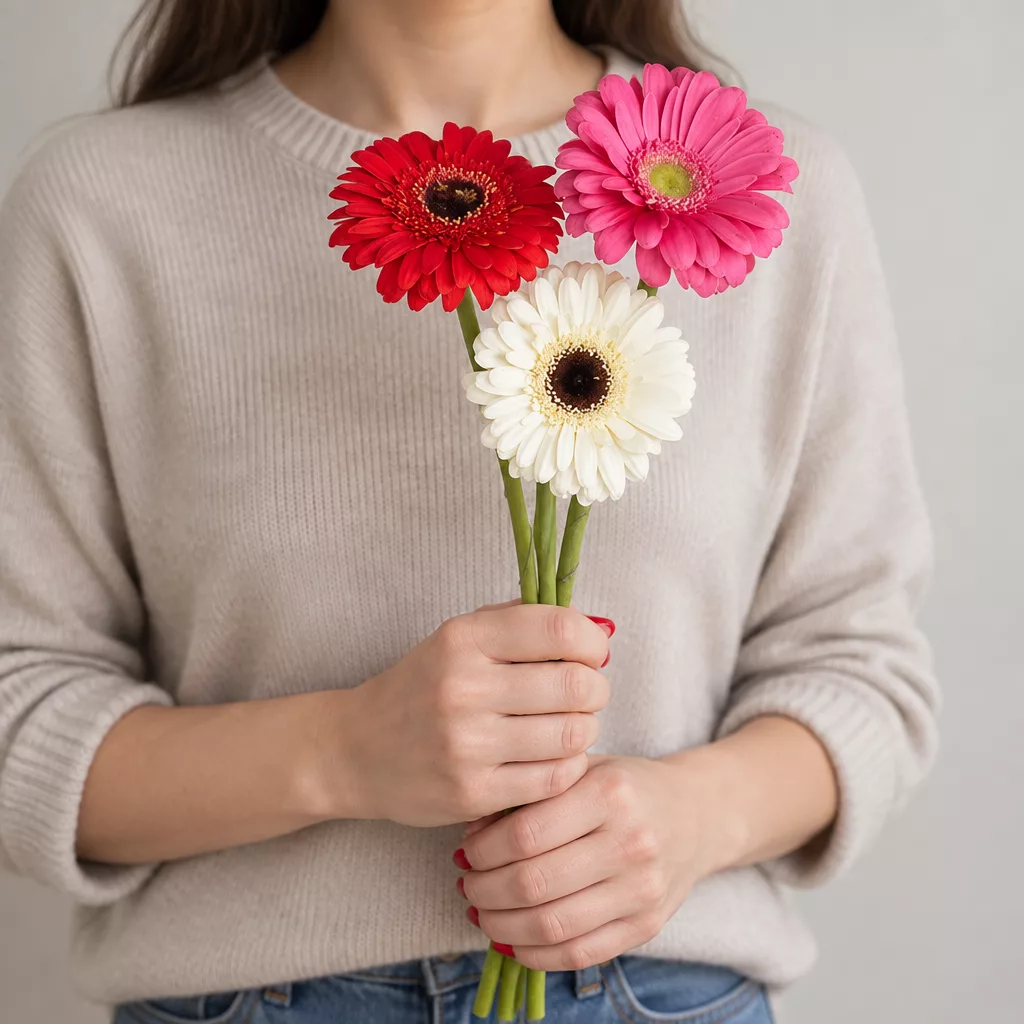

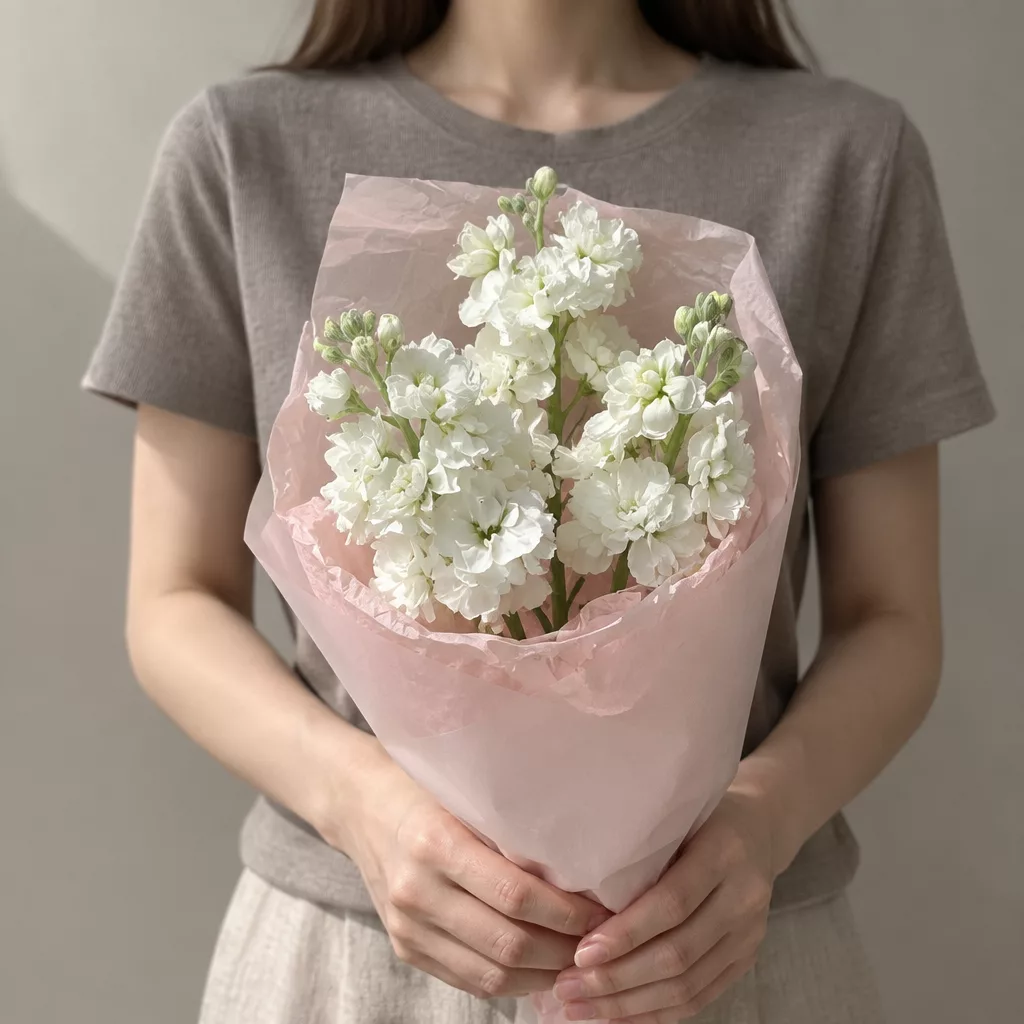
The Red Carnation: Why This Flower Became the Symbol of the Day
Walk through any Russian city on May 9th and you will see red carnations everywhere — pinned to lapels, laid at memorials, carried by schoolchildren, and placed in the hands of veterans. This is not a recent marketing trend. The red carnation became associated with Soviet-era commemoration decades ago, and its role on Victory Day has remained steady across generations and political changes.
Carnations suit the occasion in a practical sense too. They are sturdy, long-lasting, and hold their shape well even when carried outdoors for hours in the mild May temperatures that typically settle over most of Russia by the ninth. A carnation bought in the morning will still look presentable by the afternoon parade.
The variety most commonly used is the standard large-headed carnation — Dianthus caryophyllus — in deep red. Spray carnations, which carry multiple smaller blooms on branching stems, are also used but are considered slightly less formal. If you are building a bouquet for a veteran, the single large-headed red carnation is the correct choice for the anchor bloom.
One important note: carnations in Russia are not exclusively associated with sorrow, despite what some outsiders assume. On May 9th specifically, they are a symbol of honour and living memory. Presenting red carnations to a veteran is an act of respect, not condolence. That distinction matters when you are explaining your order to someone unfamiliar with the custom.
Colours That Work — and the One Colour to Avoid
Red is the dominant colour of Victory Day bouquets, and it works beautifully when paired with white. White adds brightness without diluting the seriousness of the occasion, and the combination reads as both patriotic and elegant. White spray chrysanthemums, white alstroemeria, or white freesia all pair well with red carnations and give the florist room to build texture and volume.
Deep burgundy tones — found in some roses and ranunculus — also sit comfortably within the Victory Day palette. They read as an extension of red rather than a departure from it, and they add depth to a bouquet that might otherwise feel flat if built from a single shade.
Green foliage is used freely. Ruscus, pittosporum, and eucalyptus are all common backing choices. They ground the arrangement and give the eye somewhere to rest between the saturated reds.
The colour to avoid without question is yellow. In Russian floral tradition, yellow flowers carry an association with separation, betrayal, and the end of relationships. This meaning is deeply held and widely understood across generations. Sending a yellow bouquet on any occasion that carries emotional weight — and Victory Day certainly does — risks a reaction that is the opposite of what you intend. Even a single yellow bloom tucked into an otherwise red bouquet can jar. Keep yellow entirely out of the arrangement.
Orange sits in an ambiguous space. It is not as charged as yellow, but it can feel festive rather than solemn. For a Victory Day bouquet, it is safer to stay with the red-white-burgundy range and leave orange for other occasions.
Building a Bouquet by Budget: From Simple to Generous
A respectful Victory Day bouquet does not need to be large or expensive. In fact, a modest, well-composed arrangement often feels more sincere than an oversized display. The key is intentionality — every stem should be there for a reason.
At a simple level, seven or nine red carnations with clean green ruscus backing and a white ribbon is a classic that any veteran or family member will recognise immediately. Odd numbers are traditional in Russian bouquet culture for living recipients, so seven or nine stems is the correct count. Five is acceptable but reads as minimal.
For a mid-range bouquet, you can combine red carnations with white alstroemeria or white freesia. Freesia adds fragrance, which many older recipients appreciate — it makes the bouquet feel alive in the room. Keep the structure round and compact rather than sprawling, which suits indoor spaces better.
For a more generous arrangement, red roses make a natural partner for carnations. Use garden roses rather than tight-budded commercial roses if the season allows — they open more fully and fill a vase beautifully over several days. Add white lisianthus for softness, and finish with deep green foliage to anchor the whole composition.
Whatever the size, avoid cellophane wrapping if possible. Kraft paper or fabric ribbon in red, white, or dark green wrapping feels more considered and less commercial, which suits the occasion well. The presentation signals that thought went into the choice, and that matters on a day when sincerity is the point.
Sending Flowers to a Veteran: Timing and Practical Details
If you are sending flowers to a veteran, timing is everything. May 9th in Russia begins early — ceremonies at memorials often start at ten in the morning, and many veterans attend public events or receive visitors throughout the day. A delivery that arrives after seven in the evening may miss the emotional peak of the day entirely.
Aim for delivery between nine in the morning and one in the afternoon. This window catches the recipient before or just after morning ceremonies, when the day's feeling is at its height. Turboflora delivers across Russia within one to two hours, so placing your order by eight in the morning Saint Petersburg time gives you a comfortable margin for a morning arrival.
If you are ordering from a different time zone — which many people sending to Russia from abroad will be — calculate carefully. Saint Petersburg is UTC+3. Someone ordering from London at six in the morning local time is placing their order at nine in the morning Saint Petersburg time, which still works well. Someone in New York ordering at midnight is placing an order at seven in the morning Saint Petersburg time — early enough to catch the morning window.
Include a note with the bouquet. It does not need to be long. A simple line — thank you for your service, we remember — means a great deal to a veteran receiving flowers from someone who took the time to understand the day. If you write in English, that is fine. Many veterans appreciate knowing the gesture came from outside Russia.
Care Instructions to Pass Along With Your Bouquet
A Victory Day bouquet that arrives on the ninth of May should ideally still look good on the tenth and eleventh. Passing along simple care instructions with the delivery makes that more likely, and it shows an extra level of consideration.
Carnations are genuinely long-lasting flowers. Under good conditions — clean water changed every two days, stems re-cut at an angle, kept away from direct sunlight and radiators — red carnations can hold for ten to fourteen days. In May, most Russian apartments are not yet running summer heat, so temperatures tend to stay moderate indoors, which helps.
White alstroemeria and freesia, if included, will last seven to ten days with the same basic care. Freesia should be kept away from fruit bowls — ethylene gas from ripening fruit accelerates petal drop noticeably.
Roses need slightly more attention. Re-cut the stems under water rather than in air to prevent air bubbles blocking the stem. Remove any leaves that would sit below the waterline, since submerged foliage rots quickly and clouds the water.
For the vase, a tall straight-sided vessel suits carnations better than a wide-mouthed bowl — it supports the stems and keeps the arrangement upright without the stems flopping outward. If the recipient does not have a suitable vase, a simple glass jar works perfectly well and has an honest, unpretentious quality that suits the spirit of the day.
Suggest that the recipient place the bouquet somewhere visible in the home for the day — a windowsill or a table where family gathers. On May 9th, flowers are meant to be seen.
Ordering From Outside Russia: What You Need to Know
Sending flowers to Russia from abroad has become simpler in the sense that digital ordering removes the need for any local knowledge on your part — but it still requires attention to a few practical points that can make or break the delivery.
First, have the recipient's address in Russian-language format, or at least in a form that includes the city, street, building number, and apartment number clearly. Russian postal addresses are structured differently from Western ones — the city and region typically come first, followed by the street and then the building. If you are unsure, ask the recipient to send you their address in the format they would write it themselves.
Second, confirm that someone will be home or reachable by phone during the delivery window. Turboflora delivers within one to two hours and will contact the recipient directly, but if the recipient is at a ceremony or outdoor event for most of the morning, coordinate timing accordingly. A delivery to a neighbour or building concierge can be arranged if the recipient will be out.
Third, write your message card in advance and keep it simple. If you are writing in English, that is entirely acceptable — the florist can include it as written. If you want the message in Russian and do not speak the language, a short phrase translated carefully is better than a long message run through an automatic translator, which can produce awkward results.
Finally, order early. May 9th is one of the busiest delivery days of the year across Russia. Placing your order the evening before or first thing in the morning of the eighth gives you the best choice of flowers and the most reliable delivery slot.
Victory Day is a date that asks something of the people who observe it — a moment of genuine attention to what happened and who carried it. Flowers on May 9th are not decoration. They are a language, and like any language, they communicate most clearly when you know the words. Red carnations, white accents, odd numbers, morning delivery, a handwritten note — these are small details that add up to a gesture a veteran or their family will feel rather than simply receive. Whether you are sending from Saint Petersburg, from Moscow, or from the other side of the world, the care you put into the choice is the message itself.
Frequently asked questions
Can I send roses instead of carnations for Victory Day?
Yes, red roses are a respectful and widely accepted choice for May 9th. They work especially well when combined with red or white carnations rather than used alone, which gives the bouquet more texture and a stronger connection to the traditional Victory Day palette. Avoid yellow or orange roses for this occasion.
Is it appropriate to send flowers to a veteran I have never met personally?
Absolutely. In Russia, it is common for strangers — schoolchildren, community groups, neighbours — to present flowers to veterans on May 9th as a public act of gratitude. Sending a bouquet from abroad to a veteran you know through family or community carries the same spirit and is almost always received with genuine warmth.
What is the right number of flowers to include in a Victory Day bouquet?
Use an odd number of stems — seven, nine, or eleven are all appropriate for a living recipient. Even numbers are traditionally reserved for funerary arrangements in Russian custom, so a bouquet of eight or ten carnations would feel wrong to many recipients, even if they could not immediately explain why.
How far in advance should I order if I am sending from a different country?
Order at least the evening before May 9th, or early on the morning of the eighth. May 9th is one of the highest-demand delivery days of the year across Russia. Ordering ahead gives you access to the best available flowers and ensures your chosen delivery time — ideally before noon — can be confirmed without difficulty.
Do I need to write the message card in Russian?
No. A message written in English, or in any language the sender is comfortable with, is perfectly fine. Veterans and their families understand that the gesture comes from someone outside Russia and appreciate the effort regardless of language. Keep the message short and sincere — a sentence or two is more than enough.
Ready to send flowers?
Pick the city, choose the bouquet, and a local florist takes it from there.
Choose a city →