Wedding Flowers in Russia: What Bouquets Brides Expect
A Russian wedding is a full-sensory event — long toasts, layered traditions, and flowers that carry real meaning. If you are choosing a bouquet for a bride in Russia, or sending congratulatory flowers to a venue from abroad, the expectations are specific and the stakes feel high. This article walks you through what brides here actually love, what the seasons allow, and how to make sure your flowers arrive looking as though they were arranged five minutes ago.
The Bridal Bouquet as a Statement, Not Just an Accessory
In Russia, the bridal bouquet is treated as a centrepiece of the entire look, not a detail to finalise the week before the wedding. Brides spend considerable time choosing it, and guests notice it closely — photographs of the bouquet circulate through family group chats before the reception is even over. This is worth understanding if you are sending flowers as a gift or helping someone choose remotely.
Russian brides tend to prefer structured, generous arrangements over loosely gathered wildflower styles. A bouquet that looks effortless but holds its shape through a five-hour ceremony and a reception dinner is the goal. Florists here work with that practical reality: wiring, conditioning, and water tubes are used more readily than in some Western traditions, because the bouquet genuinely needs to last.
The size expectation also differs. A small posy that might feel chic in a European city context can read as underdressed at a Russian wedding. Most brides here want something that photographs with presence — a rounded cascade or a tight dome shape that sits confidently in both hands. That does not mean excessive or fussy; it means intentional and full. When guests send congratulatory arrangements to the venue, the same logic applies: a sparse arrangement in a large reception hall simply disappears.
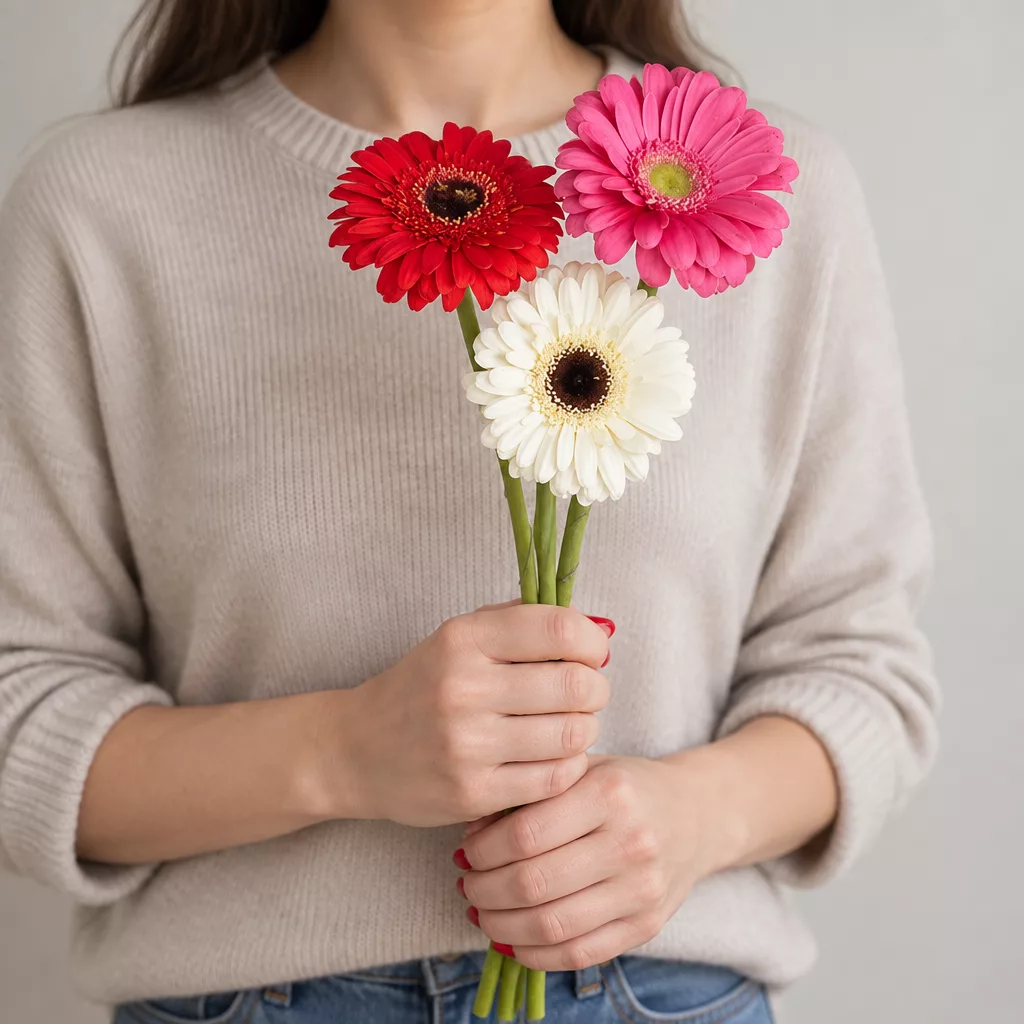
Bouquets we can deliver



Popular Styles Russian Brides Are Choosing Right Now
The monobouquet — one variety, many stems — has had a long run in Russia and remains genuinely popular. Garden roses in a single blush or ivory tone, ranunculus packed tightly together, or peonies massed into a dense dome are all considered elegant rather than plain. The effect is luxurious precisely because it is restrained in variety but generous in volume.
Next to that, the garden-style bouquet has grown steadily over the past several years. This combines two or three main flowers with softer fillers: garden roses with sweet peas and astrantia, or lisianthus with scabiosa and eucalyptus. The key difference from a wildflower arrangement is that the proportions are still controlled. Nothing spills too far, and the colour palette stays within two or three tones.
Cascade bouquets — where the arrangement trails downward — remain a choice for more formal or church weddings. They take more skill to carry gracefully, but they photograph beautifully against a white dress. Orchids, stephanotis, and ivy are common elements here.
Minimalist bouquets using a single type of calla lily or a few stems of tulips wrapped in structured foliage do appear, but they are more common in urban civil ceremonies than in large family weddings. If you are choosing flowers for someone whose wedding will have more than eighty guests, lean toward fullness. It reads better in the room and in photographs, and it matches what the bride's family will likely expect to see.
Colour Symbolism Every Guest Should Know
White is the dominant bridal colour in Russia, as in most of Europe, and it carries the same associations: purity, new beginnings, and formality. White roses, white peonies, white lisianthus, and white ranunculus are all safe and beautiful choices for both the bride's bouquet and congratulatory arrangements sent to the venue.
Blush and ivory are equally welcome and have become very fashionable. They photograph warmly and complement the skin tones common in Russian brides without the harshness that pure white can sometimes create under bright reception lighting. A blush garden rose or a cream-toned peony is rarely a wrong choice.
Red flowers deserve a careful note. In everyday Russian gifting culture, red roses are strongly associated with romantic love between partners. Sending a large red rose arrangement to a bride from someone other than the groom can feel slightly awkward, particularly to older family members who read the symbolism literally. Deep burgundy or wine tones — think burgundy ranunculus or dark-red peonies — read differently and are considered sophisticated rather than forward.
Yellow flowers carry a folk association with separation or bad luck in some Russian traditions, particularly among older generations. This association is fading among younger couples in cities, but it is still worth knowing. If you are sending flowers from abroad and are unsure of the family's background, it is safer to avoid yellow as the dominant colour. Accents of warm gold or champagne tones in a mixed arrangement are generally fine and are not read the same way as a yellow-forward bouquet.
Seasonal Availability and What It Means for Your Order
Russia has four distinct seasons, and while modern logistics mean that roses and lilies are available year-round through import, truly seasonal flowers make a significant difference in quality and vase life. A florist who understands this will always tell you what is peaking locally rather than simply filling an order with whatever is in the cooler.
Spring weddings, particularly May and June, are the peak season in Russia, and they coincide with the best availability of peonies, ranunculus, sweet peas, and garden roses. These flowers are at their most fragrant and their most reasonably priced during this window. A June bride who wants peonies is working with the season, not against it.
Summer weddings in July and August benefit from dahlias, lisianthus, and eustoma, which hold extremely well in warm conditions when properly conditioned. These months can be hot in Saint Petersburg and hotter still in southern Russian cities, which matters for delivery. Flowers ordered for a midday outdoor ceremony in August should be delivered early in the morning and kept in a cool interior space until the ceremony begins.
Autumn brings hydrangeas, chrysanthemums, and late dahlias, and the cooler temperatures are actually ideal for flower longevity. Winter weddings, which are popular in Russia around the New Year period, rely heavily on imported roses, amaryllis, and spray carnations, supplemented with eucalyptus and pine for texture. Locally grown options are limited, but the cold itself helps: flowers delivered in January last longer once placed in a cool reception hall than they would in July.
Congratulatory Arrangements for Guests Sending from Abroad
If you are attending a Russian wedding from overseas, or if you cannot travel but want to send flowers directly to the venue, the process is more straightforward than many people assume — provided you plan with enough lead time and give accurate information.
The most important detail is the venue address and the exact time the reception begins. Russian wedding receptions often start later than the ceremony, and flowers sent to arrive during the ceremony itself may sit in a lobby without anyone available to receive and place them. Aim to have congratulatory arrangements arrive between thirty and sixty minutes before guests are seated for the reception dinner.
For venue arrangements, size matters more than it does for a personal gift. A small vase of flowers in a large banquet hall reads as an afterthought. A full arrangement — think a generous cluster of garden roses or hydrangeas in a wide-mouthed vase — makes the impression you intend. If the venue has a long head table, two matching arrangements placed symmetrically are more impactful than one centrepiece.
When ordering from abroad, provide the bride's name and the groom's name for the card, and write the message in Russian if possible — even a simple transliterated congratulation means a great deal to the family. Turboflora delivers across Russia within one to two hours of order confirmation, which means same-day orders are genuinely possible if the timing works. For a wedding, however, placing the order the day before gives you a buffer and allows you to specify a precise delivery window without any stress.
Caring for Wedding Flowers on the Day
The most common mistake at Russian weddings is leaving flowers in a warm car. A bouquet that has been in a closed vehicle for forty minutes in summer heat will look visibly stressed by the time the ceremony begins. Flowers should travel in the coolest part of the car, ideally with air conditioning running, and should never be left in direct sunlight.
For the bride's bouquet specifically, a water tube on the stems — a small plastic vial that your florist can attach — extends freshness significantly during a long day. Many Russian florists include this as standard for bridal work, but it is worth confirming when you place the order. Between the ceremony and the reception, the bouquet should be placed in a cool room with the stems in water, even briefly.
Guests who receive floral gifts at the venue should ask staff for a vase and water immediately. Flowers left in cellophane wrapping for more than an hour begin to wilt from the base upward. Unwrapping, trimming a centimetre from each stem at a diagonal, and placing them in cool water is all it takes to reset them.
For table arrangements, keep them away from candles and heat sources. Hydrangeas in particular are sensitive to warmth and will droop within an hour if placed near a candle cluster. Roses and lisianthus are more forgiving, but no flower benefits from heat. A good florist will have conditioned all stems for at least twelve hours before delivery, which means the flowers arrive fully hydrated and ready to perform — your job is simply to keep them cool and in water from that point forward.
Sending Flowers to a Wedding Venue Across Russia
Russia is a large country, and weddings happen in cities ranging from Kaliningrad on the western edge to Vladivostok in the east. The logistics of sending flowers across that distance are genuinely different from sending within a single city, and understanding them helps you plan realistically.
Turboflora delivers fresh flowers across Russia within one to two hours of order confirmation. This is possible because arrangements are prepared locally and dispatched by courier, rather than being shipped through a postal system. The flowers arrive fresh because they have not spent time in transit boxes or unrefrigerated vehicles. For a wedding in a city you cannot visit yourself, this means you can send something that looks and smells as though you arranged it yourself that morning.
The information you need to provide is specific: the full venue address including floor or hall number if relevant, the bride and groom's full names, the preferred delivery time, and a contact phone number at the venue. Most Russian wedding venues have a coordinator or administrator who can receive flowers on behalf of the couple — including this person's name in your order notes removes any ambiguity.
If you are sending from a country with a significant time difference, calculate the Moscow time equivalent before placing your order and specify the delivery window in Moscow time. Russia spans eleven time zones, so a wedding in Novosibirsk is four hours ahead of Moscow, and a wedding in Khabarovsk is seven hours ahead. Turboflora's team can help you work through the timing if you reach out in advance — a short message with the city, the venue, and the ceremony start time is all that is needed to get an accurate delivery window confirmed.
Russian weddings are generous occasions, and the flowers you choose or send carry a weight of meaning that guests and family will notice. Whether you are selecting a bride's bouquet, sending congratulatory arrangements to a venue across the country, or simply trying to understand what the occasion calls for, the principles are consistent: fullness over sparseness, cool tones over yellow, seasonal varieties when possible, and careful attention to timing and temperature on the day itself. A well-chosen arrangement, delivered at the right moment to the right address, is one of the most personal gifts you can give to a couple beginning their life together.
Frequently asked questions
What is the most popular bridal bouquet flower in Russia?
Garden roses and peonies are consistently the most requested flowers for Russian bridal bouquets. Peonies peak in May and June, making spring the ideal season for them. Roses are available year-round at high quality. Ranunculus and lisianthus are close alternatives that hold their shape well through a long wedding day and photograph beautifully in both natural and artificial light.
Is it appropriate to send yellow flowers to a Russian wedding?
Yellow flowers carry an association with separation or bad luck in older Russian folk tradition, and some families still take this seriously. Among younger urban couples the belief is fading, but if you are unsure of the family's background it is safer to choose white, blush, or burgundy tones instead. Warm gold accents within a mixed arrangement are generally not read the same way as a yellow-dominant bouquet.
How far in advance should I order flowers for a Russian wedding venue?
Placing your order the day before the wedding gives you the most flexibility and allows you to specify an exact delivery window without rushing. Same-day delivery is available across Russia within one to two hours of order confirmation, so last-minute orders are possible — but for a wedding, where timing is precise and the stakes are high, a day's lead time removes unnecessary stress for everyone involved.
What size arrangement is appropriate to send as a congratulatory gift to a reception venue?
In a Russian reception hall, which is often a large banquet space, a small arrangement can look underwhelming. Aim for a full, generous vase arrangement rather than a compact bouquet. If the couple has a long head table, two matching arrangements placed symmetrically make a stronger impression than a single centrepiece. The goal is something that reads clearly from across the room and photographs well alongside the couple.
How do I ensure flowers delivered to a venue stay fresh throughout the reception?
Ask venue staff to place arrangements in water immediately upon arrival and keep them away from candles, radiators, and direct sunlight. The bride's bouquet should rest in water between the ceremony and reception if there is a gap. Flowers delivered by Turboflora are conditioned for at least twelve hours before dispatch, so they arrive fully hydrated — keeping them cool and in water from that point is all that is needed to maintain their appearance through the evening.
Ready to send flowers?
Pick the city, choose the bouquet, and a local florist takes it from there.
Choose a city →