Why Flowers in Russia Must Come in Odd Numbers
You have found the perfect roses, chosen a beautiful wrap, and typed in the delivery address — then someone mentions that the number of stems matters enormously in Russia. They are right. One small counting error can turn a celebratory gift into something that carries the wrong meaning entirely. This article explains the rule plainly, shows you how to count stems correctly, and helps you choose a bouquet that arrives feeling exactly as joyful as you intended.
The Rule and Where It Comes From
In Russian culture, even numbers of flowers are associated with grief and are traditionally brought to commemorations of the deceased. Odd numbers belong to the living — to birthdays, anniversaries, graduations, declarations of love, and every other celebration you can think of. This is not a vague superstition that only older generations observe. It is a widely held social norm that spans age groups and regions, from Saint Petersburg to Vladivostok, and most Russians will notice immediately if a bouquet contains an even count.
The origin is not precisely documented, but the pattern appears across Slavic cultures and likely developed over centuries of folk tradition linking even numbers to endings and odd numbers to continuation and growth. Whatever the historical root, the practical reality today is consistent: if you are sending flowers to mark something happy, the stem count must be odd.
This does not mean you need to obsess over every filler stem or leaf. The rule applies to the main flowering stems — the roses, peonies, tulips, or whatever variety forms the heart of the arrangement. Understanding this distinction already removes most of the anxiety around ordering. A working florist counts the feature flowers, not every sprig of eucalyptus or piece of gypsophila tucked in for texture.
Bouquets we can deliver

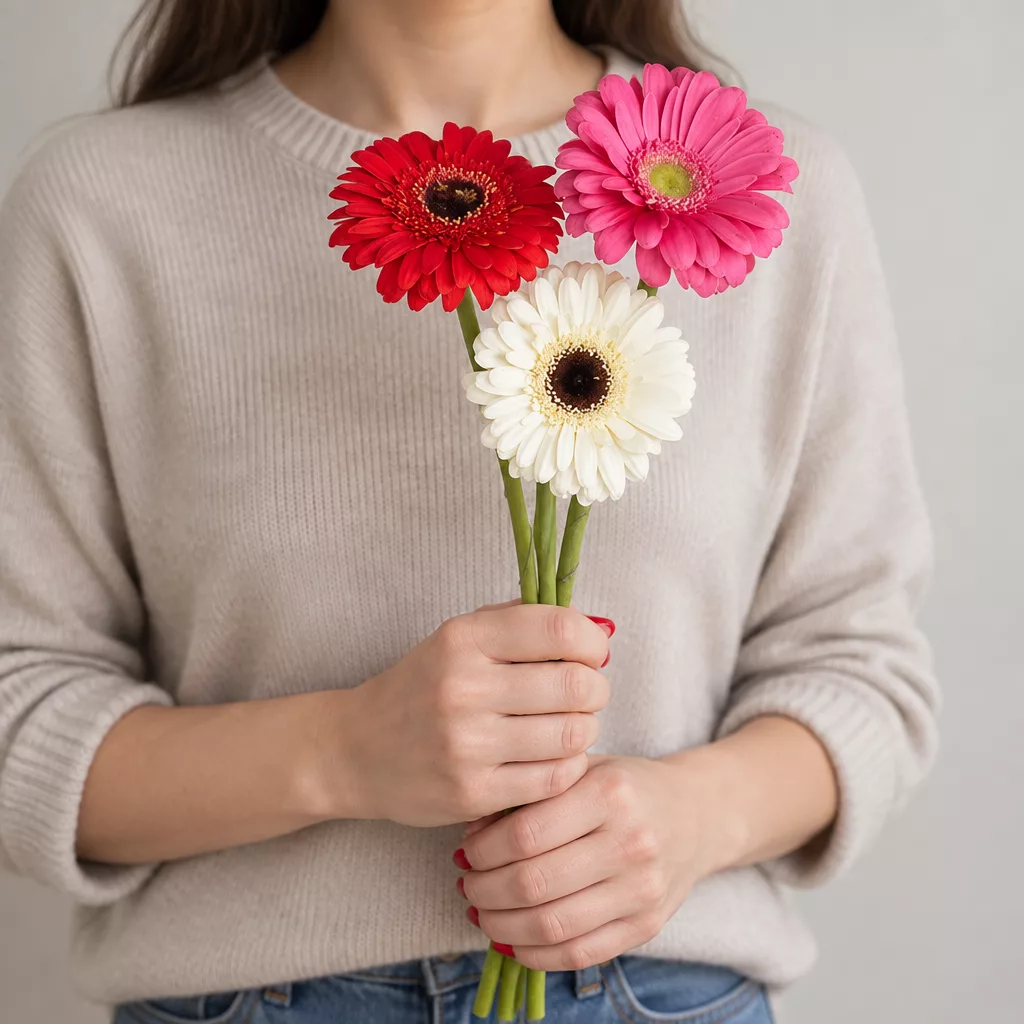


Which Stems Actually Count When You Are Ordering
The counting question trips up a lot of people ordering online, especially when a bouquet description lists multiple flower types. The short answer is that each individual flowering stem counts as one, regardless of variety. A bouquet of seven roses and four lisianthus contains eleven countable stems — odd, and perfectly appropriate for a celebration.
Where it gets slightly more complex is with branching stems. A single stem of waxflower, for example, may carry dozens of tiny blooms on multiple branches. In practice, florists count that as one stem, because it entered the arrangement as one cut. The same applies to a spray rose stem that forks into several heads: one cut at the base means one stem in the count.
Blooms that grow as a cluster on a single stalk — such as a standard spray carnation or a multi-headed alstroemeria — also count as one. The rule was never intended to make arithmetic impossible; it reflects the intention behind the gift, and a single cut stem carries that intention regardless of how many flowers it produces at the top.
When you order from Turboflora, the florist assembles the bouquet with the final stem count clearly in mind. If you specify a number, they build to it. If you choose a curated arrangement by size or budget rather than by stem count, the team ensures the total lands on an odd number before the bouquet leaves the workroom. You do not need to audit the finished piece — but it helps to understand the logic so you can describe what you want with confidence.
Odd Numbers That Work Beautifully at Each Scale
Three stems feel intimate and modern — a tight trio of garden roses in blush, cream, and soft coral can look more considered than a sprawling dozen. Five stems allow a little more movement and work particularly well with tulips in spring, where the natural lean and curve of each stem creates an effortless, just-picked feeling. Seven is a classic number for a meaningful gift: seven peonies in late May or early June, wrapped in kraft paper with a ribbon, reads as genuinely generous without being overwhelming.
Nine and eleven stems mark a step up in presence. Eleven long-stemmed roses in a single saturated colour — deep burgundy, warm apricot, or pure white — make an impression at the door that needs no explanation. Fifteen stems give a florist enough material to build real depth, layering different textures: ranunculus at the centre, flanked by lisianthus and accented with dusty miller for a silvery contrast.
Twenty-one and twenty-five stems move into grand gesture territory. At this scale, combining varieties becomes essential, because a single flower type in large quantities can look stiff. A mix of garden roses, sweet peas when in season, and a few stems of scabiosa gives the arrangement an organic, abundant quality that feels luxurious rather than formal.
The number itself is not the point — the feeling it creates for the person opening the door is. Choose the scale that matches the occasion and let the odd count take care of the cultural meaning on its own.
Common Mistakes People Make Without Realising
The most frequent error is ordering by round numbers out of habit. Ten roses, twenty tulips, a dozen of anything — these are the numbers that come naturally when shopping in most Western contexts, and they are all even. If you are accustomed to ordering flowers in multiples of ten or in dozens, you will need to consciously shift that habit when sending to someone in Russia.
A second mistake is assuming that adding a single extra stem after the fact fixes the problem neatly. It does, arithmetically — but it can throw off the visual balance of a finished arrangement if the florist has already composed it. The better approach is to specify an odd number from the start, or to let the florist know you want the final count to be odd and trust them to build accordingly.
Some people also forget to account for stems added at the last moment: a single accent flower tucked in at the wrapping stage, a stem of ornamental grass, or an additional rose slipped in as a bonus. Each of these changes the count. A well-trained florist tracks this automatically, but if you are assembling anything yourself or coordinating a large order with specific quantities, keep a running tally.
Finally, do not assume that the rule only matters for roses or for romantic occasions. It applies to any celebratory flower gift in Russia — a cheerful sunflower arrangement for a colleague's promotion, a bundle of chamomile-like matricaria for a child's teacher, a vibrant mix of gerbera for a housewarming. The occasion changes; the counting rule stays the same.
How the Occasion Should Shape the Number You Choose
The number of stems is one of the clearest signals about the weight of the occasion, and it is worth thinking about before you order rather than after. A birthday for a close friend calls for something that feels warm and abundant — thirteen or fifteen stems in her favourite colours, wrapped loosely so the bouquet looks generous rather than rigid. A first date or an early romantic gesture might actually benefit from restraint: five or seven stems of a single beautiful variety say that you thought carefully rather than spent extravagantly.
For professional occasions — congratulating a colleague on a promotion, thanking a business partner, marking a company anniversary — odd numbers in the lower range, arranged with clean lines and a neutral palette, tend to land better than exuberant mixed bouquets. Nine white chrysanthemums or eleven stems of pale lisianthus communicate respect and thoughtfulness without overstepping the professional register.
Children's occasions have their own logic. A teacher receiving flowers at the end of the school year is a deeply embedded Russian tradition, and the bouquets tend to be cheerful and colourful rather than sophisticated. Seven or nine stems of bright gerbera, or a mixed posy of seasonal flowers in yellow, orange, and pink, fits that moment perfectly.
Mother's Day and Women's Day on the eighth of March are the two dates when flower demand in Russia peaks most dramatically. On these occasions, the bouquet often needs to feel genuinely special — fifteen or twenty-one stems, with interesting variety combinations, signal that the occasion was taken seriously. The odd number carries that message without you having to say a word.
Keeping an Odd-Numbered Bouquet Looking Its Best
The care instructions for a bouquet do not change based on stem count, but the way you arrange flowers in a vase does. Odd numbers are actually easier to display attractively than even numbers, because they resist the temptation to line up symmetrically. Three roses in a vase look best placed at slightly different heights and angles — one forward, one angled left, one angled right — which creates a natural triangle that the eye reads as balanced without being rigid.
For larger bouquets of fifteen or more stems, cut each stem at a forty-five-degree angle under running water before placing them in a clean vase filled with fresh, cool water. Room temperature in Russia during winter is often quite warm due to central heating, which accelerates wilting. Keep the vase away from radiators and direct sunlight, and change the water every two days.
Roses, which are among the most commonly gifted flowers in Russia, typically last seven to ten days with proper care. Tulips, especially popular in spring, are shorter-lived at five to seven days but can be extended by keeping the water very cold and the room as cool as possible. Peonies, beloved for their lush, full heads, last five to seven days and drop petals dramatically when they are past their peak — beautiful even then, but plan for the mess.
Lisianthus and alstroemeria are among the longest-lasting cut flowers and can hold for two weeks under good conditions, making them excellent choices when you want the gift to feel lasting. A bouquet that stays beautiful for ten days tells its own story about how much thought went into choosing it.
Ordering Confidently When You Are Not in Russia
Many of the people sending flowers through Turboflora are doing so from outside Russia — a family member in another country wanting to reach someone in Saint Petersburg, or an international colleague marking an occasion for a Russian partner. The distance adds a layer of uncertainty, and the cultural counting rule is one more thing to get right without being able to check in person.
The practical answer is to be explicit in your order notes. Write the total stem count you want, or simply note that the count must be odd, and the florist will take it from there. If you are choosing a curated arrangement rather than specifying stems individually, you can add a note in the comments field and the team will confirm the count before dispatch.
Season matters more than many people realise when ordering from abroad. Peonies are available in Russia from roughly late May through June. Tulips peak in March and April. Roses and chrysanthemums are available year-round. If you have a specific flower in mind, it is worth checking whether it is in season at the time of delivery, because an in-season flower arrives fresher, lasts longer, and costs less than one that has been transported from far away.
Delivery timing is another variable worth planning around. Turboflora delivers across Russia within one to two hours of order confirmation, which means a morning order can reliably reach someone before a lunch celebration, and an afternoon order can arrive in time for an evening dinner. Factor in the time difference between your location and Saint Petersburg when you schedule the delivery, and the bouquet will arrive exactly when it should — odd-numbered, fresh, and carrying exactly the meaning you intended.
The odd-number rule is one of those cultural details that feels small until it is wrong, and completely natural once you understand it. It is not a burden on the ordering process — it is simply part of what makes a flower gift feel right to the person receiving it in Russia. Count the main flowering stems, aim for an odd total, and then focus on what actually makes a bouquet memorable: the combination of varieties, the colours that suit the recipient, the scale that matches the moment. Get those things right and the flowers will do the rest of the work themselves.
Frequently asked questions
Does the odd-number rule apply to all types of flowers or just roses?
It applies to any celebratory flower gift in Russia, regardless of variety. Whether you are sending tulips, sunflowers, peonies, or a mixed arrangement, the total stem count of the main flowering stems should be odd. The rule is about the number, not the flower type, so it holds across every occasion and every season.
Do filler flowers like gypsophila or eucalyptus count toward the stem total?
Generally, no. The count applies to the main feature flowers — the roses, tulips, peonies, or other prominent blooms that form the heart of the arrangement. Greenery, filler stems, and decorative foliage are not typically included in the count. If you are unsure, specify the number of feature stems you want and let the florist handle the rest.
What if I accidentally ordered an even number — can it be corrected after placing the order?
Yes, contact Turboflora as soon as possible after placing the order. If the bouquet has not yet been assembled, the florist can adjust the stem count easily. Adding or removing one stem before the arrangement is built takes moments. Once a bouquet is finished and wrapped, changes become more difficult, so the earlier you catch the error the better.
Is thirteen considered unlucky in Russia the way it is in some Western cultures?
Thirteen does not carry the same strong negative association in Russian culture that it does in some Western traditions. It is an odd number and therefore entirely appropriate for a celebratory bouquet. Russians are far more attentive to even versus odd than to any specific number within the odd sequence, so thirteen roses or thirteen tulips is a perfectly fine and generous choice.
How far in advance should I order if I want flowers delivered at a specific time?
Turboflora delivers within one to two hours of order confirmation across Russia, so same-day ordering works well for most occasions. For time-sensitive deliveries — a birthday breakfast surprise or flowers before an evening event — placing the order two to three hours ahead gives comfortable margin. If you are ordering from a different time zone, account for the difference when scheduling.
Ready to send flowers?
Pick the city, choose the bouquet, and a local florist takes it from there.
Choose a city →