Will Flowers Go Bad in the Car? How to Protect Your Bouquet
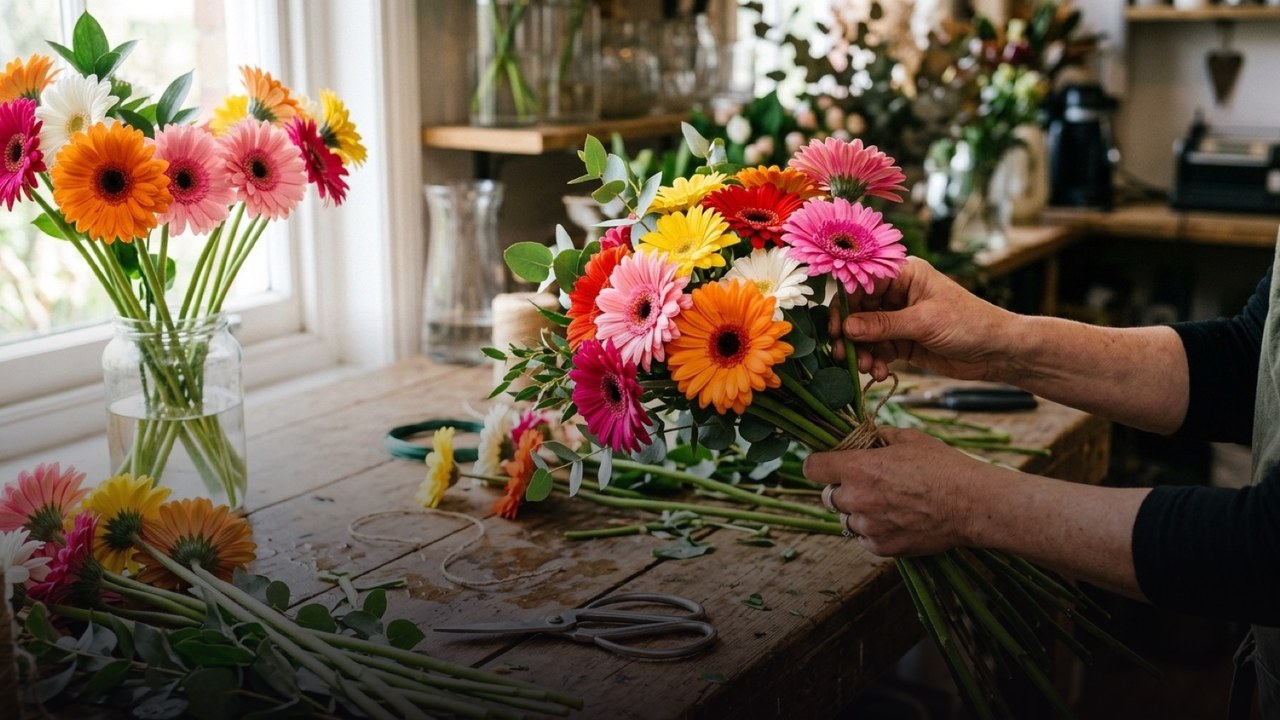
Yes, flowers can go bad in the car, especially if you leave them parked in heat, direct sun or freezing conditions. A short journey in a comfortable passenger cabin is usually less risky, but there is no universal safe waiting time: temperature, water supply and the condition of the flowers all matter.
The first problem is often loss of freshness rather than visible decay. Petals may bruise, stems may lose firmness and flower heads may droop before you reach your destination. If you are collecting a gift, plan the journey around the bouquet: prepare a stable place for it, keep the cabin comfortable and take the flowers indoors as soon as you arrive.
What makes flowers deteriorate inside a car?
Heat increases water loss, while cut stems have a limited ability to replace that moisture, particularly when they are out of water. A parked car in sunshine can become much warmer than the air outside. Leaving a window slightly open does not provide reliable protection, and shade can move while you are away from the vehicle.
Cold creates a different risk. Freezing conditions can damage flower tissue, with translucent patches, limp petals or browning becoming apparent after the bouquet warms up. Paper wrapping offers some protection during a brief transfer between buildings, but it does not make an unheated car a suitable place to store flowers.
Physical damage matters too. A bouquet sliding across a seat, pressed against luggage or rubbing against a window can arrive with creased petals and broken stems even when the temperature is comfortable. Think about three separate needs before setting off: a suitable cabin temperature, access to moisture and support that prevents movement.
How long can you leave a bouquet in the car?
There is no dependable answer such as “two hours is always fine”. The same bouquet may travel well during a short, climate-controlled journey and deteriorate during a much shorter stop in a hot parked car. The dashboard temperature display also cannot tell you how warm the flowers are getting in a patch of direct sunlight.
Make collecting flowers one of your last errands before going to the recipient. If you need to stop for lunch, shopping or an appointment, take the bouquet into a suitable indoor space with you where possible. Do not rely on the flowers looking fresh when you park: damage can develop while you are away and become clearer later.
An overnight stay is especially difficult to judge because conditions can change while no one is checking the bouquet. Move flowers indoors and put cut stems in a clean vase rather than leaving them in the vehicle until morning. For more detail on journey length, see our guide to leaving flowers in a car for a few hours.
Bouquets we can deliver




Prepare the car and support the flowers before you drive
Bring the passenger cabin to a comfortable temperature before loading the bouquet. Choose a shaded position away from the windscreen and side windows, and keep flowers out of the direct stream from heating or air-conditioning vents. A strong airflow can dry exposed petals; turning the cooling as high as possible is not a substitute for careful positioning.
Keep the bouquet supported without squeezing the flower heads. A clean, open box can help contain the wrapping and stop the stems sliding, provided the blooms have enough room. Place it on a level, stable surface where it cannot tip or interfere with the driver, pedals or controls. Never put loose flowers where they could obstruct your view.
If the stems have a water pack, keep it upright and check that it is not leaking before departure. For flowers travelling in a vase, secure the vessel inside a stable container and protect nearby surfaces from spills. Avoid transporting an unsecured glass vase. Our bouquet transport guide covers positioning and protection in more detail.
Water, wrapping and the handover at your destination
A small water pack is a temporary source of moisture, not permission to leave flowers in the car for hours. Check whether the cut ends actually reach the water, and keep any ties holding the pack in place intact during the journey. Decorative wrapping alone does not hydrate the bouquet, however substantial it looks.
For ordinary cut stems, prepare a clean vase with fresh water when you arrive. Remove the transport water pack and any leaves that would sit below the waterline, then recut the stem ends with a clean, sharp tool before arranging them. If flower food is supplied, follow its instructions instead of guessing how much to add or using household mixtures.
An arrangement set in floral foam or another fitted base needs different handling: do not pull the stems out to treat it like a hand-tied bouquet. Keep its container level and follow the care guidance supplied. When giving any flowers, hand them over promptly and mention whether they need a vase, especially if the recipient is hosting guests or preparing to leave.
What to do if flowers already look wilted or damaged
Take the bouquet out of the car and into a cool indoor space away from direct sun and heaters. For cut stems, use a clean vase, fresh water and a fresh cut at the stem ends. Allow time for the flowers to take up water before deciding how much freshness they have lost; some drooping caused by water shortage may improve.
Rehydration cannot repair every problem. Crushed petals, snapped stems and tissue damaged by freezing will not return to their original condition simply because you add water. Remove badly damaged material carefully, and avoid repeatedly touching delicate petals while checking them. If stems are soft or slimy, clean the vase and remove affected material before rearranging.
Do not use a freezer, ice bath or a blast of cold air as an emergency remedy for an overheated bouquet. A steady, suitable indoor environment is a more sensible first step. Keep the flowers out of strong sun afterwards, replace water when it becomes cloudy and remove fading flowers so you can assess the condition of the remaining stems.
Sending flowers in Russia without arranging the car journey yourself
If you live abroad and are organising a gift for someone in Russia, delivery can remove the need to ask a friend to collect and store the bouquet in a car. Turboflora delivers flowers across Russia. You can choose from the bouquets catalogue; city delivery costs 500 RUB, while the operator confirms the price for remote districts and suburbs when confirming the order.
In large cities, express delivery is available in 1–2 hours after the order is confirmed. You can also choose an exact time with a tolerance of plus or minus 30 minutes, a 09–12, 12–15, 15–18 or 18–21 window, or preorder 1–30 days ahead. Check that the recipient can receive the flowers: the courier calls about 15 minutes before arrival.
Use WhatsApp to get help choosing a bouquet, agree the time and address, provide card text or arrange a photo before delivery. Delivery is anonymous by default, so the courier does not name the sender; a card with your text is free. Online checkout uses CloudPayments: check the options displayed at checkout, as acceptance of every foreign card is not guaranteed. We deliver bouquets across Russia in 1–2 hours.
Frequently asked questions
Will flowers go bad during a short car ride?
A short ride in a comfortable cabin is generally less risky than leaving flowers in a parked car. Keep the bouquet shaded, supported and away from direct airflow, then move it indoors promptly.
Can I leave flowers in the boot?
A boot may have less temperature control than the passenger cabin, so it is difficult to judge conditions around the bouquet. Choose a stable, shaded position in the climate-controlled cabin when possible.
Does water make flowers safe in a hot car?
Water helps stems replace lost moisture, but it does not protect flowers from excessive heat or direct sunlight. Even a bouquet standing in water should be taken out of a hot parked car.
Can wilted flowers recover after being left in a car?
Flowers drooping from water loss may improve after their stems are recut and placed in fresh water in a suitable indoor space. Recovery is uncertain, and crushed petals or freeze-damaged tissue cannot be restored by rehydrating.
What happens if the recipient is absent when the flowers arrive?
If the recipient is not there, we agree a second delivery the same day or handing the flowers to a neighbour or concierge with the sender's consent. Giving an address and delivery time that suit the recipient helps make the handover easier.
Ready to send flowers?
Pick the city, choose the bouquet, and a local florist takes it from there.
Choose a city →