Sending Flowers to Russia? Write the Card in Russian Too
The bouquet is chosen, the delivery address is confirmed, and then comes the moment that stops almost every international sender: the card. Leaving it blank feels cold, writing only in English feels distant, and attempting Russian from scratch feels impossible. It is not. With a handful of transliterated phrases and a small understanding of how Russians read warmth into words, you can write something that will genuinely move the person opening the door.
Why a Russian-Language Message Lands Differently
When a card arrives written even partly in the recipient's own language, it signals effort. In Russian culture, that effort is noticed and remembered far more than the perfect grammar behind it. Russians are accustomed to receiving formal printed messages, so a hand-typed or hand-written phrase in their own script — or even a careful transliteration — stands out as something personal rather than something ordered from a template.
There is also a practical dimension. Many recipients outside Moscow and Saint Petersburg, especially older family members in cities like Kazan, Novosibirsk, or Yekaterinburg, read English slowly if at all. A message they can read fluently, without pausing to translate, hits them immediately and emotionally. The feeling reaches them before the analytical mind steps in.
Finally, Russian as a language is rich with diminutives and affectionate word endings that simply do not exist in English. Saying 'dorogaya' instead of 'dear' carries a texture that translation flattens. You do not need to understand the grammar to use the word correctly — you only need to know when it is appropriate, which is almost always.
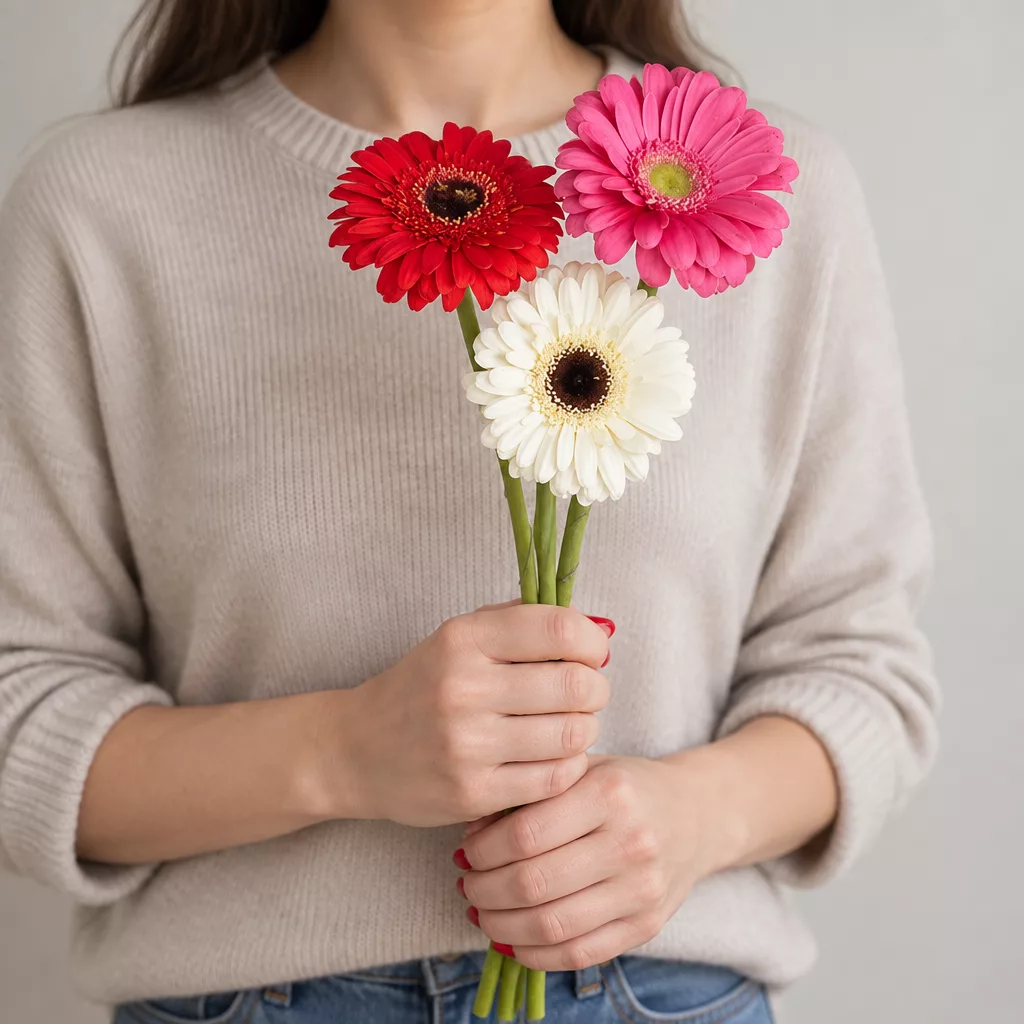
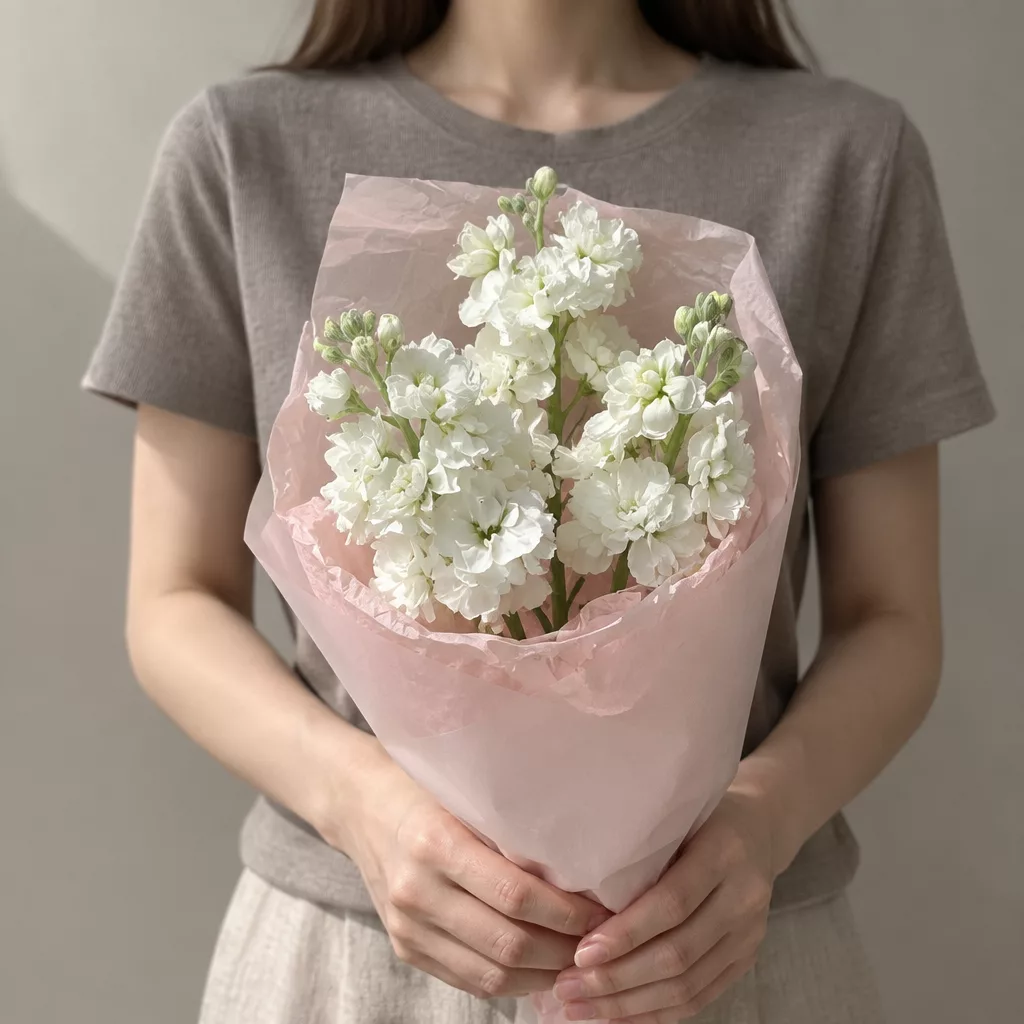
Bouquets we can deliver


The Basics: Greetings That Work for Almost Any Occasion
Start with the opening line, because that is what the recipient reads first and what sets the emotional tone for everything that follows. The most universally useful greeting is 'S lyubovyu' (С любовью), which means 'With love.' It works for romantic partners, parents, close friends, and siblings equally well without sounding excessive. Follow it with the sender's name and you already have a complete, warm card.
For birthdays, which are the most common occasion for flower delivery across Russia, use 'S dnyom rozhdeniya!' (С днём рождения!) — Happy Birthday. If you want to add a wish, 'Zhelayu tebe schastya i zdorovya' (Желаю тебе счастья и здоровья) means 'I wish you happiness and health.' Health is genuinely valued as a wish in Russian culture; it is not a formal placeholder the way it can be in English.
For women receiving flowers on International Women's Day, March 8th, which is one of the biggest flower-giving occasions in Russia, write 'S Vosmym Marta!' (С Восьмым Марта!). For New Year, 'S Novym Godom!' (С Новым Годом!) is the phrase everyone will recognise. These two occasions alone account for a significant portion of all bouquet deliveries, so knowing them is genuinely useful.
Keep the opening phrase short and confident. A single well-chosen line beats a paragraph of uncertain phrasing every time.
Phrases for Romantic Occasions and Anniversaries
Romance is where Russian really rewards a little effort. 'Ya tebya lyublyu' (Я тебя люблю) is 'I love you' — direct, clear, and deeply felt when it appears on a card tucked into a bouquet of garden roses or peonies. If the relationship is newer and 'I love you' feels too strong, 'Ty mne ochen dorog' (Ты мне очень дорог) for a man or 'Ty mne ochen doroga' (Ты мне очень дорога) for a woman means 'You mean a great deal to me.' The gender ending matters here, so pay attention to which version you need.
For anniversaries, 'S godovshchinoy!' (С годовщиной!) is the standard phrase. You can expand it with 'Spasibo za kazhdyy god ryadom' (Спасибо за каждый год рядом) — 'Thank you for every year by my side.' This kind of phrase works beautifully alongside a bouquet built around long-stemmed red or blush roses, where the presentation itself already communicates significance before the card is even read.
If you want to be more poetic, 'Ty moyo solnyshko' (Ты моё солнышко) means 'You are my little sun' — a genuine term of endearment used between partners and also from parents to children. It carries warmth without sentimentality. Russians use it naturally and hearing it in a card from someone abroad makes it feel especially tender rather than clichéd.
Phrases for Family: Parents, Grandparents, and Siblings
Sending flowers to a mother or grandmother calls for a different register than romantic occasions. 'Dorogaya mama' (Дорогая мама) — Dear Mum — is a perfectly natural opening. Follow it with 'Ya tebya ochen lyublyu' (Я тебя очень люблю), meaning 'I love you very much,' and the card is already complete and genuinely touching. For a father, 'Dorogoy papa' (Дорогой папа) works the same way.
For grandmothers, 'Babushka' (Бабушка) is the word, and it carries enormous warmth in Russian — grandmothers hold a central place in Russian family life and are often the emotional anchor of the household. 'Babushka, ty samaya luchshaya' (Бабушка, ты самая лучшая) means 'Grandma, you are the very best.' Pair this with a bouquet that includes chrysanthemums or spray carnations, which older recipients in Russia tend to appreciate for their longevity in the vase.
For siblings or close family friends, 'Moy dorogoy drug' (Мой дорогой друг) means 'My dear friend' and is gender-neutral enough to use comfortably. If you know the person is a woman, 'Moya dorogaya podruga' (Моя дорогая подруга) is more specific and more affectionate. These distinctions matter to Russian readers and using the right one shows a level of care that a generic English message simply cannot replicate, regardless of how eloquent the English phrasing might be.
Congratulations, Achievements, and Professional Milestones
Russia has a strong culture of celebrating professional achievements with flowers. Graduations, promotions, successful exams, and first days at a new job are all occasions where a bouquet might be sent, and the card should match the tone of the moment. 'Pozdravlyayu!' (Поздравляю!) is the all-purpose congratulations word and works for almost any positive milestone. It is enthusiastic without being over the top.
For graduations specifically, 'S okonchaniem!' (С окончанием!) — Congratulations on finishing — is the phrase graduates hear most often. If you want to wish them well for what comes next, add 'Uspekha v budushchem!' (Успеха в будущем!) which means 'Success in the future.' This combination is concise, warm, and exactly what a graduate wants to read.
For a new job or promotion, 'S novoy dolzhnostyu!' (С новой должностью!) — Congratulations on the new position — is direct and appropriate. You can soften it with 'Ty zasluzhil eto' (Ты заслужил это) for a man or 'Ty zasluzhila eto' (Ты заслужила это) for a woman, meaning 'You deserved this.' The acknowledgement that the achievement was earned rather than given lands particularly well in Russian professional culture, where hard work and perseverance are values people take seriously and appreciate having recognised.
How to Format the Card So It Reads Naturally
Structure matters as much as the words themselves. A Russian card typically opens with the occasion or greeting, moves to the personal message, and closes with the sender's name or relationship. Reversing this order — starting with your name — reads as slightly formal and a little cold. Lead with the feeling, end with who you are.
When using transliteration rather than Cyrillic script, keep the lines short. Long transliterated sentences are hard to parse even for Russian speakers who are used to reading their language in its own alphabet. Two or three short lines read better than one long flowing sentence. Use punctuation generously — exclamation marks are entirely normal in Russian card writing and do not read as aggressive or excessive the way they sometimes can in English.
If you are typing the message rather than handwriting it, consider whether the platform allows Cyrillic input. At Turboflora, you can type your message in either Cyrillic or Latin script and the florist team will ensure it is presented clearly on the card. If you have any uncertainty about a phrase, include both the transliteration and the English meaning in your order notes so the team can verify the message makes sense before it goes out with the bouquet.
Avoid mixing languages mid-sentence. Either write the full message in transliterated Russian or add an English line separately. Switching mid-phrase creates confusion and breaks the emotional flow of what should feel like one coherent, personal message.
Small Customs That Make the Message Feel Authentic
One thing that surprises many international senders is how much Russians appreciate specificity in a card. Rather than 'thinking of you,' a phrase like 'I remember our time in London' — even written in English beneath the Russian greeting — adds something that a generic message never can. Russians tend to value sincerity over polish, and a slightly imperfect message that references something real will always outperform a flawless but generic one.
In Russian custom, it is also common to wish the recipient something concrete rather than something abstract. 'I wish you health, happiness, and warmth in your home' is a typical structure. The specificity of 'warmth in your home' rather than just 'happiness' gives the wish texture and makes it feel considered. You can achieve this with 'Tepla i uyuta v tvoem dome' (Тепла и уюта в твоём доме), which translates to exactly that.
Finally, the flowers and the card should feel like one message rather than two separate elements. A bouquet of white tulips in early spring paired with a card that says 'S pervym tepom!' (С первым теплом!) — With the first warmth — creates a unified experience that the recipient will talk about. That kind of coherence, where the flowers and the words echo each other, is what separates a memorable delivery from a pleasant but forgettable one. It takes only a moment of thought and makes all the difference.
Writing in Russian when you do not speak the language is less about linguistic skill and more about willingness to try. Every phrase listed here has been chosen because it is natural, appropriate across a range of relationships, and genuinely touching when it arrives with fresh flowers at someone's door. The recipient will not grade your grammar. They will feel that someone on the other side of the world or the other side of the country took the time to speak to them in their own language, and that feeling is exactly what a bouquet is meant to carry.
Frequently asked questions
Can I write the card message in transliterated Russian rather than Cyrillic?
Yes, and it works well. Transliteration is perfectly readable to any Russian speaker, and the effort of writing in their language at all is what matters most. When you place your order with Turboflora, simply type the transliterated phrase into the card field. If you are uncertain about a phrase, add a note with the English meaning so the team can confirm it reads correctly before the bouquet is dispatched.
Is it appropriate to send flowers in Russia for occasions other than birthdays?
Absolutely. Flowers are given in Russia for graduations, promotions, International Women's Day on March 8th, New Year, and as simple gestures of appreciation or affection. In fact, bringing flowers when visiting someone's home for the first time is considered good manners. The culture around flower-giving is broad and enthusiastic, so almost any positive occasion justifies a bouquet.
Does the number of flowers in a bouquet matter in Russia?
Yes, and this is one of the most important customs to know. Even numbers of flowers are traditionally associated with mourning in Russia, so bouquets for celebrations should always contain an odd number of stems — five, seven, nine, eleven, and so on. Turboflora composes all celebration bouquets with this in mind automatically, so you do not need to count or specify unless you have a particular number in mind.
How do I address the card if I am sending flowers to a woman I do not know well?
Use 'Dorogaya' followed by her first name — for example, 'Dorogaya Natasha.' This translates as 'Dear Natasha' and is warm without being overly familiar. Avoid using her last name on a card as it reads as cold and formal in this context. If you know her patronymic, you may include it, but for most international senders a first name alone is entirely appropriate and will be received warmly.
What if I make a mistake in the Russian phrase — will the recipient be offended?
Very unlikely. Russian recipients receiving flowers from abroad are almost universally delighted by any attempt to write in their language, and a small grammatical slip or unusual transliteration will be seen as charming rather than careless. The intention behind the message is what they read first. If you are worried, keep the phrase short and simple — a single well-known line delivered confidently is always better than a longer uncertain one.
Ready to send flowers?
Pick the city, choose the bouquet, and a local florist takes it from there.
Choose a city →