Anniversary Flowers in Russia: A Working Florist Picks for Every Milestone
In Russia, a round anniversary is not just a birthday with a nicer cake. It carries genuine social weight — colleagues expect a speech, relatives travel across time zones, and the flowers sitting on the table will be photographed, admired, and quietly judged. Whether you are sending congratulations to a friend celebrating her fortieth, a grandmother reaching her seventieth, or a colleague marking twenty-five years at a company, the arrangement you choose says something specific. Get it right and you look thoughtful. Get it wrong and you look like you ordered in a hurry. This guide walks you through the logic Russian florists use when someone calls and says, 'It is a round date — what do I send?'
Why Round Dates Matter More in Russian Culture
Russians draw a firm line between an ordinary birthday and a round anniversary. Dates ending in zero — thirty, forty, fifty, sixty — and certain in-between milestones like twenty-five and thirty-five are treated as events that deserve ceremony. There is even a mild superstition that celebrating a round date early invites bad luck, so flowers and gifts almost always arrive on the day itself or after, never before. This is worth knowing if you are ordering from abroad or coordinating across time zones.
The number of flowers in an arrangement also follows a clear rule that surprises many first-time senders: for a living person you always give an odd number of stems. Even numbers are associated with mourning and are reserved for entirely different occasions. So a bouquet of thirty roses for a thirtieth birthday would feel deeply wrong to a Russian recipient, no matter how logical the number seems to a foreign sender. Thirty-one, thirty-three, or thirty-five stems would all be appropriate.
Beyond numbers, the occasion's scale matters. A fortieth is considered a serious threshold — the moment a person is seen as fully adult and established. A fiftieth is practically a state event in family terms. Florists in Saint Petersburg regularly receive orders for arrangements that need to fill a banquet table, hold up under indoor heating for several hours, and still look fresh when the photos are taken at the end of the evening. That practical demand shapes every variety choice we make.
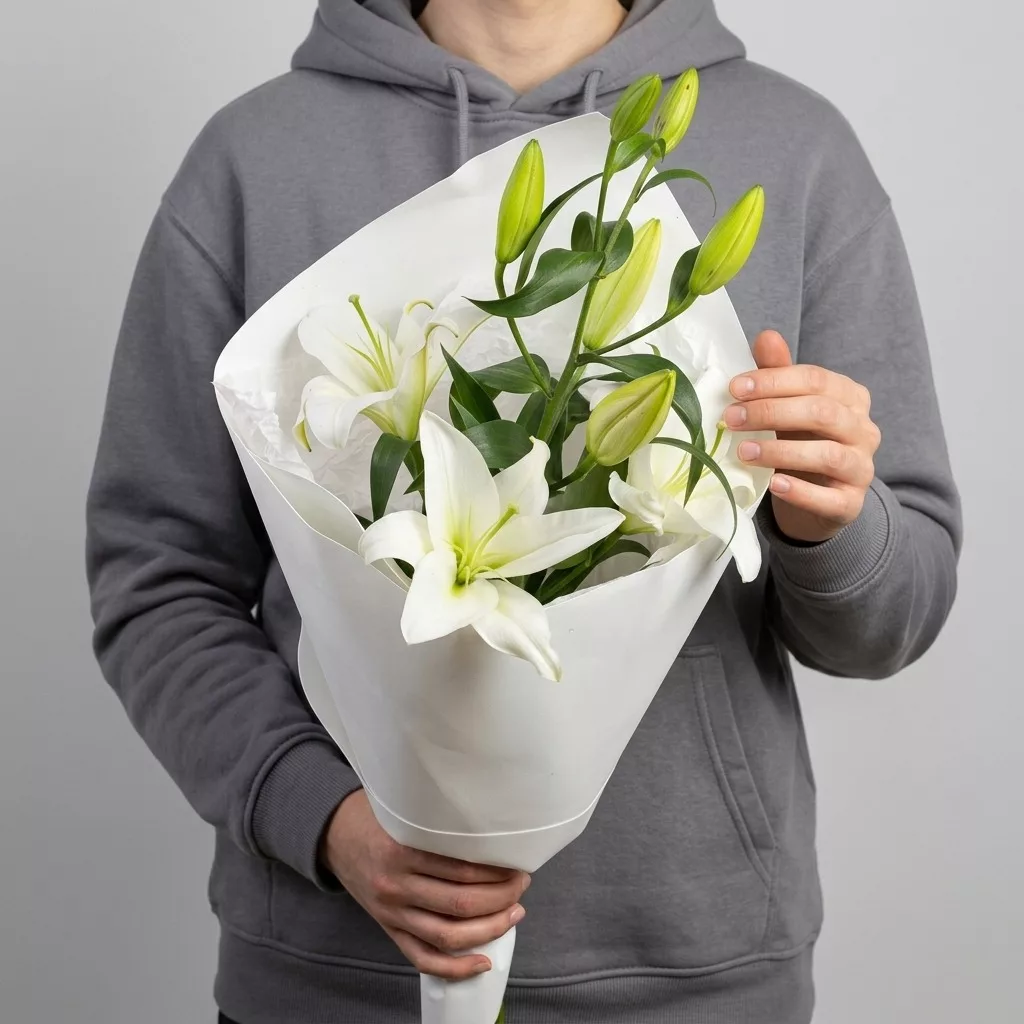
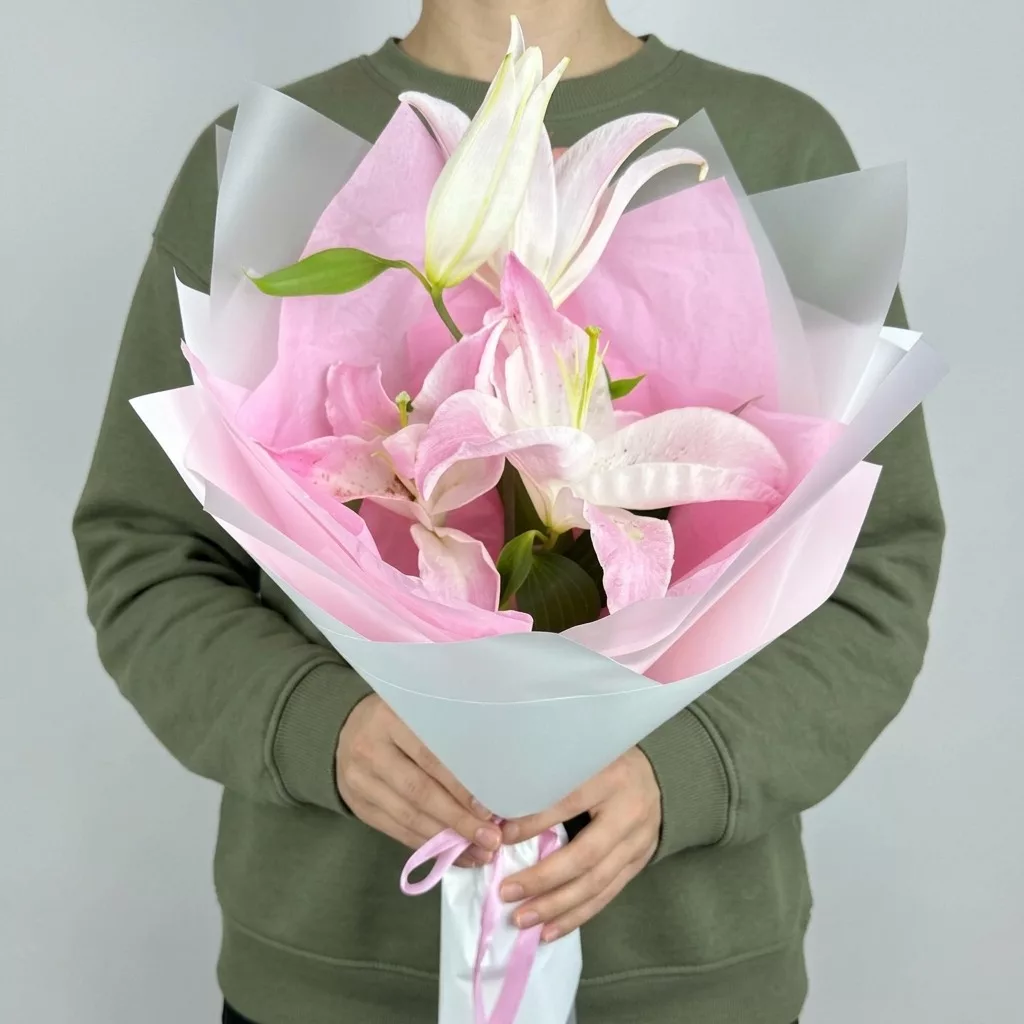
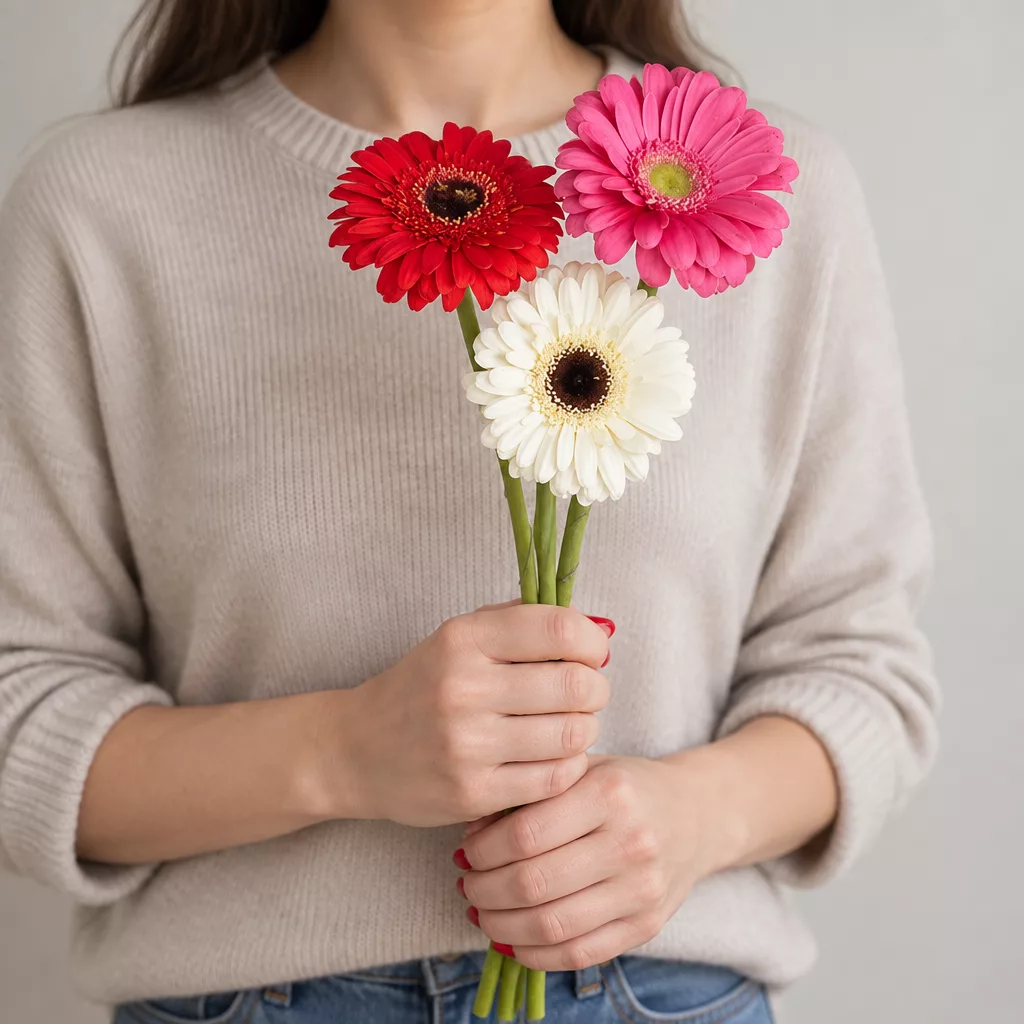
Bouquets we can deliver

The First Major Milestone: Turning Thirty
The thirtieth birthday sits in an interesting position. The person is young enough that bright, playful arrangements still feel appropriate, but the round number signals that something more considered than a casual mixed bunch is expected. This is the anniversary where peonies, ranunculus, and garden roses really shine. Their full, layered heads read as abundant and celebratory without the formality of a classic long-stemmed red rose arrangement.
In terms of timing, the thirtieth often falls in spring or early summer for many clients, and that works beautifully with seasonal availability. Peonies in blush, coral, and deep fuchsia peak between May and June in Russia, and a bouquet built around Coral Charm or Sarah Bernhardt peonies with white ranunculus and eucalyptus will arrive looking generous and fresh. For autumn or winter thirtieths, garden spray roses in peachy tones paired with lisianthus hold up well in centrally heated Russian apartments, where indoor temperatures routinely reach twenty-three to twenty-five degrees Celsius — a detail that matters enormously for vase life.
A common mistake at this milestone is going too small. Thirty is a round date, and a modest hand-tied bouquet of seven stems, however beautiful, will feel underdressed. Aim for arrangements with visible volume and at least two or three distinct flower types. If the recipient is a man — yes, Russian men do receive flowers on their birthdays — opt for structured compositions with protea, ornamental allium, or anthuriums rather than soft romantic palettes.
The Serious Ones: Forty and Forty-Five
The fortieth is the anniversary that makes Russian florists reach for their most polished materials. There is a cultural consensus that forty marks genuine adulthood, and the flowers need to reflect that. Long-stemmed roses remain the classic answer, and for good reason: they photograph well, they carry unambiguous elegance, and they scale up easily. Varieties like Explorer, Avalanche, and Red Naomi hold their shape for days and tolerate the delivery journey without bruising.
However, all-rose arrangements can feel predictable at this milestone. A stronger move is to anchor the bouquet with roses and then layer in flowers that add texture and depth — calla lilies in white or burgundy, amaryllis in winter months, or tall gladioli for a more dramatic silhouette. Gladioli have a particular resonance in Russian anniversary culture; they are seen as bold and commanding, which suits the fortieth perfectly.
For corporate anniversaries at forty — a company's anniversary, a department head's work milestone — arrangements should lean toward white, ivory, and deep green. These read as professional and respectful without feeling cold. Avoid very pale pink for male recipients in corporate settings; Russian professional culture still tends to read pastel tones as feminine.
The forty-fifth is sometimes called the Sapphire Anniversary in Russian tradition, and some clients like to honor that with blue or violet accents: delphiniums, blue hydrangeas, or violet lisianthus woven into an otherwise classic arrangement. It is a subtle nod to the milestone's name that a thoughtful recipient will notice and appreciate.
The Golden Standard: Turning Fifty
If the fortieth is serious, the fiftieth is ceremonial. In Russian families, a fiftieth birthday is often the occasion for a large gathering — a restaurant reservation, a hall, relatives arriving from other cities. The flowers are part of the décor as much as they are a personal gift, and they will be seen by many people over the course of several hours. This means durability is as important as beauty.
Chrysanthemums, which have an unfairly modest reputation in some Western markets, are genuinely excellent for this occasion in Russia. Large-headed varieties like Anastasia or Bacardi can anchor a long-lasting, voluminous arrangement that holds up beautifully through a five-hour celebration in a warm room. Combined with alstroemeria, which also has exceptional vase life, and accented with roses or orchids, you get a bouquet that looks as good in the evening photographs as it did when it arrived.
Gold and warm amber tones are popular for fiftieth arrangements — not because of any strict rule, but because the Golden Jubilee association is widely understood. Sunflowers in late summer, orange and yellow roses, golden solidago, and cream-colored hydrangeas all work beautifully together. In winter months, amaryllis in deep red or orange makes a dramatic and long-lasting substitute.
One practical note: for a fiftieth, consider sending flowers with a water source — a wrapped arrangement with a hydration insert, or a ready-to-display vase arrangement. The recipient may be too busy greeting guests to trim stems and arrange water immediately, and a properly hydrated bouquet will survive that delay without wilting.
Sixty, Sixty-Five, and the Art of Dignified Abundance
By the sixtieth, the expectations shift again. The recipient has likely received many bouquets over a lifetime and has developed genuine preferences. This is the anniversary where asking matters — a quick question to a family member about whether the person prefers fragrant flowers or has allergies, loves roses or finds them clichéd, can save you from a beautiful but entirely wrong arrangement.
Fragrance becomes more valued at this milestone. Freesias, stocks, and garden roses with strong natural scent are frequently requested for sixtieth arrangements. Freesia in particular — varieties like Oberon in golden yellow or Castor in white — carries a clean, sweet fragrance that fills a room without becoming overwhelming, and it holds its blooms well for five to seven days in cool conditions.
Size still matters at sixty, but the emphasis shifts from sheer volume to dignified composition. Tall arrangements with structure — think orchids on long stems, gladioli, or architectural protea — communicate respect and occasion. A low, sprawling arrangement that looks charming on a kitchen table may feel too casual for this milestone.
For the sixty-fifth, there is no specific traditional flower in Russian custom, which actually gives you freedom. This is a good moment to choose flowers that mean something personal to the recipient. A florist who knows their customer might reach for lily of the valley for a woman who grew up with a garden full of them, or for deep blue irises because they remind her of somewhere she loved. That kind of specificity is what elevates a round-date arrangement from impressive to genuinely memorable.
The Seventieth and Beyond: Flowers That Honor a Life
A seventieth anniversary in Russia is treated with the kind of reverence that Western cultures might reserve for a ninetieth. The person has lived through enormous historical change, and the celebration acknowledges that weight. Flowers for a seventieth need to be generous, beautiful, and — this is critical — easy to manage. Older recipients may live alone or have limited mobility, and a massive unwieldy bouquet can be more burden than joy.
The practical solution is a well-arranged vase composition that arrives ready to display. Roses, alstroemeria, and chrysanthemums together make a reliable, long-lasting combination that requires no immediate attention from the recipient. Avoid flowers with heavy pollen — open lilies, for instance, can stain clothing and furniture, which is a real concern for an older person in a well-kept home. If you love lilies, choose varieties where the anthers have been removed before delivery, or select closed buds that will open slowly over several days.
Color choices at this milestone tend toward warm, rich tones: deep red, coral, burgundy, and gold. Pure white arrangements are beautiful but carry associations that make some Russian families uncomfortable for a living person's celebration, particularly at an advanced age. Mixing white with vivid color — white roses with red alstroemeria, for example — resolves this completely.
Delivery timing matters enormously for a seventieth. A morning delivery allows the recipient to enjoy the flowers throughout the day and show them to visiting guests. Our experience in Saint Petersburg shows that flowers delivered before noon on the day of a round anniversary consistently receive the warmest response — the recipient has time to settle them, take a photograph, and feel genuinely celebrated before the day gets busy.
Russian anniversary customs reward the sender who pays attention. The odd number of stems, the scale that matches the milestone, the variety choices that survive a warm celebration room — none of this is complicated once you understand the logic behind it. A thirtieth calls for abundance and youth; a fiftieth calls for durability and ceremony; a seventieth calls for thoughtfulness and ease. When you order with those principles in mind, the flowers do not just decorate a table. They tell the recipient that someone understood what this particular day means to them, and that is exactly what a round anniversary deserves.
Frequently asked questions
Is it true you should never give an even number of flowers in Russia?
Yes, this is a firmly held convention. Even numbers of flowers are associated with mourning in Russian culture and should be avoided for any celebratory occasion. Always choose an odd number of stems — for example, eleven, twenty-one, or thirty-three — regardless of the milestone being celebrated. Most Russian florists automatically compose bouquets this way without needing to be asked.
Can I send flowers before the actual anniversary date in Russia?
It is better to avoid this. There is a widespread belief in Russian culture that celebrating a round date early brings bad luck. Delivering on the exact day or, if logistics require it, the day after is always safer and will be better received. If you are ordering from a different time zone, factor in the Moscow or Saint Petersburg clock when scheduling delivery.
What flowers last longest in a warm Russian apartment during a celebration?
Chrysanthemums, alstroemeria, and spray roses are your best allies. Russian apartments are typically heated to twenty-three degrees Celsius or above in colder months, which shortens the vase life of delicate flowers like sweet peas or anemones. Asking for a hydration insert or a ready-to-display vase arrangement also helps the bouquet survive several hours without immediate care from the recipient.
Are there colors I should avoid for a milestone birthday in Russia?
Pure yellow flowers and pure white arrangements are areas where some Russian recipients feel cautious, as both carry associations that can feel ambiguous in certain contexts. This is not a strict rule, but mixing these colors with warmer tones — adding red or coral to white flowers, for instance — removes any ambiguity and creates a composition that reads as unambiguously celebratory and warm.
How many flowers is appropriate for a major round anniversary like a fiftieth or sixtieth?
For a fiftieth or sixtieth, think in terms of visual impact rather than a specific stem count. Arrangements of fifty-one stems or more are common and appropriate. The bouquet should be large enough to make a statement when it arrives, since these milestones involve guests and photographs. If budget is a consideration, choosing fewer stems of larger-headed flowers like hydrangeas or peonies creates volume without requiring a very high stem count.
Ready to send flowers?
Pick the city, choose the bouquet, and a local florist takes it from there.
Choose a city →