Flowers That Actually Survive a Saint Petersburg Winter Delivery
When the temperature in Saint Petersburg drops to minus fifteen and the wind off the Neva cuts right through you, sending flowers feels like an act of pure defiance against the season — and that is exactly why people do it. A bouquet arriving at someone's door in January or February carries twice the warmth it would in May. But winter delivery is not the same as summer delivery, and if you have ever watched a beautiful arrangement arrive with blackened petals and limp stems, you already know that not every flower is built for a Russian frost. After years of preparing and delivering bouquets through some genuinely brutal Saint Petersburg winters, we have learned which blooms travel well, which ones collapse the moment cold air touches them, and how the right choices make the difference between a gift that dazzles and one that disappoints. This guide is for anyone — whether you are ordering from across Russia or from abroad — who wants to get it right.
Why Russian Winter Is a Unique Challenge for Cut Flowers
Russia experiences some of the most punishing urban winters in the world, and Saint Petersburg is no exception. From late November through early March, outdoor temperatures regularly sit between minus five and minus twenty degrees Celsius, with wind chill pushing the felt temperature even lower. For cut flowers, which are essentially living tissue with a very high water content, exposure to those temperatures — even briefly — causes the cells inside petals and stems to freeze, rupture, and collapse. The damage is not always visible immediately. A rose might look fine when it comes through the door but turn soft and translucent within hours as the frozen cells thaw and break down from the inside. This is called freeze damage, and it is the single most common complaint florists hear in winter. The journey from our preparation room to your recipient's hands involves several transitions: from a temperature-controlled space to a vehicle, from the vehicle to an outdoor walkway, up a stairwell, and finally indoors. Each transition is a risk. The total outdoor exposure might be only three or four minutes, but at minus fifteen that is enough to damage delicate tropical varieties entirely. Understanding this physics is the first step to making smart choices. It also explains why packaging matters as much as variety selection, and why we time our preparation so bouquets leave as close to departure as possible. Winter floristry is not just about beauty — it is about engineering a flower to survive a journey most plants were never designed to make.
Bouquets we can deliver


Roses: The Reliable Winter Classic That Needs Careful Handling
Roses are the most requested flower in Russia year-round, and in winter they remain a strong choice — but only if you select the right varieties and treat them correctly. Garden roses with thin petals and loose blooms are far more vulnerable than the tightly budded, high-petal-count varieties grown specifically for the commercial cut flower trade. In winter we lean heavily on varieties like Explorer types and the dense-headed Dutch roses that arrive from Ecuadorian and Dutch growers. Their tight bud structure means there is less exposed surface area for frost to attack. A fully open rose in winter is an invitation to disaster; a firm, half-open bud can tolerate brief cold exposure far better. The stem is also a factor. Thick, well-hydrated stems hold up better than thin ones, which freeze through more quickly. We condition roses for longer periods in winter — at least twenty-four hours in temperature-controlled water — so that the stems are as turgid and resilient as possible before they face the cold outside. One mistake people sometimes make is ordering roses for a very early morning delivery in deep winter, assuming the recipient will appreciate the surprise at seven in the morning. The problem is that at that hour temperatures are typically at their lowest. A delivery window between ten in the morning and two in the afternoon, when ambient temperatures are slightly higher and daylight helps, gives roses the best chance. Red roses are traditionally the most popular choice in Russia for romantic occasions, and their robust commercial varieties handle winter better than many white or pale-pink counterparts, which tend to have slightly more delicate petal tissue.
Chrysanthemums and Spray Carnations: The Unsung Winter Heroes
If roses are the glamorous choice, chrysanthemums and spray carnations are the workhorses — and in a Russian winter, workhorses win. Both of these flowers have a cellular structure and natural waxy coating that makes them significantly more resistant to cold than almost anything else you can put in a bouquet. Chrysanthemums, particularly the large-headed varieties like Anastasia and Zembla, as well as the smaller pompon types, can tolerate brief exposure to temperatures as low as minus eight or minus ten degrees Celsius without showing visible damage. Their petals are dense and slightly leathery, which slows the rate of cellular freezing. Spray carnations — the multi-headed stems with smaller blooms — share similar resilience. The carnation's petals have a natural waxy cuticle that acts as insulation, and the flower itself has been bred over decades to survive long-distance refrigerated transport, which is essentially a form of cold stress training. In Russian floristry, carnations carry a particular cultural significance. They appear at celebrations, at official events, and at many of the public holidays that punctuate the Russian calendar. For someone unfamiliar with Russian customs, it is worth knowing that carnations here are not considered a lesser flower — they are a respected, even formal choice. A well-arranged bouquet of spray chrysanthemums in winter white and cream, combined with deep burgundy spray carnations, is not a budget compromise. It is a genuinely beautiful, seasonally intelligent arrangement that will look as good on day five as it did on day one. For winter gifting, these two varieties deserve far more credit than they typically receive.
Tulips, Alstroemeria, and What Works for February 14th and March 8th
Two dates dominate Russian flower demand in winter: February 14th, Valentine's Day, which has been enthusiastically adopted in Russia over the past two decades, and March 8th, International Women's Day, which is one of the most important gift-giving occasions in the entire Russian calendar. If you are not familiar with March 8th, think of it as a day when virtually every woman in Russia — mothers, wives, colleagues, teachers, friends — receives flowers. Demand is extraordinary, and the flowers most associated with it are tulips. Dutch tulips, imported in massive quantities for the Russian market from January onward, are a fascinating winter flower. They are not as cold-tolerant as chrysanthemums, but they are considerably tougher than roses. Their thick, fleshy stems and tightly closed buds in transit make them manageable in winter conditions. The key is that they should be delivered in bud, not in bloom. An open tulip in minus ten degrees will blacken at the petal edges within minutes. A closed tulip bud has a much better chance. Alstroemeria — the Peruvian lily — is another excellent winter choice that too few people consider. Its small, clustered blooms are individually modest, but the stems carry many of them, and the flower is exceptionally hardy. Alstroemeria can last two weeks in a vase even in a warm Russian apartment, and it tolerates cold transit far better than most people expect. For Valentine's Day, red tulips paired with alstroemeria make a genuinely striking arrangement that is also practically designed for winter survival.
Flowers to Avoid in Deep Winter and Why
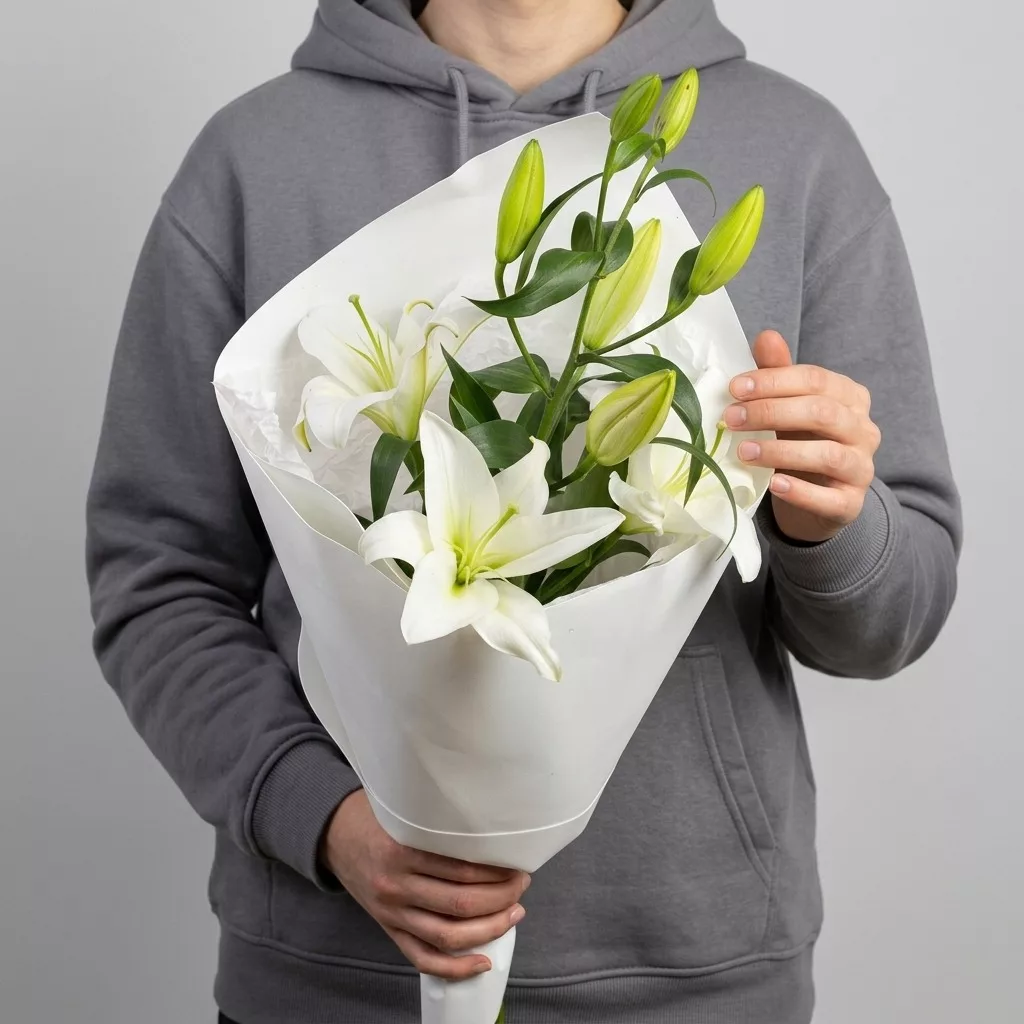
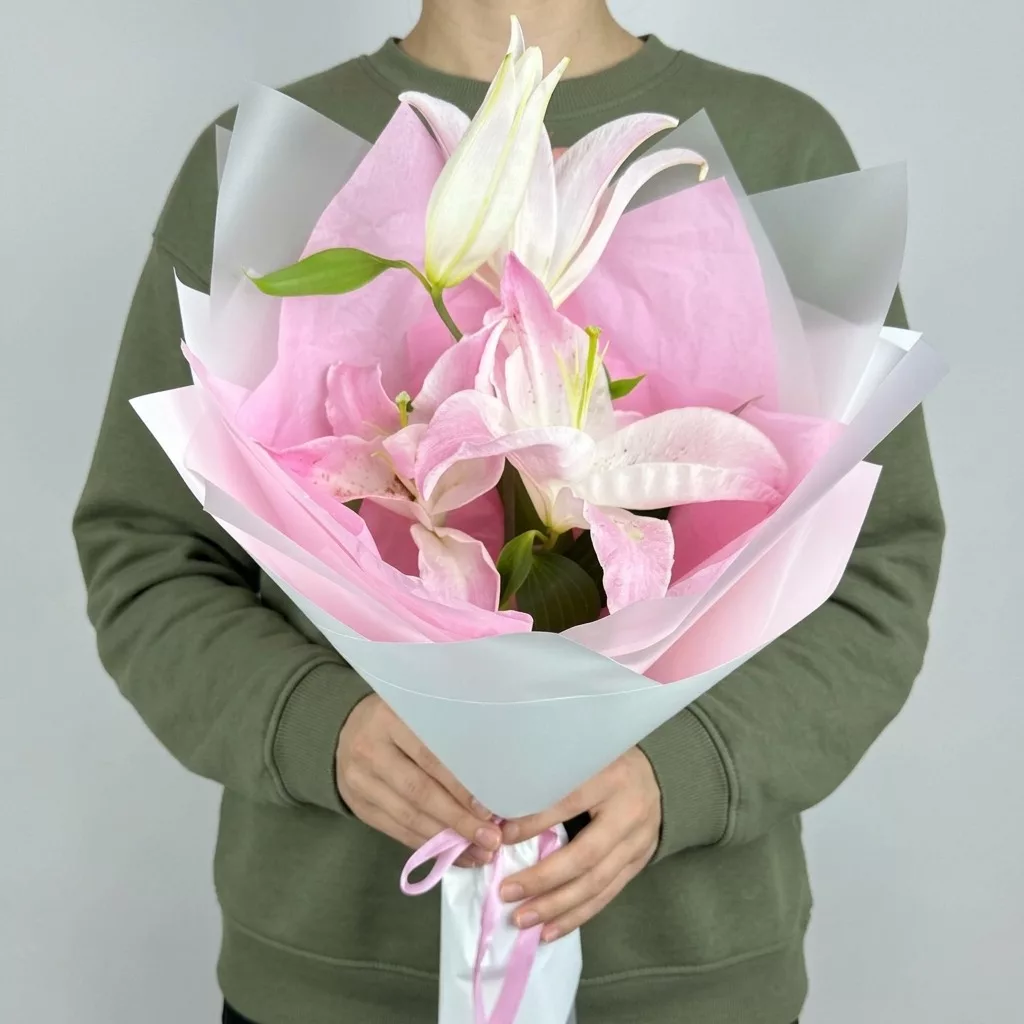
Knowing what not to send is just as important as knowing what to send, and this is where many well-intentioned orders go wrong. The most cold-sensitive flowers that people commonly request in winter are tropical and subtropical varieties: bird of paradise, anthurium, ginger flowers, and most orchid varieties that are not in a pot. These flowers evolved in warm, humid climates, and their cellular structure has essentially no tolerance for near-freezing temperatures. An anthurium exposed to even minus two degrees for ten minutes will show blackening and collapse within hours of arriving indoors. Garden-style flowers with very thin, delicate petals — sweet peas, anemones, and ranunculus — are also extremely vulnerable. Ranunculus in particular, despite being a beautiful and currently fashionable flower, has paper-thin petals that freeze almost instantly. We do occasionally include ranunculus in winter arrangements, but only in very specific conditions: mild winter days above minus five, heavily insulated packaging, and short delivery windows. Hydrangeas are another common problem. Their large flower heads contain a lot of water and a lot of exposed surface area. In hard frost they freeze solid within a minute outdoors, and the thaw damage is severe. If someone specifically requests hydrangeas in January, we have an honest conversation with them about the risks. Lilies, particularly Oriental lilies like Stargazer, fall somewhere in the middle. A tightly closed lily bud can survive winter transit reasonably well, but an open bloom cannot. The rule of thumb for winter ordering is simple: the more delicate and open the flower, the more vulnerable it is. Choose density, choose buds, choose flowers with a natural waxy or leathery petal surface.
How Turboflora Packages and Times Winter Deliveries
A flower's cold tolerance is only part of the equation. How it is packaged and when it leaves our preparation room determines whether even the toughest variety arrives in perfect condition. Our winter packaging process adds several layers that are not necessary in warmer months. Every bouquet is wrapped in multiple layers of craft paper, which provides both insulation and physical protection against wind. For particularly cold days — anything below minus ten — we add an inner layer of thin thermal film around the blooms themselves before the outer paper wrapping goes on. This creates a small insulating air pocket around the flowers. The stems are kept in water-soaked floral foam or a small sealed water tube for deliveries up to about forty minutes in transit. For longer delivery windows, we adjust the water management accordingly. Timing is something we think about carefully in winter. Flowers are prepared as close to departure as possible — not arranged hours in advance and left waiting. A bouquet sitting in a cold vehicle between deliveries loses temperature rapidly, so our drivers follow optimized routes that minimize wait time between stops. We also pay close attention to the forecast. A day that starts at minus eight but drops to minus eighteen by afternoon changes our approach to afternoon deliveries. Recipients are notified when their delivery is minutes away so they can open the door promptly — every minute a courier stands on a cold doorstep with flowers in hand is a minute of unnecessary cold exposure. These details might seem small individually, but together they are the difference between a bouquet that arrives alive and one that does not. Winter flower delivery done well is a precise operation, and we take every step of it seriously.
Sending flowers in a Russian winter is one of the most meaningful gestures you can make — precisely because it requires thought, care, and a genuine understanding of what the season demands. The flowers that survive and thrive in the cold are not always the ones you might first think of, but once you know them — the dense Dutch rose bud, the resilient spray chrysanthemum, the tough little spray carnation, the tightly closed tulip — you have a palette that is both beautiful and built for the journey. At Turboflora, every winter bouquet we prepare carries the experience of florists who have watched frost do its worst and learned exactly how to fight back. Whether you are sending flowers to someone in Saint Petersburg from across the city or from the other side of the country, the right variety choices combined with expert packaging and precise timing mean your gift arrives the way you intended it: alive, vibrant, and full of warmth against the cold.
Frequently asked questions
Can flowers really survive delivery in minus fifteen degree weather?
Yes, with the right variety selection and packaging. Hardy flowers like spray chrysanthemums, carnations, and tightly budded roses tolerate brief cold exposure well. The critical factors are insulated wrapping, minimal outdoor exposure time, and choosing flowers with dense petal structure rather than thin, open blooms. Turboflora's winter packaging is specifically designed for these conditions.
What is the most popular flower for March 8th in Russia?
Tulips are by far the most traditional and popular flower for International Women's Day on March 8th. This is one of Russia's biggest gifting occasions — comparable to Mother's Day in other countries but extended to all women. Tulips in yellow, pink, red, and white are ordered in enormous quantities, and we recommend placing your order several days in advance to secure availability.
How long will winter flowers last once they are indoors?
Assuming they arrive undamaged, spray chrysanthemums and carnations typically last ten to fourteen days indoors. Roses last six to nine days with proper care — fresh water every two days and stems trimmed at an angle. Tulips last five to seven days but continue to grow and open after delivery, which many people find charming. Keep all flowers away from radiators, which are common in Russian apartments and dry flowers out quickly.
Is it safe to order delicate flowers like ranunculus or anemones in winter?
It is risky and we are honest about that. These flowers have very thin petals that are highly vulnerable to frost damage even with good packaging. On milder winter days above minus five degrees we can sometimes include them carefully, but in deep frost we recommend substituting them with hardier alternatives. We would rather suggest a change than send you a bouquet that arrives damaged.
How far in advance should I order flowers for a winter delivery in Russia?
For standard occasions, same-day ordering is fine — we deliver within one to two hours. For high-demand dates like February 14th and especially March 8th, we strongly recommend ordering three to five days ahead. Flower supply across Russia tightens significantly around those dates, and early orders allow us to source the best available stems and guarantee your preferred varieties.
Ready to send flowers?
Pick the city, choose the bouquet, and a local florist takes it from there.
Choose a city →