Blue flowers: what to choose and how to care for them
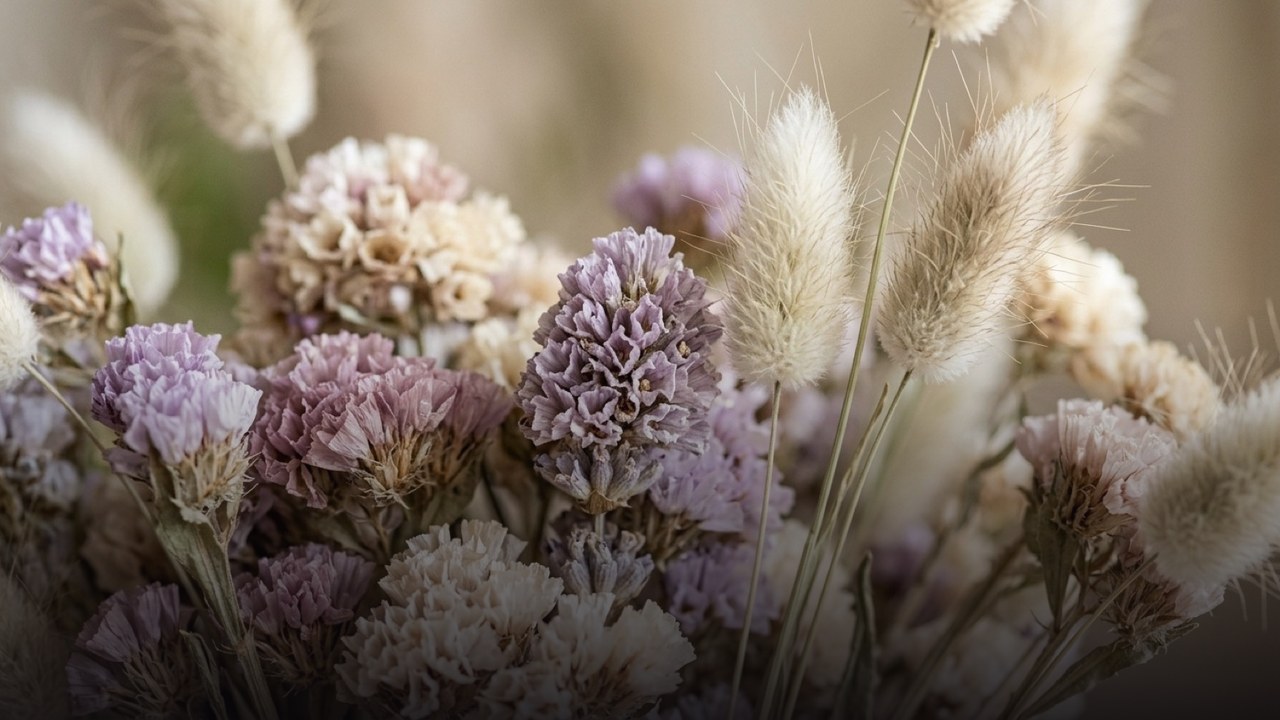
Blue flowers include naturally blue delphiniums, muscari, cornflowers and gentians, while some hydrangeas and irises also offer blue shades. For a bouquet, choose by the shape and depth of colour you want: delphiniums add height, hydrangeas create rounded volume, and muscari bring small, delicate clusters.
The word blue covers everything from pale sky blue to violet-blue and deep indigo, so a colour reference is more useful than the colour name alone. If you are sending flowers to someone in Russia, decide whether blue must be the main colour or whether a few blue stems among white, cream or pink flowers would express your idea.
Which flowers are naturally blue?
Delphiniums carry many flowers along tall stems, making them useful when you want an airy bouquet with height. Their colours include clear blue and shades leaning towards violet; the exact variety matters. Our guide to delphiniums in Russia explains their tall form and seasonal availability, which you should check before building your choice around them.
Muscari have short stems topped with tightly packed, bell-shaped flowers, often in rich blue. Their small scale suits a compact spring arrangement better than a tall, sweeping bouquet. Cornflowers have a lighter, meadow-like appearance, while gentians can provide a more concentrated blue accent. These flowers have different seasons and availability, so treat them as possibilities to discuss.
Hydrangeas offer large, rounded flower heads, and some varieties produce blue shades. Their colour is affected by the variety and growing conditions, including aluminium availability and soil acidity; changing the water in a vase will not reliably turn a cut pink head blue. Blue irises often lean towards purple, so ask about the actual shade when a clear blue is essential.
How to recognise dyed blue flowers
A vivid blue rose is usually coloured rather than naturally blue. Blue orchids may also have been treated, and later flowers on a living plant can open in a different colour. This does not make a treated flower an unsuitable gift, but you should know what you are choosing, especially if the recipient enjoys plants or expects a natural shade.
Appearance alone is not a dependable test. Ask whether the colour is natural, dyed through the stem or applied to the surface, and request a photo of the bouquet before delivery. A photo helps you judge the overall colour balance, although lighting and screens can shift blue towards turquoise or purple. If exact matching matters, explain which neighbouring shades you want to avoid.
Handle treated flowers carefully because colour may transfer to hands, fabric or surfaces, depending on the treatment. Keep petals away from pale upholstery and do not try to wash off their colour. If you prefer untreated flowers, say so before the bouquet is agreed; a naturally blue seasonal stem may give a softer result than an intensely coloured rose.
Bouquets we can deliver




What blue flowers mean, and when to give them
Blue flowers are often associated with calm, trust and thoughtfulness, but flower meanings are conventions rather than a fixed language. A blue bouquet can feel personal when it reflects the recipient's favourite colour, their home or a shared memory. That connection is usually more useful than relying on a symbolic meaning they may never have encountered.
For a birthday, blue can work as a distinctive main colour without needing a special explanation. For a romantic gift, you might combine it with pink or cream and let your card carry the message. For someone recovering or having a difficult week, choose words that acknowledge their situation without asking them to feel cheerful or respond immediately.
Do not assume blue is suitable only for men, or that every recipient wants a large arrangement. Think about their taste, available space and the setting where the flowers will arrive. For a formal or sensitive occasion, family and cultural preferences matter more than a general colour rule. When you are unsure, a brief, sincere card makes your intention clearer.
Choose the shape, colour balance and season
Start with the bouquet's outline. Tall delphiniums create upward movement, while hydrangeas make a fuller, rounder silhouette; small muscari are better appreciated close up. If the flowers are going to a desk or a small dining table, ask for a compact arrangement. For someone who enjoys arranging stems, explain that preference when discussing your choice.
Blue and white give a clear contrast, while cream softens the combination. Pink introduces warmth, and lilac creates a closer blend, although it can make the whole bouquet read as purple. Use the bouquets catalogue to identify shapes and colour combinations you like, then explain whether your priority is a particular flower, a blue shade or the overall appearance.
Season matters when you want a named variety. Muscari are a spring choice with a short season; our muscari guide explains their character in more detail. Before settling on a design, check what is available for the delivery date. If the flower you want is unavailable, agree another choice before placing an order that depends on it.
Keep a blue bouquet fresh at home
Begin with a clean vase and fresh water. Remove any leaves that would sit below the waterline, then trim the stem ends with a clean, sharp tool before placing them in water. If flower food is supplied, follow its dilution instructions. Crowding too many stems into a narrow opening makes it harder to check the water and remove deteriorating foliage.
Keep the bouquet away from direct sunlight, heaters, draughts and ripening fruit. Check the water daily, top it up as needed and replace it regularly, cleaning the vase when you do. Remove fading flowers and any material that falls into the water. A mixed bouquet will not necessarily age evenly, so you can continue enjoying healthy stems after others have finished.
Large hydrangea heads can show wilting noticeably, so pay particular attention to their water supply. Support tall delphiniums in a stable vase and avoid forcing their stems into a shape that could snap them. Do not add household chemicals or use hot-water revival tricks without advice for the particular flower. Keep bouquets out of reach of children and pets, especially delphiniums, which are toxic if eaten.
How to send blue flowers to someone in Russia
Turboflora delivers flowers across Russia. To discuss a blue bouquet, contact a manager on WhatsApp with the recipient's city, delivery date, address and your colour preferences. The manager can help you choose the bouquet, agree the time and card text, and arrange a photo before delivery. City delivery costs 500 RUB; the operator confirms the price for remote districts and suburbs when confirming the order.
In large cities, express delivery is available 1–2 hours after the order is confirmed. You can also arrange an exact time with a tolerance of ±30 minutes, select a window of 09–12, 12–15, 15–18 or 18–21, or pre-order 1–30 days ahead. Check the delivery and payment details while planning. Online checkout uses CloudPayments; check the options displayed there rather than assuming your foreign-issued card will be accepted.
Delivery is anonymous by default: the courier does not name the sender, so include your name in the free card if you want the recipient to know. The courier calls about 15 minutes before arrival. If the recipient is absent, we agree a second delivery the same day or, with your consent as sender, hand the flowers to a neighbour or concierge. Choose a time when receiving the bouquet will be convenient.
Frequently asked questions
Are there any naturally blue flowers?
Yes. Delphiniums, muscari, cornflowers and gentians include naturally blue flowers, while some hydrangeas and irises also offer blue shades. The precise colour depends on the variety, and some shades lean towards violet.
Are blue roses natural?
Vivid blue roses sold as cut flowers are usually artificially coloured. Ask how the colour was achieved if you want an untreated bouquet or are concerned about colour transferring to fabric.
What do blue flowers symbolise?
Blue flowers are often associated with calm, trust and thoughtfulness, although their meaning varies between people and cultures. Choosing the recipient's favourite colour and adding a personal card gives the gift a clearer message.
Can I order a blue bouquet for delivery in Russia?
Turboflora delivers across Russia, and a manager can help you choose a bouquet and agree the delivery details. Check the availability of your preferred blue flowers for the date before settling on a particular design.
Can I pay for flowers with a foreign card?
Online checkout uses CloudPayments. Check the payment options displayed at checkout, as acceptance of every foreign-issued card is not guaranteed.
Ready to send flowers?
Pick the city, choose the bouquet, and a local florist takes it from there.
Choose a city →