Bouquet Arrived Damaged or Wilted? Here Is What to Do
You ordered flowers from abroad for someone you love in Saint Petersburg or another Russian city, and something went wrong on arrival. The roses arrived with bent necks, the peonies look grey at the edges, or the whole bouquet seems to have spent the journey in a warm car. It is a frustrating moment, and it raises real questions: who do you contact, what do you send them, and will anything actually be done? The answers are straightforward, and this article walks through every step so you can resolve the situation quickly and get the right flowers into the right hands.
Why Fresh Flowers Sometimes Arrive Below Expectation
Flowers are living things, and a bouquet moving through a city in summer or across a region in winter faces real physical stress. Roses, ranunculus, and garden spray roses are particularly sensitive to temperature swings. In Saint Petersburg, summer delivery vehicles can reach interior temperatures of 28 to 32 degrees Celsius on a warm day, which accelerates ethylene production in the blooms and causes petals to drop or soften faster than they should. In winter, the opposite problem occurs: stems exposed to below-zero air even for a few minutes can develop translucent, water-soaked patches that look like bruising.
Beyond temperature, mechanical pressure matters. A densely wrapped bouquet of tulips or lisianthus placed upright in a courier bag can arrive with crushed outer petals if the bag is overfilled or tilted during transit. Hydrangea heads are especially vulnerable because the florets are packed tightly and the stem struggles to push water to the tips under stress.
Most of the time, these issues are visible the moment the bouquet is unwrapped. A well-trained eye can distinguish between a flower that was genuinely damaged in transit and one that simply needs an hour in fresh water to recover. Tulips, for instance, often look droopy immediately after delivery but stand upright within forty minutes of being placed in a clean vase with cool water. Knowing this distinction helps you describe the problem accurately when you contact the shop, which speeds up the resolution considerably.
Bouquets we can deliver

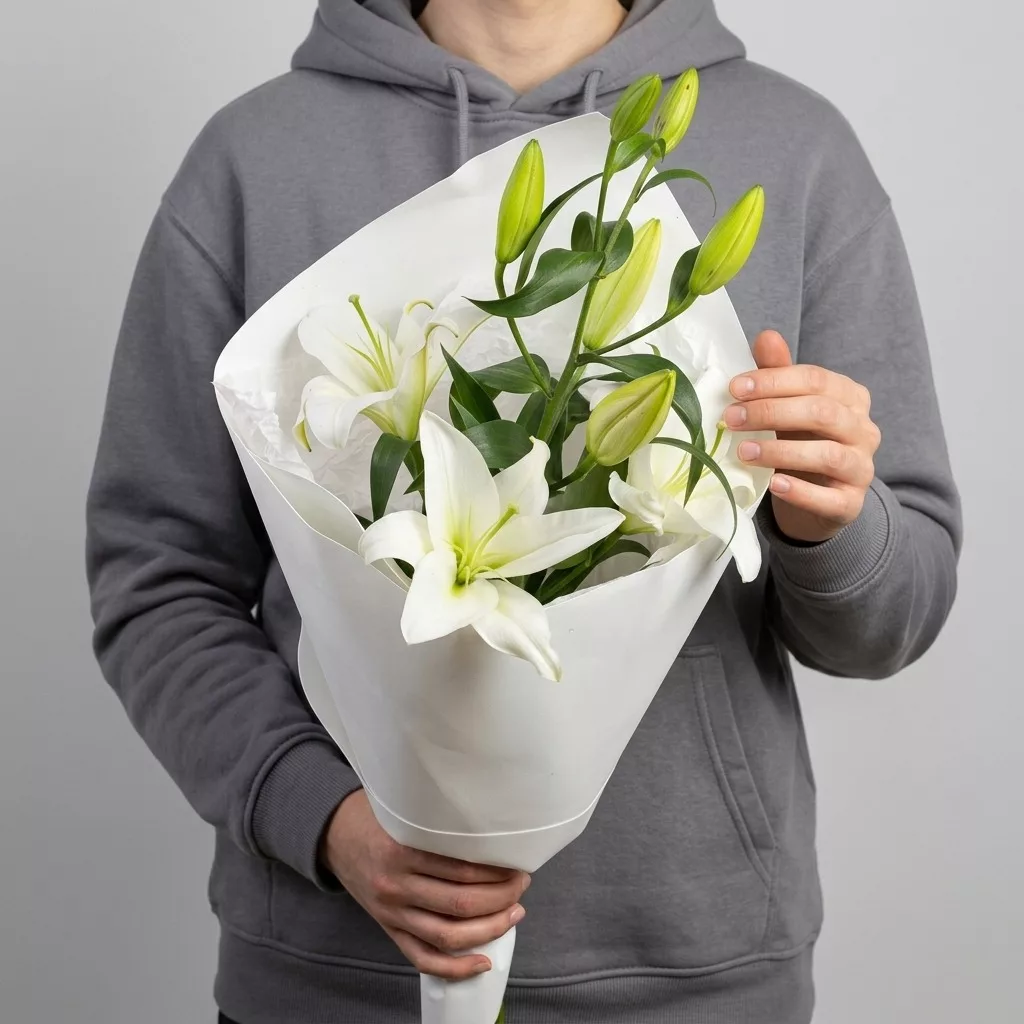
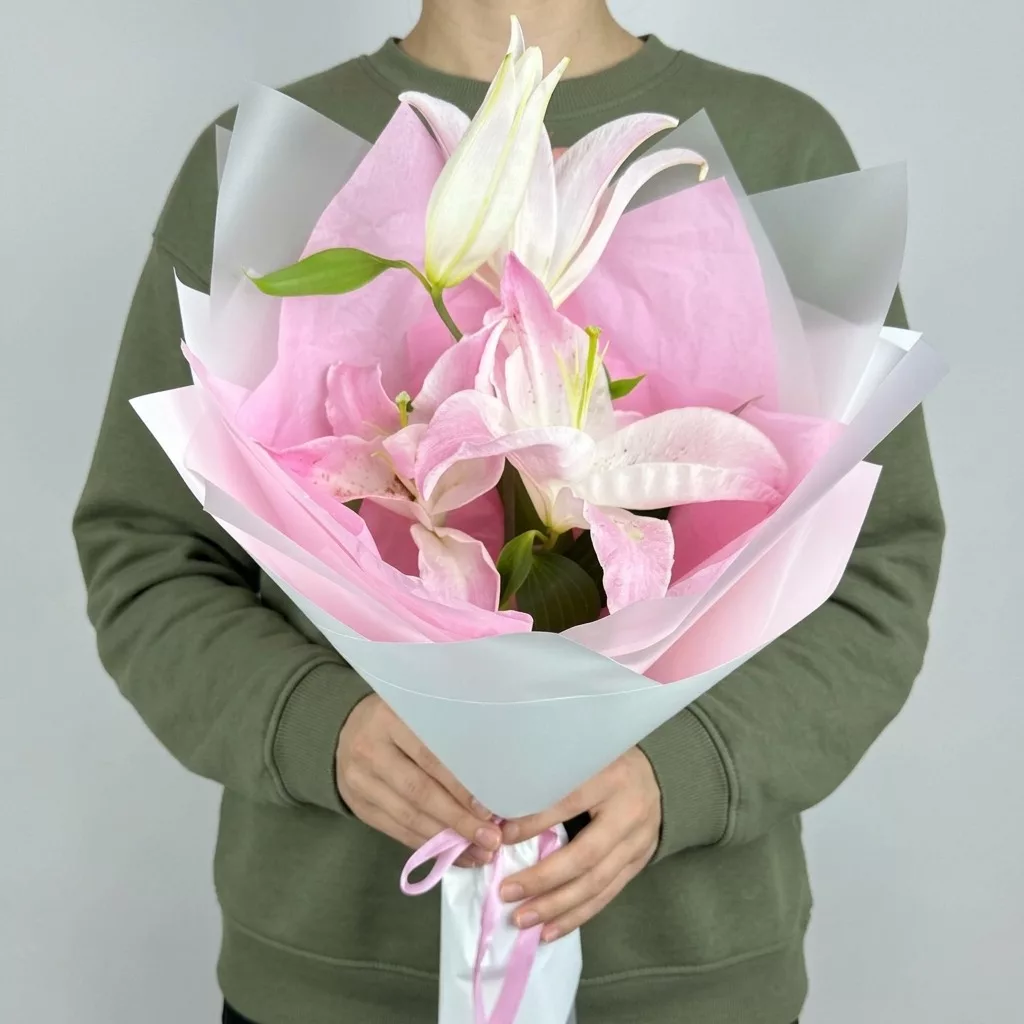

The First Thing the Recipient Should Do at the Door
Ask the recipient to photograph the bouquet before it is unwrapped or placed in water. This single step makes the entire complaint process faster and cleaner. The photo should be taken in natural or good indoor light, showing the outer packaging, then the bouquet itself once the wrapping is removed. If specific stems are damaged, a close-up of those stems or petals is useful. The goal is to capture the condition of the flowers at the moment of handover, not twenty-four hours later.
This is not about bureaucracy. In Russia, as in most countries, a complaint about a perishable product is much stronger when it is supported by timestamped photographic evidence taken at or near the time of delivery. A photo taken the following morning, after the bouquet has been in a warm room overnight, tells a different story than one taken within the first hour.
If the recipient is elderly or not comfortable with smartphones, a family member or neighbour who is present can help. The key detail is the timestamp embedded in the image file, which modern phones record automatically. If your recipient is in Kazan, Novosibirsk, or any city outside Saint Petersburg, the same process applies: photograph first, unwrap second, contact us third. The courier should still be nearby if the damage is obvious, but there is no need to refuse the delivery or create a confrontation at the door. Accepting the bouquet and documenting it is the right sequence.
How to Contact Turboflora When You Are Outside Russia
Reaching out from abroad is simpler than many international senders expect. Turboflora handles complaints through its website chat and email, both of which work across time zones and require no Russian-language knowledge. You do not need to call a local number or navigate a Russian-language phone menu. Write in English and the team will respond in English.
When you make contact, have three things ready: your order number, the delivery photo from the recipient, and a brief description of what is wrong. Be specific rather than general. Instead of writing that the flowers look bad, describe what you see: the outer petals of the red roses are brown at the edges, three stems of white freesia are bent at a right angle near the base, or the eucalyptus sprigs have yellowed. This level of detail allows the florist reviewing your case to identify whether the issue is transit damage, a preparation error, or something that can be corrected with simple care steps.
Response times during business hours are typically within a few hours. If you are contacting from a time zone significantly ahead of Moscow, such as from North America or Western Europe in the evening, you may receive a reply the following morning Moscow time. This does not affect the validity of your complaint. The timestamp on your initial message and on the delivery photo is what establishes the timeline, not when the reply arrives. Keep the conversation thread in one place rather than switching between channels, so the full context is visible to whoever handles your case.
What Evidence Makes a Complaint Strong
The delivery photo is the foundation, but a strong complaint usually includes a small set of supporting details that help the team understand exactly what happened. The most useful combination is the delivery photo, a photo of the order confirmation or the order number clearly visible, and if possible a second photo taken thirty to sixty minutes after the bouquet was placed in water. That second photo shows whether the issue resolved with hydration or persisted, which is important for distinguishing transit stress from structural damage.
For specific flower types, context helps. Gerbera daisies, for example, have hollow stems that collapse if they are cut at the wrong angle or placed in too much water. If your gerberas arrived with drooping heads, noting that the stems were hollow and the water level was correct tells the team something useful. Garden roses with many petals, such as David Austin varieties, can look balled or closed in cold weather but open normally at room temperature within a few hours. If yours did not open after four hours in a warm room, that is a meaningful detail.
What weakens a complaint is a photo taken the next day after the flowers have been in a heated room without water, or a description that focuses on personal disappointment rather than observable physical condition. The team is not judging your feelings; they are assessing the product. Clear, factual, timestamped evidence gives them everything they need to act quickly and fairly. A complaint supported by a good delivery photo almost always reaches resolution within one business day.
The Resolution Options Available to You
Once the complaint is reviewed and the evidence supports it, there are several ways the situation can be resolved. The most common outcome for a genuinely damaged bouquet is a replacement delivery. A fresh bouquet of the same or equivalent composition is prepared and sent to the recipient, usually with priority scheduling. If the original delivery was for a specific occasion such as a birthday, the replacement is treated as urgent regardless of the day or time.
If a replacement is not practical, for instance if the recipient is travelling or the occasion has already passed, a credit to your account or a partial refund is offered instead. The amount reflects the degree of damage: a bouquet where two stems out of fifteen were affected is handled differently from one where the majority of flowers arrived in poor condition. The team communicates the options clearly and lets you choose, rather than applying a fixed rule without discussion.
In cases where the flowers look worse than expected but are not technically damaged, the resolution might be a care guide sent directly to the recipient with specific steps for the variety involved. Lisianthus, for example, often arrives with the upper buds closed and the lower ones open, which looks incomplete but is actually correct for the flower. Understanding that the buds will open over two to three days changes the experience entirely. This kind of explanation is offered as a first step when the evidence suggests the flowers are healthy but unfamiliar to the recipient, and it is followed by further action if the flowers do not improve as expected.
Caring for the Bouquet While the Complaint Is Being Resolved
Even when you are waiting for a response, ask the recipient to give the bouquet basic care rather than leaving it untouched. This matters because some flowers that look damaged on arrival recover substantially with the right conditions, and that recovery is actually a good outcome. It means the flowers will be enjoyed while the complaint is being reviewed, and it gives the team accurate information about what was transit stress versus lasting damage.
The standard steps are simple. Cut the stems at a forty-five degree angle under running water or while submerged in a basin. Remove any leaves that would sit below the waterline in the vase, as submerged leaves rot quickly and cloud the water. Use a clean vase with cool, not cold, water. Keep the bouquet away from direct sunlight, radiators, and fruit bowls. Fruit emits ethylene gas, which shortens the life of roses, tulips, and carnations noticeably.
For specific varieties: roses with bent necks sometimes recover if the stem is recut and the whole flower is wrapped loosely in paper and laid horizontally in cool water for an hour. Tulips prefer cold water and a cool room. Hydrangeas can be revived by submerging the entire head in cool water for fifteen to twenty minutes if they have wilted. These are not guaranteed fixes, but they work often enough that they are worth trying before concluding the bouquet is unsalvageable. Document the condition before and after, and share both photos with the team. It all contributes to a faster, fairer resolution.
Setting Realistic Expectations for Delivery Across Russia
Russia is a large country with significant climate variation between cities, and deliveries to destinations beyond Saint Petersburg involve longer transit times and more exposure to outdoor conditions. A bouquet sent to Yekaterinburg in January travels through a different environment than one delivered within Saint Petersburg on a mild October afternoon. Turboflora accounts for this in how bouquets are prepared and packaged for different routes, but it is worth understanding what the journey involves.
For same-day or one-to-two-hour deliveries within Saint Petersburg, the conditions are controlled and the timing is short enough that most hardy varieties, including spray roses, chrysanthemums, alstroemeria, and statice, arrive in excellent condition. For longer routes to other Russian cities, the packaging is adjusted and hardier combinations are recommended when the sender is open to suggestions.
When you place an order for delivery to a city outside Saint Petersburg, the estimated delivery window reflects real logistics, not an optimistic number. If you request a specific time and the team flags a concern about reaching that window, it is worth listening. A bouquet of garden roses and sweet peas is more fragile than one built around sturdy carnations and waxflower, and the right choice for a cross-city delivery might differ from what you would choose for a local one. Asking the team for a recommendation based on the destination and the season is always a reasonable thing to do, and it reduces the chance of a complaint being needed at all.
A damaged bouquet is disappointing, but it is also a situation with a clear path forward. The key steps are simple: photograph at delivery, contact the team with your order number and evidence, and describe what you see in plain, specific terms. From abroad, the process works entirely in English and requires no local knowledge or phone calls. Most complaints that arrive with good photographic evidence are resolved within one business day, either with a replacement, a credit, or practical care advice that turns the situation around. The flowers matter, the occasion matters, and getting this right matters to the team as much as it does to you.
Frequently asked questions
How quickly do I need to report a damaged bouquet?
Report the issue as soon as possible after delivery, ideally within two to three hours. The delivery photo should be timestamped close to the handover time. Complaints submitted the following day are still accepted, but the case is stronger when the evidence is fresh and the condition of the flowers at the moment of delivery is clearly documented.
Can the recipient report the complaint directly, or does it have to be me as the sender?
Either the sender or the recipient can make the initial contact. If the recipient reports it, they should reference the sender's name or the order number so the case can be linked to the correct order. The evidence, particularly the delivery photo, is what matters most, and it can be shared by either party through the same complaint channel.
What if the flowers looked fine at delivery but wilted within a few hours?
This situation is handled differently from obvious delivery damage. Share a photo taken shortly after delivery alongside one showing the current condition, and describe the care steps the recipient followed. Rapid wilting within two to three hours of delivery, despite correct care, is a legitimate quality concern and is reviewed as such by the team.
Is a replacement always sent to the same address, or can it go elsewhere?
A replacement is sent to the address on the original order unless you request otherwise. If the recipient has moved or the occasion has passed, you can ask for the replacement to be held for a future date or redirected to a different address within the delivery area. Discuss this with the team when they confirm the resolution options.
Do certain flower varieties have a higher risk of arriving damaged?
Delicate varieties such as garden roses with many petals, sweet peas, and open peonies are more sensitive to heat and pressure than sturdy ones like chrysanthemums, alstroemeria, or carnations. If you are ordering for a destination with a long transit time or during extreme weather, asking the team to suggest a more resilient combination is a practical way to reduce the risk.
Ready to send flowers?
Pick the city, choose the bouquet, and a local florist takes it from there.
Choose a city →