What Bouquet Presentation Style Do Russians Expect?
You have chosen the flowers, picked the right colours, and placed the order. Then the bouquet arrives and the recipient's first reaction is not about the roses themselves — it is about the wrapping. In Russia, presentation is not decoration; it is a signal of care, seriousness, and respect. Understanding those signals helps you send something that feels genuinely right rather than technically correct.
Why Presentation Matters More Here Than in Many Other Countries
In a lot of Western European flower shops, a bouquet arrives loosely wrapped in a single sheet of kraft paper, tied with a simple piece of twine, and that is considered elegant minimalism. Russian recipients read that same bouquet very differently. The sparse wrap feels unfinished, almost careless, as if the sender did not invest enough thought into the gift itself. Presentation in Russia carries emotional weight that goes well beyond keeping stems damp on the journey.
This is partly cultural history. Soviet-era flower markets trained buyers to expect volume and visual drama — a bouquet had to look abundant and celebratory before it was even opened. That expectation has evolved with modern florist culture, but the underlying instinct remains: a properly dressed bouquet signals that the occasion was taken seriously.
It also comes from the way flowers are given in person. Handing over a bouquet is a small ceremony. The paper, the ribbon, the overall silhouette — all of it forms the first impression before a single petal is touched. When flowers are delivered to a door, that same ceremony has to be built into the packaging itself, because the florist is no longer present to add warmth through gesture or words. The wrapping does that work instead. Getting it right means the recipient feels the occasion the moment they open the door, not after they have unwrapped everything and arranged it themselves.
Bouquets we can deliver


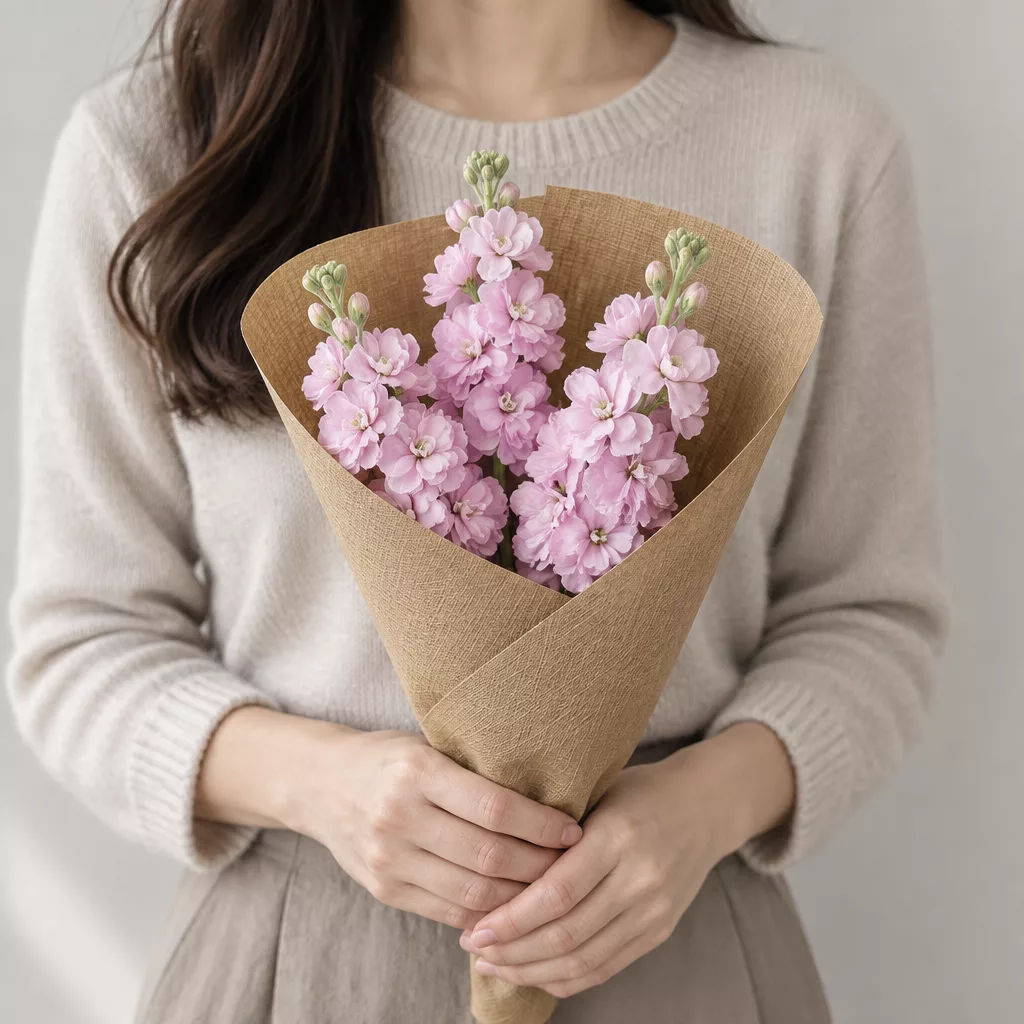
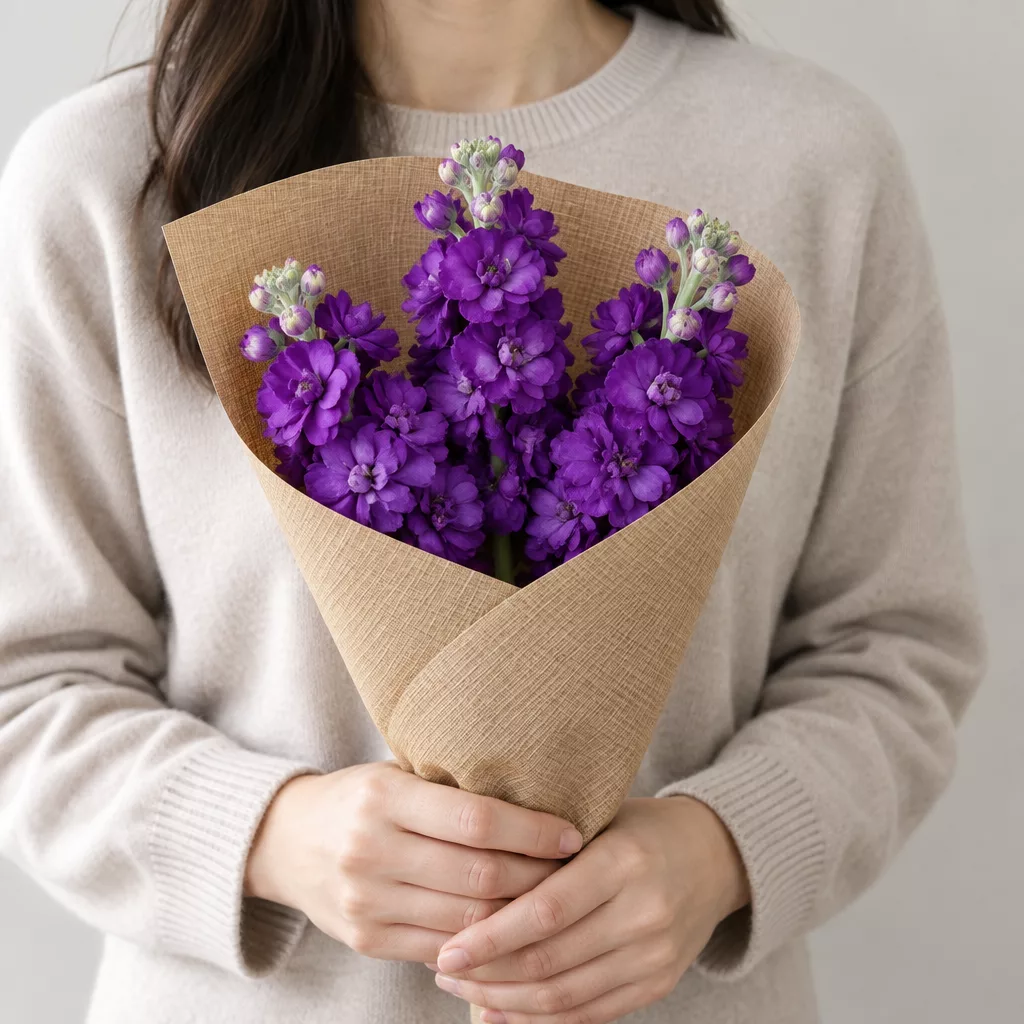
The Role of Cellophane: Transparent, Structured, and Expected
Cellophane is probably the single most distinctive element of Russian bouquet presentation, and it is the one that surprises visitors from abroad the most. In many countries, florists use cellophane sparingly or avoid it entirely, associating it with petrol station flowers. In Russia, a structured cellophane wrap is a mark of a professional bouquet — not a budget shortcut.
The key word is structured. The cellophane is gathered and shaped so that it forms a cone or a fan around the flowers, holding the arrangement in place and giving the bouquet a clear silhouette. It is not simply folded around the stems and taped shut. When done well, the transparent layer lets the flowers show through while adding a crispness to the overall form. Coloured or frosted cellophane is used for certain styles, but clear remains the most universal and the most trusted option for formal occasions.
Cellophane also serves a practical purpose in the Russian climate. Saint Petersburg winters are severe, and even a short journey from a courier's bag to an apartment door exposes delicate petals to freezing air. A proper cellophane layer buffers that temperature shock and holds moisture around the stems. Roses, ranunculus, and lisianthus — all popular in Russian gifting — are particularly sensitive to sudden cold. A bouquet that arrives with petals already wilting from the journey, however beautiful the flowers themselves, is a disappointment that good wrapping prevents.
Removing the cellophane is also part of the recipient's experience. It is a small unwrapping ritual, and florists who understand this leave enough structure in the wrap that the moment feels satisfying rather than fiddly.
Paper Layers: Kraft, Velvet, and the Logic of Combining Them
Russian florists rarely use a single layer of paper. The standard professional approach is two layers at minimum — typically an inner layer of softer, often coloured tissue paper directly against the flowers, and an outer layer of kraft or textured paper that gives the bouquet its shape and durability. This combination is so common that a single-wrap bouquet immediately reads as informal, even if the flowers inside are premium.
Kraft paper in natural brown or black is currently the most fashionable outer wrap in Saint Petersburg's better flower shops. It photographs well, it ages gracefully if the recipient sets the bouquet down before unwrapping, and it gives a contemporary feel that works for birthdays, anniversaries, and professional occasions alike. Paired with a soft inner tissue in dusty rose or sage green, it suits a wide range of flower colours without competing with them.
Velvet paper — a flocked paper with a soft, matte texture — is used for more elevated presentations, particularly for roses and peonies given on significant anniversaries or to mark a serious romantic gesture. It adds tactile richness that plain kraft cannot match, and it photographs beautifully in low light. The trade-off is that velvet paper is less forgiving of moisture, so florists use it with a protective cellophane layer underneath.
The inner tissue layer is where a florist can introduce a colour accent that ties the whole bouquet together. Choosing tissue that echoes one of the secondary flower colours — say, a soft lavender tissue with white eustoma and purple statice — creates cohesion that recipients notice even if they cannot explain why the bouquet feels so considered.
Ribbons and Bows: What Signals Celebration and What Signals Formality
A ribbon on a Russian bouquet is not optional decoration — it is a punctuation mark that tells the recipient what kind of occasion this is. Satin ribbon tied in a full bow at the base of the stems says celebration loudly and clearly. It is the expected finish for birthdays, graduations, and romantic gestures. The bow should be generous; a small, flat knot reads as an afterthought rather than a flourish.
Colour choice matters considerably. Red and gold ribbon combinations signal grandeur and are often used for significant anniversaries or professional achievements. Soft pink or ivory ribbon works for romantic occasions and for flowers given to new mothers. White ribbon with a clean bow is appropriate for formal congratulations — a promotion, a successful defence, an opening night. Florists who match the ribbon colour to a secondary flower in the bouquet rather than defaulting to plain white show a level of attention that recipients genuinely notice.
For a more restrained, modern aesthetic — which is increasingly popular among younger recipients in Saint Petersburg — a single length of grosgrain or velvet ribbon tied in a simple knot rather than a bow reads as intentionally understated. This works particularly well with architectural arrangements: single-variety bouquets of garden roses, or a structured bunch of ranunculus in one colour family. The restraint signals confidence rather than economy.
What does not work is no ribbon at all on a formal bouquet. Even the most minimal contemporary arrangement benefits from something at the stem. A bare stem wrap, however artfully done, feels incomplete to most Russian recipients and suggests the bouquet was assembled in haste rather than with care.
Odd Numbers, Stem Direction, and the Details That Show Local Knowledge
One of the most firmly held conventions in Russian flower culture is the odd-number rule. Bouquets given as gifts must contain an odd number of flowers — three, five, seven, nine, eleven, and so on. Even numbers are associated with mourning and are used specifically in that context. Sending a bouquet of twelve roses to a birthday recipient, however generous the gesture, creates an uncomfortable moment that the recipient may not voice but will certainly feel.
This rule applies to the prominent flowers in an arrangement, not to every stem. A bouquet of eleven roses with a scatter of wax flower and eucalyptus filler is perfectly correct. What matters is the count of the feature flower — the element that the recipient will instinctively count when they receive the bouquet.
Stem direction also matters in Russian presentation. The flowers face outward, toward the person receiving the bouquet, not inward toward the giver. When a bouquet is handed over or set down for delivery, the recipient should see the blooms immediately, without needing to rotate it. Florists who build bouquets with this orientation in mind make the handover or the doorstep moment feel natural rather than awkward.
Finally, the stems should be cut cleanly and evenly, and the lower leaves stripped back so that the stem section visible below the paper is clean and green. Leaving yellowing or damaged foliage on the lower stems is considered a mark of poor craftsmanship. It suggests the flowers were not prepared carefully, which undermines the impression of the entire bouquet regardless of how beautiful the blooms themselves are.
Choosing Presentation Style by Occasion and Recipient
A bouquet for a woman turning fifty should feel different from one sent to a colleague on their last day at work, and the presentation is where that difference is first communicated. For a significant personal milestone — a major birthday, a wedding anniversary, a birth — the wrapping should be full and generous: two paper layers, structured cellophane, a satin bow, and enough volume that the bouquet makes an impression from across a room. Roses, peonies, or garden roses in a colour the recipient loves are natural choices, and the presentation should match their weight.
For a professional occasion — thanking a teacher, congratulating a colleague, welcoming a business partner — the presentation should be polished but restrained. A single outer paper layer in a neutral colour, a clean ribbon rather than a large bow, and flowers that are elegant rather than exuberant: white or cream eustoma, spray roses, or alstroemeria in soft tones. The goal is to say that the sender is thoughtful and professional, not that they are making a romantic gesture.
For a romantic bouquet, presentation can afford to be more expressive. Deep red or burgundy roses in velvet paper with a matching ribbon, or a monochrome arrangement of blush peonies in dusty pink tissue — these presentations feel intentional and personal. The detail that most elevates a romantic bouquet is a handwritten card rather than a printed one. Russian recipients pay attention to handwriting; it signals that the sender stopped and thought rather than clicking through a checkout.
For a child's birthday or a young person's celebration, brighter colours in both flowers and wrapping are entirely appropriate. Bright gerbera, sunflowers, or colourful ranunculus in cheerful paper feel joyful rather than over the top.
What Makes a Bouquet Feel Foreign — and How to Avoid It
There are a few recurring presentation choices that immediately signal to a Russian recipient that the bouquet was designed without local customs in mind. The most common is the single kraft paper wrap with exposed stems and no ribbon — a style that reads as deliberately casual in Scandinavia or the Netherlands but feels incomplete in Russia. It is not that the style is ugly; it is that it does not match the visual vocabulary the recipient has grown up with.
Another common mismatch is a bouquet built around even numbers of feature flowers. As noted earlier, this carries an association that no sender wants to create at a birthday or a celebration. Florists working from an international template sometimes default to round numbers — ten, twelve, twenty — without realising the effect. Choosing eleven or thirteen instead of twelve is a small adjustment that makes a significant difference.
Using entirely dried or preserved flowers as a standalone gift is another area where expectations can diverge. Dried arrangements have a growing following in Saint Petersburg among younger, design-conscious recipients, but for an older recipient or a traditional occasion, a bouquet with no fresh flowers can feel like a lesser gift. Mixing a few dried elements — pampas grass, dried lagurus, or preserved eucalyptus — into a primarily fresh arrangement gives a contemporary feel without sacrificing the sense of freshness that Russian recipients associate with a proper gift bouquet.
Finally, sending flowers without any wrapping at all — just stems in water tubes — is a style that works for some international delivery services but lands poorly here. The unwrapping moment is part of the gift. Skipping it removes something the recipient was expecting to experience.
Presentation is not the afterthought that comes after choosing the flowers — in Russia, it is the first thing the recipient sees and the first signal of how much care went into the gift. Getting the wrapping, ribbon, and structure right means the bouquet feels correct before a single petal is touched. At Turboflora we build every bouquet with these conventions in mind, because we know that a rose is not just a rose when it arrives at someone's door: it is a whole moment, and the presentation is what makes that moment land. We deliver bouquets across Russia in 1–2 hours.
Frequently asked questions
Do Russian florists always use cellophane, or is it considered old-fashioned now?
Structured cellophane remains standard in professional Russian bouquets and is not seen as dated. It serves a practical purpose in cold weather by protecting petals, and it gives the bouquet a clean silhouette. Frosted or coloured cellophane is used for specific styles, but clear cellophane over a paper wrap is still the most trusted and widely expected finish for a formal gift bouquet.
Is it true that even numbers of flowers are considered bad luck in Russia?
Even numbers of feature flowers are associated with mourning rather than bad luck specifically, which is why they are avoided in gift bouquets. The convention is taken seriously across generations. When ordering, count the main flowers — roses, peonies, or whatever the feature bloom is — and make sure that number is odd. Filler flowers and greenery are not counted.
What ribbon colour works for most occasions if I am unsure?
Ivory or champagne satin ribbon is the safest all-occasion choice. It complements most flower colours, reads as celebratory without being loud, and works for birthdays, professional occasions, and romantic gestures alike. If you know the recipient's favourite colour or the dominant colour in the bouquet, matching the ribbon to a secondary flower in the arrangement is a more considered option.
Can I request a more minimal, European-style wrap for a recipient who has lived abroad?
Yes, and it is a reasonable request for recipients who have spent significant time in Western Europe and appreciate that aesthetic. A single kraft paper wrap with a simple grosgrain ribbon knot rather than a bow reads as intentionally modern rather than incomplete, particularly for single-variety bouquets. Mentioning this preference when you order allows the florist to adjust the presentation accordingly.
How far in advance should I order to ensure the presentation is done properly, not rushed?
Ordering two to three hours before your target delivery time gives the florist enough space to build and wrap the bouquet carefully rather than rushing the finish. For significant occasions — a major anniversary, a large arrangement — ordering the evening before or first thing in the morning is better. A rushed wrap is one of the most visible signs that a bouquet was assembled under pressure.
Ready to send flowers?
Pick the city, choose the bouquet, and a local florist takes it from there.
Choose a city →