Received a Bouquet? Here Is How to Unpack It the Right Way
The moment a bouquet arrives at the door is one of the best parts of any occasion. But what happens in the next ten minutes quietly decides how long those flowers will look their best. Most people unwrap a bouquet the same way they tear open a gift — quickly, with good intentions and no particular plan. A working florist will tell you that the wrapping, the stems, and the water temperature all matter more than they appear to, and that a few calm, deliberate steps at the start add days of life to almost any arrangement.
Why the First Ten Minutes After Delivery Matter So Much
Flowers are living things, and they have been through a journey. Even with fast same-day delivery, a bouquet spends time in transit — inside a cool van, then briefly in warm air, then in your hands. During that time the stems are not drinking. Every minute without water is a small stress that shortens vase life, and the effect compounds quickly once the flowers warm up.
Roses, tulips, and peonies are the most sensitive to this gap. A rose stem that has been out of water for more than thirty minutes begins to form a dry seal at the cut end, which blocks uptake even after you place it in a vase. Tulips droop noticeably within an hour if they are not recut and watered promptly. Chrysanthemums and alstroemeria are more forgiving, but they still benefit from quick action.
The goal is simple: move from delivery to vase in under ten minutes. That is not a rushed process — it is just an organised one. Lay out a clean vase, room-temperature water, and a sharp pair of scissors or a knife before you even open the door. Having everything ready means you spend those ten minutes doing the right things rather than searching for a vessel. Think of it the way a cook thinks about mise en place: preparation before the moment, not during it.
Bouquets we can deliver

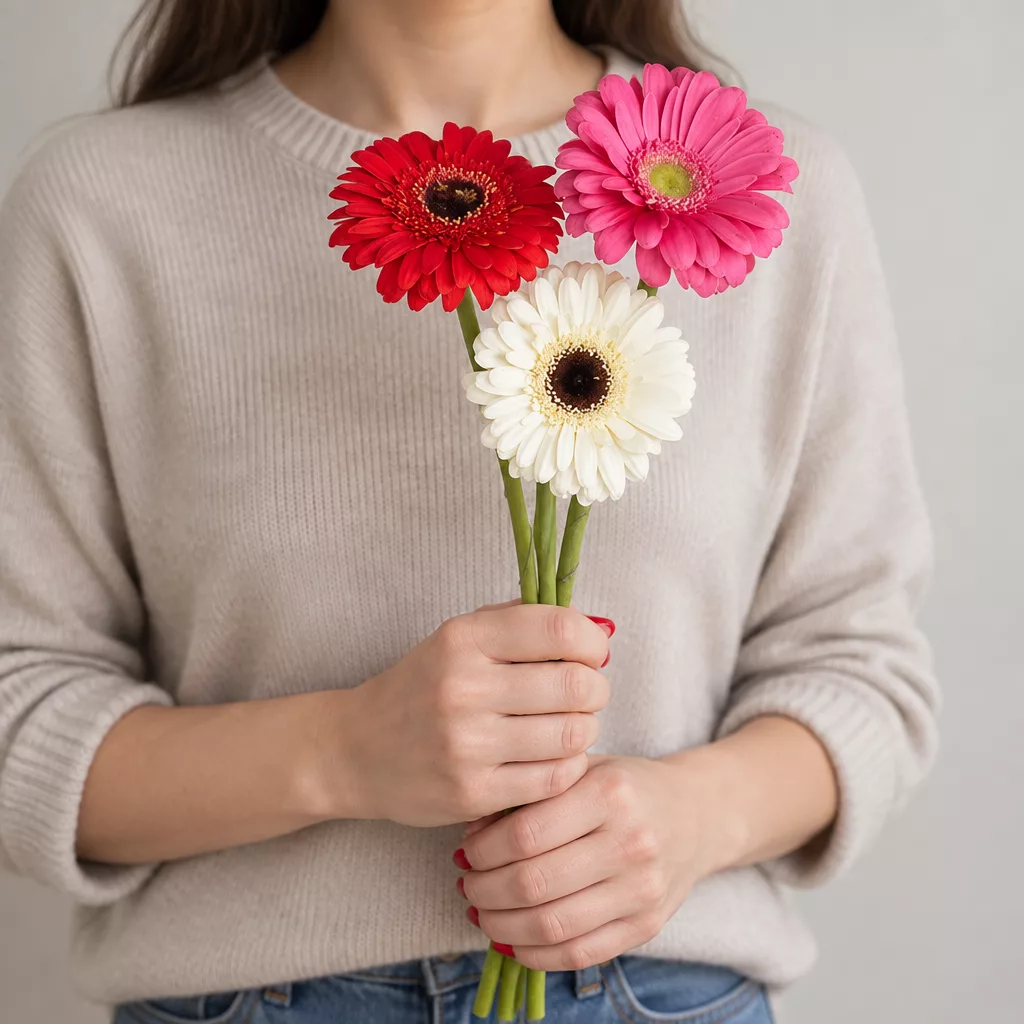

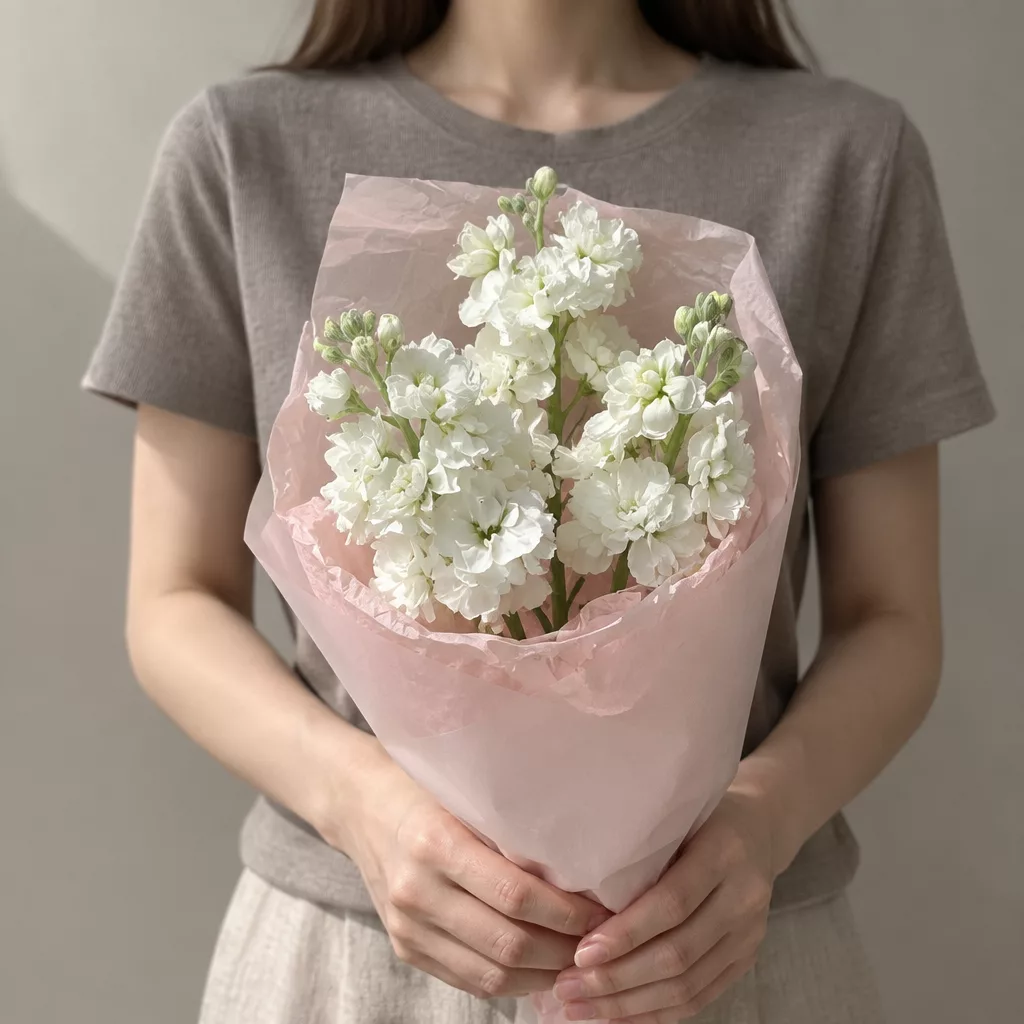
Reading the Wrapping Before You Remove It
Modern bouquet wrapping serves two purposes: it protects the flowers during transit and it presents them beautifully when the recipient opens the package. Russian florists, including our team in Saint Petersburg, typically use several layers — a kraft paper outer wrap, sometimes a sleeve of decorative paper or fabric, and a soft inner layer that cushions the blooms. There may also be a moisture pack or damp cotton at the stem ends to keep the flowers hydrated on the road.
Before you pull anything apart, take thirty seconds to look at how the bouquet is assembled. Notice which direction the stems run, where any pins or staples are holding the paper together, and whether there is a moisture pack attached at the base. Removing a moisture pack carelessly can drag stems out of position or snap fragile flower heads that are resting against the paper.
Gently feel the outside of the wrapping near the stem ends. If it is damp, there is a hydration pack inside — peel the paper back from the bottom first rather than pulling downward from the top. If the wrapping is dry throughout, the bouquet was packed without added moisture and you should move to water even more quickly. Look for any small cards or decorative elements tucked into the paper, and set them aside before you begin cutting. Losing a handwritten card in a pile of discarded wrapping is more common than it sounds, and on an occasion that matters, it is worth the extra moment to save it.
Removing the Wrapping Without Disturbing the Arrangement
The safest way to open a wrapped bouquet is from the bottom up, not the top down. Most people instinctively pull the paper away from the flowers by reaching in at the top — this bends stems, catches petals on the paper edge, and can pull the whole arrangement out of shape. Instead, hold the bouquet upright in one hand, find the tape or pin holding the base of the wrapping, and release it first.
Once the base is open, let the paper fall away naturally rather than pulling it. For bouquets with multiple layers, remove each layer separately. The inner layer, which is usually a soft tissue or thin decorative paper, is the most likely to catch on open rose petals or the delicate outer petals of a ranunculus or garden spray rose. Slow down at this stage.
If the bouquet has a ribbon tied around the stems, cut it rather than untying it. Tugging at a ribbon knot shifts the stems against each other and can bruise soft stems like tulips or freesia. Use scissors to snip the ribbon cleanly at one point, then slide it away. Some arrangements are also secured with a rubber band underneath the ribbon — remove this too, because leaving a tight band on the stems restricts water uptake at exactly the point where the flowers need it most. Once the wrapping is fully off, hold the bouquet by the stems and carry it straight to your prepared work surface. Do not set it down horizontally — always keep flowers upright from this point forward.
Cutting the Stems: The Step Most People Skip or Rush
A fresh cut on every stem is not optional — it is the single most important thing you do before placing flowers in a vase. The reason is straightforward: the bottom of a stem that has been out of water oxidises and forms a barrier. Even a stem cut an hour ago needs to be recut before it can drink properly. The cut should remove at least two centimetres from the base, and it should be made at an angle of roughly forty-five degrees.
The angle matters because it increases the surface area of the cut and prevents the stem from sitting flat against the bottom of the vase, which would seal it off again. Use a sharp knife rather than scissors if you have one available. Scissors crush the cell walls of the stem as they cut, which reduces uptake. A clean knife cut leaves the vascular tissue intact and open. If scissors are all you have, use the sharpest pair available and cut decisively — a slow squeeze is worse than a quick snip.
For woody stems like roses or lisianthus, some florists recommend making a small vertical split at the base in addition to the angled cut, which helps water move up faster. For hollow stems like amaryllis or large delphiniums, this is not necessary. Cut stems under a thin stream of running water if possible — this prevents any air bubble from entering the stem between the cut and the moment it reaches the vase. It sounds fussy, but for roses especially it makes a measurable difference to how long the flowers hold their heads upright in the first two days.
Choosing the Right Vase and Water Temperature
Vase choice is about proportion and stem length, not decoration. A bouquet that arrives tightly bunched will spread as it opens, and it needs a vessel wide enough to allow that without crowding. Crowded flowers bruise each other, trap humidity between the petals, and go over faster. As a rule, the vase should be roughly half the height of the trimmed stems, and the opening should be wide enough that you can insert your hand without forcing it.
Water temperature is one of the most misunderstood variables in flower care. The standard advice is to use room-temperature water, and for most flowers that is correct — around eighteen to twenty degrees Celsius. Cold water from the tap slows uptake because it causes the stem tissue to contract slightly. Very warm water encourages bacterial growth. The exception is tulips: tulips actually benefit from slightly cooler water, around twelve to fifteen degrees, because it helps them stay upright longer and slow down the natural tendency to bend toward light.
Fill the vase so that the lower third of the stems is submerged. Submerging more than that encourages the lower leaves to rot in the water, which clouds it quickly and creates bacteria that block the stem ends. Strip any leaves that would sit below the waterline before you place the flowers in the vase. This is a step that is easy to forget when you are excited about the arrangement, but it has a direct effect on how many days the flowers last. Flower food sachets, often included with delivery, should be dissolved in the water before the stems go in.
Arranging the Bouquet Once It Is in Water
A professionally arranged bouquet from a florist is already composed — the stems are placed in a spiral that holds the flowers in a balanced shape. Your job when transferring it to a vase is to preserve that structure rather than rearrange it. Hold the bouquet by the stems just below the bind point, lower it into the vase as a single unit, and then release. The stems will splay slightly as they settle, which is normal and actually helps with water uptake.
If the arrangement includes a mix of flower types — say, garden roses combined with eucalyptus, wax flower, and a few stems of lisianthus — the foliage and filler stems will naturally support the main blooms. Do not pull individual stems out to reposition them immediately after placing the bouquet in water. Give the flowers twenty minutes to begin drinking and to straighten themselves. Many flowers that look slightly droopy on arrival will recover fully once they have had water for half an hour.
After that initial rest, you can gently adjust any stems that are leaning awkwardly or blocking others from light. Rotate the vase so that all sides of the arrangement face the light source at some point during the day — this prevents the flowers from bending strongly in one direction, which is especially noticeable with sunflowers and gerbera. If any guard petals on the outer layer of roses look bruised or papery, they can be carefully removed — these outer petals exist to protect the bloom during transit and are meant to be discarded once the flower is home.
The First 24 Hours: Where to Place Them and What to Watch
Where you put a bouquet in the first day matters as much as how you unpack it. Flowers last longest away from direct sunlight, heat sources, and draughts. A windowsill in summer sun is one of the worst places for cut flowers — the warmth accelerates aging and the direct light causes rapid water loss through the petals. A cool interior wall, a dining table away from a radiator, or a kitchen counter away from the stove are all good choices.
Keep flowers away from fruit bowls. This is a detail that surprises many people: ripening fruit, especially apples and bananas, releases ethylene gas, which causes flowers to age faster. Even a bowl of fruit on the same table can shorten vase life by a day or two. The effect is strongest on roses, carnations, and sweet peas.
Check the water level after the first twenty-four hours. Flowers drink a surprising amount in the first day as they recover from transit and begin to open fully. Top up with fresh water at the same temperature, and if the water looks cloudy, replace it entirely and recut the stems by another centimetre. A quick stem recut every two days is one of the most effective habits for extending vase life. Remove any flowers that go over before they affect the others — one wilting stem releases compounds into the water that accelerate the decline of everything around it. With good care from the moment of unpacking, most mixed bouquets will look beautiful for five to seven days, and roses or chrysanthemums can hold for ten or more.
Unpacking a bouquet carefully takes less than ten minutes, but the habit changes everything about how long the flowers stay beautiful. A sharp cut, clean water at the right temperature, a vase with room to breathe, and a spot away from heat and fruit — these are not complicated steps, but they are the ones that separate a bouquet that looks stunning for a week from one that droops by the third day. The flowers that arrive at your door have already made a long journey to get there. A few calm, deliberate minutes on your end are all they need to repay that with days of colour and fragrance. We deliver bouquets across Russia in 1–2 hours.
Frequently asked questions
Can I leave the bouquet in its wrapping for a few hours before unpacking it?
It is not recommended. Flowers need water as soon as possible after delivery, and keeping them wrapped traps heat and humidity around the petals, which accelerates wilting. If you cannot unpack immediately, at least cut the base of the wrapping and place the stem ends in a glass of water as a temporary measure until you are ready to arrange them properly.
Do I really need to recut the stems if they were already cut by the florist?
Yes, always recut before placing in a vase. Even stems cut an hour ago develop a dry seal at the base that blocks water uptake. Removing two centimetres at a forty-five degree angle opens fresh tissue and allows the flowers to drink immediately. This single step has more impact on vase life than almost anything else you can do at home.
What should I do if some flowers arrive looking droopy or soft?
Droopiness on arrival is usually caused by temporary dehydration during transit, not damage. Recut the stems, place the flowers in cool water, and leave them in a dim, cool room for one to two hours. Most roses and tulips recover fully within that time. If a stem is completely limp and does not recover after two hours in water, it is best removed from the arrangement.
Should I use the flower food sachet that came with the delivery?
Yes, dissolve it in the vase water before placing the stems in. Flower food contains a mild acidifier that keeps water clean, a small amount of sugar that feeds the flowers, and a biocide that slows bacterial growth. Using it correctly, according to the dilution on the packet, noticeably extends vase life compared to plain tap water alone.
How often should I change the water in the vase?
Every two to three days is a good rhythm for most bouquets. When you change the water, rinse the vase thoroughly, recut the stems by about one centimetre, and remove any leaves that have slipped below the waterline. If the water turns cloudy before two days are up, change it immediately — cloudy water contains bacteria that block the stem ends and shorten the life of every flower in the arrangement.
Ready to send flowers?
Pick the city, choose the bouquet, and a local florist takes it from there.
Choose a city →