Sending Corporate Flowers to Multiple Russian Cities: Budget It Right
You have a company anniversary coming up, or perhaps Women's Day on March 8th is three weeks away and your HR team just reminded you that you have offices in Moscow, Kazan, Novosibirsk, and Yekaterinburg. Every recipient matters. Every arrangement needs to arrive fresh, look generous, and feel personal — even when it is part of a coordinated order for two hundred people. Getting that balance right between budget, timing, and presentation across several cities at once is exactly the kind of problem a good florist should help you solve before it becomes a headache.
Why Multi-City Corporate Orders Need Their Own Logic
A single-location flower order is straightforward: you choose a style, set a budget per arrangement, and confirm a delivery window. The moment you add a second or third city, several new variables appear simultaneously, and ignoring any one of them tends to produce uneven results that embarrass rather than impress.
The first variable is seasonal availability. Russia spans eleven time zones, and while Saint Petersburg and Moscow share a climate, Novosibirsk in February is a different world. Flowers that hold beautifully for two days in a temperate office may struggle if a delivery vehicle spends time in minus-twenty temperatures during the last mile. Roses and tulips are generally robust choices for winter deliveries because their stems are dense and they recover quickly after a brief cold exposure. Gerberas and open lilies are far more fragile in those conditions.
The second variable is cultural expectation. In many Russian cities, particularly in regions outside the two capitals, a large and voluminous arrangement signals respect more clearly than a small sculptural one. Recipients in Kazan or Ufa, for example, may interpret a minimalist three-stem composition as an afterthought, even if it cost the same as a fuller bouquet elsewhere. Understanding this helps you allocate your budget where visual generosity matters most.
The third variable is simply coordination: someone on your team needs a single point of contact, a unified order reference, and one invoice. Fragmenting the process across multiple vendors guarantees inconsistency in ribbon colour, wrapping style, and card formatting — small things that collectively undermine the impression of a well-run company.
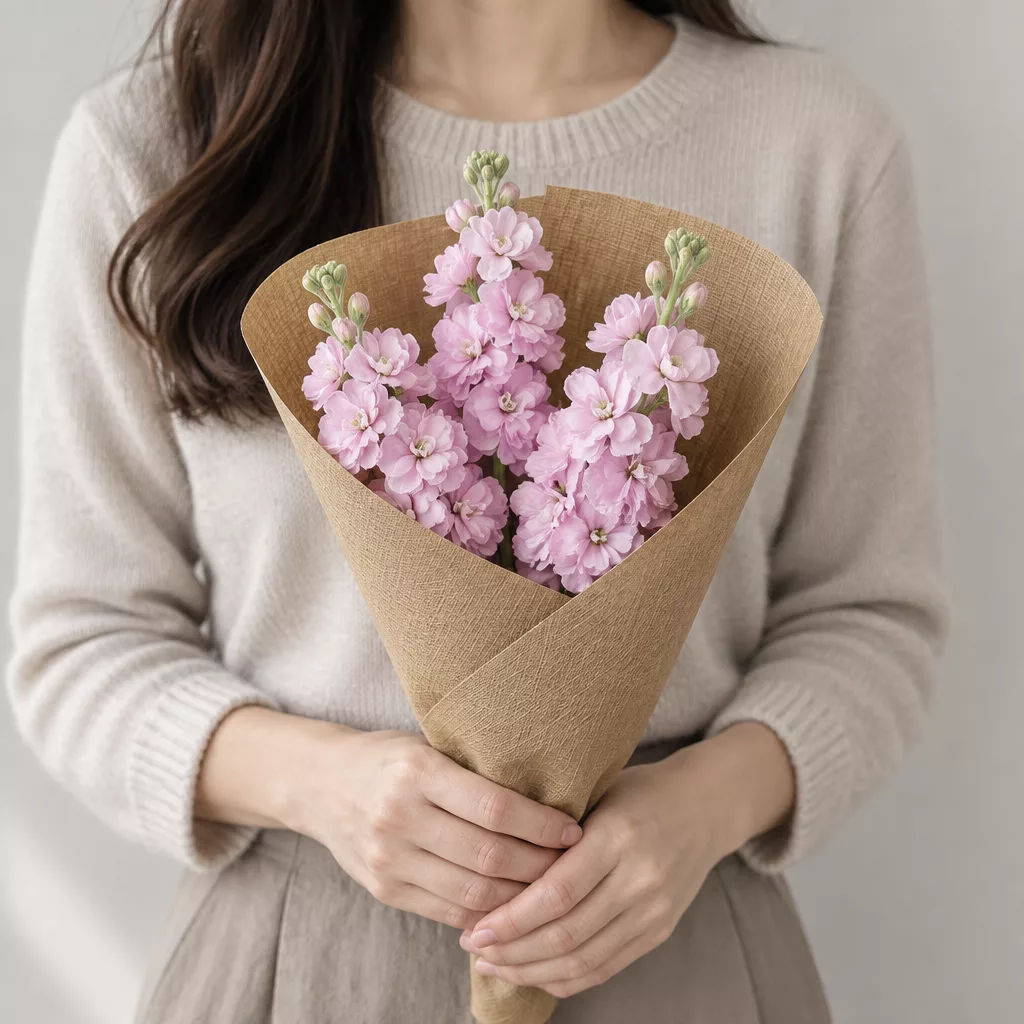
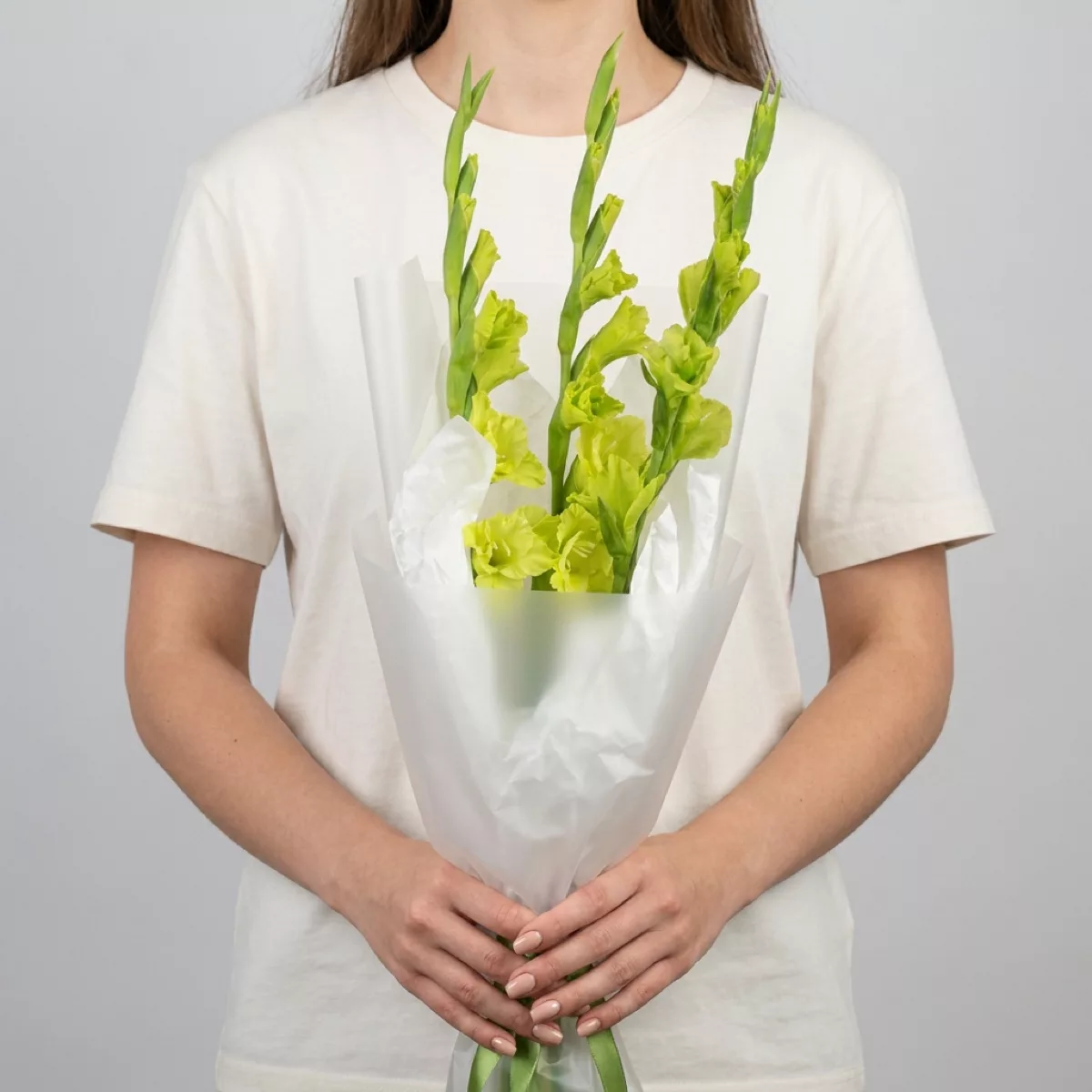
Bouquets we can deliver


Setting a Per-Recipient Budget That Actually Works
The most common mistake companies make is setting a flat per-head budget without accounting for what that budget actually produces in each format. A figure that feels generous when you picture one elegant bouquet starts to look thin when it has to cover packaging, a printed card, and delivery to a specific floor of a business centre by a specific time.
A useful way to think about it is in tiers. A modest tier produces a neat single-variety arrangement: think a hand-tied bunch of spray roses or alstroemeria, wrapped cleanly in kraft paper with a ribbon. It reads as thoughtful and is appropriate for large teams where every desk receives something. A mid-range tier allows you to mix two varieties — for instance, garden roses combined with eucalyptus or waxflower — which immediately elevates the visual complexity without requiring a dramatic budget jump. The top tier brings in premium stems: long-stemmed Dutch roses, peonies in season, or orchid sprays, usually with a box presentation rather than wrapping.
For corporate gifting, the mid-range tier tends to deliver the best impression per rouble spent. It looks considered rather than mass-produced, it photographs well for internal communications, and it gives your florist enough to work with creatively. Allocating slightly more to arrangements going to senior partners or external clients while keeping the team tier consistent is a sensible internal policy that most HR departments already apply to gift hampers.
Build your per-recipient figure first, then multiply by city, then add a coordination margin of roughly ten percent for last-minute additions, address corrections, or a few extra pieces for reception desks.
Choosing Varieties That Travel Well Across Russia
Not every flower is suited to a long delivery chain, and in a country as large as Russia, even a same-day delivery can involve significant temperature variation between warehouse, vehicle, lobby, and office. Your florist should be steering you toward varieties with a strong track record in transit, not simply toward whatever is fashionable in the window display.
Roses are the most reliable corporate choice year-round. They are bred for longevity, available in a consistent range of colours, and they carry associations of quality and formality that suit a professional context. For winter orders, choose varieties with tighter bud openings — they will bloom gradually in the recipient's office over several days, extending the gift's presence. Chrysanthemums are underrated for corporate use: they last ten to fourteen days in a vase, hold their colour well, and are available in whites and yellows that feel bright without being frivolous.
Carnations have been rehabilitated in recent years through better breeding and are now acceptable in mixed arrangements, particularly in cream, blush, and burgundy tones. Avoid them in pure white for corporate gifts, as white carnations carry mourning associations in Russian culture that you do not want to introduce into a celebratory moment.
Tulips are excellent for spring orders, particularly around March 8th, but they are directional — they continue growing after cutting and will lean toward light sources, which means a tulip arrangement looks different by the end of the working day. Brief your recipients to rotate the vase, or choose them only when you know they will be displayed away from strong directional light. Alstroemeria fills arrangements generously, lasts well, and is a smart filler for mid-range budgets.
Timing Your Order Around Russian Calendar Peaks
Russia has several dates when flower demand spikes sharply across the entire country at once, and corporate buyers who do not plan around these dates either pay more, receive less, or both. The three most significant peaks are March 8th, February 14th, and New Year, though the dynamics of each are different.
March 8th, International Women's Day, is the single largest flower-buying moment in Russia. It is not a romantic holiday but a workplace one: offices send flowers to female colleagues and clients, and the expectation is near-universal. If your company has women on staff or among its partners — and it does — this date requires an order placed at least two weeks in advance for a multi-city coordination. Florists are processing thousands of orders simultaneously, and late requests result in substitutions you did not approve.
February 14th is growing in significance but remains more personal than professional. Some companies use it for client gifts, which is fine, but the volumes are lower and the lead time pressure is less severe than March 8th.
New Year corporate orders typically run through the last two weeks of December. The flower choices shift toward deep reds, burgundies, and whites with winter foliage — spruce tips, cotton stems, and dried orange slices appear in arrangements to signal the season. These arrangements often sit in reception areas rather than on individual desks, so the brief shifts toward statement pieces rather than personal bouquets.
For non-peak dates — company anniversaries, product launches, partner visits — a five-to-seven-day lead time is comfortable for multi-city coordination. Shorter than that and you are asking your florist to work against the grain of their supply chain.
Presentation Standards That Reflect Well on Your Brand
When a flower arrangement arrives at a business address, it is representing your company before anyone has read the card. The wrapping, the ribbon colour, the condition of the stems visible through the packaging, and the print quality of the accompanying note all form an impression within seconds. For corporate orders, this is not a detail — it is the point.
For multi-city orders, consistency of presentation across all locations matters more than individual flair. If your Moscow recipients receive arrangements in navy-and-white wrapping with a branded card, your Yekaterinburg colleagues should receive the same. Inconsistency reads as carelessness, particularly if recipients compare notes, which they will.
Branded ribbon or a custom card insert with your company logo is a straightforward way to unify the visual language of a large order without increasing the per-unit cost significantly. Discuss this with your florist at the briefing stage, not the day before delivery. Printing takes time, and a hand-written note on a generic card, while warm, does not carry the same weight as a clean branded insert for a professional context.
Box presentations, where the arrangement sits inside a rigid gift box rather than wrapped in paper, travel better and look more premium on arrival. They also display well on a desk without requiring the recipient to find a vase immediately, which matters in a busy office environment. For senior recipients or external partners, a box format is worth the additional cost. For large team orders, a well-wrapped hand-tied bouquet is entirely appropriate and easier to scale.
Always include care instructions. A small printed card explaining water changes and stem trimming extends vase life noticeably, and recipients appreciate the guidance.
Managing the Logistics of a Simultaneous Multi-City Delivery
Sending flowers to four offices on the same morning requires more than a large order — it requires a delivery plan that accounts for different time zones, different office opening hours, and different points of contact at each location. Getting this right protects you from the scenario where an arrangement sits in a lobby for three hours because the recipient had not arrived yet.
Russia spans multiple time zones, and this matters even for same-day deliveries. If you want all recipients to receive their flowers at roughly the same moment in their working day — say, mid-morning — the actual dispatch times will differ by several hours between Saint Petersburg and Novosibirsk. Build this into your brief. A florist coordinating across cities needs to know whether simultaneity of receipt or simultaneity of dispatch is your priority.
Office addresses in Russian cities often require specific instructions: which entrance, which floor, whether there is a reception desk that accepts deliveries or whether the courier needs to call ahead. Business centres in Moscow and Saint Petersburg frequently have strict access protocols. Collecting accurate delivery details for every location is your team's responsibility, and errors here are the single most common cause of delays in corporate orders.
Assign one person internally to own the order: one contact for the florist, one person who can approve substitutions quickly if a variety is unavailable, and one person who receives confirmation photos or delivery notifications. Distributed responsibility in a multi-city order produces confusion. A single coordinator on your side mirrors the single point of contact on the florist's side, and the order runs cleanly.
Confirm delivery windows in writing for each city separately, and ask for delivery confirmation by city so you can track progress across the day.
Helping Recipients Get the Most from Their Flowers
A beautiful arrangement that wilts by the following morning reflects poorly on the gift regardless of what it cost. Office environments are often challenging for cut flowers: dry air from heating systems, proximity to computers generating heat, and the simple fact that busy people forget to change the water. A little guidance from you — passed on through the card or a brief message — makes a real difference to how long the flowers last and how the gift is remembered.
The single most important instruction is to trim the stems on an angle before placing them in fresh water. Even if the arrangement arrived in good condition, re-cutting removes the sealed end that forms during transit and allows the stem to draw water freely. A diagonal cut increases the surface area further. This takes thirty seconds and can add two to three days to vase life.
Water temperature matters more than most people realise. Lukewarm water is absorbed more easily than cold, particularly for roses. Flowers should be kept away from radiators, sunny windowsills, and fruit bowls — ethylene gas produced by ripening fruit accelerates petal drop. In a Russian winter office where the heating is typically set high, placing the arrangement near a window on the cool side of the room helps significantly.
For arrangements that include foliage — eucalyptus, ruscus, or similar — removing any leaves that sit below the waterline prevents bacterial growth that clouds the water and shortens the life of the whole arrangement. Changing the water every two days and re-trimming the stems at each change will keep most corporate arrangements looking presentable for seven to ten days, which is long enough to carry through a working week and into the next.
A multi-city corporate flower order done well is one of the most effective gestures a company can make — it reaches people in their workplace, it arrives at a predictable moment, and it carries your name on the card. The planning behind it should be invisible to the recipient. They should simply feel that someone thought of them, chose something beautiful, and made sure it arrived in perfect condition. That is exactly what careful budgeting, the right variety choices, consistent presentation, and a clear logistics brief make possible. Start earlier than you think you need to, brief your florist with the same detail you would use for any supplier, and the result will look effortless. We deliver bouquets across Russia in 1–2 hours.
Frequently asked questions
How far in advance should we place a multi-city corporate flower order?
For standard dates, five to seven days gives your florist comfortable time to coordinate across cities, confirm variety availability, and prepare branded materials if needed. For peak dates like March 8th, place your order at least two weeks ahead. Late requests during peak periods result in substitutions or gaps in coverage that are difficult to resolve at short notice.
Is it acceptable to send the same arrangement to everyone, or should senior staff receive something different?
Sending a consistent arrangement to an entire team signals fairness and avoids awkward comparisons. A practical approach is to use one design for the general team and a visibly upgraded version — a box presentation, premium roses, or a larger format — for department heads and external partners. Keep the colour palette unified so the order still reads as a single coordinated gesture.
Which flowers should we avoid for professional corporate gifts in Russia?
Avoid pure white carnations, which carry mourning associations in Russian culture. Even numbers of flowers in a bouquet are also traditionally associated with funerals, so arrangements should contain an odd number of stems. Beyond these conventions, focus on variety durability: fragile open blooms like fully open lilies or delicate sweet peas are risky for office deliveries where the arrangement may sit unattended for several hours.
Can we include a branded card or ribbon across all cities in one order?
Yes, and it is strongly recommended for corporate orders. Branded ribbon or a printed card insert with your logo unifies the presentation across all locations and reinforces your company identity. Discuss this at the briefing stage since printed materials need lead time. A consistent visual language across all cities makes the order feel deliberate rather than assembled from separate purchases.
What is the best way to handle address errors or access issues on the day of delivery?
Assign one internal coordinator who can respond quickly to florist queries on delivery day. Collect complete address details in advance — building entrance, floor, reception contact name, and a recipient phone number for each location. Business centres in major Russian cities often have strict access rules, and a courier who cannot reach the recipient may be turned away. Accurate details prevent most same-day problems before they start.
Ready to send flowers?
Pick the city, choose the bouquet, and a local florist takes it from there.
Choose a city →