Carnations in Russia: What They Mean and When to Give Them
Few flowers carry as much cultural weight in Russia as the carnation. It has been pinned to lapels at celebrations, placed in the hands of graduates, and carried by crowds on public holidays for well over a century. Yet many people outside Russia — and even some inside it — are not entirely sure what a carnation says today, which colours to choose, or whether the flower still feels fresh and relevant. The answer is yes, very much so, and this article will walk you through everything you need to know to give carnations with confidence.
How the Carnation Took Root in Russian Culture
The carnation arrived in Russia in the eighteenth century as a decorative garden flower favoured by the aristocracy. By the nineteenth century it had moved into urban florist stalls and become a staple of everyday gifting. Its durability made it practical — carnations travel well, open slowly, and last considerably longer than most cut flowers under the same conditions.
The real turning point came in the Soviet era. Red carnations became strongly associated with revolutionary anniversaries and civic pride, particularly around May Day on the first of May and Victory Day on the ninth. Images of soldiers and veterans receiving red carnations became familiar across Soviet visual culture, and the association stuck deeply in collective memory.
This history sometimes makes people hesitant, as though giving carnations today means reaching back into a political past. In practice, that reading has softened considerably among younger generations. What remains is a flower that Russians recognise as sincere and unshowy — a gift that does not try too hard. Understanding that backstory helps you choose carnations with intention rather than uncertainty, and it helps you pick the colour that fits your moment rather than defaulting to red out of habit.
Bouquets we can deliver



What Each Colour Actually Communicates
Colour is where carnations become genuinely expressive, and getting it right matters more than the flower choice itself. Red carnations carry the strongest historical charge — admiration, deep affection, and a certain boldness. They work beautifully for a romantic gesture or a heartfelt thank-you, but if the Soviet association feels too present for your recipient, a deep burgundy or claret tone reads as equally warm without the same weight.
White carnations are associated with purity and new beginnings in Russian tradition. They are a natural choice for a new baby, a first day at a new job, or a young person marking an important milestone. Paired with soft greenery such as eucalyptus or ruscus, white carnations feel genuinely elegant rather than plain.
Pink carnations sit in the most comfortable middle ground. They read as affectionate and cheerful without being intense. A bouquet of mixed pink shades — from pale blush to deep rose — works for birthdays, thank-yous, and gestures of appreciation directed at anyone from a close friend to a colleague you respect. Yellow carnations have traditionally carried cautious connotations in Russia, sometimes linked to separation or jealousy, so they are best avoided unless you know your recipient well and are combining them deliberately with other flowers. Lilac and purple carnations are newer to the market and carry no strong cultural baggage, which gives them a pleasant freedom — they simply look striking.
Occasions Where Carnations Are the Right Call
Choosing carnations for the right occasion is less about following rules and more about reading the emotional register of the moment. For a teacher on Knowledge Day, the first of September, a neat bundle of red or white carnations is entirely expected and warmly received — this tradition runs deep in Russian schools and feels genuinely celebratory rather than obligatory when the flowers are fresh and well-arranged.
For a woman's birthday, carnations work best when they are part of a composed arrangement rather than a single-variety bouquet. Mix them with lisianthus, ranunculus, or garden roses in complementary tones, and the result feels considered and generous. On their own, a large bunch of uniform carnations can read as an afterthought, even if the stems are perfect.
For men, carnations are one of the more accepted floral gifts in Russian culture, particularly on February 23rd, Defender of the Fatherland Day. A structured arrangement with dark red or white carnations alongside bold foliage suits the occasion well. For a professional milestone — a promotion, a successful project, a retirement — a monochromatic carnation bouquet in a deep, serious colour feels appropriately substantial. The key across all these occasions is freshness: carnations should arrive with tight buds just beginning to open, not fully blown, so the recipient gets the full arc of the bloom.
Choosing Carnations by Budget Without Losing the Effect
Carnations are one of the more affordable cut flowers available year-round, and that affordability is genuinely useful — it means you can achieve volume and visual generosity without compromise. A single-stem carnation costs a fraction of a garden rose, so a bouquet that would feel modest in roses can feel abundant in carnations if it is assembled thoughtfully.
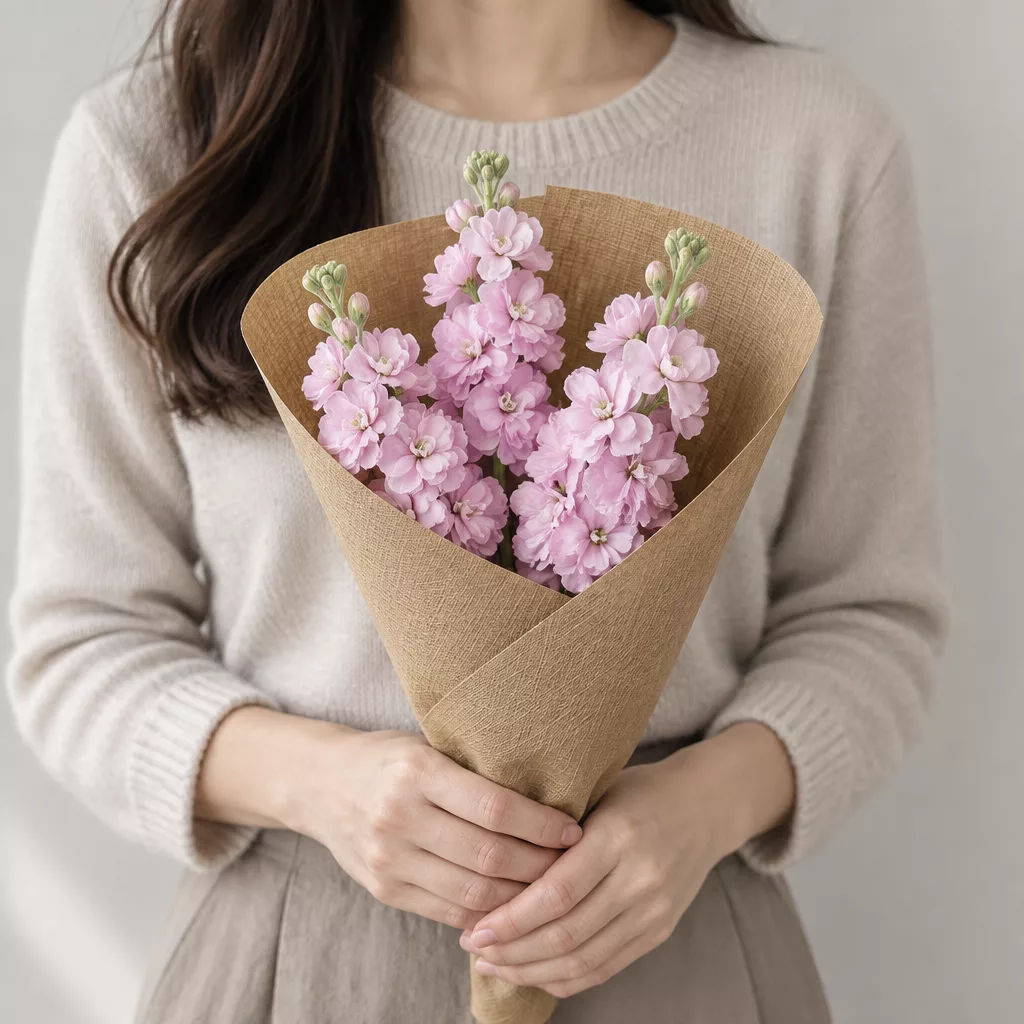
For a smaller gesture, five to seven stems in a single colour, wrapped simply with kraft paper and a ribbon, delivers a clean and sincere impression. The presentation does the work that quantity cannot. For a mid-range gift, consider a mixed arrangement of fifteen to twenty stems combining two or three carnation colours with complementary filler flowers. Gypsophila is the classic pairing and for good reason — it softens the structured look of carnation heads without competing with them.
At a larger budget, carnations become the backbone of a statement piece rather than the whole story. A tall arrangement combining standard and spray carnations — spray carnations produce several smaller blooms per stem and add texture — alongside seasonal blooms creates something that holds its own in any room. Spray varieties such as Felicitas or Pallas are widely available and particularly long-lasting. The mistake most people make at any budget level is choosing too many colours at once. Three tones maximum, ideally within the same family, keeps the arrangement from looking chaotic and lets the carnations' natural elegance come through.
Keeping Carnations Fresh After Delivery
Carnations are forgiving flowers, but they reward a little attention. When your bouquet arrives, trim each stem at a sharp diagonal — about two centimetres from the bottom — using a clean knife rather than scissors, which can crush the vascular tissue. Place them immediately in cool, clean water. Room temperature in a Russian apartment in winter can be quite warm, so positioning the vase away from radiators and direct sunlight makes a measurable difference to vase life.
Change the water every two days and re-trim the stems each time. Carnations are sensitive to ethylene gas, which is released by ripening fruit, so keeping them away from a fruit bowl is not just a folk remedy — it genuinely slows the ageing of the petals. If you received a sachet of flower food with your delivery, use it: the formula balances the water pH and provides a small amount of sugar that helps buds continue opening.
Expect well-conditioned carnations to last ten to fourteen days in a cool room. Buds that arrive tightly closed will open gradually over the first three to four days, which is exactly what you want — it means the flowers were cut and conditioned at the right stage. A carnation that arrives already fully open will fade faster. If petals begin to curl at the edges before the stem shows any wilting, the water temperature is likely too warm. Switch to cooler water and the remaining buds will continue to develop normally.
Why Carnations Deserve a Second Look Right Now
There has been a quiet but genuine rehabilitation of the carnation in Russian and European floristry over the past several years. For a long time the flower was considered unfashionable — associated with mass-produced bundles sold at metro exits rather than with considered, personal gifts. That perception has shifted as florists and customers have rediscovered what the carnation actually offers: extraordinary longevity, a wide colour range, a distinctive frilled petal texture, and a fragrance that is light enough to be pleasant without being overwhelming.
Contemporary arrangements increasingly use carnations alongside peonies, dahlias, and sweet peas in seasonal compositions, treating them as a textural element rather than a filler. The ruffled head of a carnation next to the smooth face of a garden rose creates a visual contrast that feels intentional and sophisticated. Florists working in a more sculptural style have also begun using carnations in single-variety arrangements where the repetition of form becomes the statement.
For someone sending flowers across Russia — to a colleague in Novosibirsk, a grandmother in Voronezh, a friend in Yekaterinburg — carnations offer a practical advantage that goes beyond sentiment. They travel exceptionally well under refrigerated conditions and arrive looking nearly identical to how they left. That reliability is not a small thing when you care about the impression your gift makes at the moment of delivery, not just at the moment of purchase. Choosing carnations is increasingly a sign of knowing what you are doing, not a default.
Carnations have earned their place in Russian gifting culture through decades of real use, and they are earning it again now through genuine quality. The colour you choose, the occasion you match them to, and the care taken in presentation all shape what the recipient feels when they open the door. Get those three things right and a carnation bouquet is not a compromise — it is exactly the right flower.
Frequently asked questions
Are carnations considered old-fashioned in Russia today?
Less so than a decade ago. Younger Russians increasingly see carnations as a classic with genuine character rather than a dated choice. The key is presentation — a well-composed arrangement using current colour combinations and complementary flowers feels entirely contemporary. The flower itself has never gone out of quality; only its reputation needed time to catch up.
Is it appropriate to give carnations to a man in Russia?
Yes, particularly on February 23rd, Defender of the Fatherland Day, where carnations are one of the most traditionally accepted gifts for men. Dark red or white carnations in a structured, unfussy arrangement work well. For other occasions, a bold monochromatic bunch with strong foliage reads as confident and appropriate without feeling overly sentimental.
Which carnation colours should I avoid when sending flowers in Russia?
Yellow carnations carry an association with separation or jealousy in Russian tradition and are best avoided unless you know your recipient well and are using them deliberately within a larger mixed arrangement. All other colours — red, white, pink, lilac, and burgundy — are safe and positive choices for the vast majority of occasions and recipients.
How long will carnations last after delivery, and what affects their vase life?
Under good conditions — cool room, clean water changed every two days, stems re-trimmed diagonally — carnations last ten to fourteen days. The biggest factors shortening their life are warm rooms, proximity to radiators or fruit bowls, and water that is not changed regularly. Buds that arrive closed will continue opening for several days, giving you the full lifespan of the bloom.
Can I send carnations to someone outside Saint Petersburg and expect them to arrive in good condition?
Yes. Carnations are among the most travel-resilient cut flowers available, which is one reason they remain popular for long-distance delivery across Russia. They are conditioned and packed under refrigerated conditions before dispatch, and tight buds tolerate transit far better than open roses or tulips. The recipient typically receives flowers that look fresh and have days of bloom ahead of them.
Ready to send flowers?
Pick the city, choose the bouquet, and a local florist takes it from there.
Choose a city →