Carnations in Russia: The Classic Flower People Are Choosing Again
For a long time, carnations carried a reputation in Russia that made people hesitate. They were the flower of Soviet-era ceremony — handed out at official events, laid on statues, given in bulk when nothing else was available. That association stuck, and for a generation of buyers, carnations felt like a step backward. What is happening now is genuinely interesting: a new wave of varieties, a shift in how florists are arranging them, and a growing group of recipients who receive a carnation bouquet and feel delighted rather than disappointed. This article is for anyone who has written off carnations and wonders whether that instinct still holds.
Why Carnations Fell Out of Favour — and What Changed
The carnation's reputation problem in Russia is specific and traceable. During the Soviet period, red and pink carnations were the default celebratory flower for public occasions — May Day, International Women's Day, factory anniversaries. They were available when other flowers were not, which made them ubiquitous rather than chosen. When the Russian flower market opened up in the 1990s and roses, lilies and tulips became accessible, carnations were quietly left behind by buyers who associated them with obligation rather than feeling.
What changed is partly a matter of breeding and partly a matter of taste cycling back around. The carnation varieties that dominate the modern wholesale market are dramatically different from the stiff, single-stem flowers of forty years ago. Spray carnations — the type with multiple small blooms on branching stems — have become a florist's working tool precisely because they fill space beautifully, hold their shape and accept dye without looking artificial. Standard carnations now come in dusty rose, terracotta, deep burgundy and soft apricot, colours that sit naturally alongside dried elements, eucalyptus and garden-style roses.
There is also a generational shift at play. Younger buyers in Russia, particularly those in their twenties and thirties, did not grow up with the same Soviet-era associations. For them, a carnation is simply a flower — one that happens to be affordable, long-lasting and, in the right combination, genuinely beautiful. Florists who work with this group report that carnation requests are increasing, especially for arrangements that lean into the flower's natural texture rather than hiding it.
Bouquets we can deliver



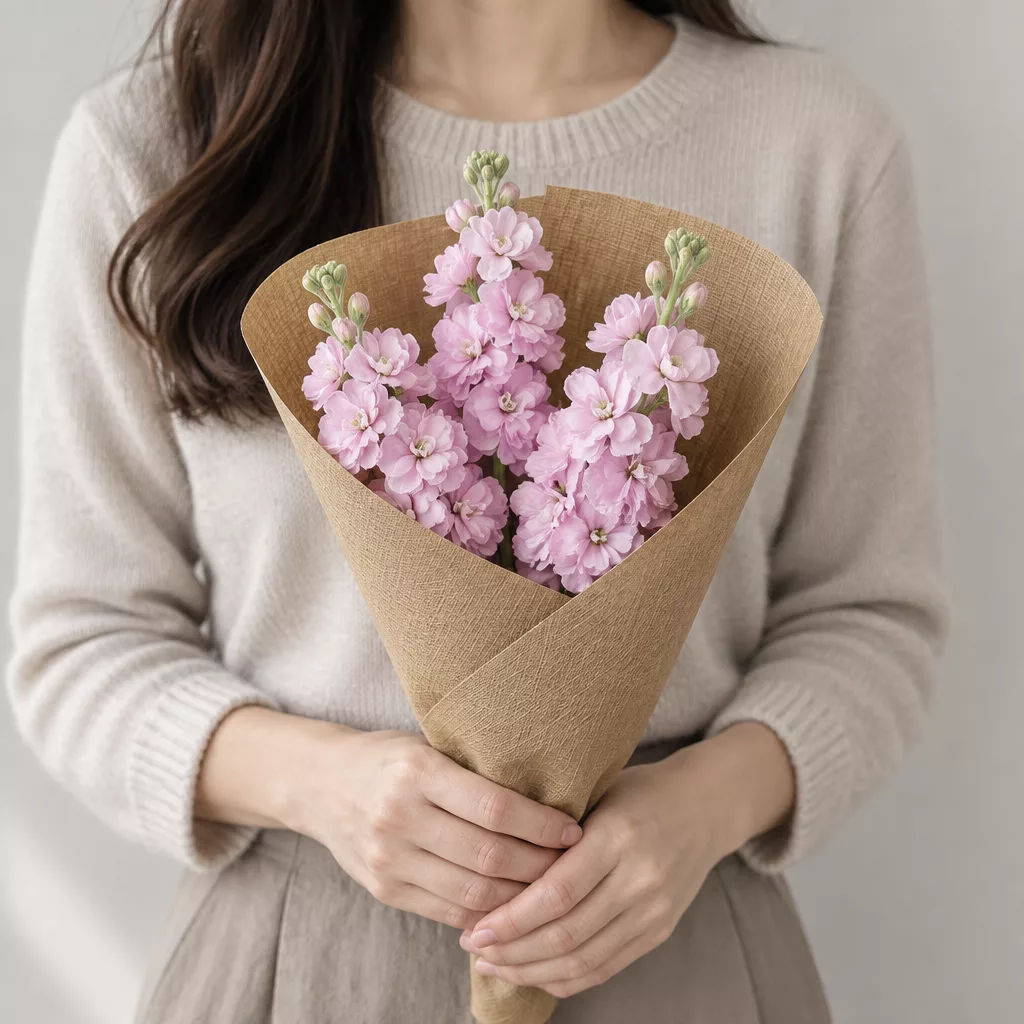
Choosing Carnations for the Person and the Moment
The first question to ask is not which colour but who is receiving the bouquet and what you want them to feel when they open the door. Carnations are a warm flower — they do not carry the formality of a white rose or the drama of a protea. That warmth makes them well suited to people you know well: a friend who has just moved into a new apartment, a colleague celebrating a work anniversary, a grandmother on her birthday, a mother at any time of year.
In Russia, March 8th — International Women's Day — remains the single largest flower-giving occasion of the year. Carnations have a complicated history with this date precisely because they were so standard. The way to use them well on March 8th is in combination: a spray carnation in soft peach alongside white ranunculus and a few stems of wax flower reads as a considered, contemporary bouquet rather than a default one. The carnation does the structural work; the other flowers carry the softness.
For a birthday, carnations in terracotta or deep coral next to greenery and a single variety of complementary bloom — dusty miller works well, as does ruscus — create something that photographs beautifully and feels personal. For a housewarming, the longevity of carnations is itself a gift: the recipient gets to enjoy the flowers for a full week or more, which feels generous in a way that a bouquet of open peonies, beautiful but brief, does not. Think about what the occasion asks for emotionally and then let that guide the colour and combination rather than starting from the flower itself.
The Varieties Worth Knowing About Right Now
Not all carnations are the same, and the difference between a flat, odourless standard carnation and a well-chosen spray variety is significant enough to change how you feel about the flower entirely.
Standard carnations — single large blooms on long straight stems — are the type most people picture. Modern breeding has produced versions with tighter, more layered petals and colours that hold true rather than fading toward magenta as they age. Varieties in the burgundy and deep wine range are particularly striking and hold well in mixed arrangements with ivory or cream roses.
Spray carnations are the more versatile working flower. Each stem carries between four and seven smaller blooms at different stages of opening, which means a single stem already contains movement and depth. In white, they are a florist's reliable filler that does not look like filler. In lilac or pale lavender, they add a softness that is difficult to achieve with other flowers at the same price point. In orange or coral, they bring warmth without the heaviness of a marigold.
There is a third category that deserves mention: the dianthus barbatus, commonly called sweet William, which is a close relative of the carnation and shares its longevity. It clusters in domed heads and comes in deep red, bicolour and white. It is not technically a carnation but it behaves like one and is often grouped with them in a florist's ordering. If you see it offered as part of a seasonal arrangement in late spring or early summer, it is worth saying yes to. The texture it adds — dense, almost velvety — is unlike anything else in that price range.
What Carnations Cost and Why That Is Not a Reason to Dismiss Them
Carnations are among the most affordable flowers in a working florist's inventory, and this has contributed to their image problem. In a culture where gift-giving is taken seriously and the value of a bouquet is sometimes read by its price, choosing carnations can feel like under-investing. That reading is worth examining.
The price of a carnation reflects its availability and the efficiency of its cultivation, not its quality. A carnation grown well, cut at the right stage and handled correctly is a genuinely beautiful flower that will outlast a rose by several days. The vase life of a healthy carnation — kept in clean water, away from direct heat and fruit — is typically ten to fourteen days. A rose under the same conditions lasts five to seven. If you are sending flowers to someone who lives alone and will enjoy them quietly over a week, a carnation bouquet is not the economical choice; it is the right one.
The way to use the price advantage well is in volume and combination. A generous arrangement of spray carnations, given the right colour palette and some supporting greenery, has a fullness and presence that a small rose bouquet at the same price cannot match. Florists who work with carnations regularly know that the flower rewards abundance — a tight cluster of twenty spray stems in graduating shades of pink and peach is more impressive than ten roses spaced out in the same vase.
For the recipient, what matters is not the per-stem cost but the overall experience of receiving something that was clearly thought about and that continues to look good on their table for the better part of two weeks.
How to Keep Carnations Looking Good After Delivery
Carnations are forgiving, but they respond well to a few straightforward habits. The most important step happens in the first ten minutes after the bouquet arrives: the stems should be cut at an angle under water or immediately before going into water, removing at least two centimetres. Carnations have nodes along their stems — the slightly swollen joints — and cutting just below a node rather than through it helps water move up the stem more efficiently.
Water temperature matters more with carnations than with many other flowers. They prefer cool to cold water, not room temperature. In a warm apartment during winter, when central heating in Russian buildings is often intense, this becomes significant. Keep the vase away from radiators and from the windowsill if the window faces direct afternoon sun. A temperature between 15 and 20 degrees Celsius in the room is ideal; above 22 degrees, the blooms will open faster and the petals will begin to show their age more quickly.
Change the water every two days and recut the stems each time. Remove any leaves that sit below the waterline — they decompose quickly and cloud the water, which shortens the life of every stem in the vase. Carnations are also sensitive to ethylene gas, which is produced by ripening fruit. A bowl of apples or bananas on the same counter will noticeably shorten vase life, so keep the arrangement in a different part of the room.
If individual blooms begin to look tired before the rest, remove them rather than leaving them in place. The remaining stems will continue to look fresh and the arrangement will hold its shape well into the second week.
Sending Carnations Across Russia: What to Expect on Arrival
One of the practical advantages of carnations for long-distance gifting — sending flowers from Saint Petersburg to Kazan, Novosibirsk, Yekaterinburg or anywhere else across Russia — is their durability in transit. Flowers travel in temperature-controlled conditions, but even so, the journey from florist to recipient involves handling, time and variable conditions in the final stretch. Carnations are among the most resilient flowers for this reason.
A carnation that has been properly conditioned — held in water at the right temperature for several hours before packing — will arrive in good condition even after a same-day delivery that takes the full two-hour window. The buds may be partially closed on arrival, which is actually desirable: a carnation that opens in the vase at the recipient's home gives them the pleasure of watching it develop. A fully open carnation delivered to the door has less time ahead of it.
For recipients who are not familiar with carnations in their modern form, it is worth including a short note with the bouquet explaining the longevity. Many people still expect flowers to last three or four days and are pleasantly surprised when carnations are still looking good at the ten-day mark. That surprise is part of the gift.
Colour holds well during transit. Unlike some flowers that shift in hue when chilled or handled, carnations in terracotta, burgundy or white arrive looking very close to how they appeared when packed. This makes them a reliable choice when you are ordering remotely and cannot see the bouquet before it leaves — what you select is close to what the recipient will receive.
Carnations are not making a comeback because tastes have lowered or because other flowers have become too expensive. They are returning to bouquets because florists and buyers are looking at them without the weight of old associations and seeing what is actually there: a flower with real colour range, genuine longevity, a texture that works in almost any arrangement style, and a price point that allows generosity. The person receiving a well-made carnation bouquet today is not receiving a compromise. They are receiving something that was chosen for them — for how long it will last on their table, for the warmth of its colour, for the care that went into putting it together. That is what a flower is supposed to do.
Frequently asked questions
Are carnations considered an appropriate gift in Russia today?
Yes, particularly for birthdays, Women's Day and housewarmings. The Soviet-era associations have faded significantly among younger generations. The key is presentation — carnations in a considered colour palette and combination read as a genuine choice rather than a default, and most recipients today respond to them warmly.
How long do carnations actually last in a vase?
A healthy carnation kept in cool, clean water away from heat sources and fruit typically lasts ten to fourteen days. This is roughly twice the vase life of a cut rose under the same conditions. Recutting the stems every two days and changing the water extends that lifespan noticeably.
What flowers combine well with carnations in a bouquet?
Spray carnations pair naturally with eucalyptus, ruscus and dusty miller for greenery. For blooms, they work well alongside ranunculus, garden roses and wax flower. Standard carnations in deep colours — burgundy or terracotta — sit well next to ivory roses or white lisianthus, which softens the overall palette without competing.
Do carnations have a scent?
Standard carnations have a light, spicy-sweet fragrance that is noticeable up close but not overpowering in a room. Spray carnations tend to have a milder scent. Neither variety is likely to overwhelm a small space, which makes them a practical choice for recipients who are sensitive to strong floral fragrance.
Can I send carnations to someone who received them before and was not impressed?
Quite possibly, if the previous experience involved a single-colour, single-variety bunch with no styling. A contemporary arrangement — spray carnations in a dusty rose or apricot tone, combined with complementary greenery and one or two supporting blooms — looks and feels entirely different from the carnations many people remember. Context and presentation change the experience completely.
Ready to send flowers?
Pick the city, choose the bouquet, and a local florist takes it from there.
Choose a city →