Carrying Flowers on the Metro: What Every Bouquet Needs to Survive the Journey
You have just picked up a beautiful bouquet and you are standing at the top of a metro escalator, watching the crowd pour in below. The flowers are already drawing glances. What happens next — a pristine arrival or a crushed, wilted mess — depends almost entirely on choices you make in the next five minutes, before you even swipe your card.
Why the Moscow and Saint Petersburg Metro Is Harder on Flowers Than You Think
Both metro systems are genuinely impressive — fast, frequent, and deep underground. That depth is the first problem. The escalators in Saint Petersburg especially are among the longest in the world, and the temperature at platform level can be ten to fifteen degrees warmer than street level in winter. Moving a bouquet from minus fifteen outside to plus twenty-five on the platform in under two minutes causes immediate condensation inside any wrapping, softening petals and encouraging bacterial growth at the stem ends.
The second problem is crowd pressure. During peak hours on lines like Moscow's Ring Line or Saint Petersburg's Line 1, passengers stand shoulder to shoulder. A bouquet held at chest height becomes a battering ram. Roses lose guard petals. Ranunculus, which are naturally globe-shaped and fragile, compress and bruise. Tall stems like gladioli or delphiniums bend at the natural weak point just below the first bloom.
The third issue is air quality. Metro air is dry and carries fine particulate matter. Even a thirty-minute ride without proper wrapping will dull the surface of open peonies or garden roses noticeably. None of this means you cannot carry flowers on the metro — millions of people do it every week in both cities. It means you need to treat the journey as part of the flower's life, not an afterthought.
Bouquets we can deliver

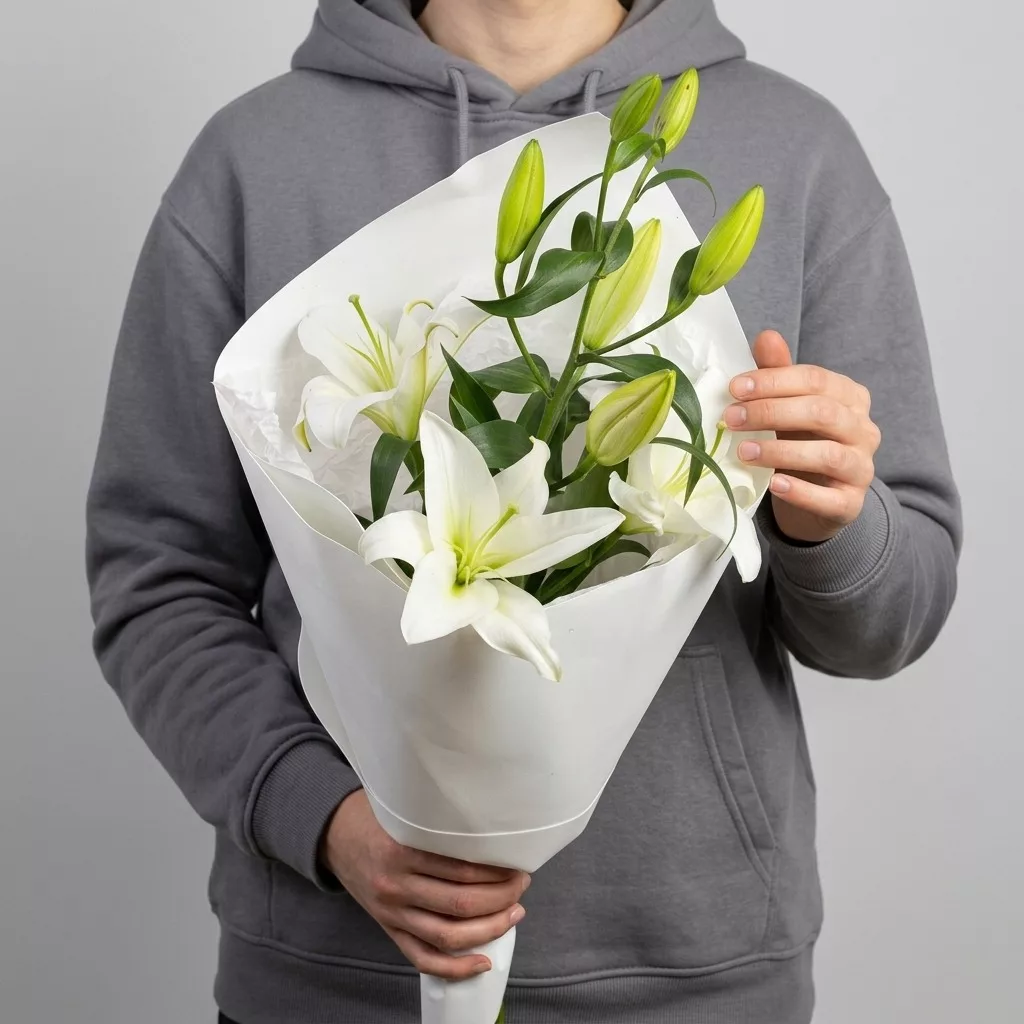
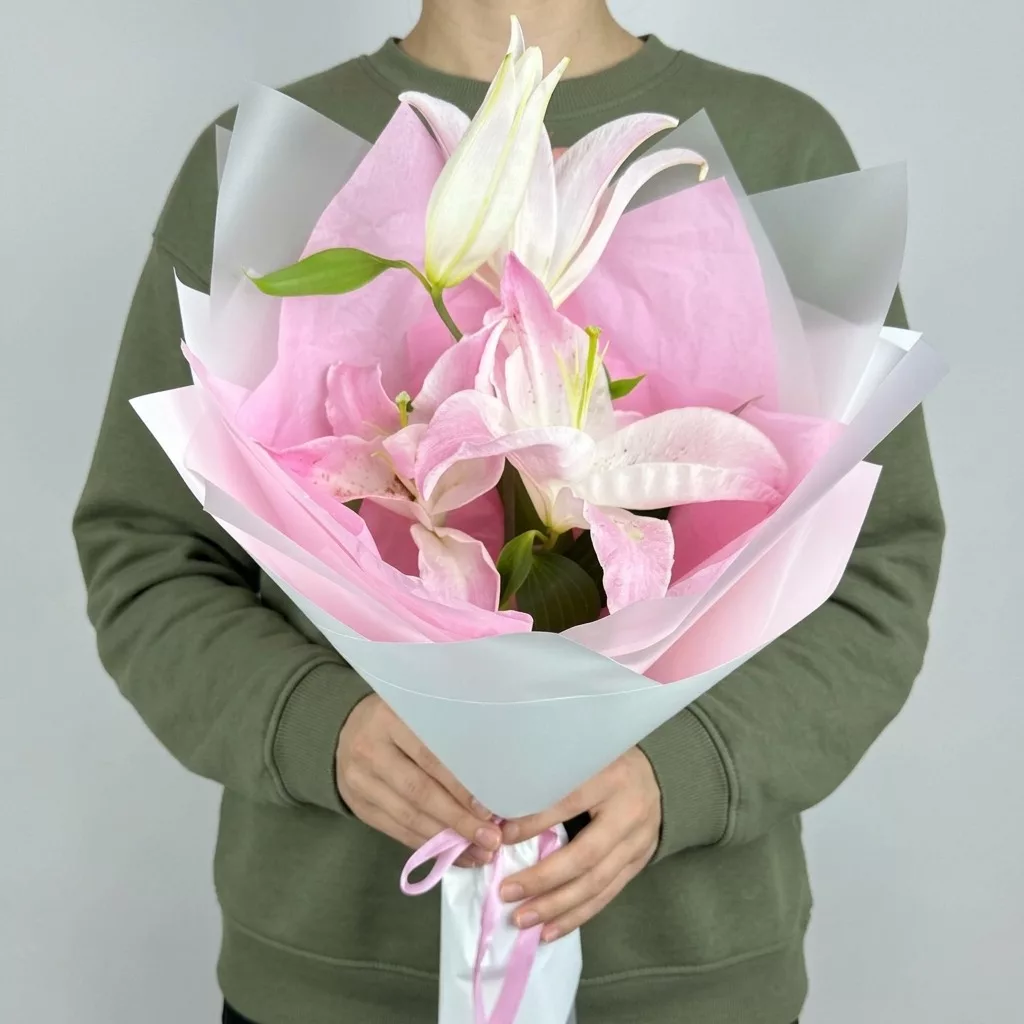

Choosing the Right Wrapping Before You Even Enter the Station
The standard kraft paper cone you see at Russian flower markets is charming but offers almost no structural protection. It wraps around the stems and lower blooms beautifully, yet leaves the top third of the bouquet completely exposed. For a metro journey, you want a closed wrap — one that covers the blooms from above as well as below.
Ask for a full sleeve wrap, sometimes called a gift wrap or box wrap, where the paper or cellophane is folded over and secured at the top to create a tent above the flowers. This single change protects against contact from other passengers, traps a small amount of humidity around the blooms, and prevents the cold-to-warm temperature shock from hitting the petals directly.
Cellophane alone is not ideal. It does not breathe and causes condensation quickly in warm metro air. A double layer — kraft paper on the outside, a thin tissue paper directly against the blooms — is the professional standard. The tissue absorbs minor moisture while the kraft holds shape. If you are collecting a bouquet from a shop rather than receiving delivery, ask explicitly for metro-safe wrapping. Any experienced florist will know exactly what you mean and will reinforce the base of the wrap so stems do not punch through the bottom when you hold the bouquet upright. The base is where most wraps fail during a crowded journey.
Timing Your Journey: When the Metro Is Actually Manageable
Rush hour on Moscow and Saint Petersburg metro lines runs roughly from seven-thirty to nine-thirty in the morning and from five to eight in the evening on weekdays. During these windows, carrying a bouquet is genuinely difficult. You will be pressed on all sides, and even the most carefully wrapped flowers will suffer.
The sweet spot for flower transport is mid-morning, between ten and noon, or early afternoon, between one and three. Platforms are quieter, you can choose a less crowded carriage, and you have room to hold the bouquet upright without pushing it into someone's face. Weekend mornings before noon are also reliable — both cities see lighter metro traffic on Saturday and Sunday until around midday.
If you have no choice but to travel during peak hours, consider the direction of travel. Heading out of the city centre in the morning or into the centre in the evening is typically lighter than the main commuter flow. On Saint Petersburg's metro, some stations like Admiralteyskaya or Sportivnaya are served by only one line and see less interchange traffic than major hubs like Sennaya Ploshchad or Tekhnologichesky Institut. Choosing a route that avoids major interchange stations adds only a few minutes to your journey but dramatically reduces the crowd pressure your bouquet will face. Timing is the single most effective protection you have.
Which Flowers Actually Travel Well Underground
Not all flowers respond equally to metro conditions. Some varieties are natural travellers. Spray chrysanthemums are remarkably resilient — their small, dense blooms resist bruising, they tolerate temperature swings, and they hold shape under light pressure. Alstroemeria is another strong choice: the flowers are small, the stems are flexible rather than brittle, and the buds continue opening gradually, so even if one or two are damaged the bouquet still looks full on arrival.
Lisianthus, especially when purchased in bud rather than fully open, travels exceptionally well. The buds are tight and firm, protected by their own layered petals, and they open beautifully over the following day or two once in a vase. Carnations, despite their unfashionable reputation in some circles, are almost indestructible in transit. A well-wrapped carnation bouquet can survive a forty-five-minute metro journey with barely a mark.
Flowers that struggle on the metro include open garden roses with many petals, fully open peonies, and anemones with their delicate black centres and papery petals. Tulips in winter are vulnerable in a specific way — they continue growing after cutting, so a bouquet that was perfectly upright when wrapped may have bent stems and drooping heads by the time you exit the station. Sunflowers present a different problem: the large heads are impossible to protect fully in a closed wrap and the heavy stems make the bouquet awkward to hold safely in a crowded carriage. Choose your variety with the journey in mind, not just the destination.
How to Actually Hold and Position the Bouquet on the Train
This sounds obvious until you are standing on a moving carriage trying to hold a grab rail and protect thirty stems at the same time. The most common mistake is holding the bouquet horizontally across the body like a barrier. This exposes the blooms to every passing passenger and puts lateral stress on the stems exactly where they are most likely to snap.
Hold the bouquet vertically, stems down, with the wrapped bloom end pointing upward. This mimics the natural growing position of most flowers and keeps the heads away from contact. Hold the stems firmly but not tightly — gripping hard concentrates pressure on the lower stems and can crack woody stems like roses or lisianthus. A relaxed grip around the middle of the stem bundle is more stable on a moving train.
If you can get a seat, place the bouquet across your lap with the stems toward the aisle and the blooms toward the window or wall. This keeps the delicate end protected and lets you rest your arm over the stems to prevent sliding. If you are standing, position yourself near the end of the carriage rather than the centre — there is typically more space near the doors between stations, and you can brace against the wall when the train accelerates or brakes. Avoid placing the bouquet on the floor, even briefly. Metro floors are warm, dirty, and often damp, and stems sitting in that environment for even five minutes will draw up whatever is on the surface.
Temperature Shock and What to Do When You Arrive
Russian winters create a specific challenge that visitors from warmer climates rarely anticipate. Walking from minus ten or minus fifteen outside into a metro station at plus twenty-two, then back out into the cold at the destination, subjects the flowers to two significant temperature changes in under an hour. Each transition causes the cells in the petals to expand and contract, and repeated cycles weaken them noticeably.
The best defence is keeping the bouquet wrapped until you are fully inside your destination — not just through the door, but settled indoors for at least five minutes. Unwrapping flowers in a cold hallway or at a doorstep is the equivalent of putting them straight back outside. Let the flowers acclimatise gradually to indoor temperature before you remove the wrap.
Once inside and unwrapped, re-cut the stems at a forty-five-degree angle immediately. Metro journeys last long enough for the cut ends to begin sealing over, which reduces water uptake. A fresh diagonal cut, made with a sharp knife rather than scissors, opens the maximum surface area for drinking. Place the bouquet in cool, clean water — not warm, despite the instinct to warm up cold flowers. Cool water carries more oxygen, moves up the stem more efficiently, and slows bacterial growth at the cut end. Remove any leaves that would sit below the waterline, as submerged foliage rots within a day and clouds the water rapidly.
When Delivery Makes More Sense Than Carrying
There is a point at which the effort and risk of carrying flowers on the metro simply outweighs the satisfaction of delivering them yourself. A large statement bouquet of open peonies for a birthday, a tall arrangement with decorative branches, or anything designed for a table centrepiece is genuinely difficult to protect in transit and almost impossible to carry comfortably during peak hours.
For these occasions, having the bouquet delivered directly to the recipient removes every transit risk entirely. The flowers travel in a temperature-controlled environment, are handled by people who pack for transport professionally, and arrive in the same condition they left the workshop. The recipient also gets the genuine surprise of an unexpected delivery, which carries its own emotional weight — there is something about a doorbell ringing and flowers appearing that a hand-carried bouquet, however thoughtfully chosen, cannot quite replicate.
For smaller, tighter bouquets — a hand-tied bunch of spray roses and eucalyptus, a simple alstroemeria arrangement, a wrapped bundle of tulips in season — the metro is entirely manageable with the right preparation. The decision really comes down to the scale of the bouquet, the time of day, and how much of the experience you want to control personally. Both approaches are valid. Knowing which situation calls for which choice is the mark of someone who genuinely cares about how the flowers arrive, not just that they arrive.
Carrying flowers on the Moscow or Saint Petersburg metro is one of those things that looks simple until the doors close and the carriage fills up around you. With the right wrapping, the right timing, the right variety, and a clear sense of how to hold and position the bouquet, a thirty-minute underground journey becomes entirely routine. The flowers that matter most to you — and to whoever receives them — deserve that small extra layer of thought.
Frequently asked questions
Is it actually allowed to carry flowers on the Moscow and Saint Petersburg metro?
Yes, there are no rules against carrying bouquets on either metro system. The practical challenge is purely physical — crowd pressure, temperature changes, and dry air — rather than any formal restriction. You may attract admiring looks, but no one will ask you to leave.
How long can flowers survive without water during a metro journey?
Most cut flowers handle two to three hours without water comfortably if they were well-hydrated before wrapping. A typical metro journey of thirty to forty-five minutes is well within that window. Re-cutting the stems and placing them in fresh water immediately on arrival restores uptake and extends vase life significantly.
Should I unwrap the flowers before or after entering the recipient's home?
Always after, and ideally five minutes after stepping inside. Unwrapping in a cold hallway or on a doorstep exposes the blooms to a second temperature shock immediately after the journey. Letting the wrapped bouquet sit briefly at room temperature before opening it gives the petals time to settle and reduces petal drop.
Which metro lines in Saint Petersburg are least crowded for carrying flowers?
Lines 4 and 5, which serve the newer outer districts, generally carry lighter traffic than the central Lines 1 and 2. Travelling outside peak hours matters more than line choice, but if you can avoid major interchange stations like Sennaya Ploshchad or Sadovaya during your journey, the carriage will be noticeably more manageable.
Do roses or tulips travel better on public transport in winter?
Roses travel better overall. Their stems are firmer, the blooms are more resistant to pressure when in bud, and they handle temperature swings more reliably. Tulips continue growing after cutting and can shift position inside the wrap during a journey, arriving with bent or drooping stems — especially in heated metro carriages where growth accelerates.
Ready to send flowers?
Pick the city, choose the bouquet, and a local florist takes it from there.
Choose a city →