Cold Water for Roses: Everyday Care Without the Guesswork
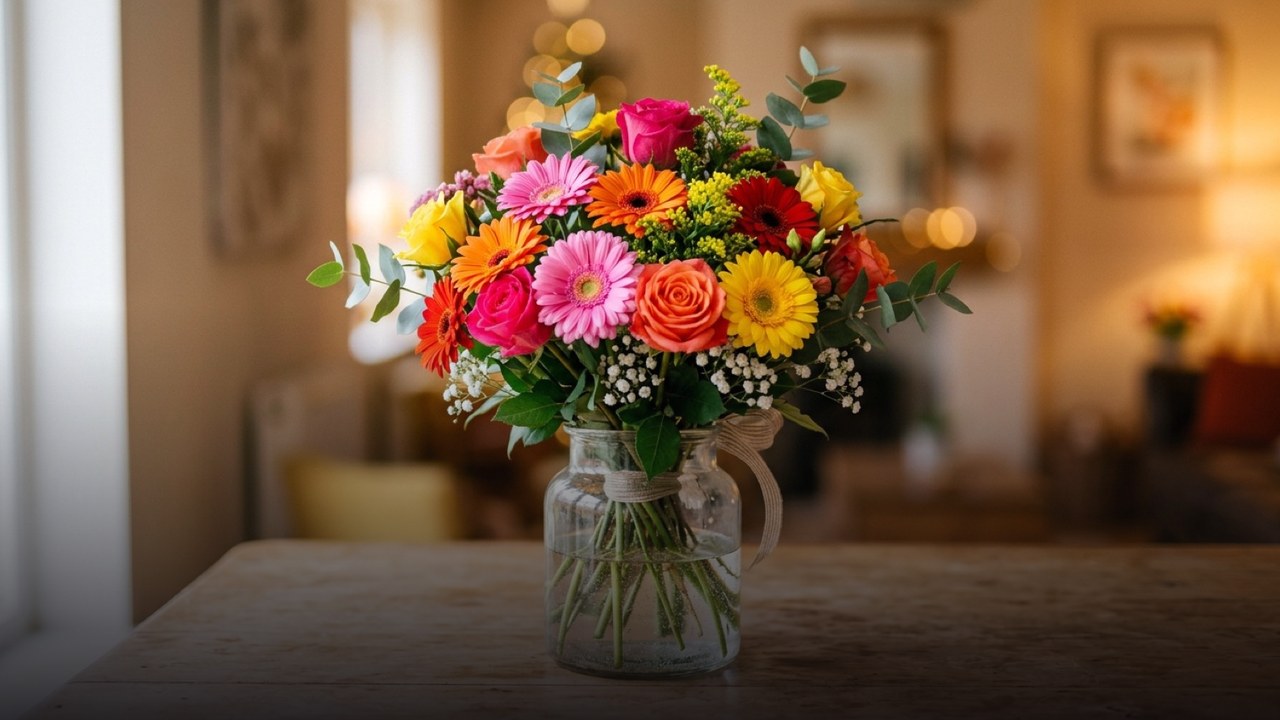
For cut roses, cool or room-temperature water is a sensible everyday choice; you do not need ice-cold water. Start with a clean vase, trim the stems and keep every leaf above the waterline. If you use cut-flower food, follow its mixing instructions rather than trying to improve the result by making the water colder.
Water temperature is only one part of caring for a bouquet. A dirty vase, submerged leaves or a position beside a radiator can undermine an otherwise careful routine. Whether you have just received roses or are sending them to someone in Russia, the most useful approach is straightforward: prepare the vase properly, give the stems access to water and check the bouquet each day.
How cold should the water actually be?
Use fresh drinking-quality water that feels cool or neutral to your hand. There is no need to chill a jug in the refrigerator or aim for a precise temperature for ordinary vase care. If the cold tap runs extremely cold, let the water stand briefly or mix it towards room temperature before filling the vase. Avoid hot water as your default.
Adding ice cubes is unnecessary. They make the water temperature harder to judge and do not replace cleaning the vase or refreshing the water. If your roses already stand in cool, clean water and look firm, leave them settled instead of repeatedly changing conditions in search of a better result. Keep your attention on water level and cleanliness.
Advice about warm water often concerns initial hydration or attempts to revive a struggling bouquet, rather than its whole time in the vase. Those situations should not become a rule that roses always need warm water. For a closer comparison, see our guide to water temperature for cut roses.
Prepare the vase before the roses go in
Wash the vase with washing-up liquid, clean the inside thoroughly and rinse away the soap. Pay attention to the base and any narrow neck where residue can remain. Choose a vase that supports the stems without squeezing them into a tight bundle. If you cannot reach the inside well enough to clean it, use a different container.
Remove transport wrapping as needed to arrange the roses, then take off the leaves that would sit below the waterline. Keep healthy foliage higher up the stems. Fill the vase so the cut ends will remain submerged as the roses take up water, while leaving the remaining leaves dry. Check this against the actual stem lengths rather than filling to an arbitrary mark.
With a clean, sharp cutting tool, remove a short piece from each stem at a slight angle and place the roses in water promptly. Make a clean cut without crushing or splitting the stem. If a cut-flower food sachet came with the bouquet, use the water volume stated on its label; guessing the concentration can leave you with an unsuitable mixture.
Bouquets we can deliver




Keep the water fresh and the bouquet comfortably placed
Check the water level every day, particularly during the first day after arranging the roses. A vase can still look partly full while some shorter stems no longer reach the water. Top up when necessary, using the correct dilution if you are adding flower food. If the water becomes cloudy, smells unpleasant or contains fallen plant material, replace it promptly.
When changing the water, lift the roses out carefully, wash and rinse the vase, and remove any leaves or petals that have fallen inside. Inspect the cut ends and make a fresh cut with a clean tool where needed before returning the stems to water. Pouring fresh water into a dirty vase leaves the underlying cleaning problem unresolved.
Choose a cool place away from direct sunlight, radiators, heating vents and ripening fruit. Avoid positioning the bouquet directly in a draught from a fan or open window. You do not need to keep moving it around the house: a suitable, steady position makes daily care easier. Our rose vase-life guide explains the wider care routine.
What to do when a rose starts to droop
A drooping flower is a reason to inspect the bouquet, rather than immediately reach for colder water. First check whether its stem end is submerged and whether the vase water is clean. Look for a bent or damaged section of stem, too. Several problems can produce a similar appearance, so temperature alone cannot tell you what has happened.
For a stem that appears intact, clean the vase, prepare fresh cool or room-temperature water and trim the stem end again with a clean, sharp tool. Return it to water promptly and put the bouquet in a cool position out of direct sun. Give it time to respond before trying another intervention. Recovery is possible in some cases, but it is not certain.
Avoid boiling-water treatments or whole-flower ice baths as routine home remedies. They introduce extra handling and can damage delicate petals or stems. Remove a stem that becomes soft or visibly decayed, and clear away loose petals. Some ageing flowers will not recover after recutting; maintaining clean conditions still helps you care for the remaining bouquet.
Make rose care easy for the person receiving them
If you are giving roses in person, consider when the recipient can put them in water. A bouquet presented just before a long journey or at the start of a busy outing creates an extra practical task. When you can choose the timing, favour a moment when a clean vase and a few minutes to arrange the stems are available.
Keep any care message short enough to use: clean vase, fresh cool water, a fresh stem cut and no leaves underwater. You can add a reminder to check the water daily. Avoid presenting a precise temperature or an elaborate revival technique as essential; simple instructions are easier to follow and focus attention on the parts of care the recipient can readily manage.
For the personal message, let your relationship guide the wording. Roses can express affection, appreciation or support, and a clear card helps the recipient understand your intention without relying on colour symbolism. Turboflora includes a card with your text free of charge. Delivery is anonymous by default, so include your name in that text if you want the recipient to know who sent them.
Arrange rose delivery in Russia with the timing in mind
You can choose flowers from our bouquets catalogue for delivery across Russia. City delivery costs 500 RUB; for remote districts and suburbs, the operator confirms the delivery price when confirming the order. If you are ordering from abroad, check the recipient's city and address carefully, and use the recipient's local time when discussing arrival details.
In large cities, express delivery is available 1–2 hours after order confirmation. You can also arrange an exact time with a tolerance of ±30 minutes, choose a window of 09–12, 12–15, 15–18 or 18–21, or pre-order 1–30 days ahead. The courier calls about 15 minutes before arrival. If the recipient is absent, we agree a second delivery that day or a handover to a neighbour or concierge with the sender's consent.
Contact a manager on WhatsApp for help choosing the bouquet, agreeing the time, address and card text, or arranging a photo before delivery. Online checkout uses CloudPayments; check the payment options displayed there for your card. If availability is uncertain, agree the timing carefully so the recipient can bring the roses inside and place them in water soon after arrival. We deliver bouquets across Russia in 1–2 hours.
Frequently asked questions
Can I put cut roses in cold tap water?
Yes, cool drinking-quality tap water is suitable for routine vase care. If it feels extremely cold, let it move towards room temperature before using it, and prepare a clean vase with freshly trimmed stems.
Should I add ice cubes to a vase of roses?
Ice cubes are unnecessary for everyday care. Use fresh cool or room-temperature water, keep leaves above the waterline and place the vase away from heat and direct sunlight.
Will cold water revive roses with drooping heads?
Cold water alone is not a reliable remedy because drooping can have several causes. Check the water level, clean the vase and recut intact stems before returning them to fresh water; some roses may not recover.
Do I need to change the water if I keep topping it up?
Topping up maintains the level but does not remove residue or fallen plant material. Check daily and replace water promptly if it becomes cloudy or smells unpleasant, cleaning the vase at the same time.
Can I send roses to Russia while living abroad?
Turboflora delivers flowers across Russia, and a manager can help agree the bouquet and delivery details. Checkout uses CloudPayments; check the displayed payment options rather than assuming that every foreign-issued card will be accepted.
Ready to send flowers?
Pick the city, choose the bouquet, and a local florist takes it from there.
Choose a city →