How Foreign Companies Arrange Corporate Flower Delivery Across Russia
Running an office in Russia or maintaining business relationships with Russian partners means navigating a gifting culture that takes flowers seriously — more seriously than most Western business environments do. Flowers appear at contract signings, office openings, employee birthdays, professional holidays, and client meetings. If you are managing these relationships from abroad, or if your local office team is still finding its feet, understanding how to set up a dependable corporate flower delivery service is not a small logistical detail. It is a genuine part of how trust gets built here.
Why Flowers Matter So Much in Russian Business Culture
In Russia, presenting flowers is not reserved for romantic occasions. It is a normal, expected gesture in professional life, and skipping it when others expect it can read as indifference or even disrespect. When a senior partner celebrates a work anniversary, when a key client opens a new office, or when International Women's Day arrives on the eighth of March, flowers are the default language of acknowledgment. Foreign companies sometimes underestimate this, treating flowers as optional extras. Russian colleagues and clients rarely see them that way.
The eighth of March deserves special attention. It is a national public holiday, and in a business context it means that every woman in your office or on your client list will likely receive flowers from someone. If your company is the one that forgets, it will be noticed. The same applies to the twenty-third of February, Defender of the Fatherland Day, which is when men are typically remembered with small gifts, though flowers for male colleagues are less common.
Professional holidays also carry weight. Teachers, doctors, lawyers, and many other professions have their own calendar days, and Russian business contacts in those fields appreciate being remembered on them. A florist who works with corporate clients regularly knows these dates by heart and can help you plan around them so nothing slips through. Building a calendar of key dates at the start of each year is one of the most practical things a foreign company's office manager can do.
Bouquets we can deliver

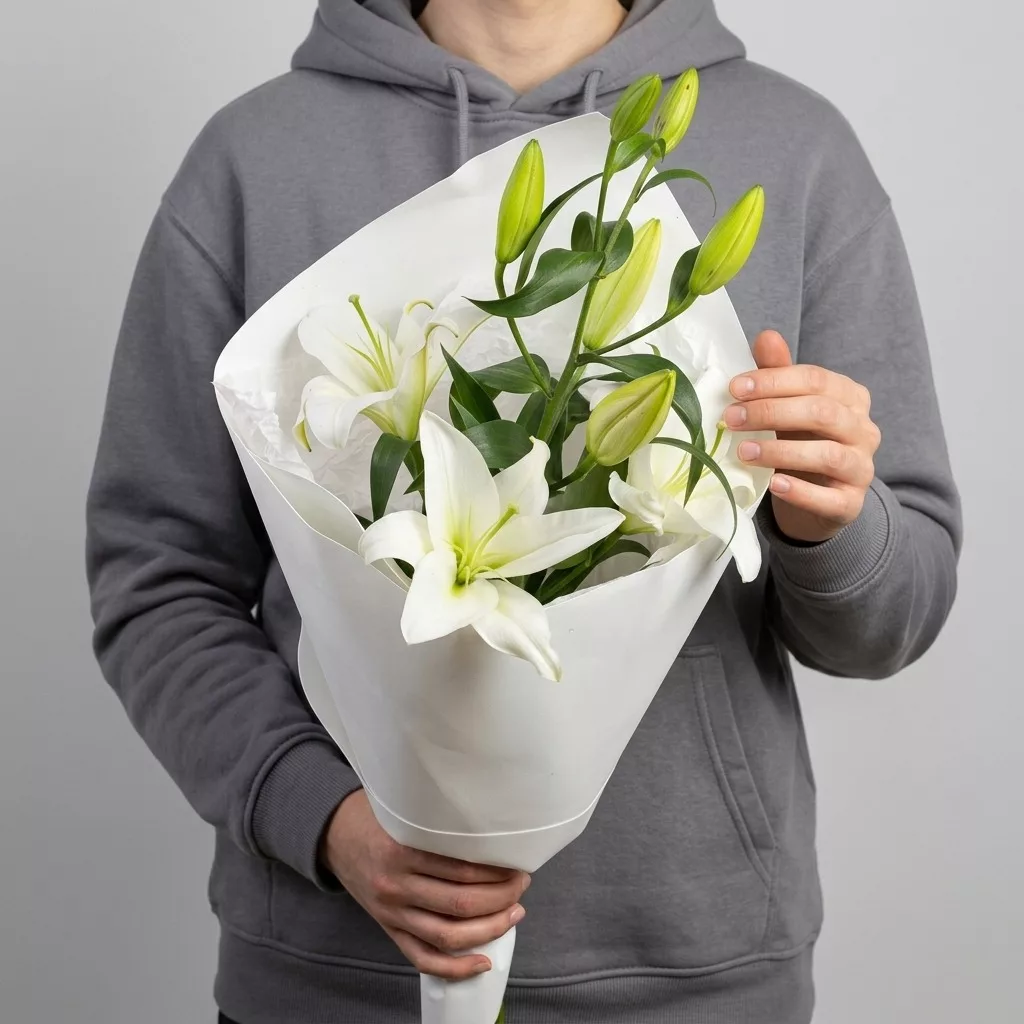
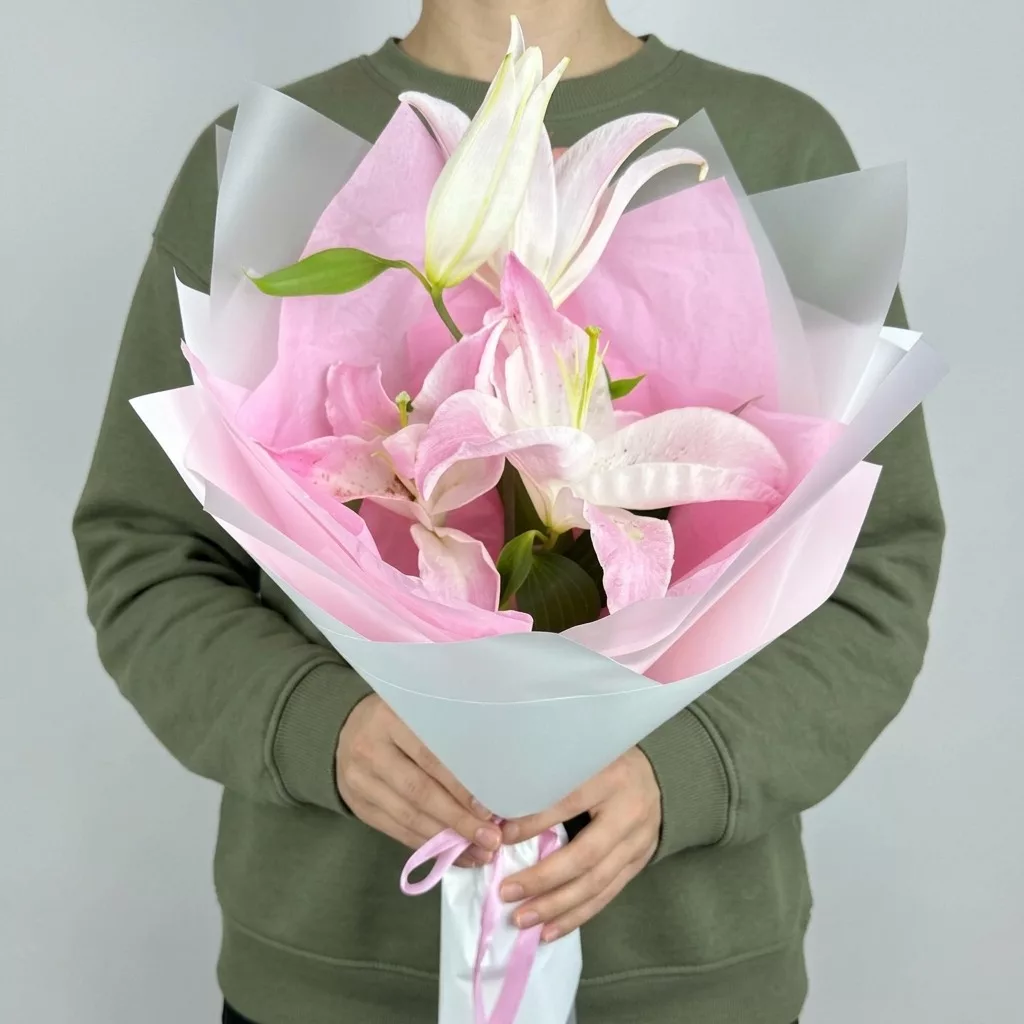

Choosing the Right Flowers for Corporate Gifting
Not every flower works equally well in a business context, and some choices carry unintended meanings in Russian culture. The most important rule is about quantity: always give an odd number of flowers for living recipients. Even numbers are associated with mourning and are placed at graves. A bouquet of ten roses, however beautiful, sends entirely the wrong signal. Eleven, fifteen, or twenty-one roses are all perfectly appropriate.
For corporate gifting, roses remain the most universally accepted choice. Red roses are warm and celebratory without being overly romantic in a group or office setting. White and cream roses read as elegant and neutral, making them ideal for formal client gifts. Spray roses add volume and texture to arrangements without dramatically increasing the cost, which matters when you are ordering at scale.
Peonies are hugely popular in Russia from late spring through early summer and carry very positive associations — abundance, warmth, celebration. When they are in season, they make excellent corporate bouquets. Chrysanthemums are widely used in autumn and winter and are perfectly acceptable in business contexts, though some older clients associate certain varieties with funerals, so it is worth asking your florist to avoid the large single-headed types and lean toward spray chrysanthemums instead.
Eustoma, also called lisianthus, is a reliable choice year-round. It looks luxurious, holds well in office temperatures, and comes in white, purple, and pink tones that work beautifully in formal arrangements. Avoid anything too exotic or unfamiliar if you are unsure of the recipient's taste — elegance and recognizability are safer than novelty in a corporate context.
Setting Up Recurring Orders for Your Office and Partners
One of the most efficient things a foreign company can do is establish a recurring order schedule rather than placing individual orders each time a date approaches. A good corporate flower account allows your office manager or executive assistant to brief the florist once — preferred styles, budget range, recipient names, delivery addresses — and then confirm individual orders with a short message a day or two in advance.
For office deliveries, weekly or biweekly fresh arrangements for reception areas and meeting rooms create a consistently professional impression. Flowers at reception are not decorative vanity; they signal that an organization pays attention to its environment, which matters to Russian business visitors. Peonies and garden roses in summer, dahlias in early autumn, and tulips in late winter all work well for interior arrangements. The key is freshness — wilted flowers in a reception area are worse than no flowers at all.
For partner and client gifting, a recurring schedule tied to your business calendar is far more reliable than ad hoc orders. Share your list of key dates — birthdays, company anniversaries, contract renewal periods — and work with your florist to build a delivery plan around them. This removes the risk of a last-minute scramble when an important date lands during a busy period.
Timing matters practically as well. Same-day delivery is possible, but ordering the evening before gives the florist time to source specific varieties and ensure freshness. For large corporate orders covering multiple addresses, placing the order two to three days ahead is strongly advisable, particularly around major holidays when demand spikes sharply.
Logistics and Delivery: What Foreign Companies Need to Know
Flower delivery in a city like Saint Petersburg involves real logistical complexity, and understanding how it works helps you avoid the most common mistakes. Fresh-cut flowers are perishable, and their condition on arrival depends on the entire chain from cooler storage through transit to the recipient's hands. Responsible delivery means keeping flowers at the right temperature throughout — ideally between four and eight degrees Celsius in storage, then protected from both freezing cold and direct heat during transit.
In Russian winters, this matters enormously. Temperatures in Saint Petersburg regularly drop below minus fifteen Celsius from December through February. Flowers left in an unheated vehicle or carried across an exposed car park without proper wrapping can suffer frost damage within minutes. Roses and tulips are particularly sensitive. A professional florist wraps winter deliveries in insulating craft paper and times handoffs carefully. If you are arranging delivery to a business address, make sure someone is available to receive the order — flowers left in a cold lobby or with a security desk that does not store them properly can deteriorate quickly.
For deliveries to multiple corporate addresses on the same day, route planning and timing coordination are essential. If you need flowers at three different offices before a morning meeting, communicate that clearly when placing the order. Delivery windows can usually be specified, and a one-to-two hour delivery window is realistic for within-city orders.
If your partners are in other Russian cities, ask specifically about delivery reach and timing before placing the order. Turboflora delivers across Russia, so distance from Saint Petersburg does not have to be a barrier to maintaining consistent gifting standards for your entire partner network.
Common Mistakes Foreign Companies Make with Corporate Flower Orders
The most frequent mistake is treating flower orders as an afterthought. A bouquet ordered thirty minutes before a meeting is almost always a compromise — in variety selection, in arrangement quality, and sometimes in freshness. Planning ahead by even twenty-four hours makes a substantial difference to what your florist can actually prepare for you.
The second most common error is ignoring the odd-number rule. It seems like a small thing, but presenting an even-numbered bouquet to a Russian business contact is a genuine cultural misstep. Always confirm the flower count when placing an order and ask your florist to double-check before dispatch.
Another mistake is choosing flowers based on what looks impressive in a photograph rather than what holds up in real conditions. Tropical flowers like anthuriums or birds of paradise can look dramatic in marketing images but may not be the warmest choice for a conservative Russian business context. They also require more careful temperature management in transit. When in doubt, classic roses, eustoma, and peonies in season are reliable and universally appreciated.
Foreign companies sometimes also underestimate the importance of the accompanying card. In Russian business culture, a handwritten or personally composed message carries real weight. A generic printed label feels impersonal. Take a moment to write something specific — reference the occasion, the relationship, or a shared milestone. Your florist can print or attach the card, but the words should come from you.
Finally, do not assume that a corporate account means you can skip communication. Brief your florist on any changes to recipient preferences, office access restrictions, or seasonal style preferences. The relationship works best when both sides stay informed.
Building a Long-Term Flower Strategy for Your Russian Operations
The companies that handle corporate gifting most effectively in Russia are the ones that treat it as a planned, ongoing activity rather than a series of individual transactions. Building a long-term approach means starting with a clear gifting calendar, establishing a trusted relationship with a single florist who knows your preferences and your clients, and reviewing the arrangement periodically as your team and partner network evolve.
Start by mapping all the dates that matter across a full calendar year. Include Russian national holidays, the professional holidays relevant to your industry contacts, and the personal dates — birthdays and work anniversaries — for your most important relationships. This list becomes the foundation of your corporate flower plan. Share it with your florist and revisit it each autumn before the new year begins.
Next, establish a consistent visual identity for your corporate bouquets. This does not mean every arrangement looks identical, but it does mean choosing a style — perhaps always including white flowers, or always using a particular ribbon color, or always accompanying flowers with a specific type of card — that makes your gifts recognizable and memorable. Over time, recipients begin to associate that style with your company, which quietly reinforces your brand.
Finally, gather feedback. Ask your office manager or executive assistant whether deliveries arrived on time and in good condition. Note which occasions generated a warm response and which felt slightly off. Flower gifting is a skill that improves with attention, and a florist who receives honest feedback can calibrate their service to match your specific corporate culture and client base. Done well, a corporate flower program is one of the most human and effective relationship-building tools available to any company operating in Russia.
For a foreign company navigating Russian business culture, flowers are not a ceremonial extra — they are a practical tool for building genuine professional relationships. Getting the details right, from flower choice and quantity to delivery timing and personal messages, signals that your company understands and respects the culture it is working within. That kind of attention is noticed, remembered, and reciprocated. Whether you need a single celebratory bouquet for a key partner or a fully managed recurring delivery program for your entire Russian office network, the investment in doing this thoughtfully pays back in goodwill that no other gesture quite replicates.
Frequently asked questions
How far in advance should a foreign company place corporate flower orders in Russia?
For standard bouquets, the evening before is usually sufficient. For large orders covering multiple addresses, or for deliveries around major holidays like International Women's Day on March 8th, placing the order two to three days ahead is strongly recommended. This allows the florist to source specific varieties and plan delivery routes properly without compromising on freshness.
Is it appropriate to send flowers to male business contacts in Russia?
It is less common than sending flowers to women, but not unusual for significant occasions such as a major work anniversary, a company milestone, or a formal celebration. A compact, structured arrangement rather than a soft romantic bouquet is the right tone. Plant arrangements or a single statement flower like a large orchid stem can also work well for male recipients in a business context.
Can Turboflora handle deliveries to multiple cities across Russia on the same day?
Yes. Turboflora delivers across Russia, so corporate clients managing partner relationships in multiple cities can coordinate orders through a single account. It is important to communicate all delivery addresses and preferred time windows when placing the order, and to allow extra lead time for same-day multi-city coordination, ideally ordering the day before.
What happens to flowers delivered to an office if no one is available to receive them?
This is a real risk, especially in winter when cold temperatures can damage flowers left unattended. Always ensure someone at the delivery address is available and briefed to receive the order. When placing your order, provide a contact name and phone number at each address so the delivery team can coordinate arrival and avoid leaving flowers in an uncontrolled environment.
Are there any flowers that should be avoided entirely in Russian corporate gifting?
Large single-headed chrysanthemums are associated with mourning by some recipients and are best avoided in corporate bouquets. Yellow flowers carry mixed associations in Russian culture and can be misread in some contexts, so it is safer to use them as accents rather than the dominant color. When uncertain, white, cream, pink, and red tones are universally safe and well-received.
Ready to send flowers?
Pick the city, choose the bouquet, and a local florist takes it from there.
Choose a city →