Paying with Crypto for Flowers Delivered to Russia
You want to send a beautiful bouquet to someone in Saint Petersburg or across Russia, but your card keeps getting declined. Sanctions, blocked networks, international restrictions — the reasons vary, but the frustration is the same. The good news is that cryptocurrency has quietly become a practical bridge for people in exactly this situation, and understanding how it fits into a flower order can save you real time and stress.
Why Card Payments to Russia Have Become So Complicated
Since 2022, major international card networks suspended direct processing for many Russian transactions. This means that even if you have a perfectly healthy credit or debit card, a payment routed through a standard Russian merchant terminal may simply bounce. It is not about your credit score or your bank balance — it is a structural gap in how money moves across borders right now.
For people sending flowers from Europe, North America, or anywhere outside Russia, this creates a genuine problem. You find a lovely arrangement, you add it to your cart, and then the checkout page becomes a wall. Some shops offer workarounds through third-party processors, but those routes can be slow, require extra verification, or carry hidden conversion fees that inflate the final cost unexpectedly.
Cryptocurrency sidesteps this entire layer of infrastructure. A USDT transfer or a Bitcoin payment does not pass through Visa or Mastercard rails. It moves directly between wallets, settles on its own blockchain timeline, and arrives regardless of what is happening between Russian and Western banking systems. For the person placing a flower order from abroad, this is not a technical novelty — it is simply the most reliable payment path available in the current environment. Understanding which tokens are accepted and how to use them correctly makes the difference between a bouquet arriving on time and a birthday morning without flowers.
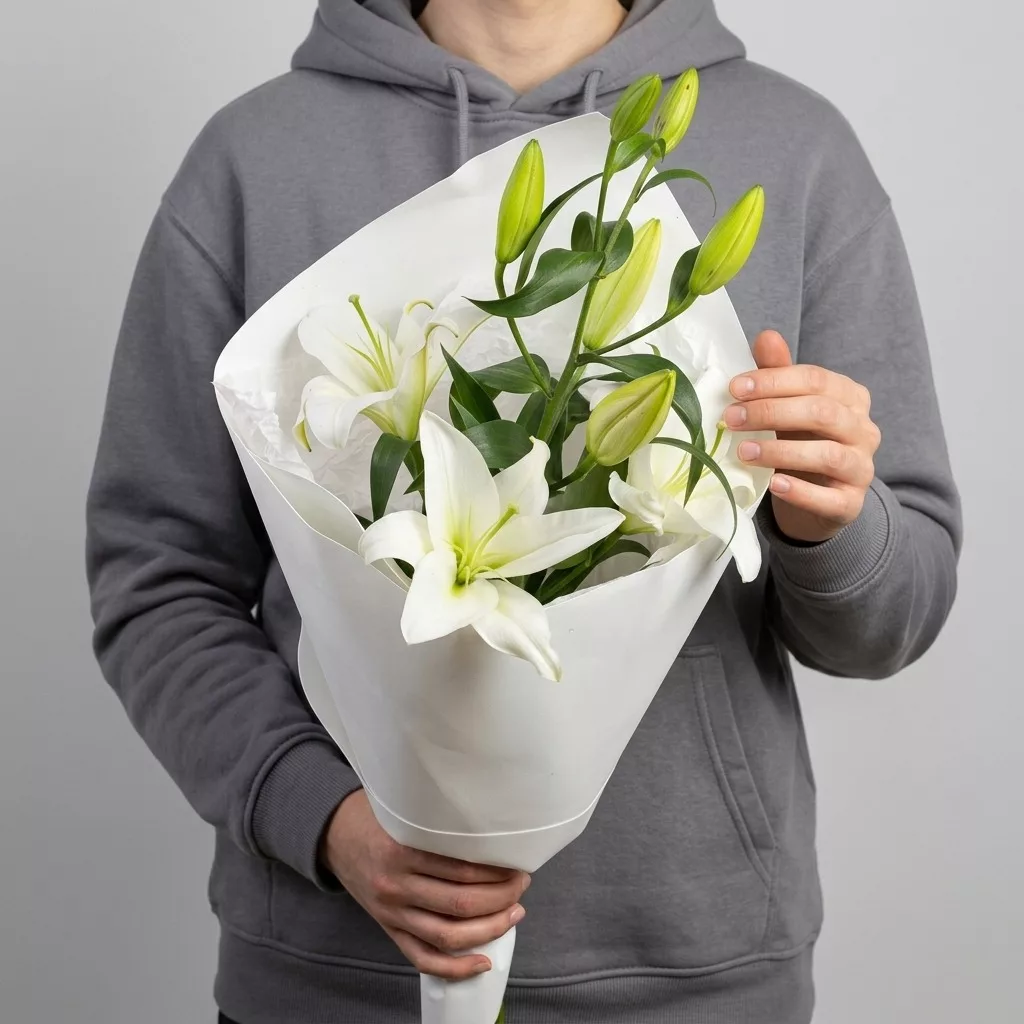
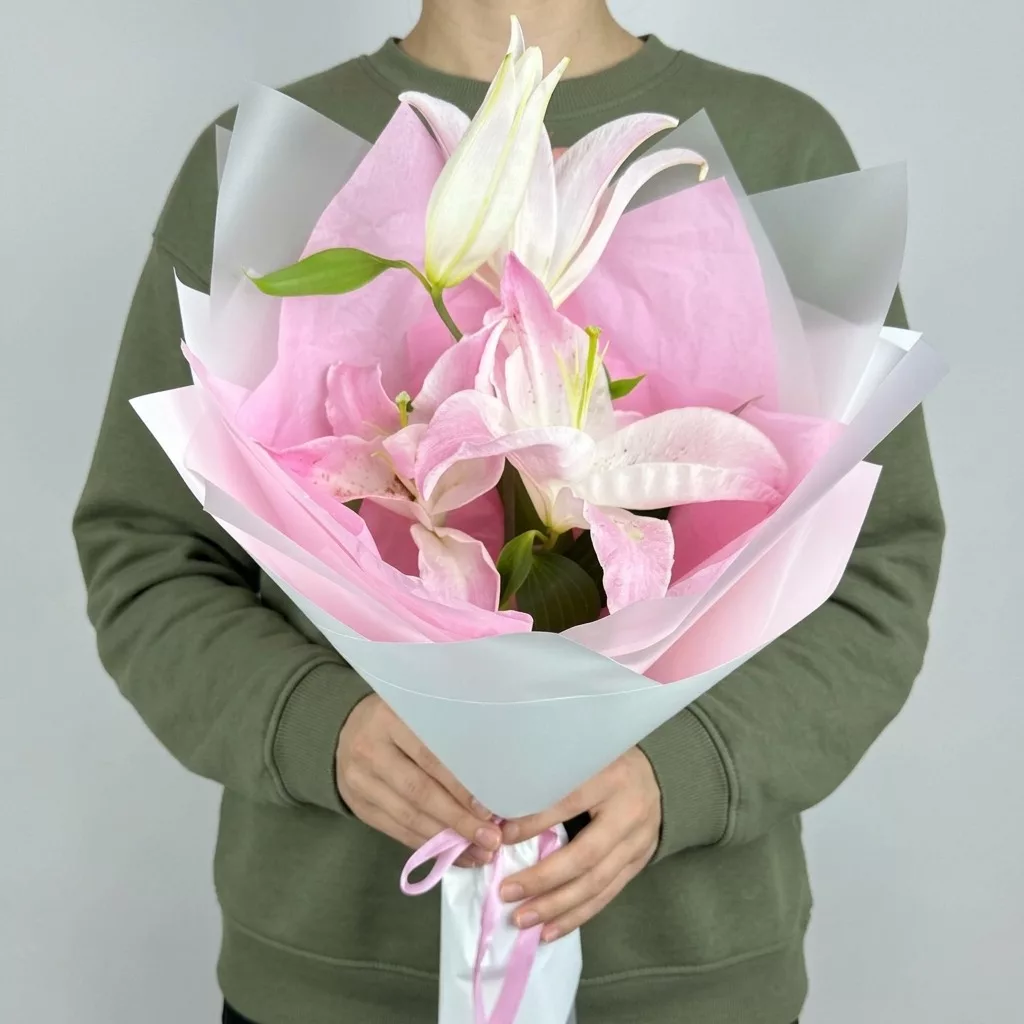
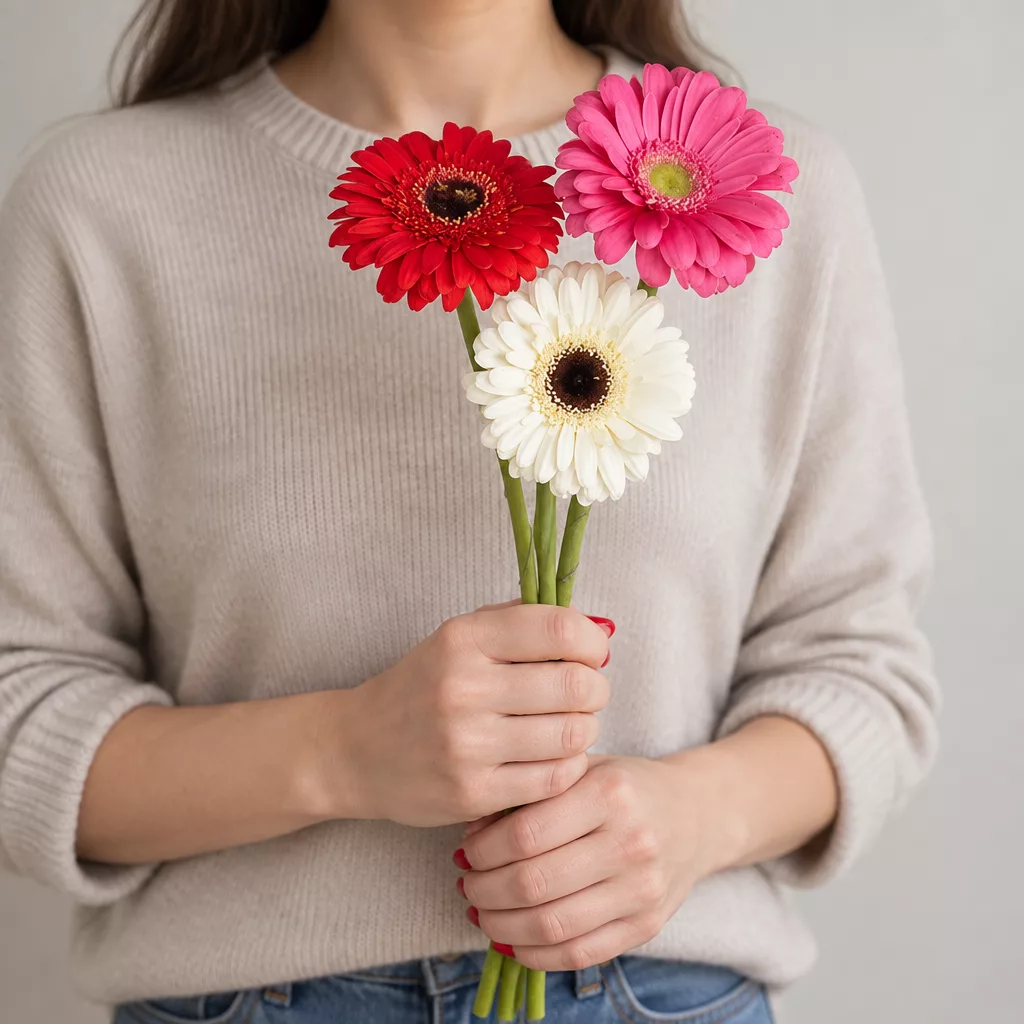
Bouquets we can deliver

Which Cryptocurrencies Are Actually Useful for Flower Orders
Not every token is equally practical for a time-sensitive purchase like flowers. When you are ordering a same-day delivery for a birthday or anniversary, you need a payment method that confirms quickly, costs little in network fees, and does not swing wildly in value between the moment you pay and the moment the order is confirmed.
USDT, the dollar-pegged stablecoin, is by far the most useful option in this context. Because its value is tied to the US dollar, you know exactly what you are paying and the florist knows exactly what they are receiving. There is no uncomfortable gap where the price of your bouquet effectively changes because the market moved. USDT runs on several blockchains — Tron's TRC-20 network is popular because its transaction fees are minimal, often just a few cents, and confirmations arrive within a minute or two.
Bitcoin is recognized almost everywhere, but it carries two practical drawbacks for flower orders: network fees can spike unpredictably, and confirmation times on the main chain can stretch to thirty minutes or more. For a planned order placed a day ahead, Bitcoin works fine. For a last-minute arrangement that needs to leave the workshop in the next hour, a stablecoin is a smarter choice.
Ethereum is another option some shops accept, though gas fees on the main network can be surprisingly high during busy periods. Whichever token you use, always confirm the accepted network with the shop before sending — sending USDT over the wrong chain is one of the most common and easily avoided mistakes in crypto payments.
How to Match Your Crypto Payment to the Right Occasion
The flowers themselves do not care how they were paid for, but the occasion absolutely shapes which arrangement makes sense. If you are sending to someone celebrating a birthday, a lush mix of garden roses, ranunculus, and spray chrysanthemums in soft pinks or corals reads as joyful and personal rather than formal. These varieties hold beautifully for five to seven days in a cool apartment, which matters when you cannot be there to see the reaction in person.
For a romantic gesture — an anniversary or simply an unexpected declaration — red or deep burgundy roses remain the clearest signal in Russian floral culture. A single variety bouquet of long-stemmed roses, tightly wrapped and tied with a satin ribbon, carries enormous weight. Russians often read a mixed bouquet as friendly and a single-variety bouquet as more intentional and serious. That distinction is worth knowing if you want the flowers to say exactly the right thing.
For a congratulatory moment — a new job, a graduation, a housewarming — white and green combinations feel fresh and optimistic. Eustoma, also called lisianthus, pairs beautifully with eucalyptus branches and white alstroemeria. This kind of arrangement photographs well and lasts up to ten days if the recipient keeps it away from direct sunlight and changes the water every two days.
When you place your crypto order, include a note about the occasion in the comment field. A good florist will adjust stem lengths, wrapping style, and ribbon choice to suit the moment, even when working from a brief description.
Choosing an Arrangement by Budget When Paying in Crypto
One of the underappreciated advantages of paying in a stablecoin like USDT is that the amount you send is the amount that arrives, without currency conversion losses eating into your budget. This makes it easier to plan what kind of arrangement you can realistically afford.
At a modest budget, a compact mono-bouquet of seasonal flowers — tulips in spring, chrysanthemums in autumn, alstroemeria year-round — delivers genuine color and freshness without overspending. These arrangements are tightly composed and travel well, which matters for a delivery that may cover a significant distance within the city.
A mid-range budget opens up mixed bouquets where the florist has room to layer textures. Think garden roses combined with waxflower, or peonies when they are in season from late May through June, supported by soft greenery like ruscus or pittosporum. These combinations feel generous and considered, and they fill a room with fragrance in a way that a single-variety bunch simply cannot match.
A larger budget allows for statement pieces: large-headed David Austin roses, imported Dutch peonies out of season, or architectural arrangements that use anthuriums or orchid stems as focal points. These are the bouquets that get photographed and remembered. When paying in crypto, it is worth rounding your transfer amount slightly upward to account for minor network fee variations, so the florist receives the full intended sum and does not need to contact you about a shortfall before the order goes to the workshop.
The Practical Steps of Placing a Crypto Flower Order
The process is more straightforward than most people expect, especially if you have made any crypto transfer before. You select your arrangement on the shop's website, choose cryptocurrency as your payment method, and receive a wallet address along with the exact amount required. The address will specify which network to use — this detail is critical, so read it carefully before initiating the transfer.
Open your wallet app, paste the address rather than typing it manually, and double-check the first and last four characters against the address shown on the order page. This two-second habit prevents the kind of irreversible mistake that no florist or blockchain can undo. Enter the amount, confirm the network fee, and send.
For USDT on TRC-20, you will typically see confirmation within one to three minutes. For Bitcoin, budget fifteen to forty-five minutes depending on network congestion. Once the payment is confirmed on-chain, the order moves into the workshop queue exactly as any other paid order would. There is no additional delay because of the payment method.
Include the delivery address in full — street name, building number, apartment number, and the recipient's phone number. In Russia, couriers routinely call ahead to coordinate entry to apartment buildings, which often have coded doors or security desks. A missing phone number can delay delivery by thirty minutes or more, which matters enormously for a two-hour delivery promise. If the recipient does not speak Russian, note that in the comments so the courier can be prepared.
Keeping the Flowers Fresh After Delivery
Sending flowers across a city in one to two hours means the recipient gets them at peak freshness, but what happens in the following days depends almost entirely on how they are cared for at home. This is worth including in a message to the recipient, especially if they are not experienced with cut flowers.
The first step is recutting the stems at an angle under running water or while submerged in a basin. This removes the air bubble that forms during transport and allows the stem to drink immediately. A diagonal cut increases the surface area for water uptake, which directly extends vase life. Even a centimeter off the bottom makes a visible difference by the third day.
Fill the vase with cool, clean water and add the flower food sachet if one is included with the bouquet. Flower food contains a mild acidifier and a small amount of sugar — both help the blooms open evenly and resist bacterial growth. If no sachet is provided, a small pinch of sugar and a drop of bleach in a liter of water achieves a similar effect.
Keep the arrangement away from radiators, which are a significant factor in Russian apartments during the heating season running from October through April. Central heating keeps interiors very warm and dry, which shortens vase life considerably. A spot near a window on the cooler side of a room, away from direct sunlight and drafts, is ideal. Change the water every two days and recut the stems each time. With this routine, roses last five to seven days, eustoma up to ten, and alstroemeria can reach twelve days or more.
Common Questions When Sending Flowers to Russia for the First Time
Many people ordering to Russia from abroad are doing it for the first time, and a few recurring uncertainties are worth addressing directly so they do not slow down the process.
The first is about odd numbers. In Russian tradition, even numbers of flowers are associated with mourning, so bouquets are always composed of an odd number of stems — three, five, seven, eleven, and so on. A reputable florist will automatically follow this convention, but it is reassuring to know why the bouquet contains an unusual count.
The second is about timing. Same-day delivery is genuinely possible for orders placed before early afternoon in Saint Petersburg time, which is UTC plus three. If you are placing an order from a time zone several hours behind, do the conversion before assuming same-day is available. An order placed at what feels like morning to you might already be early evening in Saint Petersburg.
The third is about the note card. Russian recipients appreciate a personal message, and having it written in Russian increases the warmth considerably. If you write your message in English, most shops can translate a short note accurately. Alternatively, a few words in transliterated Russian — even just the recipient's name and a warm phrase — are received with genuine delight.
Crypto payments do not change any of these customs or timelines. Once the payment confirms, the order is treated identically to any other, and the same care goes into every stem and every ribbon.
Sending flowers to Russia without a working card is a real challenge, but it is not an unsolvable one. Cryptocurrency — particularly USDT on a low-fee network — gives you a direct, reliable path from your wallet to a confirmed flower order, without depending on international card rails that may simply refuse the transaction. The flowers that arrive are the same garden roses, the same fragrant peonies, the same carefully composed arrangements that any other customer receives. The payment method changes only the technical route the money takes, not the quality of what gets delivered or the care that goes into it.
Frequently asked questions
Can I pay with USDT to send flowers to Saint Petersburg?
Yes. USDT is one of the most practical options for international flower orders to Russia because its dollar-pegged value means no price surprises between payment and confirmation. The TRC-20 network is recommended for its low fees and fast confirmation times, usually under three minutes. Always verify the wallet address and network before sending.
How long does a crypto payment take to confirm before my order starts?
On the TRC-20 network, USDT transfers typically confirm within one to three minutes. Bitcoin payments on the main chain can take fifteen to forty-five minutes depending on network congestion. Once the transaction is confirmed on-chain, your flower order moves into the workshop queue immediately, with no additional waiting time added because of the payment method.
Is it safe to send cryptocurrency to a flower shop I found online?
Use only the wallet address provided directly on the shop's official website during checkout. Never use an address sent to you by email or chat unless you initiated that conversation through a verified channel. Paste the address rather than typing it, and check the first and last four characters carefully. Blockchain transfers are irreversible, so a few seconds of verification matters.
Why does the bouquet have an odd number of flowers?
In Russian culture, even numbers of flowers are traditionally reserved for mourning occasions. Giving someone a bouquet of four or six stems would carry an unintended and unwelcome meaning. Reputable florists in Russia always compose bouquets with an odd number of stems — three, five, seven, and so on — as a matter of standard practice, not personal preference.
Can I schedule a delivery for a specific time when paying with crypto?
Yes. Time-slot scheduling works the same way regardless of payment method. Once your crypto payment confirms on-chain, the order is fully active and your chosen delivery window is reserved. For same-day delivery, place your order before early afternoon Saint Petersburg time (UTC plus three) to ensure the workshop has sufficient time to prepare and dispatch the arrangement.
Ready to send flowers?
Pick the city, choose the bouquet, and a local florist takes it from there.
Choose a city →