Cutting Flower Stems at an Angle: What Helps Your Bouquet
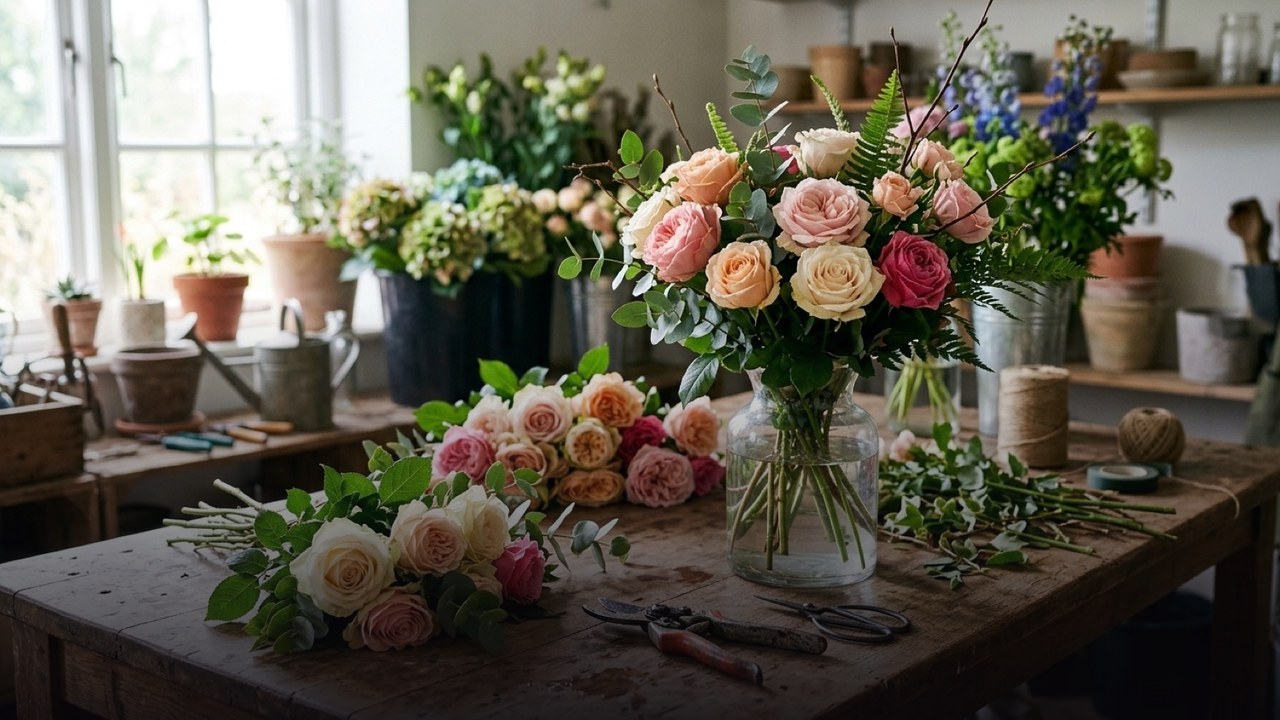
For most cut flowers, trim the stems at roughly a 45-degree angle with a clean, sharp blade, then put them straight into clean water. The sloping end helps prevent the cut surface from sitting flat against the vase base. You do not need to measure the angle: a clean cut and prompt access to water matter more than precision.
If you have just received a bouquet, prepare the vase before you start trimming so the flowers spend less time out of water. If you are sending flowers to someone in Russia, you can also share these steps with the recipient. They need only a suitable vase, clean water and a tool that cuts without crushing the stems.
What an angled cut actually does
A cut flower takes up water through conducting tissue in its stem. Once separated from the plant, it depends on that supply to help keep its leaves and petals firm. Recutting removes the old exposed end, which may have dried during handling. An angled cut also leaves an opening that is less likely to press completely against a flat vase bottom.
You may hear that a diagonal cut makes every bouquet last much longer because it exposes more surface. The cut does expose a larger surface than a straight cut, but that alone does not determine vase life. Stem condition, water cleanliness, flower type and the room all matter. Treat the angle as one useful part of care, rather than a rescue for every problem.
Do not keep shaving the end to achieve a perfect slope. Several hesitant cuts can damage soft tissue and shorten a stem unnecessarily. Aim for one smooth cut through sound tissue. If the end is visibly crushed, split or brown, move your cutting point above that damage; making a neat angle through an unhealthy section leaves the underlying problem in place.
Choose a tool that suits the stem
Use a sharp floral knife if you can handle it confidently, or clean bypass secateurs for firmer stems. Sharp scissors can work on thin, soft stems if they slice cleanly. Watch what happens as the blades close: a flattened, pinched end suggests the tool is too blunt or unsuitable. Choose a tool that cuts through without squeezing the stem flat.
Wash away plant residue before you begin, and clean the tool between bouquets. A blade with dried sap or dirt on it can carry contamination to a fresh cut. Give the vase the same attention, particularly its base and the inside near the waterline. Rinsing a vase that still feels slippery inside does not remove the film left by its previous contents.
Work on one stem at a time with your hands clear of the cutting edge. If using a knife, support the stem securely and cut away from your body. Do not attempt a fast florist-style motion you have only seen in a video. For a fuller preparation guide, see Trimming Flower Stems After Delivery.
Bouquets we can deliver




How much to trim and when to add water
Start by checking the bouquet against the vase before cutting anything. Removing about 1–2 cm is a practical starting point for stems with healthy ends, but allow more if the lower section is damaged. Keep enough length for the flowers to sit securely above the rim. If you want a shorter arrangement, reduce the height gradually rather than making one large cut.
Remove leaves that would sit below the waterline, while keeping healthy foliage above it. Submerged leaves break down and make the water harder to keep clean. Handle each stem gently as you remove foliage, especially around joints and soft sections. There is no need to strip the whole stem bare or scrape its outer surface to help it drink.
Have the filled vase beside you and place each freshly cut stem into it promptly. You do not need to cut every stem underwater as a standard home-care routine; working with clean tools and minimising the delay is more practical. If flower food is supplied, follow its packet instructions for the amount of water instead of guessing or making a concentrated solution.
Adjust the technique for different flowers
Roses and many other firm-stemmed cut flowers suit a clean diagonal cut. With woody stems, use secateurs strong enough for the job rather than forcing ordinary scissors through them. Do not hammer or crush the ends: damaged tissue can deteriorate in the vase. Avoid splitting the stem as a routine extra step unless you have specific care guidance for that flower.
Soft or hollow stems need a lighter touch because they can buckle under pressure. Support them close to the cutting point without squeezing, and use a sharp blade. A modest diagonal is sufficient; a long, pointed cut is unnecessary. If a soft stem starts to flatten, stop and change the tool rather than forcing the same blades through the remaining stems.
Some flowers have different handling needs, so a 45-degree cut is a useful general rule rather than a requirement for every variety. Tulips, for example, are also commonly trimmed straight across. In a mixed bouquet, concentrate on clean, intact stem ends and suitable support in the vase. Follow any flower-specific instructions supplied with the bouquet where they differ from general advice.
Keep the cut ends working after the first trim
Check the water every day, especially soon after arranging the flowers, and top it up before any stem ends become exposed. A narrow vase can look adequately filled while holding little water. Make sure every stem reaches the water, including shorter stems at the edge of a mixed bouquet. A beautiful arrangement still needs a reliable water supply beneath the flowers.
Replace water that becomes cloudy or smells unpleasant, washing the vase before refilling it. When refreshing the arrangement, inspect the ends and make a small fresh cut if they have deteriorated or dried. You do not need to remove several centimetres every day. Repeated heavy trimming can leave flowers too short for the vase without addressing dirty water or damaged tissue.
Keep the bouquet away from radiators, strong direct sun and ripening fruit. Remove fading flowers and any leaves that fall into the water. If a flower droops, first check its water access and stem condition; an angled recut may help when the end has dried, but it cannot reverse every cause of wilting. Avoid adding sugar, alcohol or other improvised mixtures to the vase.
Sending a bouquet to Russia with practical care in mind
When choosing from our bouquets catalogue, consider when the recipient can receive the flowers and put them in water. We deliver across Russia. Express delivery in large cities is available 1–2 hours after order confirmation; you can also choose an exact time with a ±30-minute allowance, a listed delivery window, or pre-order 1–30 days ahead.
The delivery windows are 09–12, 12–15, 15–18 and 18–21. City delivery costs 500 RUB; the operator confirms the price for remote districts and suburbs when confirming the order. Use WhatsApp to get help choosing a bouquet and agree the time, address and card text. You can also arrange a photo of the bouquet before delivery.
Delivery is anonymous by default: the courier does not name the sender, and a card with your text is free. Add your name to the card if you want the recipient to know who sent it. The courier calls about 15 minutes before arrival. For delivery and payment, online checkout uses CloudPayments; check the options displayed there for your card.
Frequently asked questions
Do flower stems need to be cut at exactly 45 degrees?
No. A roughly diagonal cut is sufficient for most cut flowers; the aim is a clean opening that is less likely to sit flat against the vase base. Sharp tools and prompt placement in clean water matter more than measuring the angle.
Can I use kitchen scissors to trim a bouquet?
Clean, sharp scissors can work for thin, soft stems if they cut without flattening them. Use suitable secateurs for thicker or woody stems, and change tools if the end looks crushed.
Should I cut flower stems under running water?
It is not necessary as a general home-care step. Prepare a clean, filled vase first, then trim each stem and place it in water promptly.
Will cutting the stems again revive wilted flowers?
A fresh cut may help if dried or damaged stem ends are limiting water uptake. Check the water and clean the vase too, but remember that recutting cannot reverse ageing or all forms of damage.
What happens if the recipient is out when the flowers arrive?
If the recipient is absent, we agree a second delivery the same day or handing the flowers to a neighbour or concierge with the sender's consent. The courier calls the recipient about 15 minutes before arrival.
Ready to send flowers?
Pick the city, choose the bouquet, and a local florist takes it from there.
Choose a city →