Do Picked Flowers Need Sunlight? Choose a Cool Spot Instead
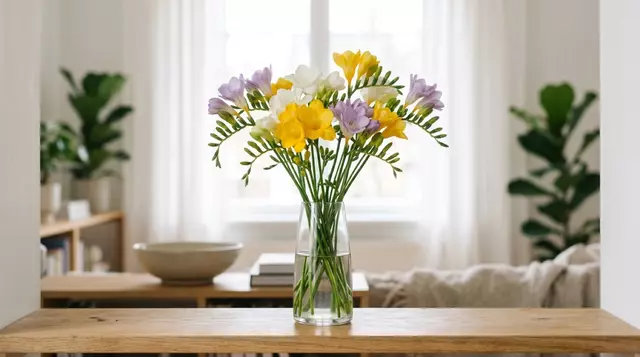
Picked flowers do not need direct sunlight to stay fresh in a vase. Once stems are cut, their immediate needs are clean water and a suitable place indoors; a sunny windowsill can heat the flowers and water, making the arrangement wilt sooner. Choose a cool spot with indirect daylight, away from radiators and hot draughts.
The useful distinction is between flowers growing on a rooted plant and flowers already picked for a vase. A plant needs appropriate light to support continued growth, while a cut stem has a limited life and no roots to replace lost water. Whether you have picked a handful from your garden or received a wrapped bouquet, careful handling matters more than finding the brightest room.
Why a sunny window can shorten vase life
Leaves on a cut stem may still photosynthesise, but this does not make direct sun a sensible vase-care treatment. Cutting removes the root system, and the stem must take up water through its cut end. Sunlight that heats the arrangement can increase water loss, leaving petals and leaves limp even when there is water in the vase.
Think about what happens at the window over several hours. A table may feel comfortable in the morning, then receive strong afternoon sun through the glass. The flowers and vase water can warm up before you notice. Place the arrangement beyond the path of direct rays, and check the position again later rather than judging it only when you first put the flowers down.
Ordinary indirect daylight is a practical choice for displaying most bouquets. You do not need to buy a grow light or move the vase around to follow the sun. If you are comparing possible positions, choose the one that stays comfortably cool and stable. Our guide to sunlight or shade indoors explores that placement decision in more detail.
Give freshly picked stems water before arranging them
If you are cutting flowers from your own garden, have a clean container of water ready before you begin. Pick during a cooler part of the day where practical, and avoid leaving the stems on a warm table while you finish other jobs. Flowers already drooping on the plant are a less promising starting point than firm stems with healthy leaves and undamaged petals.
Use clean, sharp scissors or secateurs to make a fresh cut at the base of each stem before placing it in water. Remove leaves that would sit below the waterline: submerged foliage breaks down and makes the water harder to keep clean. Keep useful leaves above the water, and avoid stripping or scraping the whole stem as a routine treatment.
Let the flowers take up water in a cool place before making a complicated arrangement. You can then adjust stem lengths to suit the vase, keeping the cut ends out of water for as little time as practical. This simple preparation is more useful than standing a newly picked bunch in sunlight in the hope that it will perk up.
Bouquets we can deliver




Choose a vase position that stays comfortable all day
A side table, dining table or shelf can work well if it is away from direct sun and heat. Check for less obvious sources of warmth, including a radiator beneath the window, a nearby cooker or warm air from a vent. The best position is one where you can enjoy the flowers and still reach the vase easily to check and change the water.
Avoid placing the bouquet directly in the airflow from a fan, air conditioner or heater. Moving air can increase moisture loss, while strong temperature changes add stress to an already cut stem. A cool room with gentle, indirect light is usually a more useful choice than a bright kitchen windowsill that becomes hot whenever you cook.
Keep the vase away from a bowl of ripening fruit. Some fruits release ethylene, a gas that can hasten ageing in sensitive flowers. Also consider the people and animals sharing the space: a stable vase reduces spills, and lilies require particular care because they are highly toxic to cats. For a household with cats, choose a bouquet without lilies.
Keep the water clean and respond to early warning signs
Start with a thoroughly washed vase and fresh water. If the bouquet comes with a sachet of flower food, mix it according to the packet directions, including the stated water volume. Guessing at the concentration is less useful than following the instructions. Do not add an improvised mixture of sugar, bleach or household cleaners to the vase.
Check the water every day, especially when several stems share a narrow vase. Top it up when the level falls, and replace it promptly if it looks cloudy, smells unpleasant or contains fallen plant material. When changing the water, wash the vase and remove deteriorating leaves. Refresh the stem ends with a clean cut if needed before returning them to water.
A soft flower head does not automatically mean the bouquet needs more light. First check whether the stem ends are submerged, whether the vase has become warm and whether the water needs replacing. Remove spent flowers as they fade so you can assess the remaining stems. Avoid crowding a large bunch into a vase so tightly that checking individual stems becomes difficult.
Match your expectations to the flowers and their stage
Different flowers change at different speeds after cutting, so a mixed bouquet will not necessarily fade evenly. One stem may be past its best while another is still opening. Remove individual flowers when necessary and rearrange the remaining healthy stems in a smaller vase. That gives you a tidy display without treating one fading bloom as a verdict on the whole bunch.
Tight buds are not always a guarantee of a longer display. Whether a picked bud opens depends on the flower, its maturity at cutting and its condition afterwards. Putting reluctant buds in direct sunlight is an unreliable fix and may dry them out. For garden cutting, choose stems at a suitable stage for that flower rather than assuming every closed bud will develop indoors.
Tulips may bend and continue to lengthen after cutting, while flowers with heavier heads may need a vase that supports their stems. These changes do not necessarily indicate poor care or a shortage of light. For a particular flower, species-specific guidance is more useful than a single rule for every bouquet; see our advice on plants and cut lilies.
Sending flowers to Russia: plan the arrival and the first vase
If you are sending a bouquet from abroad, choose a delivery time when the recipient can receive it and put it in water. Turboflora delivers flowers across Russia, with city delivery costing 500 RUB; an operator confirms the delivery price for remote districts and suburbs. Start with the bouquets catalogue, then consider the recipient's space, pets and flower preferences when choosing.
Express delivery in large cities is available in 1–2 hours after the order is confirmed. You can also arrange delivery at an exact time with a tolerance of 30 minutes either way, choose a 09–12, 12–15, 15–18 or 18–21 window, or pre-order 1–30 days ahead. Use WhatsApp to agree the address, timing and card text, ask for help choosing, or arrange a photo of the bouquet before delivery.
Delivery is anonymous by default, so add your name to the free card if you want the recipient to know who sent it. The courier calls about 15 minutes before arrival; if the recipient is absent, we agree a second delivery that day or a handover to a neighbour or concierge with your consent. Online checkout uses CloudPayments: check the payment options displayed there, since acceptance of every foreign card is not guaranteed. Availability and timing of delivery across Russia are confirmed for the chosen city, address, date and bouquet.
Frequently asked questions
Do picked flowers need sunlight every day?
No daily sunlight routine is needed for a vase of picked flowers. Keep them in a cool position with indirect daylight, and concentrate on clean water, submerged stem ends and removing fading material.
Can I keep picked flowers in a room without windows?
A windowless room can be suitable for displaying cut flowers if it stays cool and you maintain the water. You do not need to move the vase into direct sun each day.
Will sunlight help wilted flowers recover?
Direct sunlight can worsen wilting by heating the flowers and increasing water loss. Move the vase somewhere cool, check the water and refresh the stem ends with clean tools; recovery depends on the cause and condition of the stems.
Do unopened flower buds need direct sun to open?
Direct sun is not a reliable way to open cut flower buds. Opening depends on the type of flower, its maturity when cut and its condition, so some tightly picked buds may never open fully.
What care message should I include with a bouquet?
A short note is enough: “Put the stems in a clean vase with fresh water, remove leaves below the waterline, and keep the flowers away from direct sun and heat.” If flower food is supplied, remind the recipient to follow the packet directions.
Ready to send flowers?
Pick the city, choose the bouquet, and a local florist takes it from there.
Choose a city →