Does the Delivery Photo Show the Exact Bouquet the Recipient Gets?
You placed an order, you saw a beautiful image on the website, and now you are wondering whether the bouquet that arrives at the door will actually look like that picture. It is one of the most honest questions a customer can ask, and it deserves a straight answer from someone who builds these arrangements every day.
The Catalogue Image Is a Standard, Not a Snapshot
Every bouquet on the Turboflora website is photographed under controlled studio conditions using flowers at their absolute peak — stems cut to the ideal length, blooms open to exactly the right degree, colours at their most vivid. That image is a design standard. It tells you the shape, the colour palette, the flower families, and the overall mood of the arrangement. It is not a photograph of the specific bouquet that will leave our workshop on the day of your order. This distinction matters because flowers are a living material. A garden rose photographed in May will look slightly different from a garden rose sourced in January, even when both are the same variety — Avalanche, for instance, has a creamier tone in lower winter light than in summer. Ranunculus petals vary in layering from stem to stem. These are not flaws; they are the nature of the product. What the catalogue image guarantees is the concept: the mix of flower types, the approximate size, the colour family, and the wrapping style. When you order a blush-and-white hand-tied bouquet, you will receive a blush-and-white hand-tied bouquet. The specific cultivar of spray rose used on a given Tuesday may differ from the one in the photo, but it will belong to the same tonal family and carry the same visual weight in the arrangement. Understanding this from the start makes the pre-delivery photo far more meaningful.
Bouquets we can deliver

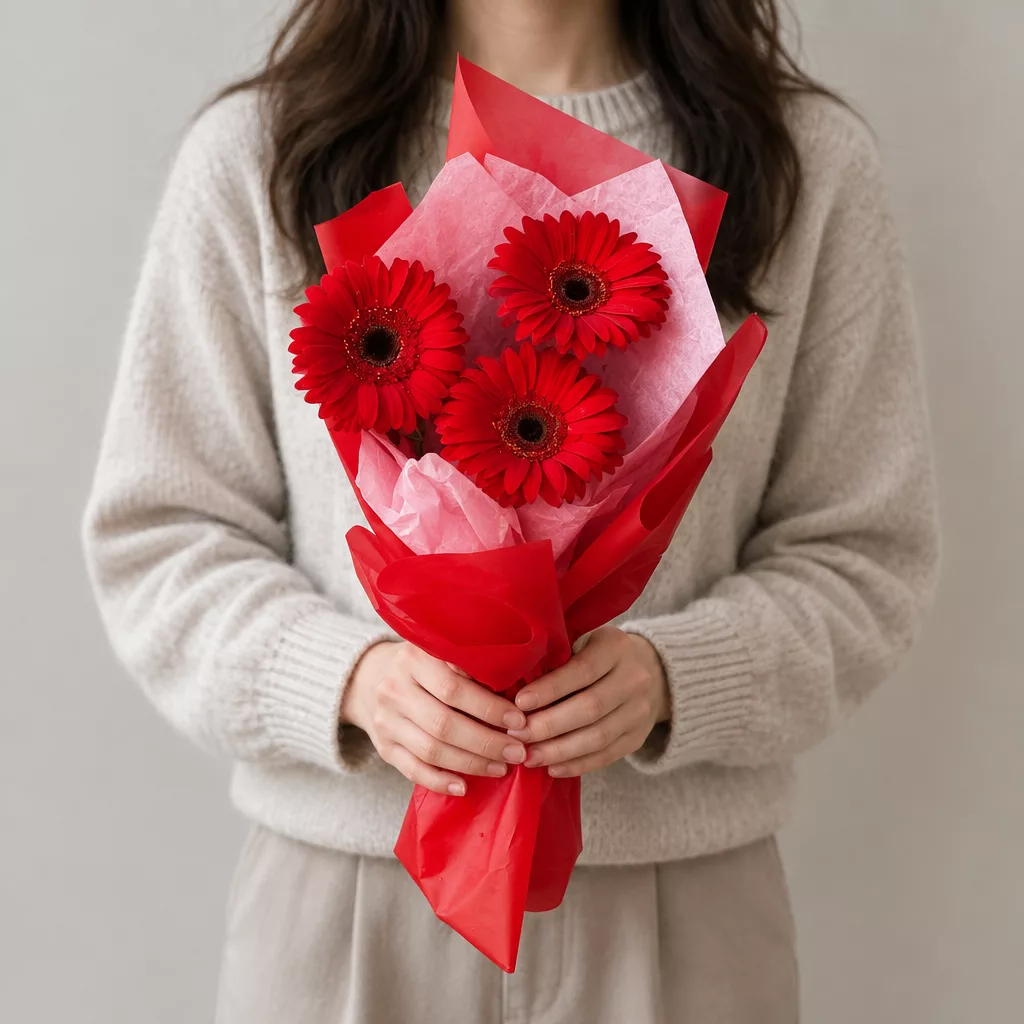
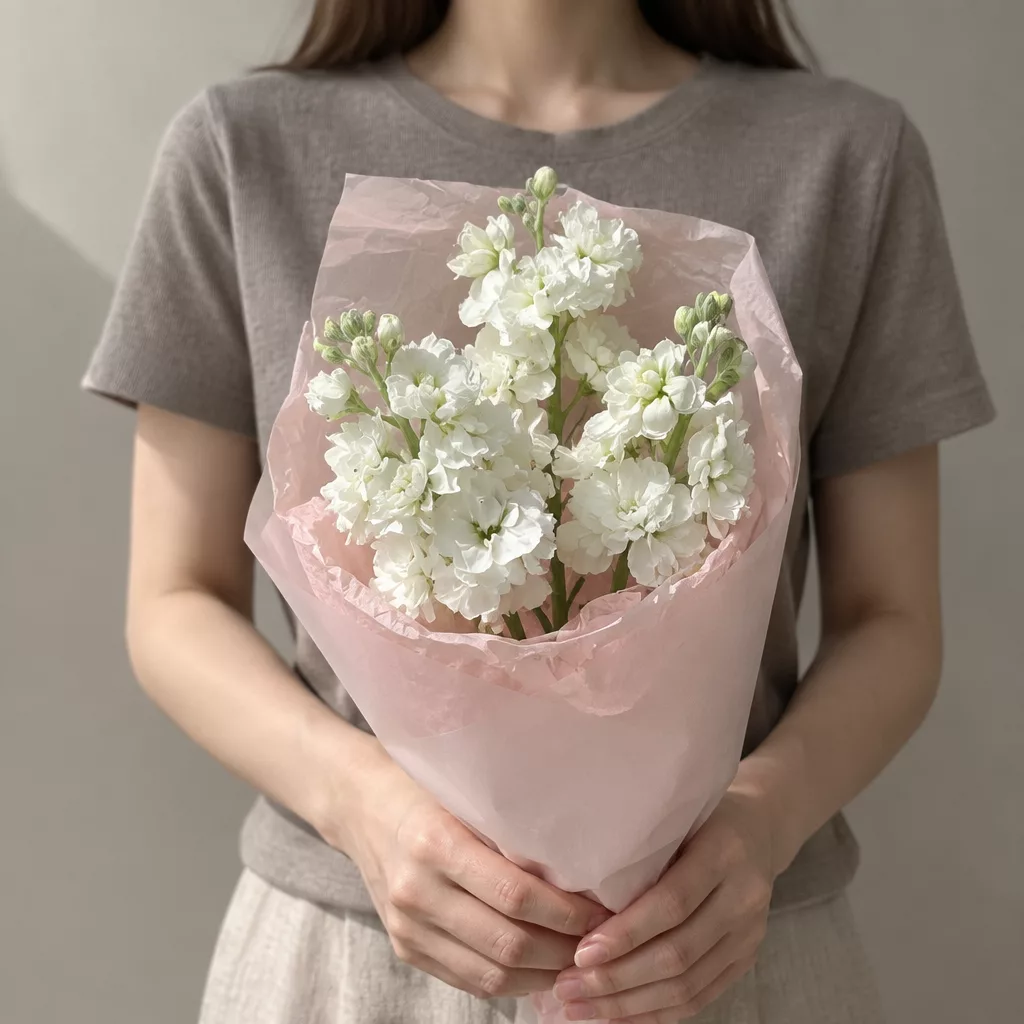
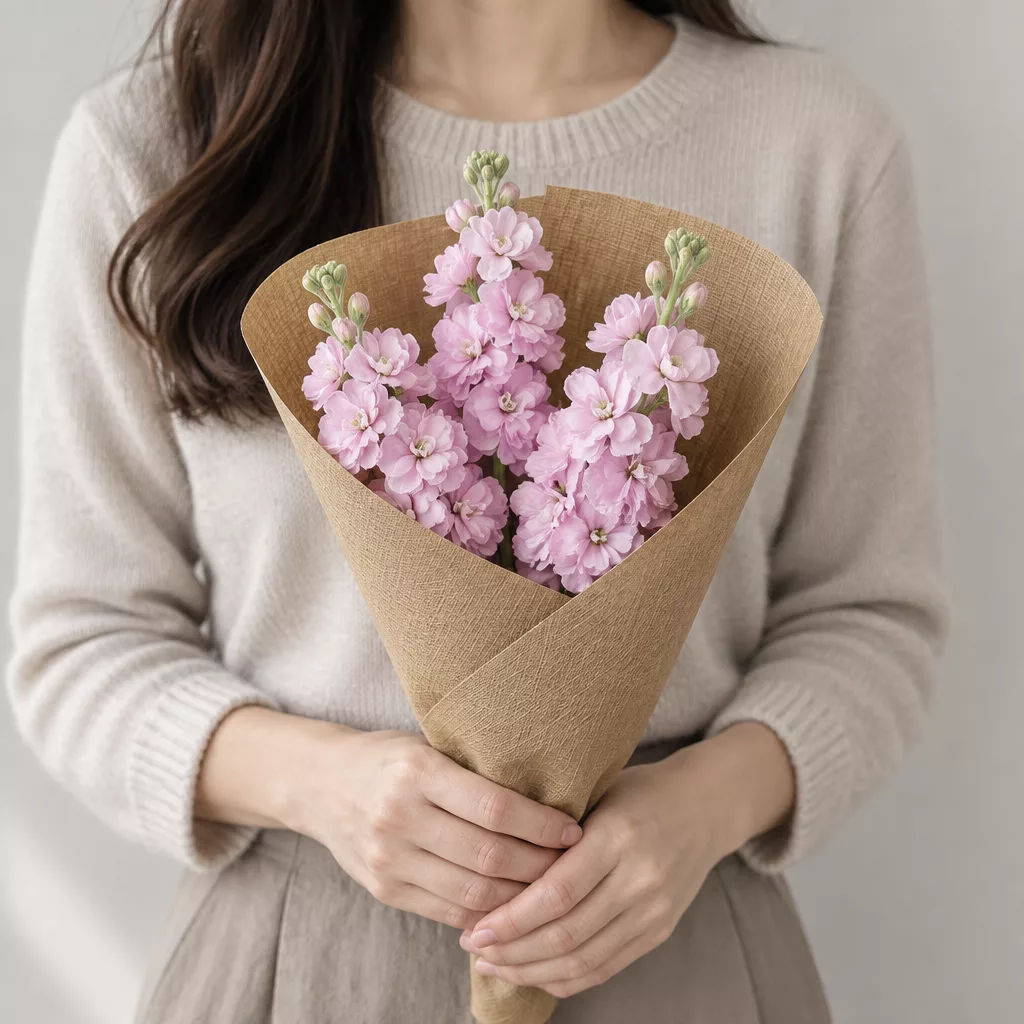
What the Pre-Delivery Photo Actually Captures
The pre-delivery photo is a real photograph taken in our workshop of the actual bouquet that is about to be handed to the courier. It is not retouched, not lit with studio equipment, and not selected from a library of archive shots. It shows the bouquet as it exists at the moment it leaves our hands — stems wrapped, ribbon tied, water-retaining wrap in place if the journey is longer than twenty minutes. This photo is sent to you, the customer, before dispatch. Its purpose is twofold. First, it gives you a chance to confirm that the arrangement matches what you intended. Second, it creates a clear reference point: if the recipient later tells you the bouquet looked different on arrival, both you and we can compare the photo to the feedback and understand exactly what happened during transit. The pre-delivery photo is also your first honest look at the seasonal reality of the flowers. If you ordered peonies in late October and the buds are tighter than in the catalogue image, the photo will show that. Tight peony buds are not a defect — they open beautifully within twelve to eighteen hours at room temperature — but you deserve to see what is being sent. We photograph the bouquet from the front and from a slight angle so that the depth of the arrangement is visible. A flat, top-down shot would hide how the stems are layered, and we want you to see the full structure before it travels to your recipient.
Why Flowers Change Between the Photo and the Door
Even with a pre-delivery photo in hand, the bouquet the recipient unwraps may look slightly different from the image taken forty minutes earlier. This is not a mystery — it is biology and physics working together over a short journey. Temperature is the primary factor. In Saint Petersburg, winter street temperatures can drop to minus fifteen or lower. Tulips, which are sensitive to cold, will close tightly during a five-minute walk from a car to a building entrance. They reopen within an hour in a warm room, but the recipient's first impression is of a more compact bouquet than the photo showed. In summer, the opposite happens: roses open faster than expected in heat above twenty-five degrees, so a bud that looked firm in the photo may be half-open by the time it is unwrapped. Hydrangeas are particularly sensitive to water loss. If the journey exceeds thirty minutes without the water-retaining wrap staying moist, the florets begin to droop. They recover almost completely once placed in water, but the intermediate state can alarm someone who has never seen a hydrangea wilt and revive. Presentation wrap also shifts during transit. A perfectly fanned paper collar can compress slightly inside a courier bag. We use rigid inner sleeves for larger bouquets precisely to prevent this, but a small degree of movement is unavoidable. None of these changes affect the quality or longevity of the flowers. They are transit states, not damage, and a florist can explain the difference immediately.
What Our Quality Guarantee Actually Covers
The Turboflora quality guarantee is specific and enforceable. If the bouquet that arrives differs materially from the pre-delivery photo — meaning flowers are broken, stems are bent at the neck, petals are bruised, or a significant element shown in the photo is missing — we will replace the affected portion or the entire bouquet, depending on the scale of the problem. A photograph from the recipient taken within two hours of delivery is the standard form of evidence we ask for. This timeline matters because flowers change quickly in a warm apartment, and a photo taken four hours later may reflect care conditions rather than delivery quality. What the guarantee does not cover is the natural variation described above: a tulip that closed in the cold, a peony bud that is tighter than the catalogue image, or a paper wrap that shifted during transit. These are expected behaviours, not failures. It also does not cover colour perception differences between screens. A monitor calibrated for warm tones will render the same coral rose differently from a phone screen set to cool white. If colour accuracy is critical to you — for a wedding table arrangement, for example — contact us before ordering and we will send you a sample photo from current stock rather than the catalogue image. The guarantee exists because we stand behind the work that leaves our workshop. Every stem is inspected before wrapping. If something is wrong, we want to know and we will fix it.
Seasonal Substitutions and How We Handle Them
Russia's flower supply chain is heavily dependent on import schedules, and certain varieties simply disappear from the market for weeks at a time. Ecuadorian garden roses, for instance, are sometimes unavailable during major Russian holidays when air freight is redirected to higher-volume cargo. Dutch lisianthus can vanish from Saint Petersburg wholesale markets for ten days to two weeks in deep winter. When a specific variety shown in a catalogue image is unavailable on the day of your order, we make a substitution within the same colour family and the same visual weight. A deep burgundy spray rose might be replaced with a burgundy lisianthus. A white freesia might be replaced with white waxflower. The substitution will never change the overall colour story or the size of the bouquet. We do not substitute a premium variety with a filler flower and call it equivalent. If the substitution is significant — for example, if the hero flower of the arrangement is unavailable — we contact you before building the bouquet. You can approve the alternative, choose a different arrangement, or reschedule to a date when the original variety is back in stock. The pre-delivery photo will always reflect the actual flowers used, including any substitutions, so you see exactly what is being sent before it leaves our hands. This transparency is the most practical quality control we offer.
How to Read the Pre-Delivery Photo Like a Florist
Most customers look at the pre-delivery photo and check whether it resembles the catalogue image. A florist looks at different things, and knowing what to look for will help you assess the photo more confidently. First, check the stems at the base of the wrap. They should be uniform in length and show no visible bending or kinking. A kinked stem means the flower will not draw water efficiently and will fade faster than it should. Second, look at the focal flowers — the largest, most prominent blooms. Are they at different heights? A good arrangement staggers its focal points so that each flower has visual space. If all the large roses are at exactly the same height, the bouquet will look flat in person. Third, check the outer edge of the arrangement. The boundary flowers should be intact, not crushed against the wrap. Delphinium florets and lilac clusters are the most vulnerable here; if they look compressed in the photo, they will arrive compressed. Fourth, look at the water-retaining wrap at the base. It should be visibly damp or show a small water reservoir. A dry base in the photo for a long-distance delivery within the city is a flag worth raising with us before dispatch. Finally, look at the overall silhouette. A round bouquet should read as round from the front. A cascading arrangement should have a clear downward flow. If the silhouette looks uneven in the photo, it will look uneven in person, and that is the right moment to raise the question with us.
Getting the Most from Your Order Before You Confirm
The single most effective thing you can do before confirming an order is to be specific in the comment field. Vague instructions like 'something beautiful' give our florists creative freedom, which is fine, but they also mean the catalogue image is the only reference point we have. Specific instructions — 'I want the roses open, not in bud, because she will enjoy them immediately' or 'please avoid anything with a strong scent as the recipient is sensitive to fragrance' — allow us to build an arrangement that serves the occasion rather than simply matching a photograph. If you are ordering for someone in Russia who you know will photograph and share the bouquet on social media, tell us. We will pay extra attention to the outer presentation layer and use a wrap colour that photographs well indoors. If the recipient has a small apartment and no large vases, mention that too. A compact, tightly structured bouquet in a short wrap is easier to place in a standard kitchen glass than a wide, open arrangement that needs a thirty-centimetre vase. The pre-delivery photo is the last checkpoint before the bouquet leaves us, but the best outcomes happen when the conversation starts at the order stage. A florist who knows the occasion, the recipient, and the setting can make decisions throughout the build process that no photo review can replicate. The photo confirms. The brief creates.
The catalogue image shows you what we are capable of and what you are choosing. The pre-delivery photo shows you what we actually built for the person you care about. The gap between those two things is where seasonal reality, living material, and honest craftsmanship all meet. When you understand that gap — and know that our quality guarantee closes it if anything goes wrong — ordering flowers becomes a much more confident experience. We want the bouquet at the door to feel like a gift, not a gamble.
Frequently asked questions
Will the bouquet look exactly like the photo on the website?
The catalogue photo shows the design concept — colour family, flower types, shape, and wrapping style. The specific varieties may vary slightly depending on what is available that day, but the overall look and feel will match. The pre-delivery photo we send before dispatch shows the actual bouquet your recipient will receive.
What should I do if the recipient says the bouquet looks different from the pre-delivery photo?
Ask the recipient to photograph the bouquet within two hours of delivery and send the image to us. We compare it against the pre-delivery photo. If there is a genuine difference caused by transit damage or a missing element, we will replace the affected flowers or the entire bouquet depending on the situation.
Can I request a specific flower variety rather than accepting a substitution?
Yes. Write the variety name in the order comment field. If that variety is unavailable on your chosen date, we will contact you before building the bouquet so you can decide whether to approve an alternative, select a different arrangement, or reschedule to a date when the original variety is back in stock.
Why do tulips sometimes look closed in photos taken in winter?
Tulips close in response to cold temperatures, which is a natural protective reflex, not damage. A bouquet photographed in our warm workshop may show open tulips, but after a few minutes outdoors in a Saint Petersburg winter they will close. They reopen fully within an hour of being placed in a warm room.
How long after delivery can I raise a quality complaint?
We ask for photographic evidence within two hours of delivery. After that window, changes in the bouquet's appearance are more likely to reflect care conditions — water, temperature, vase cleanliness — than anything that happened during transit or in our workshop. Early photos give us a clear and fair basis for resolving any issue quickly.
Ready to send flowers?
Pick the city, choose the bouquet, and a local florist takes it from there.
Choose a city →