Does warm water help cut flowers bloom?
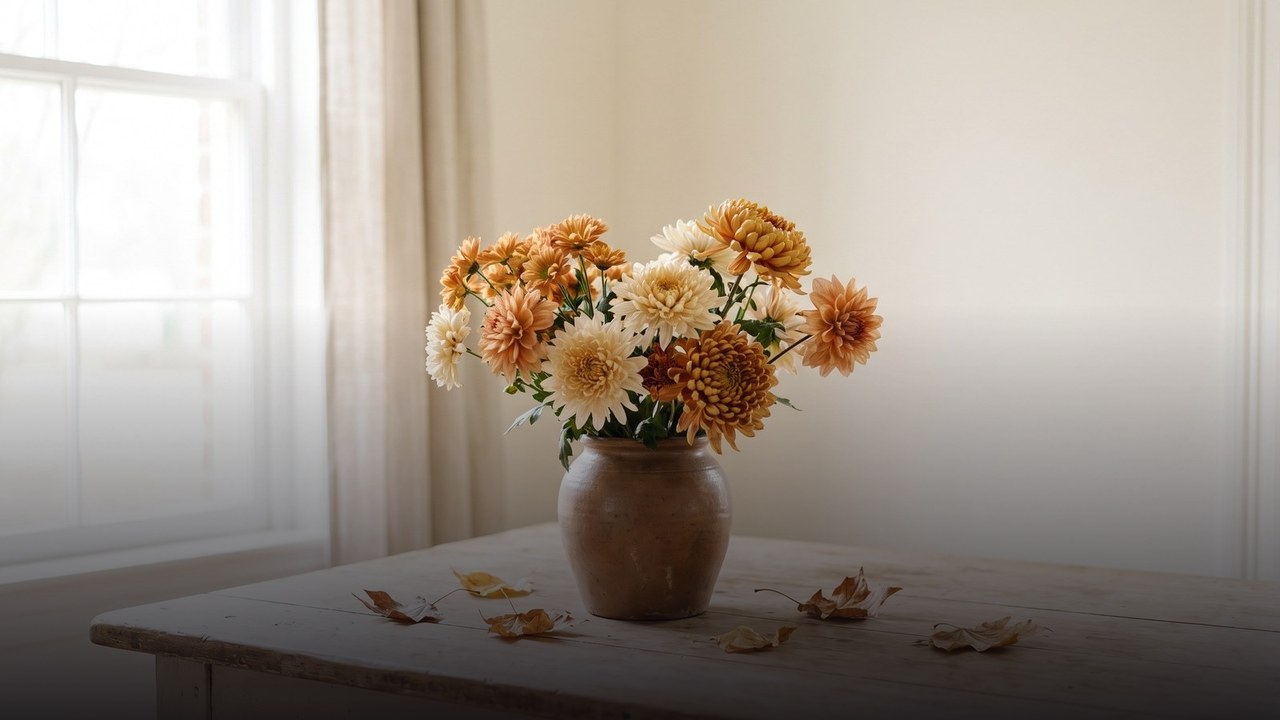
Slightly warm water may help some cut flowers take up water and support buds as they open, but it does not make every flower bloom. For a mixed bouquet, room-temperature water is a sensible starting point; hot water can damage flowers, and a bud cut too early may never open fully.
The useful distinction is between helping a thirsty stem recover and making a flower develop faster. Water supports both hydration and normal opening, while the flower's type, maturity and condition determine what happens next. If you want a bouquet looking fuller for a meal, birthday or delivery, start with careful conditioning and realistic timing rather than trying to force the result with heat.
What warm water can—and cannot—do
Cut flowers still need water after leaving the plant. When stems have spent time out of a vase, restoring their water supply may help leaves and petals regain firmness. A slightly warm initial drink can be useful for some flowers, but better hydration is not proof that heat itself triggers blooming. Freshly recut stems and a clean container matter too.
Buds also need to be developed enough to open. A rose showing some looseness in its outer petals has a different starting point from a small, hard bud with tightly closed sepals. You cannot judge every variety by the same appearance, so avoid treating a tight bud as a problem that warmer water will automatically solve.
Once the bouquet is hydrated, keeping it warm simply to speed opening involves a trade-off: flowers may develop faster but also age faster. For a gift you want someone to enjoy over several days, steady care is usually more useful than rushing every bud into full bloom. Our guide to warm or cold water for flowers explains the broader choice.
Choose a sensible water temperature for your bouquet
If you have no flower-specific instructions, start with clean water at room temperature. It is an easy, practical choice for a mixed bouquet, whose stems may have different care needs. If you use lukewarm water for initial conditioning, it should feel only mildly warm to your hand, never hot. There is no need to aim for a dramatic temperature change.
Avoid using water straight from a hot tap or adding boiling water to an ordinary bouquet. Specialist stem treatments sometimes involve heat, but they are not a general home-care method and should not be improvised. You can damage stems or petals without making a stubborn bud any more likely to open.
For tulips and other spring bulb flowers, cool water and a cool position are generally a better starting point than a warm-water opening treatment. With roses, hydration may help a mature bud continue opening, but variety and condition still matter. If your bouquet arrives with care instructions, follow those rather than applying one temperature rule to every stem.
Bouquets we can deliver




Condition the stems before trying to encourage opening
Begin with a washed vase, rinsed thoroughly so that no soap remains. Remove any leaves that would sit below the waterline, then use a clean, sharp tool to make a fresh cut at the base of each stem. Put the stems into water promptly. These steps give the bouquet a better start than changing the temperature while leaving dirty water or submerged foliage in place.
Add cut-flower food if you have it, following the packet's dilution instructions. Extra powder does not mean extra benefit, and household mixtures are difficult to balance reliably. Use enough water to keep the cut ends submerged, and arrange the stems with space between the flower heads so that petals are not crushed against one another.
Let the bouquet drink in a comfortable room away from direct sun, radiators and strong draughts, then assess its condition over the next several hours. Top up as needed and replace cloudy water promptly, cleaning the vase again. For ongoing care, see our guide to how often to change vase water.
Help mature buds open without shortening their display
After conditioning, place the flowers in a room with gentle, indirect daylight and a stable temperature. A moderately warm room may encourage development compared with a very cool one, but a sunny windowsill or radiator creates unnecessary heat stress. Move the vase to a cooler suitable spot once the flowers reach the stage you want.
Allow time rather than expecting an immediate transformation. Depending on the flower and its starting condition, visible opening may take hours or days, and some buds will remain closed. If you need flowers for a particular evening, choose blooms already approaching the desired stage instead of relying on a same-day warm-water trick.
Do not pull petals apart, press the centre of a flower or shake the stems to imitate a fuller bloom. Delicate petals bruise easily, and handling can leave lasting marks. A mixed bouquet can look attractive with some flowers open and others still developing; you do not need every head at its widest point for the arrangement to feel complete.
Tell the difference between a closed bud and a struggling flower
A firm, closed bud on an upright stem may simply need more time. A drooping head, limp leaves or soft stem suggests a different issue, so check the water level and stem condition before trying more warmth. Recutting the base and returning the flower to a clean vase may help a thirsty stem, but it cannot reverse every kind of deterioration.
If one flower struggles while the others look healthy, take it out and inspect it separately. Remove damaged foliage and check for a crushed or decaying stem. Discard decaying material and refresh the vase water. Increasing the temperature for the entire bouquet is unlikely to solve a problem affecting just one damaged flower.
Browning, translucent or badly bruised petals will not become fresh again when the bud opens. Likewise, repeated moves between warm and cold water are not a dependable rescue method. Keep your assessment simple: is the stem taking up water, does the flower feel firmer, and is the bud gradually changing? If not, avoid escalating to hotter treatments.
Plan flower delivery to Russia around the occasion
When sending flowers from abroad, think about when the recipient will display them. For a birthday dinner or anniversary, explain whether you prefer a fuller appearance on arrival or a bouquet with buds still developing. Browse the bouquets catalogue, then contact a manager on WhatsApp to discuss your choice, delivery details and a photo of the bouquet before delivery. Opening to a precise stage cannot be guaranteed.
We deliver across Russia. Express delivery in large cities takes 1–2 hours after the order is confirmed. You can also arrange delivery at an exact time with a tolerance of plus or minus 30 minutes, choose a 09–12, 12–15, 15–18 or 18–21 window, or pre-order 1–30 days ahead. City delivery costs 500 RUB; the operator confirms the price for remote districts and suburbs when confirming the order.
Choose a time when the recipient can receive the flowers and put them in water. The courier calls about 15 minutes before arrival. If the recipient is absent, we agree a second delivery the same day or, with the sender's consent, handing the flowers to a neighbour or concierge. Delivery is anonymous by default: the courier does not name the sender, so include your name in the free card text if you want it known.
Use WhatsApp to agree the address, timing and card wording, including any simple care message you want the recipient to have. Online checkout uses CloudPayments; check the payment options displayed there rather than assuming every foreign card will work. The delivery and payment page is a useful reference while arranging your order.
Frequently asked questions
Does warm water help roses open?
Slightly warm water may help a thirsty rose hydrate and support the opening of a sufficiently mature bud. It cannot guarantee that a tightly closed or damaged rose will bloom, so start with a clean vase and a fresh stem cut.
Should I put flowers in hot water to make them bloom faster?
Hot water is not a suitable general treatment for a bouquet and can damage flowers. Use room-temperature water unless you have specific care instructions for the stems you received.
How long should I leave flowers in warm water?
There is no single warm-water soaking time that suits every flower. For routine home care, start with room-temperature water, allow several hours for hydration and judge the bouquet by its condition rather than a fixed timer.
Why are my flower buds still closed after changing the water?
The buds may need more time, may have been cut before they could develop fully, or may be affected by damage or poor hydration. Check the stems and vase conditions, but avoid repeatedly raising the water temperature.
Can I arrange flower delivery to Russia for a particular time?
You can arrange an exact time with a tolerance of plus or minus 30 minutes, or choose one of the available delivery windows. Pre-orders can be placed 1–30 days ahead; agree the timing and address with a manager.
Ready to send flowers?
Pick the city, choose the bouquet, and a local florist takes it from there.
Choose a city →