Flowers for Your Product Launch or Exhibition in Russia
A product launch in Russia is never a quiet affair. Whether you are unveiling a new consumer brand in a Moscow showroom or presenting industrial equipment at an exhibition centre in Saint Petersburg, the room itself is expected to speak before anyone takes the microphone. Flowers are a large part of that language — and getting them right means understanding not just which varieties to order, but how scale, colour, timing and Russian aesthetic expectations all work together.
What Russian Audiences Expect from a Decorated Event Space
Russian corporate culture places genuine weight on visual generosity. A sparsely decorated launch venue reads as unfinished rather than minimal, and guests — from press to retail buyers — notice immediately. This is not vanity; it reflects a tradition in which hospitality and effort are expressed through abundance. Flowers carry that signal clearly.
For a product launch, the expectation is that floral decoration will frame the hero moment: the reveal, the signing table, the press backdrop. Arrangements are not scattered randomly around the room. They anchor specific zones — entrance, stage, networking tables — so that every photograph taken at the event naturally includes something beautiful in the background.
Colour discipline matters enormously. Russian event designers tend to favour tight, intentional palettes rather than mixed rainbow schemes. A technology brand might use white spray roses, silver brunia and eucalyptus to suggest precision and modernity. A food or lifestyle brand might lean into warm peach ranunculus, blush peonies and dusty miller for an approachable, premium feel. Matching the floral palette to the brand's visual identity is not optional — it is what separates a professional setup from a rental hall with flowers in it.
Guests at Russian launches are also accustomed to fragrance being part of the experience. Varieties like freesia, garden roses and stocks add scent without overwhelming a room, which matters especially in enclosed exhibition halls where ventilation can be limited.
Bouquets we can deliver

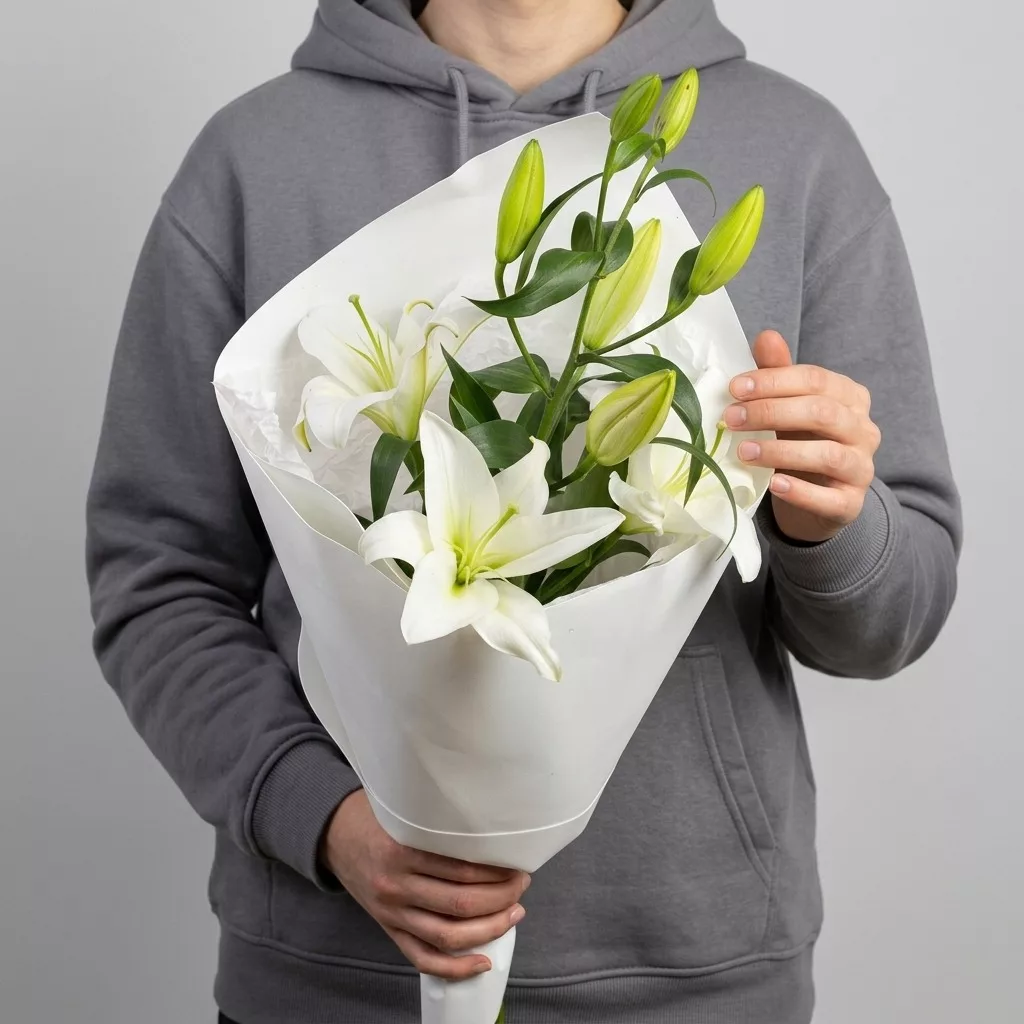
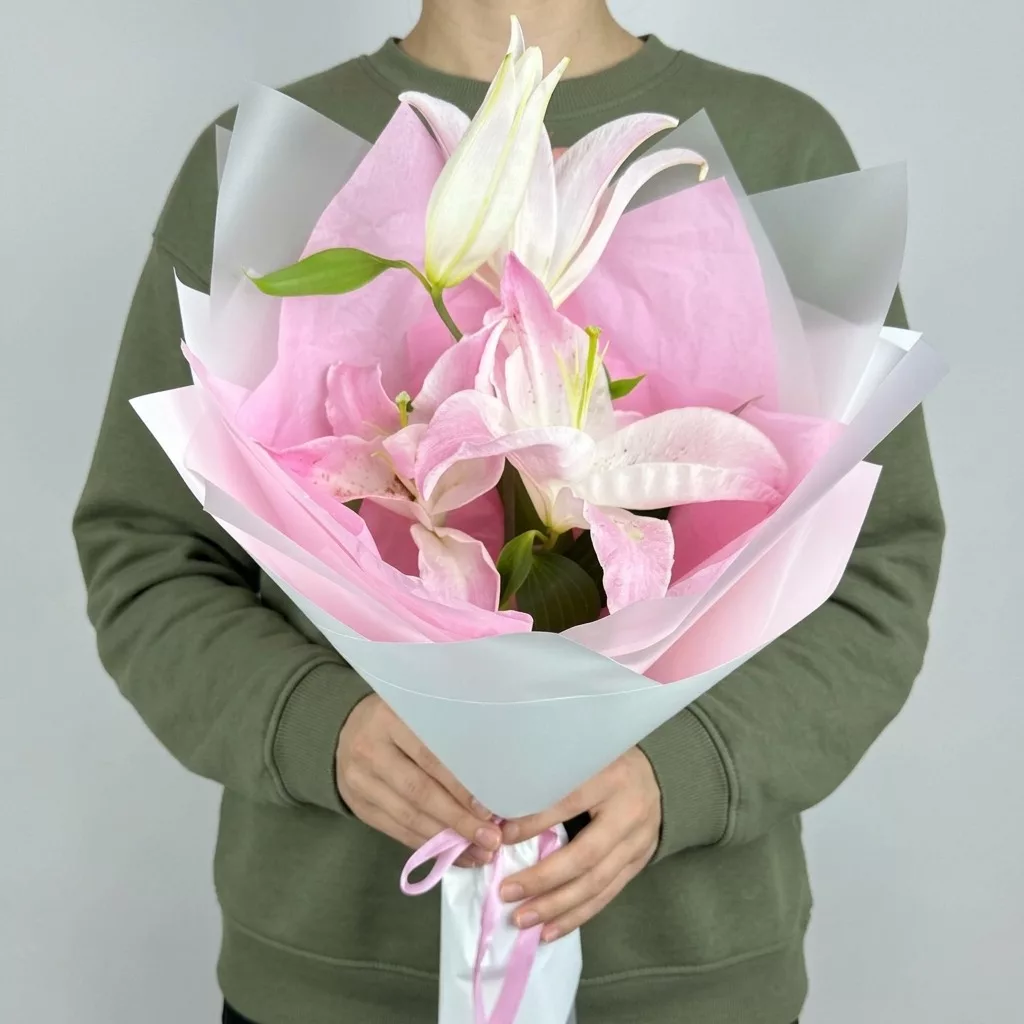

Entrance Arches: First Impressions That Hold Up to Photography
The entrance arch is the single most photographed element of any Russian product launch. Every arriving guest passes through or past it, and it appears in virtually every social media post from the event. Because of this, the arch must look as good at hour three as it did when the doors opened — which places serious demands on flower choice and conditioning.
For arches that need to hold for six to eight hours in a heated indoor venue, the strongest performers are garden spray roses, lisianthus, chrysanthemum blooms and tropical foliage such as monstera leaves and palm fronds. Peonies are beautiful but risky in warm rooms above 20 degrees Celsius; they open fast and can look overblown by the second half of the event. If a client insists on peonies, they work best in a cooler entrance lobby rather than near stage lighting.
Size matters for arches. A standard doorway arch of two metres in height reads as modest in a large exhibition hall. For venues with ceiling heights above four metres, the arch frame typically needs to reach at least 2.5 metres and extend wide enough to frame the entrance properly in wide-angle photography. A narrow arch in a grand space looks like an afterthought.
Branded elements — logos cut from acrylic, ribbon in company colours, printed signage — integrate well into arch designs when they are planned from the start rather than added at the last minute. Retrofitting a logo board into a finished arch almost always looks awkward, so the brief needs to include brand assets before the first stem is ordered.
Table Centre Arrangements for Exhibition Stands and Networking Zones
Table centres at Russian corporate events serve two purposes simultaneously: they decorate the space and they hold the table, signalling that a seat is worth taking. In networking zones especially, a well-dressed table draws people in and gives them a reason to linger, which is exactly what a product launch needs.
For standing cocktail tables — the tall, narrow kind common at exhibitions — low, compact arrangements work better than tall ones. A tight dome of white ranunculus, veronica and ruscus at around 25 centimetres in height sits below eye level and does not block conversation. Tall arrangements on cocktail tables are a common mistake; they force guests to lean around the flowers rather than talk across them.
For seated dining or presentation tables, the calculus flips. A taller central arrangement of, say, garden roses, eucalyptus branches and snapdragons creates a sense of occasion without obstructing sight lines if the stems are kept above 45 centimetres and the arrangement is narrow rather than wide. Candle holders integrated into the arrangement add warmth for evening events.
Exhibition stand tables need a different approach entirely. The flowers here compete with product displays and printed materials, so they should complement rather than compete. A single low arrangement in a branded vessel — a ceramic pot or a mirrored cube in company colours — with three or four varieties maximum keeps the stand looking intentional. Overly complex arrangements on exhibition stands distract from the product, which defeats the purpose of being there.
Branded Arrangements: Incorporating Company Colours and Logos
Branded floral arrangements are one of the most requested elements for Russian product launches, and also one of the easiest to get wrong. The goal is to make the flowers feel like part of the brand world, not to cram a logo into a bouquet and call it done.
The most effective approach starts with the brand's primary and secondary colours and finds flower varieties that match them naturally. A brand working in deep navy and gold might use midnight blue delphiniums, white garden roses and dried golden wheat to echo the palette without resorting to dyed flowers. Dyed roses and tinted chrysanthemums are available and sometimes requested, but they carry a slightly artificial quality that can undercut a premium brand's presentation.
Branded vessels make a significant difference. Arrangements delivered in plain glass cylinders look generic. The same flowers in a vessel that matches the brand's packaging — whether that means a specific colour, a custom label, or a shape that echoes the product design — immediately feel intentional. This requires lead time: custom vessels need to be sourced or produced in advance, and that conversation needs to happen at least two weeks before the event.
Logo integration works best when it is structural rather than decorative. A backdrop panel covered in white spray roses with the company name spelled out in preserved moss or dried botanicals reads as designed. A printed card stuck into an arrangement reads as an afterthought. For press conferences and product reveal moments, the backdrop arrangement is the element that will appear in every media photograph, so it deserves the most careful attention in the brief.
Stage and Backdrop Florals: Framing the Reveal Moment
The stage or reveal area is where the product launch reaches its peak, and the floral backdrop behind it is what every camera in the room will capture. This is the arrangement that needs to be planned with the most precision, because mistakes here are permanent — they appear in press photographs, brand recaps and social content for months after the event.
Flower walls have become a standard feature at Russian launches, and they work well when executed with fresh material rather than artificial panels. A fresh flower wall of white and blush spray roses, interspersed with eucalyptus and lisianthus, holds its appearance for a full eight-hour event provided the room temperature stays below 22 degrees Celsius. Above that threshold, petals begin to wilt and the wall starts looking tired by the afternoon session.
For events in large exhibition halls where temperature control is unreliable, a mixed approach works better: fresh flowers in the foreground and lower sections, with preserved or dried botanicals — pampas grass, dried lunaria, preserved eucalyptus — in the upper sections where condition is harder to maintain. The result reads as lush and intentional without the risk of visible wilting above the speakers' heads.
Asymmetric stage arrangements — a large sculptural installation to one side of the stage rather than identical flanking pieces — photograph better and feel more contemporary. Flanking pedestals with matching arrangements are a classic format that still works, but they can feel expected at a launch that wants to signal innovation. The brief conversation with the client should always include a reference image exchange so that expectations are aligned before any ordering begins.
Logistics: Delivery Timing and Temperature Management in Russia
Floral logistics for a large Russian corporate event are as demanding as the design itself, and the timing has no margin for error. A product launch with a 10 a.m. doors-open time typically requires installation to begin by 6 a.m. at the latest, which means flowers need to arrive at the venue by 5:30 a.m. in ready-to-install condition. This is not a scenario where flowers can be delivered the evening before and left in an uncontrolled environment overnight.
Russia's climate creates specific challenges depending on the season. In winter, flowers arriving from a refrigerated vehicle into a heated venue need a gradual acclimatisation period of at least 30 minutes before installation begins. Moving cold stems directly into a warm room causes condensation on petals and accelerates opening, which shortens the arrangement's lifespan significantly. In summer, the reverse problem applies: venues in June and July can be warm before air conditioning reaches full capacity, and delicate varieties like sweet peas and garden peonies suffer quickly.
For large setups — a full arch, six to eight table centres, a flower wall and a stage backdrop — the installation team needs a clear floor plan of the venue in advance, with measurements confirmed. Arriving at a venue to discover that the arch frame will not fit through the service entrance, or that the stage is positioned differently from the brief, costs time that does not exist on event morning.
All water sources need to be identified before installation day. Floral foam, water tubes for individual stems and portable water reservoirs all require refilling during a long event, and knowing where the nearest tap is located sounds trivial until it is not.
Choosing the Right Scale for Your Venue and Guest Count
One of the most consistent mistakes at Russian product launches is misjudging scale. A floral setup designed for an intimate 50-person showroom will look sparse and inadequate in a 500-person exhibition hall, even if the individual arrangements are beautiful. Scale is not about spending more — it is about understanding the proportions of the space and designing to fill them correctly.
A useful starting point is the ceiling height. Venues with ceilings above five metres, which are common in Russian exhibition centres like Expoforum in Saint Petersburg or Crocus Expo in Moscow, require taller, more vertical installations to have visual impact. Low, horizontal arrangements disappear in these spaces. Tall branching structures using cornus stems, tall eucalyptus branches or flowering quince branches give height without requiring enormous quantities of blooms.
Guest count affects table centre planning directly. For every 10 seated guests, at least one substantial table arrangement is needed to make the room feel dressed. For cocktail-format events with standing guests, the density of arrangements can be slightly lower because guests are moving rather than sitting in one place, but the entrance and stage areas need to compensate with stronger impact.
Budget conversations should always include a discussion of where to concentrate investment. For a product launch, the hierarchy is typically: stage backdrop first, entrance arch second, table centres third. If budget is constrained, reducing the number of table centres and keeping the hero elements strong produces a better overall result than spreading resources evenly and having everything look slightly underdone. A room with two spectacular focal points reads as designed; a room with eight modest ones reads as catered.
Planning event florals for a Russian product launch or exhibition is a discipline that sits between design, logistics and brand strategy. The flowers are never just decoration — they are part of the story the brand is telling about itself on one of its most public days. Getting the palette right, choosing varieties that hold up under event conditions, timing delivery precisely and scaling installations to the venue are all decisions that determine whether the room feels considered or rushed. With the right brief and enough lead time, a floral setup can transform a standard exhibition hall into an environment that guests remember and that photographs beautifully for months of brand content to come.
Frequently asked questions
How far in advance should we order event florals for a product launch in Russia?
For large setups involving arches, flower walls and multiple table centres, a minimum of two weeks lead time is recommended. This allows time to source specific varieties, arrange custom branded vessels if needed, and confirm venue measurements. For events requiring rare varieties or very large quantities, three to four weeks is safer, especially around peak seasons like March and May.
Which flowers hold up best in warm exhibition halls for a full-day event?
Spray roses, lisianthus, chrysanthemums, tropical foliage and dried or preserved botanicals perform best in warm indoor venues. Peonies, sweet peas and garden ranunculus are more sensitive to heat and should be reserved for cooler entrance zones or morning-only events. Keeping the venue below 22 degrees Celsius significantly extends the lifespan of all fresh arrangements.
Can floral arrangements be designed to match our specific brand colours?
Yes, and this works best when the palette is matched through natural flower varieties rather than dyed stems. Sharing your brand's colour codes and visual identity guidelines at the briefing stage allows the florist to select varieties that genuinely echo the palette. Custom branded vessels and structural logo elements in moss or dried botanicals can reinforce the identity further.
Is a flower wall practical for a full-day exhibition, or will it wilt?
A fresh flower wall using spray roses, lisianthus and eucalyptus holds well for eight hours in a room kept below 22 degrees Celsius. For venues where temperature control is uncertain, a hybrid approach combining fresh flowers in lower sections with preserved botanicals in upper sections provides visual impact without the wilting risk. Discuss venue conditions with your florist during the brief.
What is the most common floral mistake at corporate events in Russia?
Misjudging scale is the most frequent problem. Arrangements designed for a small showroom disappear in a large exhibition hall, while oversized installations can crowd a compact venue. The second most common mistake is ordering delicate varieties without accounting for venue temperature. Both issues are avoided by sharing accurate venue dimensions and a floor plan before any flowers are ordered.
Ready to send flowers?
Pick the city, choose the bouquet, and a local florist takes it from there.
Choose a city →