Sending Flowers to Abaza: Timing, Choices and What Arrives at the Door
Abaza sits in the Republic of Khakassia, tucked into a mountain valley where the climate shifts sharply with the seasons and where a thoughtful gift still carries real weight. Whether you are sending roses to a colleague after a promotion, peonies to a mother on her birthday, or a bright spring mix to a friend who just moved into a new flat, the bouquet needs to travel well and arrive looking as though it was arranged an hour ago. This is exactly what Turboflora plans for every order that goes out toward Abaza.
What the Delivery Area Around Abaza Actually Looks Like
Abaza is a compact industrial city of roughly 17,000 people, surrounded by forested hills and the Abakan River valley. The road infrastructure connecting it to larger Khakassian cities is functional but not fast, and that matters when you are sending cut flowers that have a clock ticking from the moment they leave water. Turboflora plans every route with that clock in mind, choosing packaging and hydration methods that keep stems fresh across the distance.
The city itself is not large, so once a courier arrives, reaching any address — whether a residential block near the central square or a house on the outskirts toward the hills — takes very little additional time. That last stretch is rarely the problem. The planning happens at the dispatch stage, before the bouquet even leaves the workroom.
If you are sending to an address slightly outside the city boundary, to a dacha plot or a small settlement nearby, it is worth noting the full address clearly when you order. Mountain terrain can create situations where a road that looks short on a map takes considerably longer to drive. A precise address, including building entrance number if applicable, removes any guesswork and keeps the delivery on schedule. Turboflora's team checks addresses before dispatch and will contact you if anything looks unclear.
Bouquets we can deliver



Timing Your Order: When to Place It for Best Results
The honest answer about timing is that earlier is always better, but the gap between ideal and acceptable is not as wide as people fear. For a same-day delivery to Abaza, placing your order before noon local time gives the team the most comfortable window to prepare, pack and dispatch. Orders placed in the early afternoon can still make it out the same day depending on current demand and the destination address, but the closer you push to evening, the less margin exists for any small delay.
For birthday deliveries, most people aim for a morning arrival so the recipient gets flowers before the celebrations begin. If the birthday is tomorrow, placing the order today — even late in the evening — is the right move. It puts the bouquet into the morning dispatch queue rather than the afternoon one.
Seasonal events create predictable surges. The week before March 8th, which is International Women's Day and one of the most flower-heavy dates in Russia, sees order volumes rise sharply across every city including Abaza. If you want tulips, mimosa or ranunculus delivered on that date, placing your order two to three days ahead is not overcautious — it is simply practical. The same applies to February 14th and the period around May 1st, when spring flowers are in high demand and supplies of specific varieties can thin out quickly. Ordering early means you choose the flowers rather than accepting what is left.
How Temperature and Climate Affect What You Should Send
Khakassia has a sharply continental climate, which means hot dry summers and cold winters with significant temperature swings even within a single day. This matters directly for which flowers travel well at different times of year and how they should be packaged for the journey to Abaza.
In winter, when temperatures regularly drop below minus fifteen Celsius and sometimes lower, delicate tropical varieties and thin-petalled flowers face real risk during transit. Roses with dense, tightly packed petals — varieties like Explorer, Avalanche or Red Naomi — handle cold better than open garden-style blooms. Chrysanthemums are also reliable in cold conditions. Turboflora wraps cold-weather bouquets in insulating layers that protect without crushing the arrangement, and the packaging is designed to come off easily at the door.
In summer, the risk reverses. Heat accelerates the opening of flowers and shortens vase life if the bouquet sits in a warm car for too long. Hydrangeas, for instance, wilt quickly without water and should be ordered with the understanding that summer delivery requires faster transit and immediate care on arrival. Sunflowers and alstroemerias handle summer heat considerably better and are good choices for warm-month deliveries to Abaza.
Spring and early autumn are the most forgiving seasons for flower delivery. Temperatures are moderate, varieties are plentiful, and tulips, peonies, lisianthus and spray roses all travel without special precautions. If you have flexibility about when to send, late April through June offers the widest range of fresh, well-priced options.
Choosing the Right Bouquet for the Person and the Moment
The best starting point is not the flower itself but the person receiving it. A woman in her sixties who keeps a traditional home will likely feel more moved by a classic round bouquet of roses or carnations than by a deconstructed botanical arrangement. A younger recipient who follows interior trends might love a loose, garden-style mix of ranunculus, eucalyptus and lisianthus in muted tones. Neither choice is wrong — they just need to match the person.
For romantic occasions, red and deep pink roses remain the clearest signal of affection, and that is not a cliché to avoid but a language the recipient will read instantly. If you want something a step warmer and more personal, mix red roses with white spray roses and a few stems of waxflower for texture. The combination feels considered without being difficult to understand.
For birthdays, the occasion calls for something celebratory, which usually means colour. Bright gerberas, orange and yellow alstroemerias, or a mixed bouquet with sunflowers and solidago all read as joyful and festive. Peonies, when in season from May through June, are one of the most universally loved choices for a birthday — they are full, fragrant and feel genuinely generous.
For a thank-you or a congratulations on a professional achievement, white and cream tones work well because they feel respectful and elegant without the romantic overtones of red. White lisianthus, cream roses and green trick dianthus make a composed, grown-up arrangement that suits an office or a formal home equally well.
Presentation and Packaging: What the Recipient Actually Sees
The moment a bouquet is handed over is the moment the whole effort either lands or falls flat. A beautiful arrangement in crushed wrapping or with bent stems undoes the thought behind the order. Turboflora treats packaging as part of the gift, not as a practical afterthought, and the wrapping style is chosen to complement the flowers rather than simply contain them.
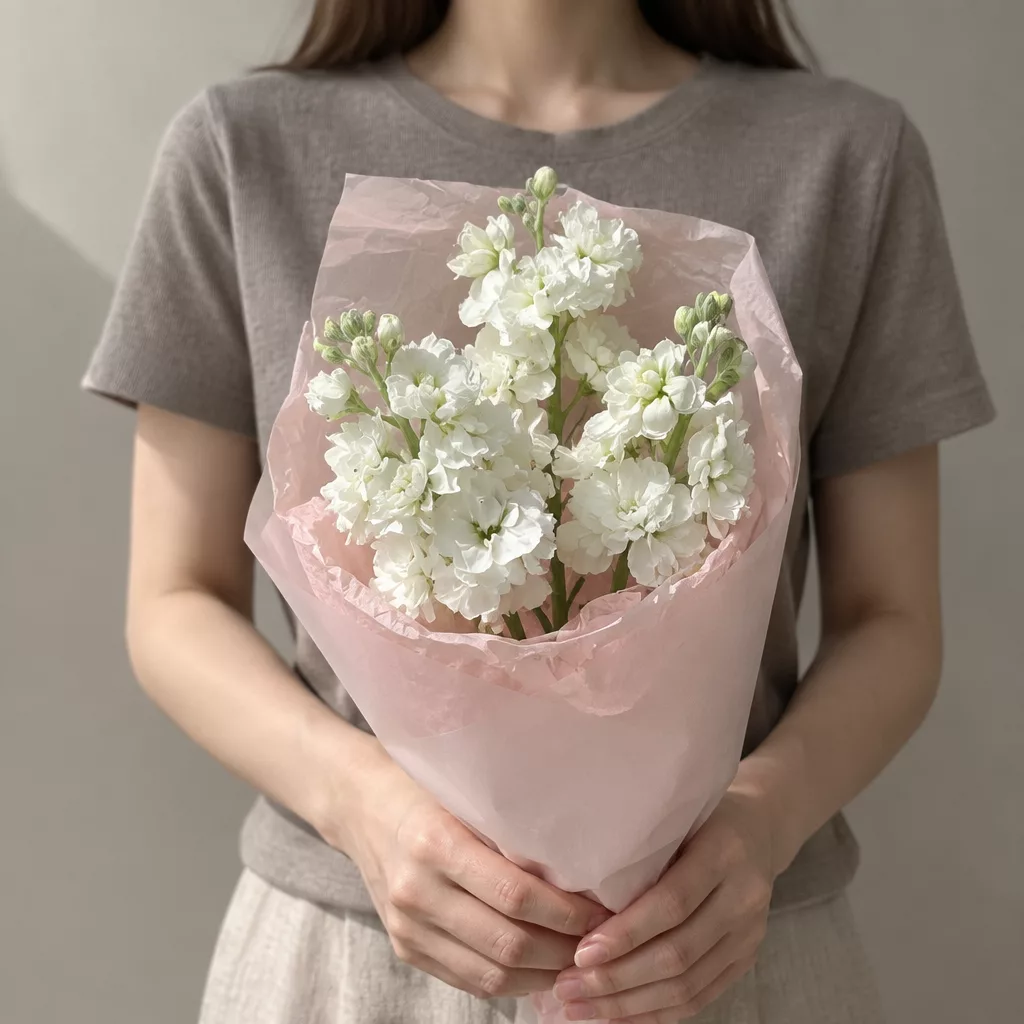
For classic bouquets, kraft paper with a coloured inner layer is a reliable choice — it photographs well, holds its shape and feels natural rather than synthetic. For more romantic arrangements, soft fabric-effect wrapping in blush or ivory tones adds a softness that matches the flowers inside. Monobouquets — a single variety in large quantity, like fifty tulips or twenty-five roses — are often presented with minimal wrapping so the flowers themselves are the visual statement.
Ribbon and bow finishing is standard on gift orders. If you are sending flowers as a corporate gift or a formal congratulations, a clean satin ribbon in a neutral tone looks professional. If the occasion is a birthday or a romantic surprise, a fuller bow in a colour that echoes the bouquet adds to the festive feeling.
A handwritten card is something recipients in Russia genuinely notice and keep. Even a short message — a name, a date, three words — makes the bouquet feel personal rather than transactional. When you order, take a moment to write something specific to the person rather than a generic phrase. The florist reads it before attaching the card, and it often shapes small decisions about how the bouquet is finished.
Care Instructions the Recipient Needs to Know
Most people who receive flowers do not know that the first ten minutes after a bouquet arrives are the most important for its vase life. The stems need to go into clean water quickly, and they need a fresh diagonal cut before they do. A diagonal cut increases the surface area through which the stem draws water, and it prevents the flat end from sitting flush against the bottom of the vase and blocking intake. A sharp knife is better than scissors, which can crush the stem tissue.
Water temperature matters more than most people realise. For most cut flowers — roses, chrysanthemums, alstroemerias, lisianthus — cool or room-temperature water works well. For tulips and other spring bulb flowers, cool water is preferable because it slows the opening process and extends the display period. For tropical varieties like anthuriums or heliconias, room temperature is better because cold water stresses them.
The vase location makes a significant difference in how long the flowers last. Direct sunlight, radiators and draughts from open windows all shorten vase life. A spot with bright indirect light and stable temperature is ideal. In Abaza's dry continental climate, indoor air can be quite dry in winter due to central heating, which pulls moisture from petals faster than in more humid climates. Misting the petals lightly with water every day or two helps.
Change the water every two days and re-cut the stems each time. Remove any leaves that sit below the waterline because submerged leaves rot quickly and contaminate the water. Following these steps, roses typically last seven to ten days, alstroemerias up to two weeks, and chrysanthemums can hold for two weeks or longer.
Making the Order Go Smoothly: Practical Details That Matter
A smooth delivery starts with a complete address. In Abaza, as in most Russian cities, the address should include the street name, building number, apartment or office number, and ideally the entrance number for residential blocks. If the recipient lives in a building with a door code or an intercom, including that in the order notes saves the courier from standing outside and calling — which can spoil a surprise.
If the delivery is a surprise, it helps to know whether the recipient will actually be home. Turboflora's courier will call ahead to confirm arrival, which is standard practice. If you want to preserve the surprise, you can note in the order that the recipient should not be told who sent the flowers — the courier will simply say a delivery has arrived. The card reveals the sender when the flowers are opened.
For corporate or office deliveries, specifying the company name and floor alongside the street address speeds things up considerably. Reception desks in larger buildings sometimes redirect deliveries, and a clear address with a contact name means the bouquet reaches the right person rather than sitting at a front desk.
If the recipient is not home when the courier arrives, the team will contact you to agree on next steps. Leaving flowers outside a door is not standard practice because of weather exposure and the risk of the bouquet being missed. Rescheduling for a confirmed time is almost always the better solution, and Turboflora will work with you to find one that keeps the flowers in good condition. Ordering with a delivery window in mind — when you know the person will be present — prevents this situation entirely.
Sending flowers to Abaza is straightforward when the order is placed with a clear address, a realistic time window and a sense of who the recipient is. The distance and the climate are factors the team accounts for at every stage, from which varieties are selected to how the bouquet is wrapped for the journey. What arrives at the door is a fresh, well-presented arrangement that reflects the thought behind it — and that is what makes the gesture worth making.
Frequently asked questions
Can I order flowers to Abaza for same-day delivery?
Yes, same-day delivery to Abaza is available when you place your order before noon local time. Orders placed in the early afternoon may still qualify depending on current demand and your specific address. For guaranteed same-day arrival, earlier is always better. If you are unsure, contact Turboflora directly before placing the order to confirm availability for your time slot.
Which flowers hold up best during delivery to Abaza in winter?
Dense-petalled roses such as Avalanche or Red Naomi, chrysanthemums and alstroemerias are the most reliable choices in cold weather. They tolerate low temperatures during transit without wilting or browning. Turboflora uses insulating packaging for winter deliveries, but choosing hardy varieties gives the bouquet the best chance of arriving in full condition regardless of how cold the day is.
What should I do if the recipient is not home when the flowers arrive?
The courier will contact you if the recipient cannot be reached. Leaving flowers unattended outside is not standard practice, especially in cold or hot weather. Turboflora will work with you to reschedule delivery for a time when the recipient is confirmed to be home. To avoid this entirely, try to order with a delivery window that matches when you know the person will be present.
How long will the flowers last after delivery to Abaza?
With proper care, roses last seven to ten days, alstroemerias up to two weeks, and chrysanthemums can hold for two weeks or more. The key steps are a fresh diagonal cut on arrival, clean cool water changed every two days, and a location away from direct sun, radiators and draughts. In Abaza's dry winter air, light misting of petals extends freshness noticeably.
Can I include a personalised message with the bouquet?
Yes, and it is strongly encouraged. A handwritten card is included with every gift order. When placing your order, write something specific to the person and the occasion rather than a generic phrase. The message is written by hand before the bouquet is dispatched, and recipients in Russia genuinely value a personal note — it makes the gesture feel considered rather than automatic.
Ready to send flowers?
Pick the city, choose the bouquet, and a local florist takes it from there.
Choose a city →