Flower Delivery Across Russia: Every City We Reach
Sending flowers to someone you love who lives in another city feels complicated until you understand how it actually works. Whether your mother is celebrating her birthday in Novosibirsk, your partner is waiting for you in Moscow, or a colleague just moved to Yekaterinburg, a bouquet can cross those distances and still arrive with petals fresh and stems strong. At Turboflora we have built our delivery network specifically so that the flowers leaving our Saint Petersburg studio reach the recipient looking exactly as they did when we wrapped them — and we want you to understand exactly how that happens, city by city.
Saint Petersburg: Our Home City and Fastest Delivery Window
Saint Petersburg is where every bouquet begins its life. Our studio is here, our coolers are here, and our florists are cutting stems and building arrangements right up until the moment a courier picks up the order. That closeness means we can promise delivery within one to two hours across the city, from Vasilievsky Island to Kupchino, from the historic centre to the newer residential districts in the north.
The city's climate matters more than people expect. Saint Petersburg is famously damp, and in winter temperatures regularly drop below minus fifteen Celsius. We wrap bouquets in insulated kraft paper and use thermal sleeves on particularly cold days so that tulips and ranunculus — varieties that bruise in the cold — arrive without blackened edges or collapsed heads. In summer the challenge reverses: roses and peonies can wilt in a warm car within twenty minutes, so couriers keep windows down and avoid leaving flowers in a parked vehicle.
For same-day orders placed before early afternoon, we can usually accommodate requests for specific varieties. If you want garden roses in blush tones or a mix of seasonal anemones with eucalyptus, the studio has time to source and prepare them. Later orders work best with arrangements we have already built that day, which are never less beautiful — just less customisable. The key advice for Saint Petersburg delivery is simple: order before noon if you have a strong vision, and trust our florists to make good decisions if you order in the evening.
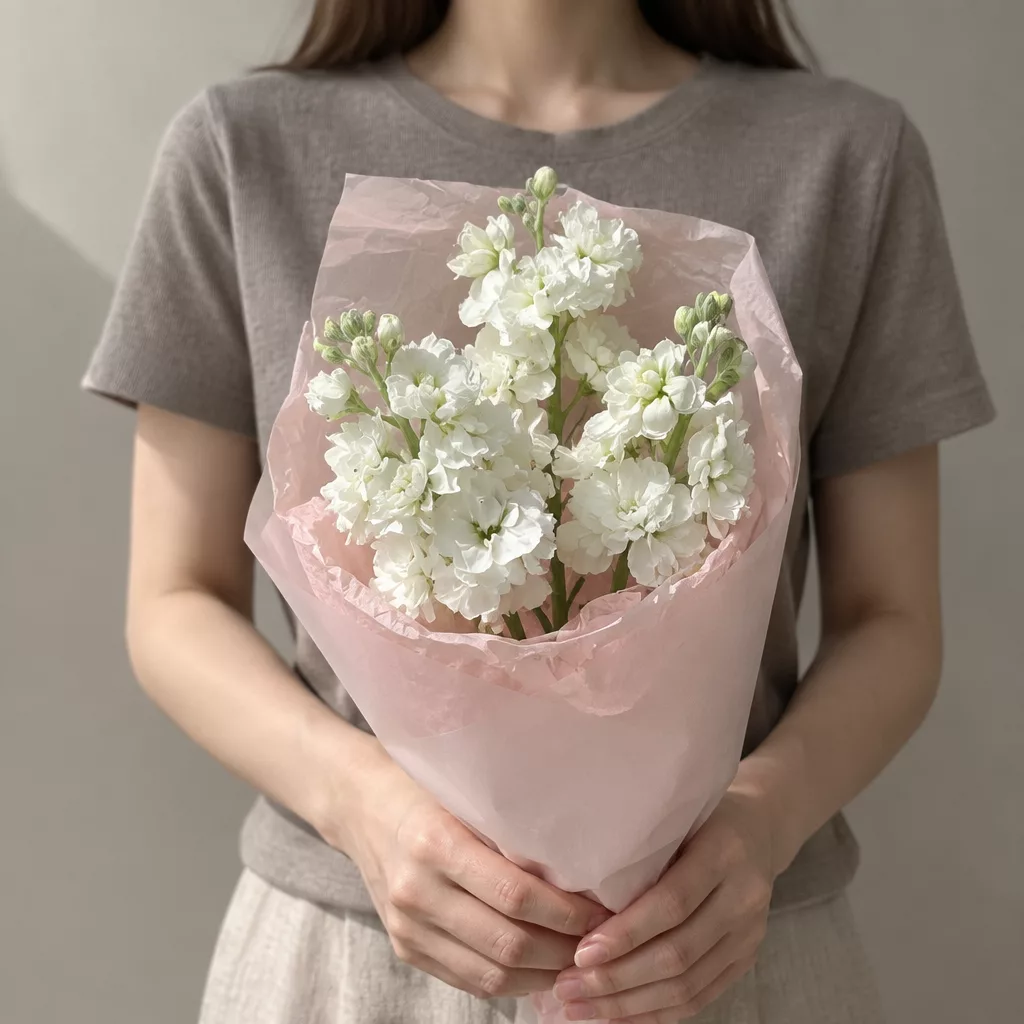
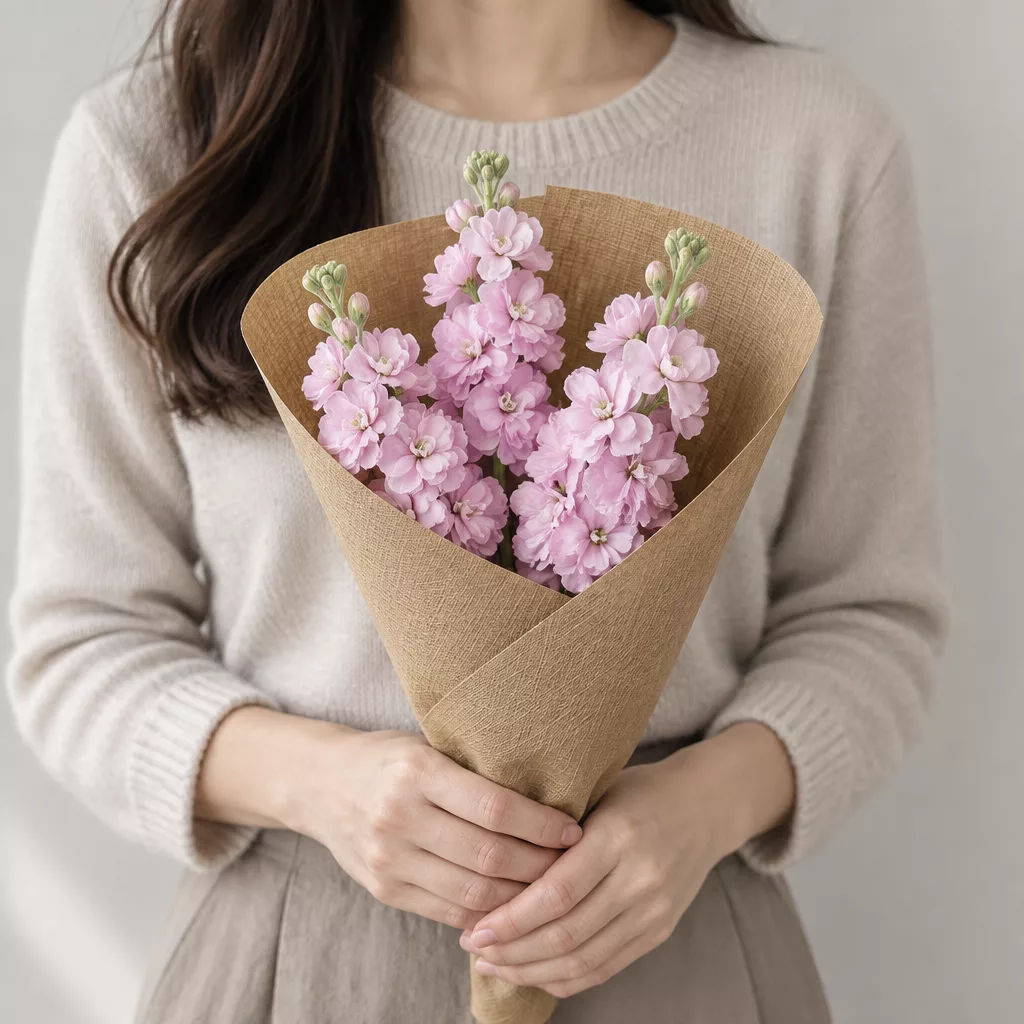
Bouquets we can deliver


Moscow: High Volume, Long Distance, Same Standards
Moscow is our most requested destination outside Saint Petersburg, and the distance — roughly seven hundred kilometres — shapes everything about how we handle those orders. Flowers travelling to Moscow leave our studio in purpose-built cool boxes that maintain a temperature between four and eight degrees Celsius, the range that keeps most cut flowers in a resting state without freezing the cells.
Roses, spray chrysanthemums, and lisianthus travel particularly well over this distance because their stems are robust and their petals do not bruise easily against packaging. Delicate varieties like sweet peas or open garden peonies are more vulnerable, so we condition them carefully before packing — meaning we cut the stems at an angle, hydrate them for several hours, and only box them when they are fully turgid. An under-hydrated peony will not recover from a long journey the way a well-conditioned one will.
Delivery timing in Moscow follows a slightly wider window than in Saint Petersburg, and we ask customers to plan around that. If the occasion is a birthday dinner at seven in the evening, ordering by early morning gives us the best chance of a relaxed, on-time delivery rather than a rushed one. Moscow recipients sometimes expect flowers to be left with a building concierge, which is common practice in Russian apartment blocks — we handle this routinely and always photograph the handover. One thing we encourage: include a short note with the bouquet, because a handwritten card in Russia is considered more personal than a digital message, even among younger recipients.
Yekaterinburg, Novosibirsk, and the Wider Siberian Reach
Reaching cities east of the Ural mountains is a different logistical reality, and we think honesty about that builds more trust than vague promises. Yekaterinburg, Novosibirsk, Krasnoyarsk, and other major Siberian cities are within our network, but the distances involved — Novosibirsk sits nearly three thousand kilometres from Saint Petersburg — mean that delivery windows are longer and flower selection is guided by what travels reliably.
For these destinations we focus on varieties with naturally long vase lives and firm structures. Alstroemeria is an excellent example: it can last ten to fourteen days in a vase, its stems are flexible rather than brittle, and it tolerates temperature fluctuation better than most flowers. Carnations, often underestimated in Western Europe, are genuinely beloved in Russia and travel beautifully. Solidago, statice, and other filler flowers add texture to a bouquet without adding fragility.
Siberian winters are extreme — Novosibirsk regularly sees minus twenty-five Celsius in January — and we take that seriously at the packaging stage. Thermal insulation alone is not enough; we also time dispatch so that flowers are not sitting in transit during the coldest overnight hours. Summer in these cities is warmer than many outsiders expect, with Yekaterinburg reaching thirty degrees Celsius in July, which creates the opposite problem. We adjust conditioning and packaging seasonally rather than using a single year-round approach. If you are sending to a Siberian city for the first time, contact us before ordering so we can advise on the best variety choices for the current season and travel conditions.
Southern Cities: Krasnodar, Rostov-on-Don, and the Black Sea Region
The south of Russia has a very different climate from Saint Petersburg, and that difference works both for and against flower delivery. Cities like Krasnodar, Rostov-on-Don, and Sochi sit in a region where summers are long, hot, and humid. Temperatures in July and August regularly exceed thirty-five degrees Celsius in Krasnodar, which means flowers need to move from cool storage to the recipient's hands as quickly as possible.
For summer deliveries to southern cities, we prioritise sunflowers, tropical varieties like strelitzia, and sturdy roses with tight bud forms rather than open blooms. An open rose that looks magnificent in our Saint Petersburg studio can shed petals within an hour in Krasnodar summer heat if it is not handled correctly. We send southern summer bouquets in a more closed bud stage than we would for a local Saint Petersburg delivery, knowing that the warmth of the destination will open them beautifully within a day.
Winter in the south is mild by Russian standards — Sochi rarely drops below five degrees Celsius — which actually makes cold-season delivery easier than in Siberia. Flowers like tulips and hyacinths, which are popular in Russia from late winter onward, arrive in excellent condition because the ambient temperature at the destination is not punishing. Rostov-on-Don has a strong flower culture, particularly around International Women's Day on the eighth of March, when demand across the whole country surges. If you are planning a delivery to a southern city for that date, we strongly recommend ordering several days in advance rather than the day before.
The Volga Region: Kazan, Samara, Nizhny Novgorod
The Volga cities occupy a middle ground geographically and climatically between Saint Petersburg and the extremes of Siberia or the south. Kazan, Samara, and Nizhny Novgorod are all significant cities with strong traditions around gifting flowers, and they are well within our delivery network.
Kazan is worth understanding as a cultural destination. It is the capital of Tatarstan, a republic with its own distinct identity within Russia, and celebrations there often blend Russian customs with Tatar ones. Flowers are given at the same occasions — birthdays, anniversaries, graduations, and major public holidays — but the preference in Kazan tends toward generous, full bouquets rather than minimalist arrangements. If you are sending to Kazan, consider asking for a bouquet that feels abundant: mixed roses with greenery, or chrysanthemums layered with seasonal branches.
Samara sits on the Volga river and has a warm-weather season that extends well into September, which is longer than Saint Petersburg's. This means late-summer and early-autumn deliveries to Samara require the same heat precautions as southern cities, while winter deliveries shift to the cold-protection protocols we use for Siberia. Nizhny Novgorod is closer to Moscow than to Saint Petersburg and benefits from the same relatively manageable transit conditions as the capital region.
For all three cities, the varieties that perform best in transit are spray roses, which are smaller and more resilient than large-headed roses, and lisianthus, which has a ruffled appearance similar to a peony but a much tougher constitution. Pairing these with textural greenery like ruscus or pittosporum creates a bouquet that looks intentional and arrives intact.
How to Order for a City You Have Never Sent Flowers To
Many of our customers are sending flowers to a city they have never visited, for a recipient whose home they have never seen. That is completely normal, and it is one of the most rewarding parts of what we do — helping someone express care across a distance they cannot cross themselves.
The first practical step is knowing the full delivery address including the apartment number and entry code if the building has a coded door. Russian apartment buildings almost always do, and a courier without the code will be stuck outside. If you do not have the entry code, let us know and we will ask the recipient directly — this is standard practice and does not spoil the surprise, because we frame it as a delivery confirmation message.
The second step is thinking about the occasion rather than the variety. Tell us who the person is and what the moment means. A grandmother turning eighty in Kazan deserves something different from a young colleague celebrating a promotion in Novosibirsk. When you give us that context, we choose varieties that suit the person's likely taste and the season at the destination, not just what happens to be available.
Finally, consider the vase life at the destination. If the recipient travels frequently or lives alone and may not be home for two days after receiving the flowers, we will choose varieties that hold well out of water — alstroemeria and carnations are forgiving in this way, while garden roses and sweet peas are not. A bouquet that lasts a week and is enjoyed fully is always better than one that looked spectacular for a single afternoon.
Sending flowers across Russia is not simply a logistical exercise — it is the act of making someone feel seen and remembered across whatever distance separates you. Every city in our network has its own climate, its own pace, and its own culture around receiving flowers, and we take all of that into account before a single stem is cut. From the damp winters of Saint Petersburg to the blazing summers of Krasnodar, from the wide streets of Novosibirsk to the Volga riverbanks of Samara, we have learned what each destination demands and how to meet it. The bouquet that arrives at your recipient's door should feel like it was made for them in that city on that day — because in the most important sense, it was.
Frequently asked questions
Can I order flowers for same-day delivery to a city outside Saint Petersburg?
Yes, same-day delivery is available to many cities in our network, including Moscow and major regional centres. The cut-off time depends on the destination — cities further east require earlier orders to allow for transit. We recommend placing your order in the morning to give us the best conditions for a timely, well-conditioned delivery.
Which flowers travel best for long-distance delivery across Russia?
Alstroemeria, spray roses, carnations, lisianthus, and chrysanthemums are all reliable choices for long journeys. They have firm stems, resilient petals, and long vase lives. Delicate varieties like sweet peas or fully open peonies are more vulnerable to transit stress, so we condition them carefully and sometimes recommend alternatives depending on the destination and season.
What happens if the recipient is not home when the flowers arrive?
In most Russian apartment buildings, flowers can be left with the building concierge or a neighbour, which is a widely accepted practice. We always photograph the handover point and send confirmation to the sender. If no handover is possible, we contact you immediately to arrange a second delivery attempt or a revised time window.
Does the cold Russian winter damage flowers during delivery?
We take winter conditions seriously at every stage. Bouquets are wrapped in insulated kraft paper and thermal sleeves before leaving our studio, and cool boxes maintain a safe temperature range during transit. Varieties known to bruise in the cold, such as tulips and ranunculus, receive extra protection. Deliveries are also timed to avoid the coldest overnight hours where possible.
Are there occasions in Russia when flower delivery demand is especially high?
International Women's Day on the eighth of March is the single busiest flower occasion in Russia — demand is extraordinarily high nationwide. Other peak dates include Valentine's Day, the first of September when children return to school traditionally bringing flowers for teachers, and major public holidays. For any of these dates, ordering several days ahead is strongly advisable.
Ready to send flowers?
Pick the city, choose the bouquet, and a local florist takes it from there.
Choose a city →