Sending Flowers to Almetevsk? Here Is What to Expect
Almetevsk sits at the heart of Tatarstan, a city that takes celebrations seriously — birthdays marked with big tables, anniversaries remembered with real care, and gestures that are meant to land beautifully. When you are ordering flowers from outside the city, or simply want something better than what a corner kiosk can offer, the question is always the same: will they arrive fresh, on time, and looking the way they did in the photo? This article walks you through everything that shapes a flower delivery in Almetevsk — from how the city is covered and what timing actually means in practice, to which flowers hold up best on a journey and how the recipient can keep them alive for as long as possible.
Which Parts of Almetevsk We Deliver To
Almetevsk is a compact but layered city. The central districts around Lenina Street and the main squares are the easiest to reach, and deliveries there tend to move quickly because traffic is predictable and addresses are straightforward. Residential areas further out — including the newer microdistricts built along the city's edges — are fully covered, though the courier route may add fifteen to twenty minutes depending on the time of day.
Industrial zones and addresses near the oil company campuses sometimes require a little more detail in the address field. If you are sending to a workplace rather than a home, it helps to include the building entrance number or a note about reception hours. A recipient who steps out for lunch at the wrong moment can delay the whole experience, and flowers waiting in a warm lobby for an hour will show it.
Villages and settlements in the immediate Almetevsk municipal district are also reachable, though delivery windows for those addresses are wider — plan for a two-to-three hour range rather than a tight one-hour slot. When in doubt, add the recipient's phone number to the order so the courier can call ahead. That one small step prevents most failed delivery attempts and keeps the bouquet in the best possible condition when it finally arrives.
Bouquets we can deliver

Timing: What One to Two Hours Actually Means
The one-to-two hour window is not a marketing phrase — it is the working standard for central Almetevsk addresses when the order is placed during business hours. What it means in practice is that the florist begins assembling the bouquet as soon as the order is confirmed, not when a batch of orders is ready. The arrangement is made fresh for that specific delivery, which is why the timing holds up even for delicate flowers like garden roses or ranunculus.
Peak periods shift the picture slightly. On the eighth of March, the fourteenth of February, and during the main school graduation season in late May and June, order volumes rise sharply across all of Tatarstan. During those windows, it is wise to place the order two to three hours ahead of the moment you want the flowers to arrive, or even the evening before for a morning delivery. This is not a warning — it is just how fresh flower logistics work everywhere in Russia during high-demand days.
Evening deliveries, particularly those requested after seven in the evening, are possible but depend on the recipient being reachable. Flowers left outside a door in Almetevsk winters — where temperatures can drop to minus fifteen or lower — will suffer within minutes. Roses, tulips, and hydrangeas are especially vulnerable to freezing. Always confirm that someone will be home, or ask for the delivery to be handed to a neighbor or building concierge. A little coordination saves the entire gesture.
Choosing the Right Bouquet for the Occasion
The occasion shapes everything — not just the flower type but the color palette, the size, and whether greenery or wrapping plays a supporting role. For a birthday, the recipient's personality matters more than any rule. Someone who decorates their home in neutral tones will appreciate a bouquet of white and blush peonies or soft-toned spray roses rather than a saturated red arrangement. Someone who loves drama will remember a large-headed sunflower and orange gerbera mix for months.
For a romantic gesture, red roses remain the clearest signal in Russian culture, but they are far from the only option. A bouquet of deep burgundy ranunculus mixed with eucalyptus reads as sophisticated and intentional — it says the sender thought about it. Garden roses in peach or coral tones feel warm without being loud, which works well for early relationships or gestures that do not need to announce themselves.
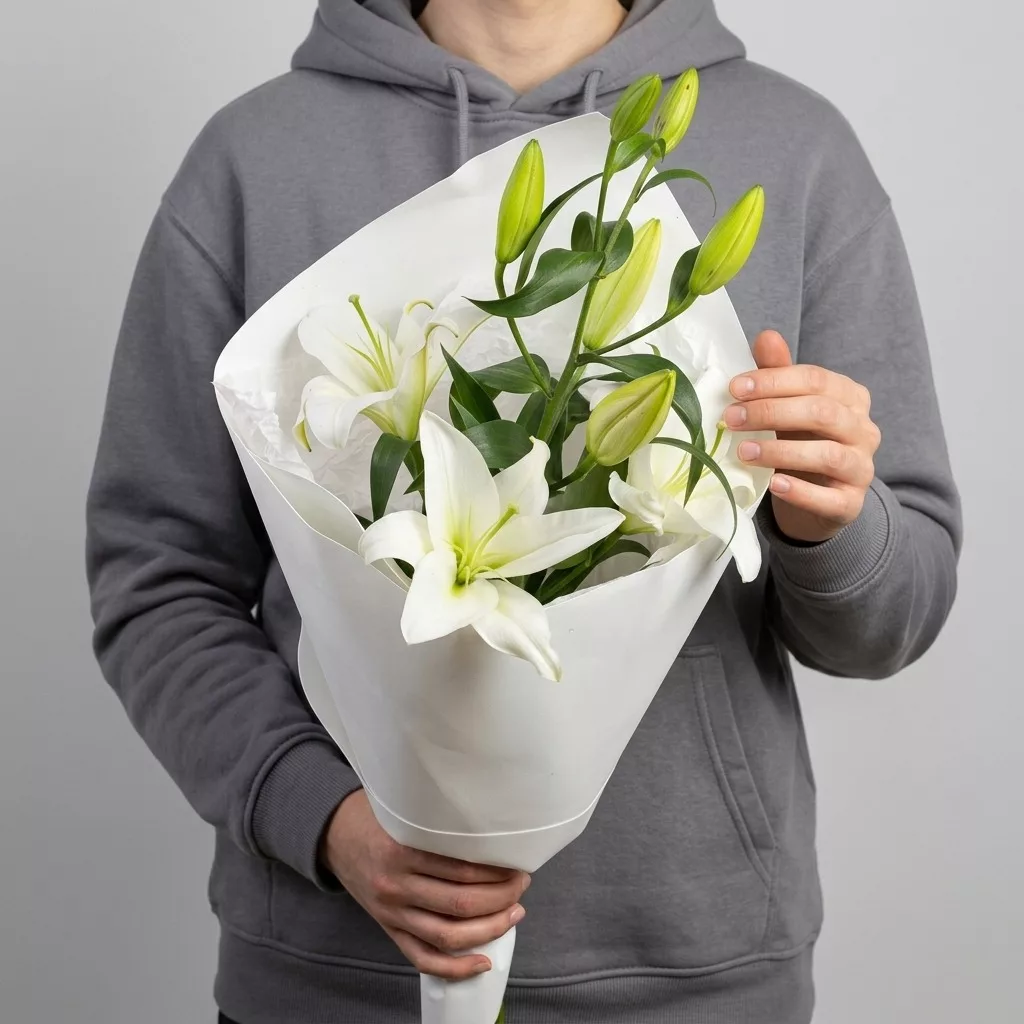
For professional occasions — a colleague's promotion, a teacher's day, a business thank-you — white and cream flowers with structured greenery tend to land well across different tastes. Chrysanthemums, lisianthus, and alstroemeria are practical choices here: they look composed, last well in an office environment, and carry no unintended romantic meaning. Avoid very fragrant flowers like lilies in office settings, since strong scents in a shared workspace can be unwelcome even when the gesture is kind.
Bouquets by Budget: Small, Medium, and Statement
A smaller budget does not mean a small impression — it means making deliberate choices. A single-variety bouquet of seasonal tulips in spring, or a tight cluster of alstroemeria in summer, can look more considered than a mixed arrangement that tries to do too much. The key is proportion: five or seven stems wrapped simply with quality paper and a ribbon will always look better than fifteen stems crammed into a cellophane cone.
At a mid-range budget, combination bouquets come into their own. Roses paired with waxflower, or spray roses layered with eucalyptus and a few stems of statice, give the florist room to create something with texture and depth. This is the range where presentation — the shape of the bouquet, the way stems are angled, the choice of wrapping color — makes the biggest difference. It is worth specifying a color direction when you order rather than leaving it entirely open.
For a statement arrangement, think about what the recipient will do with the flowers when they arrive. A very large bouquet is impressive for thirty seconds and then becomes a problem if the recipient does not own a vase tall enough to hold it. At higher budgets, consider asking for a composition that can be split between two vases, or an arrangement that includes a wide-mouthed vessel as part of the gift. Peonies, large-headed garden roses, and hydrangeas are the most visually generous flowers at this level and justify the investment because they genuinely fill a room.
What Almetevsk's Climate Does to Fresh Flowers
Almetevsk has a continental climate — cold winters and warm summers, with spring and autumn that can swing unpredictably. This matters for flowers more than most people realize, because temperature stress during transit is one of the main reasons a bouquet looks tired by the next morning even when it seemed fine on arrival.
In winter, from November through March, the biggest risk is freezing. Rose petals turn translucent and soft when they freeze, and that damage is irreversible. Tulips collapse. Even hardy chrysanthemums will show browning at the petal edges if left in the cold for more than a few minutes. Couriers in Almetevsk during these months wrap bouquets in insulating sleeves and move quickly, but the recipient's role matters too — unwrap the flowers promptly and do not leave them near a cold window or exterior door.
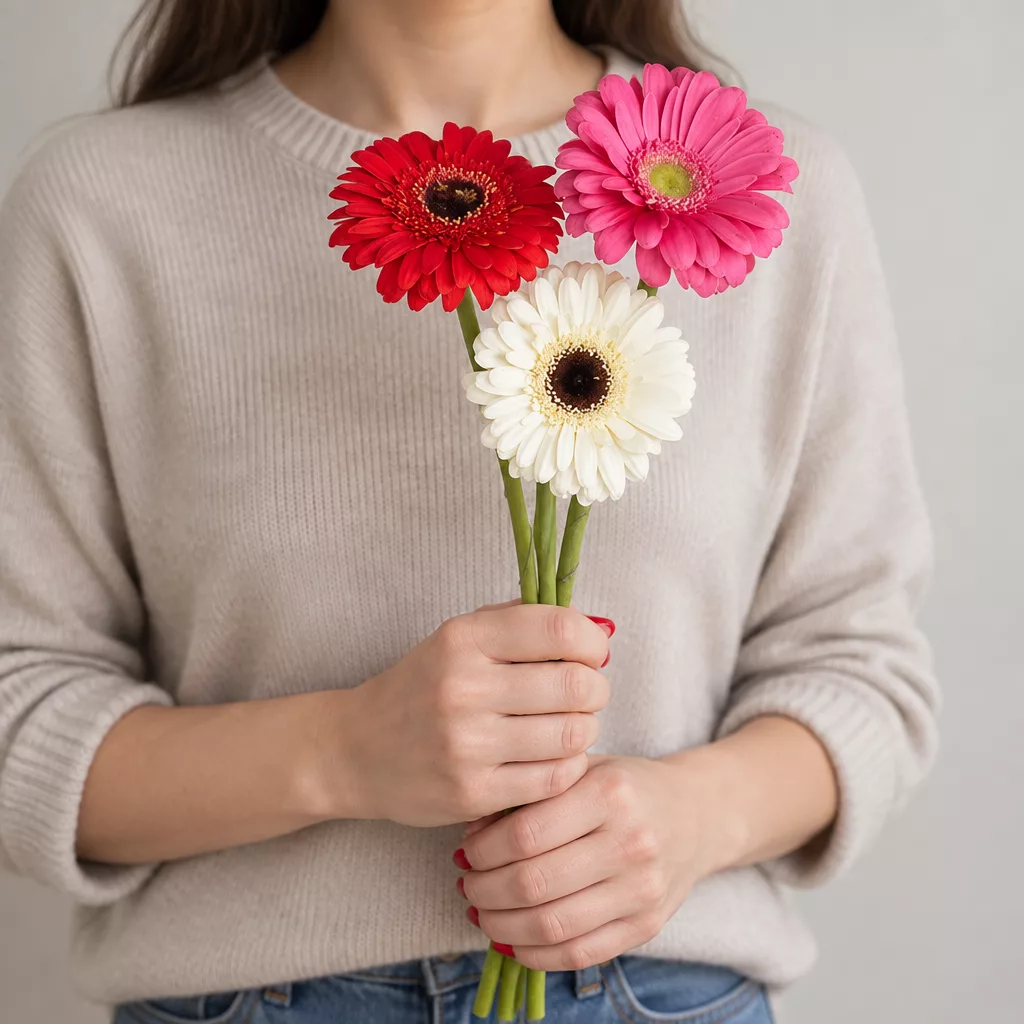
In summer, the opposite problem applies. July and August in Almetevsk can reach thirty degrees Celsius, and a bouquet sitting in a warm car for twenty minutes will begin to wilt. Flowers with high water content — hydrangeas, gerberas, sunflowers — are the most vulnerable. For summer deliveries, it helps to have water ready the moment the flowers arrive: trim the stems at an angle under running water and place them in a clean vase immediately. This single step, done within the first five minutes, extends vase life by two to three days across almost every variety.
Care Instructions the Recipient Will Actually Use
Most people receive flowers, put them in a vase, and then wonder two days later why they are already drooping. The care steps that make a real difference are simple, but they are rarely explained at the moment of delivery. Including a small care card with the bouquet — or passing these tips to the recipient — is one of the most practical things a sender can do.
Start with the water temperature. Lukewarm water, not cold, is better for most cut flowers because it moves up the stem more easily. The exception is tulips and other bulb flowers, which prefer cold water and a cool room. Fill the vase about one third full — more water is not better, because submerged leaves rot quickly and contaminate the water, which shortens vase life for the whole bouquet.
Change the water every two days and re-trim the stems each time, cutting about a centimeter off at an angle. This keeps the stem opening clear and maximizes water uptake. Keep the bouquet away from direct sunlight, heating radiators, and fruit bowls — ethylene gas released by ripening fruit accelerates petal drop in roses and carnations noticeably. A cool room at night, ideally below eighteen degrees Celsius, can add two or three days to the life of almost any arrangement. Roses and lisianthus respond especially well to being moved to a cooler space overnight. These are not complicated steps, but they are the difference between a bouquet that lasts four days and one that lasts ten.
Making the Order Go Smoothly From Start to Finish
The most common friction point in flower delivery is not the flowers — it is the address. Almetevsk, like many Russian cities, has streets where numbering follows a logic that is not always obvious to someone outside the city. If you are ordering from another city or from abroad, double-check the house number, building section, and apartment number with the recipient before placing the order. A misplaced digit can send a courier to the wrong end of a street.
The message card is worth taking seriously. In Russian culture, a written note with flowers carries real weight — it is kept, photographed, and sometimes read more than once. Keep the message warm and specific rather than generic. Even one sentence that references a shared memory or a particular reason for the gesture will make the card something the recipient saves. Florists can print the message in Russian if needed, and it is worth asking for this if your recipient reads Russian more comfortably than English.
Finally, think about the moment of delivery from the recipient's perspective. Will they be at home or at work? Is it a surprise, or do they know something is coming? A surprise delivery to a workplace can be a lovely public moment, but only if the recipient is actually at their desk and not in a meeting. A short message to the recipient's colleague or a quiet heads-up to a family member at the same address can make the difference between a dramatic, well-timed reveal and a bouquet that sits at reception for two hours. Small logistics, handled in advance, let the flowers do what they are supposed to do — arrive at exactly the right moment.
Ordering flowers for someone in Almetevsk is a straightforward act with a lot of small decisions inside it — the variety, the timing, the message, the moment. When those decisions are made thoughtfully, even a modest bouquet lands as something genuinely felt. Turboflora delivers fresh arrangements across Almetevsk within one to two hours, assembled to order and handled carefully through whatever the Tatarstan weather happens to be doing that day. The flowers you choose reflect how well you know the person receiving them — and getting them there in perfect condition is the part we take care of.
Frequently asked questions
Can I order flowers for same-day delivery in Almetevsk?
Yes. Orders placed during working hours are typically delivered within one to two hours to central Almetevsk addresses. For outlying districts or settlements in the wider municipal area, allow a little more time. On major flower holidays like March 8th, placing your order two to three hours in advance gives the best chance of hitting a specific delivery window.
What happens to flowers delivered in winter when it is very cold outside?
Bouquets are wrapped in insulating packaging for cold-weather deliveries, but the recipient should unwrap them promptly and bring them indoors immediately. Roses, tulips, and hydrangeas are most sensitive to freezing. Even a few minutes in minus-fifteen temperatures can cause petal damage that is not reversible. Trim stems and place in lukewarm water as soon as the flowers are inside.
Which flowers last the longest after delivery?
Chrysanthemums, alstroemeria, and carnations consistently last the longest — often ten to fourteen days with proper care. Lisianthus and spray roses also have good vase life. Large-headed garden roses and peonies are shorter-lived but visually impressive. Whatever the variety, changing the water every two days and re-trimming stems makes the biggest difference to how long any bouquet lasts.
Can I include a message card in Russian even if I do not speak Russian?
Yes. When placing your order, write your message in English and request that it be printed in Russian. The florist will handle the translation for a simple, warm note. If you have a specific phrase or wording that matters to you, it is worth translating it yourself first using a reliable tool so the meaning stays exactly as you intended.
Is it possible to deliver flowers to a workplace address in Almetevsk?
Workplace deliveries are common and work well when the recipient is at their desk and the address includes enough detail — building name, floor, or reception instructions. It helps to let a colleague know the delivery is coming so the bouquet does not sit unattended. Avoid very fragrant flowers like oriental lilies for office deliveries, as strong scents in a shared space can be uncomfortable for others.
Ready to send flowers?
Pick the city, choose the bouquet, and a local florist takes it from there.
Choose a city →