Sending Flowers to Berezniki? Here Is What to Expect
Berezniki sits about 170 kilometres north of Perm, and the Ural climate there is not gentle — winters are long, summers are short, and a bouquet that travels without proper care will show it the moment the recipient opens the door. Whether you are marking a birthday, a graduation, or simply saying something kind to someone far away, knowing what the delivery actually involves helps you choose better and feel confident the flowers will arrive the way you imagined them.
Which Parts of Berezniki We Reach and How the Route Works
Berezniki is a linear city stretched along the Kama River, and its districts sit at real distances from one another. The central area around Lenina Avenue and the older Soviet-era neighbourhoods near the chemical plant are straightforward to reach. The residential districts further north, including Usolye-Solikamsk Road corridors and newer housing blocks on the city's edge, add travel time but remain within our delivery zone.
We plan each route from our nearest preparation point, so the courier does not simply follow a straight line — the road network in Berezniki has limited crossings, and we account for that from the moment you place the order. If you are sending to a private house rather than an apartment building, adding the gate code or any access detail in the comment field genuinely speeds things up. Couriers in Berezniki navigate a mix of wide Soviet boulevards and narrower residential lanes, and a precise address with a landmark reference — the school, the supermarket, the park — helps more than a postcode alone.
For deliveries to workplaces, we recommend noting the reception desk or security post procedure, since many industrial and administrative buildings in the city have entry protocols. A quick note in the order saves a call and keeps the surprise intact. We cover the full city boundary, so do not hesitate to order for an address that feels remote — if it is within Berezniki, we will reach it.
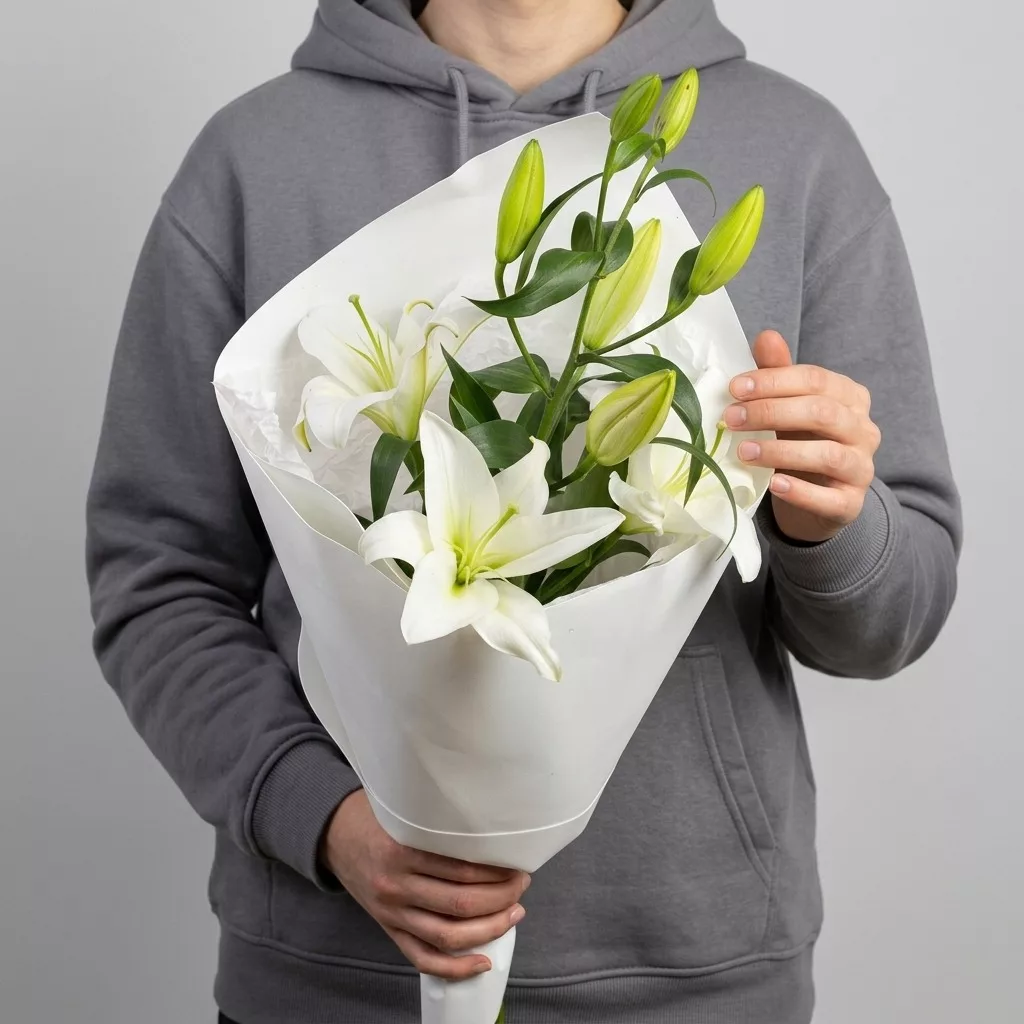
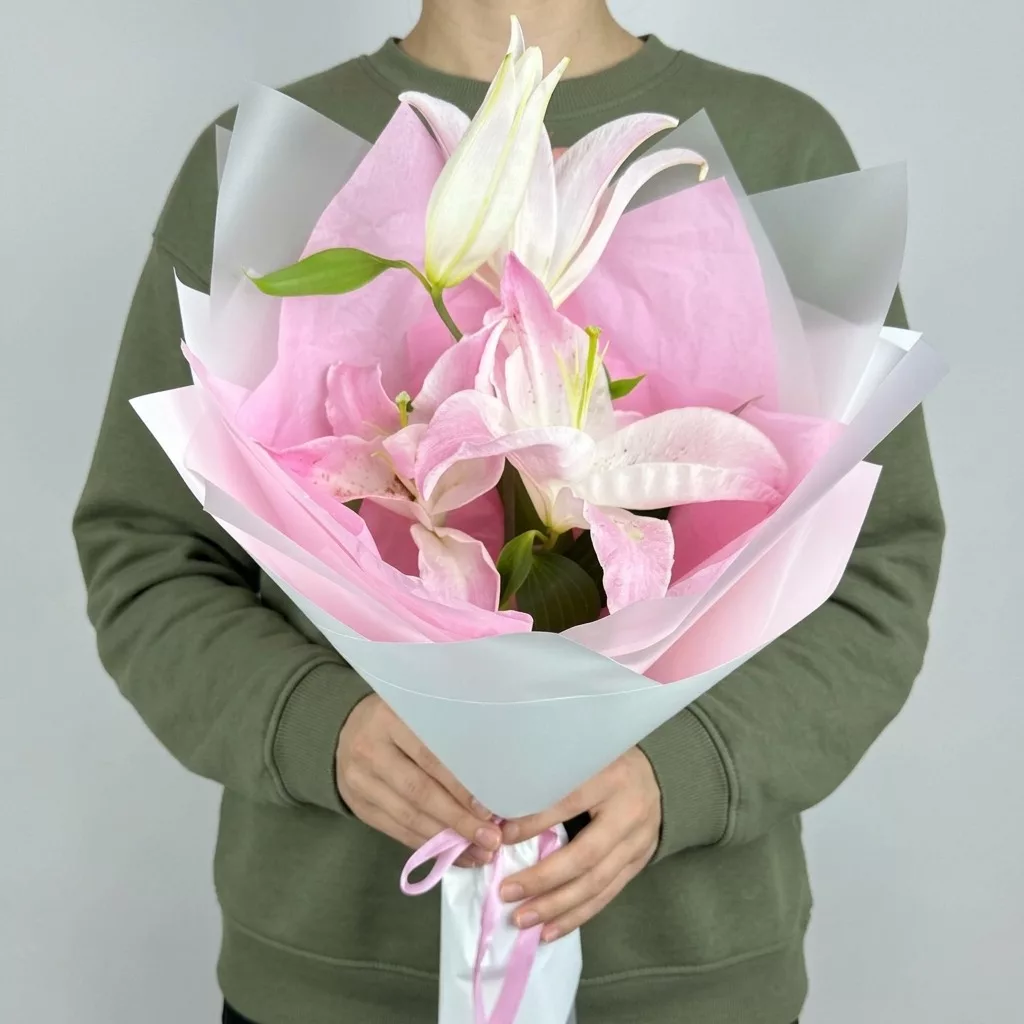
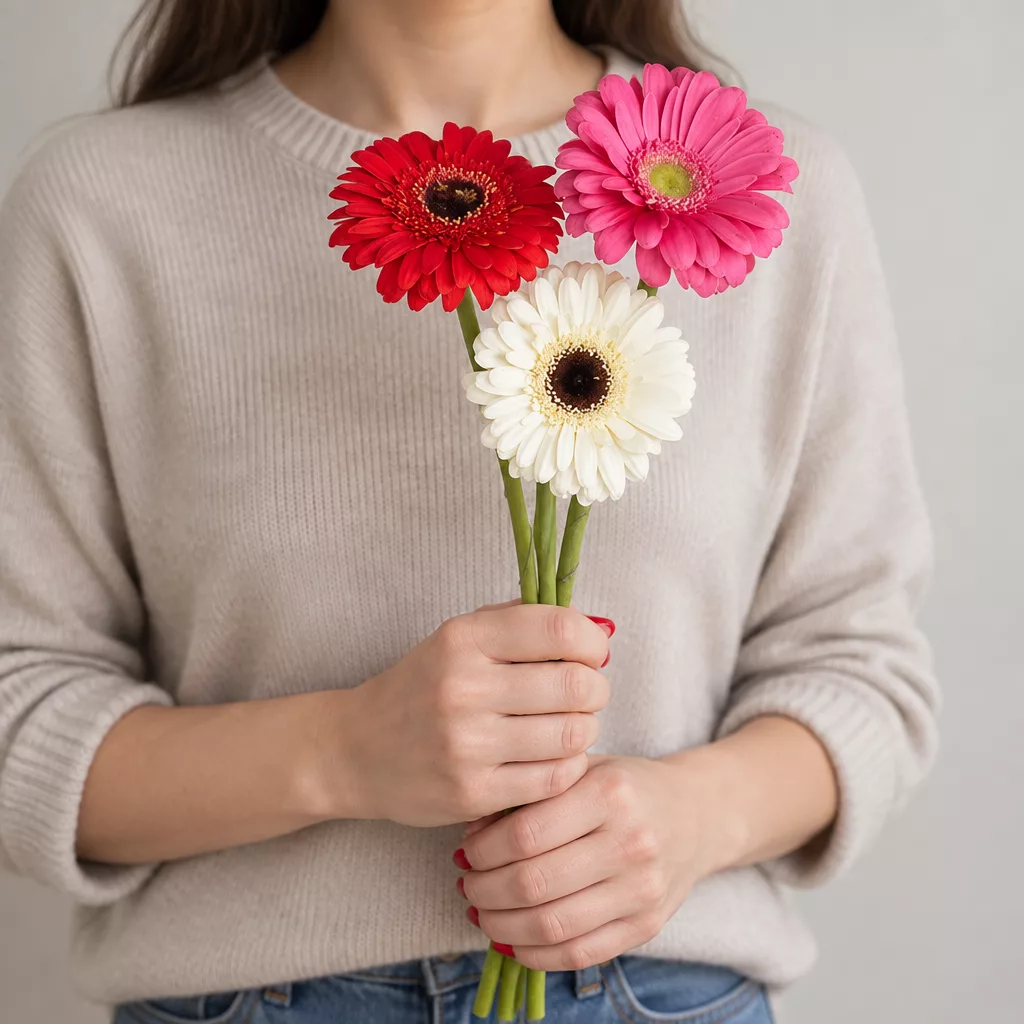
Bouquets we can deliver

Timing Your Order: Windows, Cut-Off Times and Same-Day Reality
Our standard promise is delivery within one to two hours of order confirmation, and in Berezniki that window holds for most central and mid-city addresses during regular hours. For addresses on the city's outer edges, two hours is the realistic expectation rather than the optimistic one, and it is worth building that into your plan if the occasion has a fixed moment — a meeting that ends at a certain time, a surprise at the office before lunch.
Same-day delivery is available when the order is placed before our cut-off time, which varies slightly by season. In winter, when daylight is short and road conditions can slow everything, earlier is always better. Placing an order by early afternoon gives us the flexibility to prepare a fresh arrangement and route it properly rather than rushing a composition that deserves care.
If you are planning for a specific time — say, the moment someone arrives home from a trip — use the scheduled delivery option and name the window. We treat scheduled orders with the same priority as urgent ones; the difference is that we can prepare the bouquet at the optimal moment rather than holding it assembled for hours. Flowers that sit assembled too long before delivery lose their freshness at the stem ends, which is exactly the kind of detail that separates a thoughtful florist from a logistics operation. Tell us the time, and we will work backwards from it.
Choosing Flowers That Survive the Ural Climate on the Way to the Door
The Perm Krai climate means Berezniki sees hard frosts from November through March, and genuine warmth only from June to August. A flower that is delicate in transit — garden roses with thin petals, open peonies in full bloom, delicate sweet peas — needs extra protection in cold months. We wrap cold-weather deliveries in insulating kraft and thermal sleeves, but the right variety choice matters more than packaging alone.
For winter and early spring deliveries, spray roses, alstroemeria, chrysanthemums and eustoma are reliable. They hold their form in cold air, recover quickly from brief temperature drops, and still look full and generous in the arrangement. Tulips are a special case: they continue to grow after cutting, which means a bouquet that looks compact at delivery will open beautifully in a warm room within a day. In February, when tulips are everywhere for the Russian holiday on the 8th of March — which is celebrated enthusiastically across the Urals — they are both practical and meaningful.
Summer in Berezniki is warm enough for sunflowers, lisianthus, and hydrangeas to travel well. The risk shifts in summer: heat rather than cold is the enemy, and a bouquet left in a warm car for even twenty minutes will wilt visibly. We time summer deliveries to avoid the hottest part of the day when possible and use water tubes on stem ends for arrangements that include thirsty varieties like hydrangeas. Knowing the season you are ordering in helps us give you the best recommendation without you having to ask.
Reading the Occasion: What to Send and to Whom
In Russian culture, flowers carry specific weight depending on the occasion and the relationship. Odd numbers of stems are traditional for living recipients — this is not superstition so much as a deeply ingrained social code, and recipients notice. A bouquet of eleven roses reads as intentional and generous; ten reads as slightly off to anyone raised in the tradition. If you are unfamiliar with this, simply let us know the number you have in mind and we will advise.
For a birthday, the recipient's personality matters more than any rule. A bold woman who loves drama will appreciate a large monobouquet of garden roses or a vivid mix with tropical accents like bird of paradise. A colleague you know less well is better served by something elegant and neutral — white or cream eustoma, soft alstroemeria, a clean and composed arrangement that says warmth without overstepping.
For a romantic occasion, red roses remain the clearest signal, but a mix of burgundy and blush roses with eucalyptus reads as more considered and contemporary. For a new baby — a common reason to send flowers to Berezniki from a distance — soft pastels work well: pale pink ranunculus, white spray roses, and a ribbon in the appropriate colour. For a professional achievement, something structured and lasting is appropriate: a mixed arrangement with solidago, chrysanthemums, and greenery that will hold its shape on a desk for a week. Reading the person and the moment is exactly what a florist does — share what you know about them and let us translate it into stems.
Budget Ranges and What Each One Gets You in Practice
Flower budgets work differently from most purchases because the same spend can produce very different results depending on variety choice and composition style. A modest budget handled well produces something genuinely beautiful; a larger budget wasted on poor combinations produces something forgettable. The goal is always to maximise the impact of what you have.
At the entry level, a single-variety bouquet — five or seven tulips, a tight cluster of spray roses, or a simple alstroemeria arrangement — is honest and cheerful. It does not pretend to be something it is not, and recipients appreciate clarity. Presentation matters enormously here: clean wrapping, a coordinated ribbon, and a handwritten card elevate a simple bouquet into something that feels considered.
A mid-range spend opens up mixed compositions. This is where you can combine a focal flower like a garden rose or a peony with supporting varieties like waxflower, eucalyptus, or ruscus, and the result has depth and texture. The bouquet looks abundant without being excessive, and it photographs well — which matters, since the recipient will almost certainly share it.
At the higher end, you are paying for volume, premium varieties, and the kind of composition that takes genuine time to build. Large-headed garden roses, ranunculus, lisianthus in multiple tones, and structured greenery like pittosporum or monstera leaves create something that commands a room. These arrangements are appropriate for significant milestones — a major anniversary, a significant birthday, a celebration that deserves a centrepiece rather than a gesture. Whatever your range, tell us the occasion and we will make the most of it.
Care Instructions to Pass Along with the Bouquet
A florist's job does not end at the door. The way a bouquet is received and handled in the first hour determines how long it will look beautiful, and it is worth including simple care guidance with every order — we print it on the care card that accompanies each delivery.
The first step is always a fresh diagonal cut on every stem, made with a sharp knife rather than scissors. Scissors crush the stem's water channels; a clean diagonal cut maximises the surface area for drinking. The stems should go immediately into a clean vase with fresh, cool water. Warm water encourages bacteria; cool water slows it. A small amount of the flower food sachet we include should be dissolved in the water — it is not decoration, it genuinely extends vase life by several days.
Leaves below the waterline should be removed before placing the flowers. Submerged leaves rot quickly and cloud the water, which accelerates the decline of the whole bouquet. The vase itself should be rinsed every two days and the water replaced, with a fresh cut on the stems each time.
In Berezniki, heated apartments in winter can be very dry, which shortens vase life for moisture-sensitive flowers like hydrangeas and open peonies. Keeping the bouquet away from radiators and direct sunlight helps significantly. A cool room overnight — a hallway or a cool kitchen — gives the flowers a rest and extends their life. Tulips, which continue growing after cutting, should be placed in a taller vase than you think they need, because they will lean and reach for light within a day or two.
Common Mistakes People Make When Ordering to an Unfamiliar City
Ordering flowers to a city you have never visited involves a few predictable missteps, and knowing them in advance saves the frustration of a delivery that does not land the way you hoped.
The most common mistake is underestimating address detail. Berezniki has several streets with similar names and multiple buildings in large residential complexes that share a street address but have different entrance numbers. A delivery to the wrong entrance in a large Soviet-era block can mean a ten-minute walk for the recipient and a cooled bouquet waiting in a corridor. Building number, entrance number, floor, and flat number — all four, every time.
The second mistake is choosing flowers for their appearance in a photograph rather than for the recipient's taste. Dried flower arrangements and preserved roses look striking online but are not universally loved; in Russian floral culture, fresh flowers remain the strong preference for almost every occasion. If you are unsure, fresh is always safer.
The third mistake is leaving the message card blank or writing something generic. The card is what the recipient reads first, before they even look at the flowers. A specific, personal message — one that references something real between you — transforms the experience. We can help with phrasing if you are writing in a language that is not your first, or if you simply want a second opinion on tone.
Finally, do not assume the recipient will be home. Berezniki residents work standard hours, and a midday delivery to a home address often means the bouquet waits outside or is taken in by a neighbour. Coordinate the timing, or choose a workplace delivery if the surprise element is less important than the flowers arriving in perfect condition.
Berezniki is not the easiest city to reach, but it is absolutely reachable — and the people there deserve the same quality of flowers and care that someone in a capital city would expect. When you order with us, you are not handing the task off into an unknown chain; you are working with florists who prepare the arrangement, pack it for the Ural climate, and route it to the door. Share the occasion, the person, and the address, and we will handle the rest with the attention it deserves.
Frequently asked questions
How does the Ural cold affect the bouquet during delivery in Berezniki?
In winter, couriers wrap arrangements in insulating sleeves and move quickly between vehicle and door. Flowers like roses and chrysanthemums handle brief cold exposure well, but tropical stems such as orchids and anthuriums are more sensitive. If you are ordering between November and March, choosing cold-tolerant varieties gives the bouquet a better chance of arriving looking exactly as it left us.
Which flowers work best for someone living in one of the northern residential districts farther from Lenina Avenue?
For addresses with longer travel times, choose stems with strong water retention and firm petals — spray roses, alstroemeria, and carnations all travel well. Delicate open peonies or fully bloomed garden roses are better suited to shorter central routes. Mentioning the district in your order notes lets us adjust the preparation timing so the bouquet is fresh at the moment of arrival, not at the moment of packing.
Can I send a bouquet to someone working at one of the industrial or administrative buildings near the chemical plant area?
Yes, and it works well when you include the reception or security post detail in the comment field. Many of these buildings have sign-in procedures that can delay a courier without prior information. A note such as 'ask for the main reception on the ground floor' or 'security will call the recipient' keeps the delivery smooth and preserves the surprise rather than turning it into a logistical conversation at the gate.
What combination would suit a birthday for a woman in her fifties who has lived in Berezniki most of her life?
A classic arrangement of garden roses mixed with lisianthus and eucalyptus tends to land warmly with recipients who appreciate something considered rather than trend-led. Soft pinks, creams, or deep burgundy read as generous without being showy. Wrapping in kraft paper with a fabric ribbon rather than cellophane gives it a handcrafted feel that suits a personal occasion better than something that looks like it came off a production line.
How should the recipient care for the bouquet once it arrives, given that Berezniki homes can be very warm in winter due to central heating?
Central heating dries air quickly, which shortens vase life noticeably. The recipient should trim stems at an angle, place the bouquet away from radiators and windowsills, and change the water every two days. Adding a small amount of sugar to the water helps. Flowers like alstroemeria and chrysanthemums will last ten days or more with this routine, while open roses are better enjoyed immediately and replaced sooner.
Ready to send flowers?
Pick the city, choose the bouquet, and a local florist takes it from there.
Choose a city →