Sending Flowers to Bratsk? Here Is What to Expect
Bratsk sits deep in Irkutsk Oblast, surrounded by taiga and shaped by a climate that swings from minus thirty in January to genuine summer heat in July. Ordering flowers here is not complicated, but it rewards a little planning — the right variety, the right timing, and a clear delivery address can make the difference between a bouquet that arrives glowing and one that wilts before the door opens. This guide walks you through every step so your flowers reach the person who matters, in exactly the condition they deserve.
Which Parts of Bratsk We Reach and Why the Address Matters
Bratsk is not a compact city. It developed as three separate districts — Tsentralny, Energetik, and Padun — spread across a large territory around the Bratsk Reservoir. Each district has its own residential neighbourhoods, office clusters, and industrial zones, and the distances between them are real. When you place an order, writing the full address including the district name, street, building number, and apartment or office number is essential. A vague note like 'the big shopping centre in Padun' will slow down delivery and may push your bouquet outside the promised window.
We cover residential buildings, offices, schools, hospitals, and private houses across all three main districts. If you are sending to a gated residential complex, it helps to include the intercom code or a note that the recipient should come to the gate. For deliveries to workplaces, specifying the floor and department saves time at reception.
One practical tip: if the recipient is not at home, coordinate with them beforehand or leave a neighbour's contact as backup. Flowers left in an unheated hallway in winter or in direct sun in summer lose condition fast. A confirmed handoff is always better than a doorstep drop. The more detail you give at checkout, the smoother the delivery runs from our side.
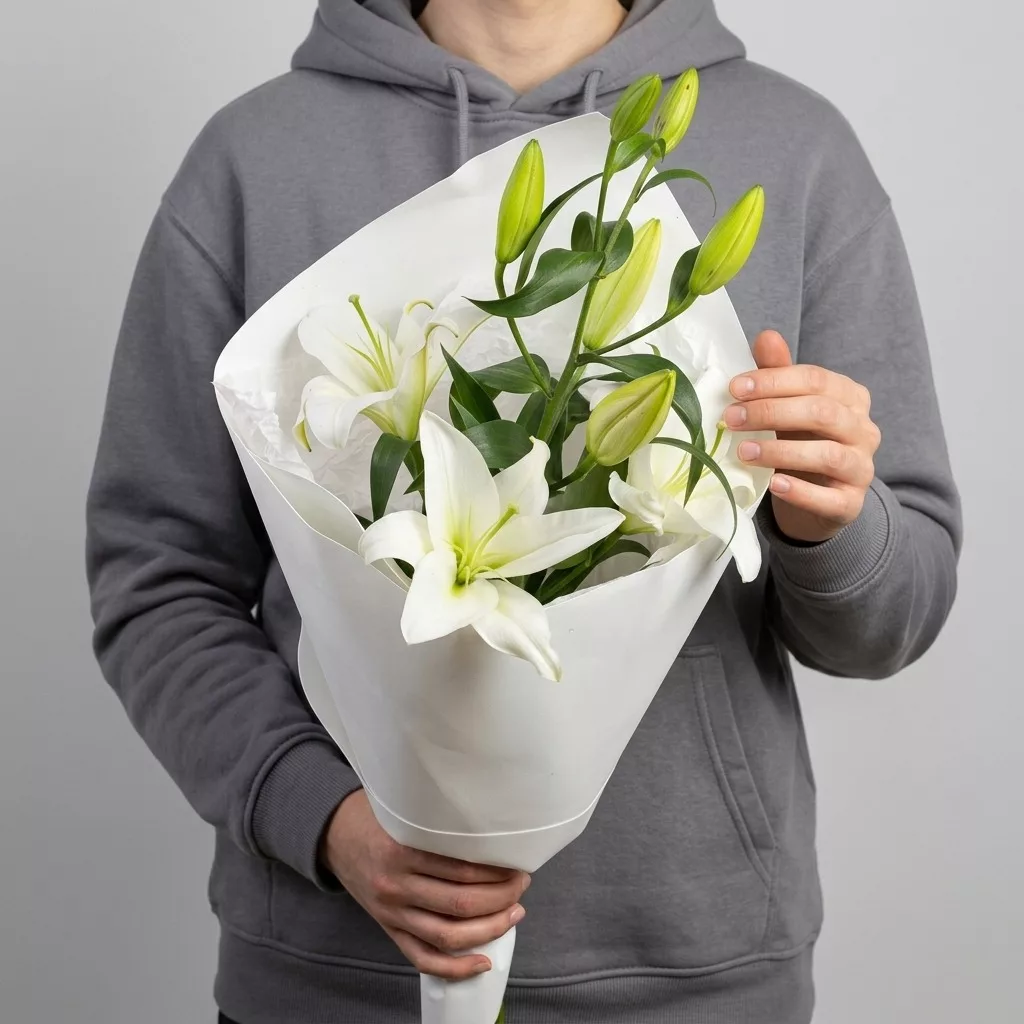
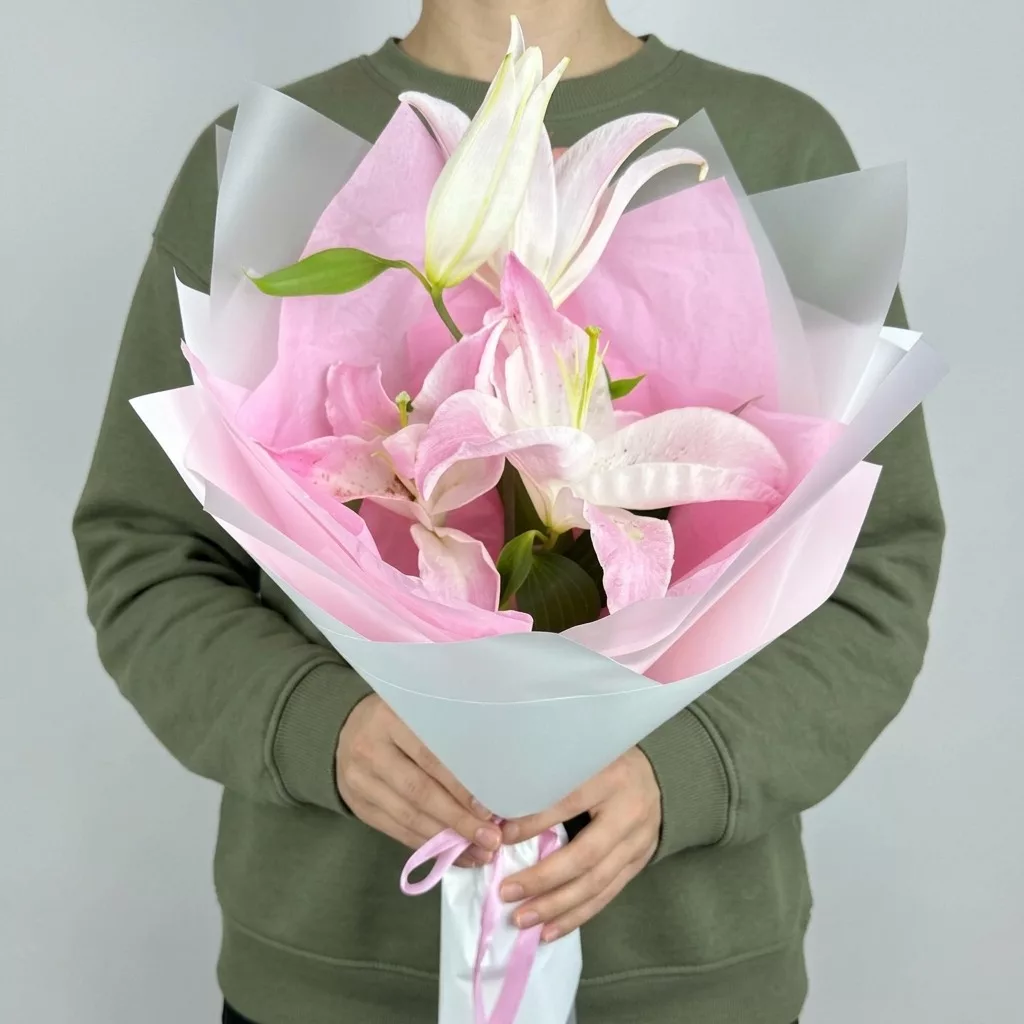
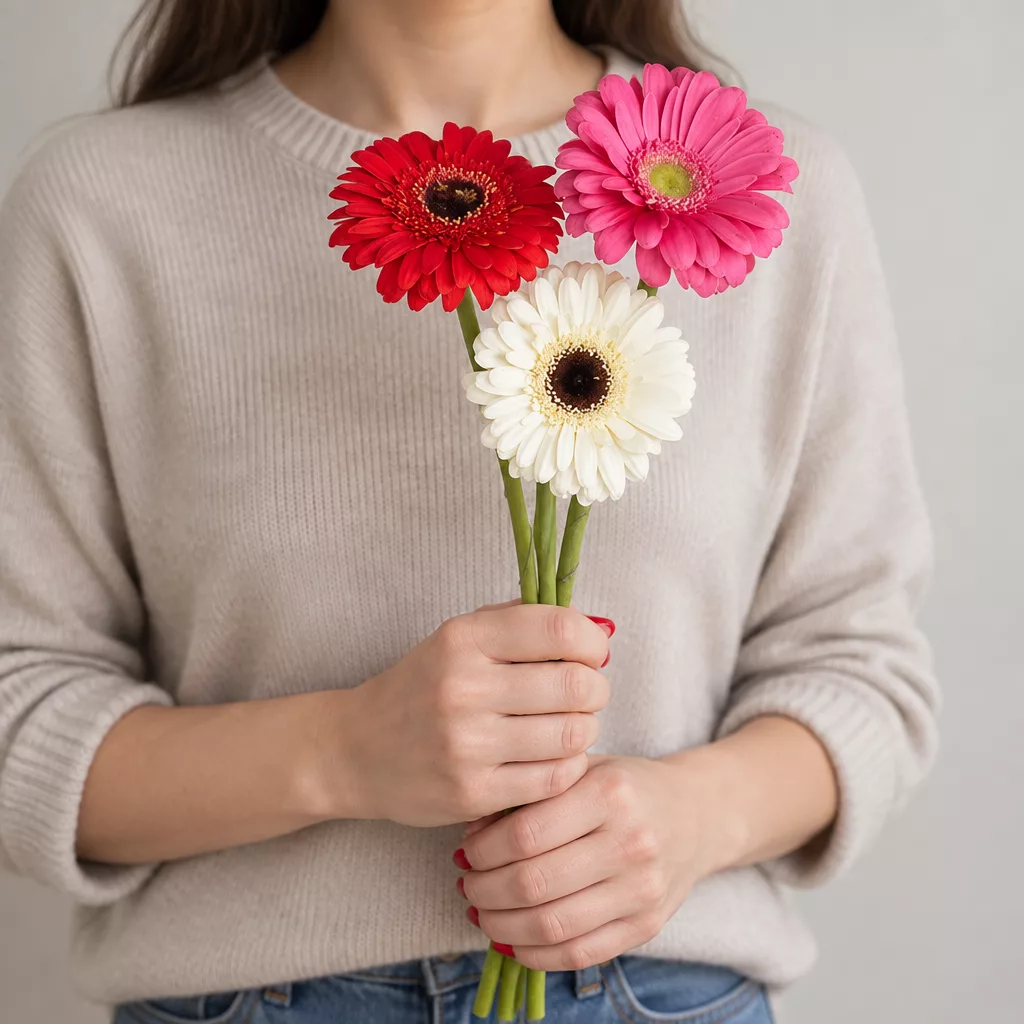
Bouquets we can deliver

Timing Your Order for a One- to Two-Hour Arrival
The standard delivery window in Bratsk is one to two hours from the moment your order is confirmed. That window assumes the address is clear, the recipient is reachable, and the order comes in during operating hours. Orders placed in the morning for a same-day afternoon delivery generally run smoothly. Orders placed late in the evening for an early-morning slot the next day also work well because the bouquet is prepared fresh at the start of the working day.
Where timing gets tighter is around major gift-giving dates. The eighth of March — International Women's Day — is by far the busiest single day in the Russian flower calendar. It is a national holiday on which nearly every woman receives flowers from someone: a husband, a son, a colleague, a classmate. Demand spikes sharply for several days before and on the day itself. If you are ordering for that occasion, placing your order two or three days ahead and choosing a specific delivery time slot is the single most effective thing you can do.
Other busy periods include Valentine's Day on the fourteenth of February, the first of September when children bring flowers to teachers on the first day of school, and New Year. Outside these peaks, same-day orders placed before midday almost always arrive within the standard window. If you have a hard deadline — a surprise at a specific hour, a ceremony, a birthday dinner — mention it in the order comments and we will prioritise accordingly.
Choosing Flowers for Bratsk's Continental Climate
Bratsk has a sharply continental climate. Winters are long and cold, with temperatures regularly dropping below minus twenty-five Celsius. Summers are short but warm, often reaching plus thirty. This range matters when you choose flowers, because the journey from our cooler storage to the recipient's hands passes through real weather.
In winter, the biggest risk is cold shock. Delicate petals — ranunculus, anemones, garden roses with very open heads — can bruise or blacken if exposed to freezing air even briefly. Hardier choices for cold months include spray chrysanthemums, alstroemeria, carnations, and standard roses with tighter bud stages. These varieties travel well in low temperatures and open beautifully once they warm up indoors. We wrap bouquets in insulating kraft and foil sleeves precisely for this reason, but variety choice adds another layer of protection.
In summer, the concern flips: heat and direct sunlight accelerate wilting. Sunflowers, gerberas, and lisianthus hold up well in warm conditions. Tulips and peonies, which are seasonal anyway, are best ordered for the cooler shoulder months of May and early September. Hydrangeas look spectacular in summer arrangements but need water quickly after arrival — they are thirsty flowers.
For a mixed bouquet that works across seasons, a spine of alstroemeria or spray roses combined with seasonal greenery and one statement bloom gives you colour, longevity, and visual interest. It is a combination that photographs well and lasts at least a week with basic care.
Bouquet Options Across Different Budgets
A thoughtful bouquet does not require a large budget, but understanding what changes at each level helps you choose well. At the entry level, a mono-bouquet of spray chrysanthemums or alstroemeria in five to seven stems, wrapped simply with kraft paper and a ribbon, is clean, cheerful, and long-lasting. It suits a colleague's birthday, a thank-you gesture, or a first visit to someone's home. The presentation is modest but the flowers are fresh and will stay that way for ten days or more with proper care.
A mid-range bouquet typically combines a focal flower — standard roses, gerberas, or eustoma — with complementary fillers like waxflower, solidago, or ruscus, and two or three accent stems. This is where composition starts to matter. A round, domed shape reads as classic and romantic. A loose, asymmetric hand-tied arrangement feels more contemporary and is particularly well-suited to creative or younger recipients.
At the upper end, you move into premium roses — varieties with large heads and long stems such as Explorer or Mondial — or seasonal flowers that are harder to source: garden-style roses, peonies when in season, or orchid stems worked into a structured arrangement. These bouquets are also where the packaging becomes part of the gift: a hat box, a wooden crate, or a wrapped arrangement with dried elements for texture.
Whichever level you choose, tell us something about the person receiving the flowers. A colour preference, a favourite flower, whether the setting is formal or relaxed — these details let us make something that feels personal rather than generic.
What Russian Flower Customs Look Like in Practice
If you are not familiar with Russian gifting culture, a few customs are worth knowing so your order lands exactly right. The most widely observed rule is that bouquets given as gifts should contain an odd number of stems. Even numbers are associated with mourning and are reserved for entirely different occasions. This is not a superstition everyone follows strictly, but it is deeply ingrained, and an odd-numbered bouquet will always feel correct to a Russian recipient.
Colour carries meaning too, though less rigidly than in some cultures. Red roses read as romantic and are most appropriate between partners. Yellow flowers — particularly yellow roses — carry an association with separation or bad luck in some regions, though younger generations are less attached to this. White flowers are given freely and are not restricted in the way they might be in other traditions. If you are uncertain, a mixed bouquet with pink, cream, and coral tones is universally well-received and avoids any ambiguity.
For professional occasions — a teacher's anniversary, a colleague's promotion, a business congratulation — flowers should look considered rather than lavish. A structured mono-bouquet or a restrained mixed arrangement in neutral tones signals respect without overstepping. For a close friend or romantic partner, more volume and more colour are entirely appropriate.
Finallyy, Russians generally appreciate receiving flowers at the door rather than having them left unattended. If you can coordinate with the recipient or a family member to ensure someone is home, the gesture lands with far more warmth.
Keeping Your Flowers Fresh After Delivery
A bouquet that arrives in perfect condition can still fade in two days if it is not cared for properly. The most important step is also the easiest one to skip: cutting the stems. Use a sharp knife or scissors to trim one to two centimetres from each stem at a forty-five degree angle, ideally while holding the stem under water. This prevents an air bubble from blocking the cut and keeps the flower drinking. Do this on the day of arrival and again every two to three days when you change the water.
Vase water should be clean and cool. Room temperature water is fine, but avoid warm water for most varieties — it accelerates bacterial growth and shortens vase life. Change the water every two days rather than topping it up, and rinse the vase each time. Remove any leaves that fall below the waterline, as submerged foliage rots quickly and clouds the water.
Placement matters as much as water. Keep flowers away from direct sunlight, radiators, and fruit bowls. Ripening fruit releases ethylene gas, which causes petals to drop faster. A cool corner of a room, away from draughts, is ideal. In Bratsk's heated winter apartments, where indoor air can be very dry, a light mist of water over the petals in the morning helps.
With these simple steps, a well-chosen bouquet of alstroemeria or spray roses will last eight to twelve days. Even more delicate flowers like eustoma will give you a solid week of colour and fragrance.
Making a Surprise Delivery Work Smoothly
A surprise delivery is one of the most satisfying things you can arrange for someone, and it requires just a little more coordination than a standard order. The key variable is confirming that the recipient will actually be at the address at the time of delivery. This sounds obvious, but it is the most common reason a surprise does not land as planned. A person who works irregular hours, travels frequently, or lives in a building with restricted access can inadvertently complicate even the best-planned gesture.
One approach that works well is to coordinate with a family member or close friend who can ensure the recipient is home without revealing the surprise. Another is to choose a workplace delivery, where the recipient is almost certainly present during business hours and the arrival in front of colleagues adds a layer of delight to the moment.
When you place a surprise order, use the comments field to tell us anything useful: the recipient's name for the card, whether there is a specific time that works best, whether the building has a code or a doorman. A handwritten-style card included with the bouquet is a detail that many people remember longer than the flowers themselves. Keep the message short and specific — a single sentence that refers to a shared memory or uses the recipient's name will always feel more personal than a generic wish.
If the delivery cannot be completed at the first attempt — the recipient is unexpectedly away — we will contact you to arrange an alternative time or address. Building a small buffer into your timing, especially for a surprise, means the moment stays magical even if the logistics need a small adjustment.
Bratsk is a city where flowers carry real weight — a burst of colour and scent against long winters, a warm gesture in a place where warmth is genuinely appreciated. Getting a delivery right here comes down to a clear address, a sensible variety choice for the season, and a little thought about the person on the other end. When those pieces come together, the bouquet does exactly what flowers are supposed to do: it makes someone feel seen.
Frequently asked questions
Can you deliver flowers to all three districts of Bratsk — Tsentralny, Energetik, and Padun?
Yes, we deliver across all three main districts. Because the distances between them are significant, including the district name along with the full street address and apartment number in your order helps us route correctly and keeps your delivery within the standard one-to-two-hour window. The more precise the address, the smoother the handoff.
What happens to the flowers in minus twenty-five Celsius winter temperatures during transit?
We wrap every winter bouquet in insulating kraft paper and a foil sleeve to shield petals from cold air during the short but critical time between our vehicle and the recipient's door. We also recommend hardier varieties in winter — spray chrysanthemums, alstroemeria, and tight-bud roses — which tolerate cold far better than open, delicate blooms like ranunculus.
Is it true I should always give an odd number of flowers in Russia?
Yes, this is a widely observed custom. Odd numbers are for celebrations and gifts; even numbers are associated with mourning occasions. You do not need to count stems yourself — our bouquets are always assembled with this in mind. If you are ordering a specific quantity, just keep it odd and the gesture will feel natural to any Russian recipient.
How far ahead should I order for the eighth of March delivery in Bratsk?
Two to three days ahead is strongly recommended. International Women's Day is the single busiest day in the Russian flower calendar, with demand rising sharply from the sixth onward. Placing your order early and selecting a specific time slot gives you the best chance of a punctual delivery. Same-day orders on the eighth itself may face longer waits.
Which flowers last longest in a Bratsk apartment during the dry winter heating season?
Alstroemeria, spray chrysanthemums, and carnations are the most resilient in dry, heated indoor air. They can last ten to fourteen days with clean water and regular stem trimming. A light daily mist over the petals helps in very dry conditions. Avoid placing any bouquet near radiators, which are typically working hard throughout the Bratsk winter.
Ready to send flowers?
Pick the city, choose the bouquet, and a local florist takes it from there.
Choose a city →