Flower Delivery in Cheboksary: Timing, Packaging and Freshness Explained
Sending flowers to someone in Cheboksary feels like a small act of courage — you want them to arrive looking exactly as you imagined, at exactly the right moment, without the recipient standing at the door in confusion. The good news is that a well-run delivery makes all of that straightforward, and understanding how the process works takes most of the guesswork out of it.
Which Parts of Cheboksary We Reach and How Quickly
Cheboksary stretches along the Volga in a way that surprises people who have not visited — the city is longer than it looks on a map, with residential districts like Novocheboksarsk on one side and the older central embankment area on the other. We cover the full city, including Novocheboksarsk, the Kalinin district, the Moskovsky district and the areas around Cheboksary Bay. Delivery to the central streets and most residential blocks typically takes one to two hours from the moment the order is confirmed. Addresses further from the centre, or those with tricky access such as gated housing estates, may sit at the upper end of that window, so it is worth noting any entrance codes or building details in the order comments — this single step saves more deliveries from delay than anything else. If you are ordering for a specific moment, say a birthday dinner that starts at seven in the evening, place the order at least two to three hours ahead. We can also schedule delivery for a precise time slot, which is worth doing for surprises where timing is everything. Cheboksary traffic is generally lighter than in Moscow or Saint Petersburg, but the bridge crossings and the city's hilly terrain can add minutes during rush hour, so a small buffer is always sensible.
Bouquets we can deliver



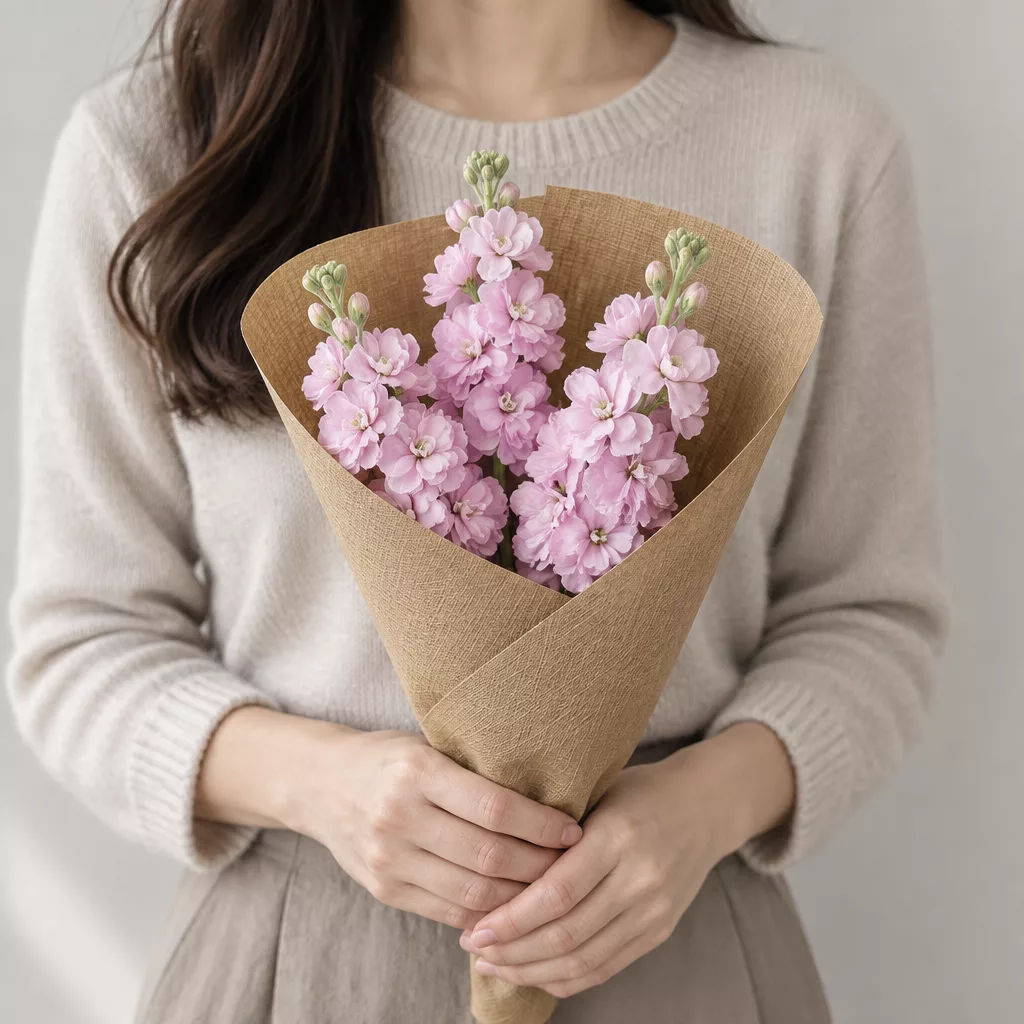
How We Package Flowers for the Journey from Saint Petersburg
Every bouquet leaves our workshop in Saint Petersburg, which means the flowers travel before they ever reach your recipient. This is not a disadvantage — it is simply something we have designed around carefully. Stems are cut at an angle, wrapped in water-retaining floral foam or damp paper at the base, and then layered in structured packaging that holds the heads apart so petals do not bruise against each other in transit. Temperature is the detail most people overlook. In winter, Cheboksary regularly drops well below minus fifteen degrees Celsius, and exposed roses or tulips can suffer frost damage within minutes of leaving a warm vehicle. Our packaging includes thermal insulation for cold months, and in summer we use ventilated wrapping to prevent condensation from building up around dense blooms like peonies or garden roses. Ranunculus and anemones are particularly sensitive to heat and are packed with extra care during July and August. When the bouquet arrives, it should feel cool and firm, not limp or warm. If you are receiving flowers at an address where no one will be home, let us know in advance — we can coordinate a handover time rather than leaving a delicate arrangement in an unheated hallway in January or in direct sunlight in summer. The packaging itself is designed to hold the bouquet stable for up to two hours after arrival without water, which gives a reasonable window for the recipient to get home and arrange them.
Choosing the Right Flowers for Cheboksary's Climate and Seasons
Cheboksary has a continental climate with cold winters and warm, sometimes humid summers, and this genuinely affects which flowers travel and last best at different times of year. In January and February, roses, chrysanthemums and carnations are reliable — they handle cold transitions well and have good vase life even after a journey. Tulips are beautiful in late winter and early spring but need to go straight into water on arrival, as they continue to grow and will lean dramatically if left in packaging. In May and June, peonies are a wonderful choice for Cheboksary recipients — they are at their seasonal peak, they travel well when picked at the tight bud stage, and they open gradually over several days in a warm room, which feels like a gift that keeps giving. Summer is the moment for sunflowers, lisianthus and spray roses, which hold up well in heat if the packaging is right. Autumn suits rich combinations: burgundy dahlias with orange spray roses, or deep purple lisianthus with eucalyptus. When thinking about what to send, consider the recipient's home environment too. A sunny south-facing apartment will shorten the life of delicate sweet peas dramatically, while a cooler hallway keeps lilies fresh for over a week. Mentioning these details when you order helps us choose varieties and bud stages that will perform best in the actual conditions, not just in a florist's studio.
Occasions and What Works Well for Each
In Russia, flowers carry a specific social language that is worth understanding if you are sending from abroad or are new to the custom. Bouquets are almost always given in odd numbers — one, three, five, seven stems — because even numbers are traditionally reserved for solemn occasions. This is not a strict rule that everyone follows today, but it is a safe one to respect, and we follow it by default in our arrangements unless you specify otherwise. For birthdays, the instinct is often to go large and colourful — a full bouquet of garden roses in blush and cream, or a mixed arrangement with lisianthus, ranunculus and greenery, reads as generous and celebratory. For a first meeting or a thank-you, something more restrained works better: three or five stems of a single variety with beautiful foliage can feel more considered than a large mixed bouquet. Teacher's Day in early October is one of the busiest flower days in Russia, and Cheboksary is no exception — chrysanthemums and roses in school colours are a reliable choice, and ordering a day ahead is wise. On March 8th, International Women's Day, the entire country sends flowers simultaneously, so placing your order two to three days before is not excessive. For romantic occasions, red roses remain the clearest signal, but a combination of red and white spray roses with dusty miller feels more current and less predictable while carrying the same warmth.
What Happens If Something Goes Wrong with the Delivery
Most deliveries arrive without incident, but flowers are living things and logistics are never perfectly smooth, so it is worth knowing what to expect if something does not go to plan. If the recipient is not home at the agreed time, we will contact them directly — or you, if you prefer to manage communication — to arrange a new window. We do not leave bouquets unattended in common areas of apartment buildings unless specifically asked to, because temperature exposure and the risk of the flowers being moved or knocked over is too high. If a bouquet arrives and something looks wrong — stems are bent, petals are bruised, or the arrangement looks nothing like what was ordered — take a photograph immediately and contact us. A clear photo taken within an hour of arrival gives us everything we need to understand what happened and to make it right. We take presentation seriously because we know the moment of receiving flowers matters as much as the flowers themselves. One thing worth knowing: flowers that look slightly tired immediately after unwrapping will often recover after being recut and placed in fresh water for a few hours. Roses in particular can look soft after a journey and then open beautifully overnight. If you are unsure whether what you are seeing is transit fatigue or actual damage, a quick message to us with a photo will get you a clear answer within minutes.
Caring for Flowers Once They Arrive in Cheboksary
The care that happens in the first thirty minutes after a bouquet arrives determines most of its vase life, and this is something worth sharing with the recipient if you can. The stems should be recut at a sharp angle — about two centimetres from the bottom — ideally under running water or while submerged, which prevents air bubbles from blocking the uptake of water. A clean vase matters more than most people realise: bacteria in a dirty vase will shorten vase life by days. Fill it with cool, fresh water and add the sachet of flower food that comes with the bouquet if one is included. Roses last longest in a cool room away from direct sunlight, heating vents and fruit bowls — ethylene gas from ripening fruit accelerates wilting noticeably. In a Cheboksary apartment in winter, the air is often very dry due to central heating, which can dehydrate petals faster than the cold outside. Misting the petals lightly once a day helps, and changing the water every two days keeps the stems fresh. Tulips are a special case: they keep growing after cutting and will lean toward any light source, so rotating the vase daily keeps them upright. Chrysanthemums are the most forgiving of all — they tolerate varying temperatures and last well over a week with basic care. Peonies should be kept in a cool spot until you want them to open, then moved to a warmer room to encourage the buds to bloom. Knowing these small details makes the difference between a bouquet that lasts four days and one that looks beautiful for ten.
Sending flowers to Cheboksary is less complicated than it might seem from a distance, and the result — a fresh, well-packaged bouquet arriving at the right address at the right time — is entirely achievable when the process is handled with care. The key things to get right are the timing of your order, a complete delivery address with any access details, and a sense of the season and occasion so the flowers chosen will genuinely suit the moment. Everything else we take care of from our end.
Frequently asked questions
How does packaging protect flowers during the journey from Saint Petersburg to Cheboksary?
Stems are cut at an angle and wrapped in water-retaining floral foam or damp paper at the base. The bouquet is then layered inside structured packaging that holds flower heads apart so petals do not press against each other during transit. This matters more over longer distances, which is exactly why we designed the packaging around that specific journey.
Which districts of Cheboksary does Turboflora actually deliver to?
We cover the full city, including Novocheboksarsk, the Kalinin district, the Moskovsky district and the areas around Cheboksary Bay. The city runs longer along the Volga than most people expect, so it is worth confirming your recipient's district when ordering to make sure timing works as planned.
What flowers travel best to Cheboksary during the humid summer months?
Chrysanthemums and roses handle summer humidity reasonably well because their petals are dense and less prone to wilting under warmth. Delicate flowers like sweet peas or anemones are harder to guarantee over longer journeys in high temperatures. If you are ordering in July or August, ask about which stems are performing well that week.
Can I include a personal note with the bouquet and will the courier deliver it with the flowers?
Yes, a handwritten note is prepared at our workshop and travels with the bouquet inside the packaging. The courier delivers it together with the flowers rather than separately. Keep the message short and clear so nothing is lost if the note gets tucked inside the wrapping during transit.
How does the 1 to 2 hour delivery window actually work across a city as spread out as Cheboksary?
The window applies from the moment your order is confirmed and dispatched from our local point. Because Cheboksary stretches considerably along the Volga, delivery to outlying areas like Novocheboksarsk may sit closer to the two-hour end of that range. Ordering before midday generally gives the most flexibility for same-day timing.
Ready to send flowers?
Pick the city, choose the bouquet, and a local florist takes it from there.
Choose a city →