Flower Delivery in Cherepovets: Timing, Areas and What Arrives at the Door
Cherepovets is a city that takes giving seriously. Whether you are sending roses to a colleague after a big presentation, surprising a partner on an ordinary Tuesday, or marking a birthday for someone who lives far from you, the bouquet that arrives matters as much as the thought behind it. This guide walks you through everything that shapes a successful delivery in Cherepovets — from which neighbourhoods we reach, to what the February cold does to a ranunculus, to the small presentation details that make the recipient feel genuinely seen.
Which Parts of Cherepovets We Deliver To
Cherepovets stretches along the Rybinsk Reservoir and the Sheksna River, and the city's layout matters when you are planning a delivery with a specific time in mind. We cover the central districts — Zarechye, Indust rialny, Severniy — as well as the residential areas that have grown outward along Sovetsky Prospekt and the neighbourhoods near the metallurgical plant. Delivery also reaches the private housing zones on the city's quieter edges, though addresses there sometimes require a slightly wider time window.
If you are sending to a workplace, keep in mind that Cherepovets has several large industrial campuses where access is controlled. It helps to include the full building number, any pass or gate instructions, and a mobile number where the recipient can be reached. A florist arriving at a gatehouse with a bouquet and no contact details loses time, and fresh flowers do not wait well.
For residential high-rises, which make up much of the city's housing stock, a working intercom code or a heads-up call to the recipient is the simplest way to ensure smooth handover. We always call ahead before arrival, so the person receiving the flowers is never caught off guard. The goal is for the door to open and for the first thing they see to be something beautiful — not a courier holding a phone and looking confused.
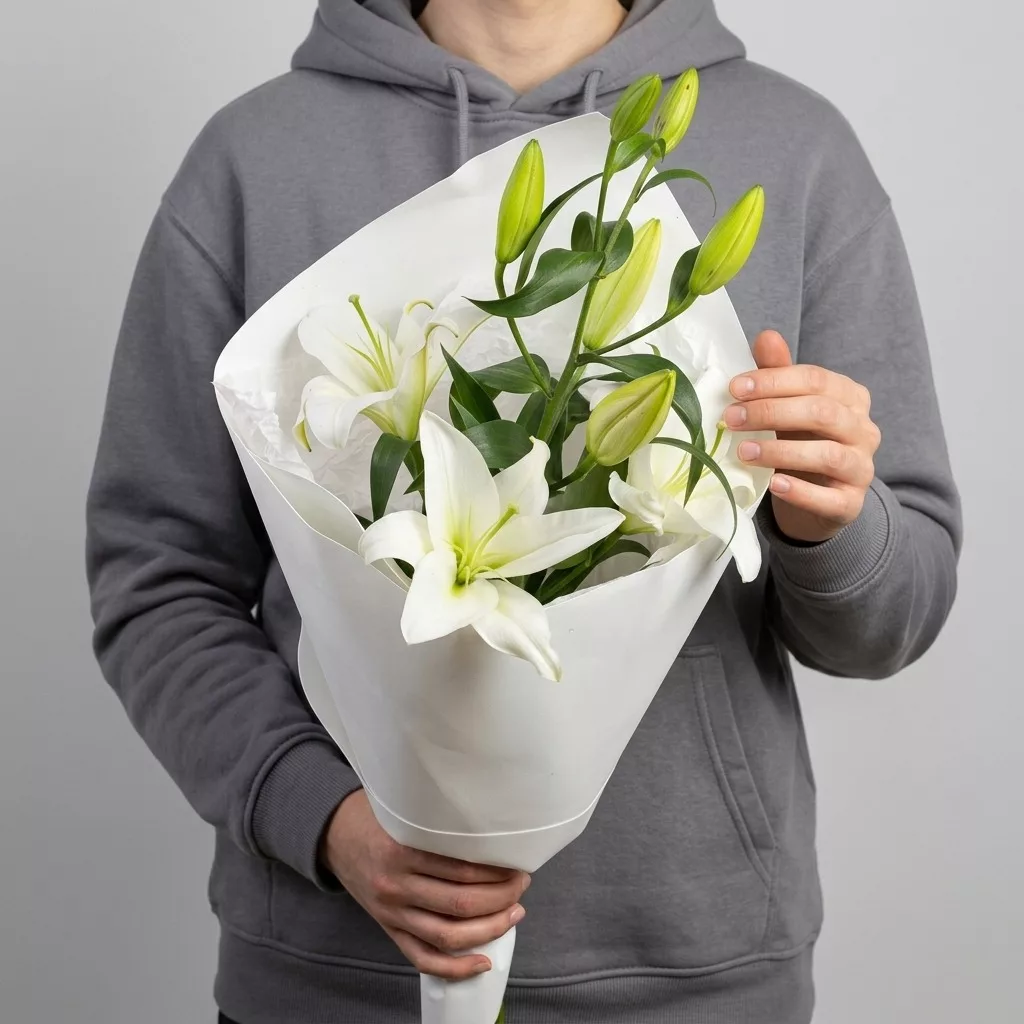
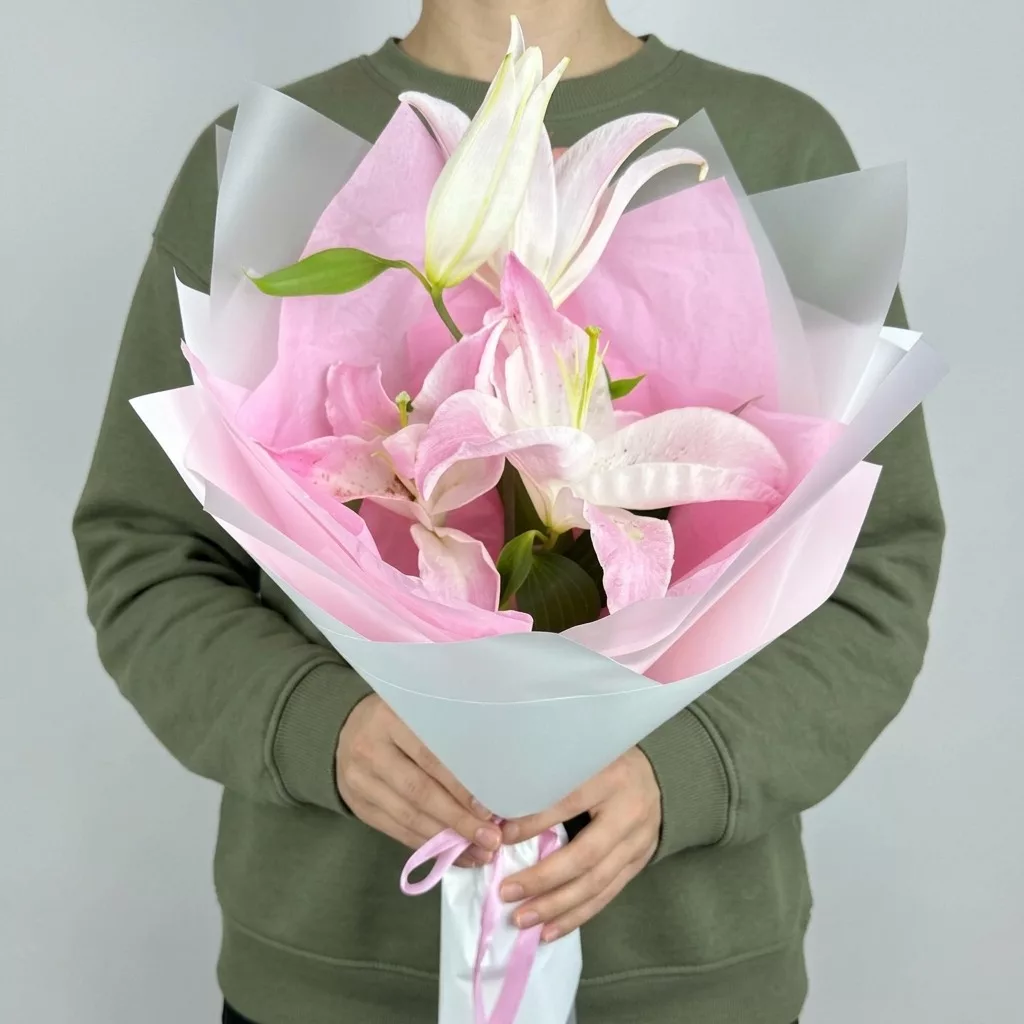
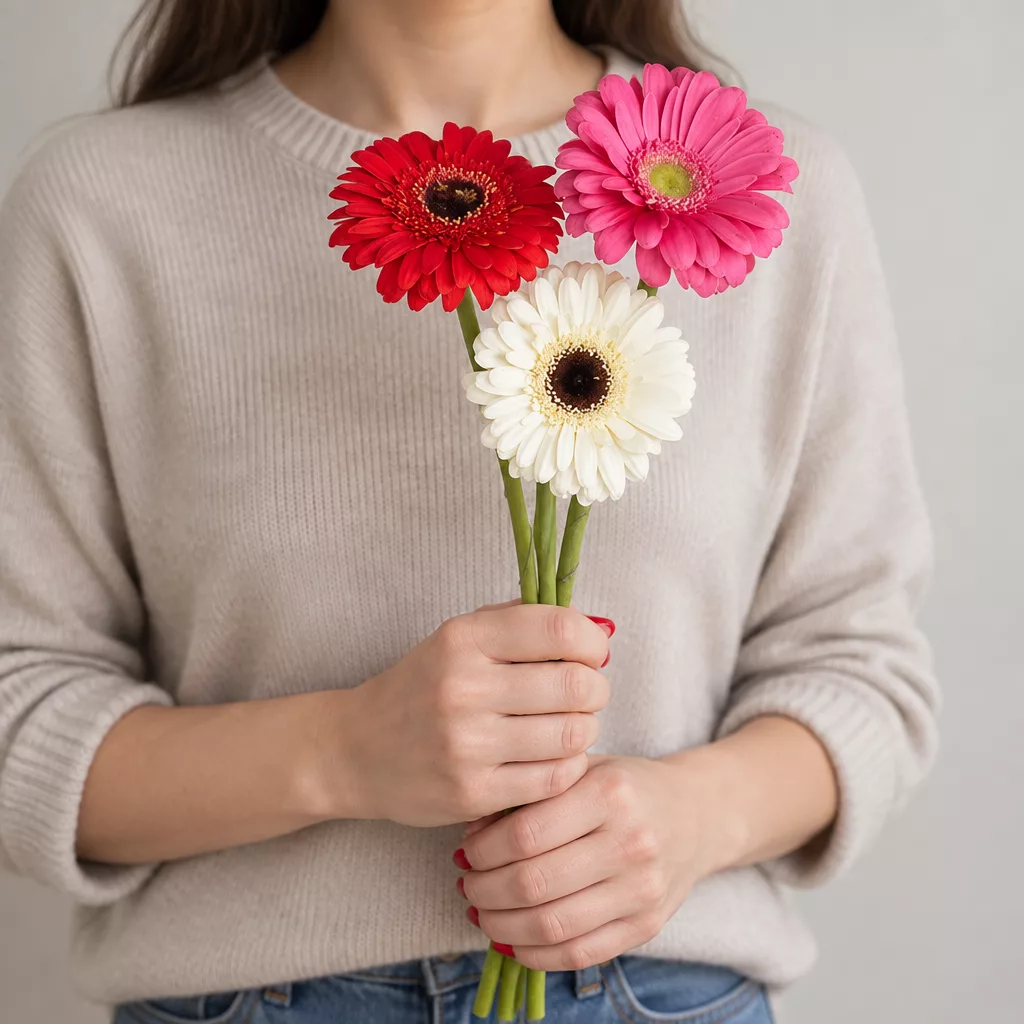
Bouquets we can deliver

Realistic Timing: What 1–2 Hours Actually Means
The one-to-two-hour window is our standard, and in most of Cherepovets it holds reliably. Orders placed in the morning, before midday, tend to move fastest because the florists are assembling compositions at peak freshness and traffic across the city is manageable. Late afternoon deliveries, particularly between four and six in the evening, can stretch closer to the two-hour mark as more orders arrive simultaneously and roads near the city centre get busier.
Cherepovets winters are genuinely cold — temperatures regularly drop to minus fifteen or lower between December and February. This affects logistics in a practical way. Flowers need to travel in a warm vehicle, and the handover at the door needs to happen quickly. Delicate varieties like anemones or sweet peas are more vulnerable to frost shock than, say, sturdy spray chrysanthemums or standard roses. If you are ordering in winter, it is worth choosing a composition that includes some cold-tolerant stems alongside the more fragile ones.
For same-day deliveries, placing your order at least three hours before the desired arrival time gives the best result. If you need the bouquet to arrive at a precise moment — during a birthday dinner, right at the start of a meeting — choose the earliest slot available and note the timing clearly in your order comments. We read those notes and plan accordingly. Exact-minute delivery is not guaranteed, but a thirty-minute window around your target time is something we work hard to honour.
Choosing Flowers for the Person, Not Just the Occasion
The occasion tells you the register — celebratory, tender, playful, grateful. The person tells you everything else. Someone who keeps a minimalist apartment and wears neutral colours will likely feel more at home with a monochromatic arrangement of white lisianthus and silver eucalyptus than with a loud mixed bouquet in five colours. Someone who loves a garden aesthetic will respond to loose, textured compositions built around garden roses, veronica spicata and scabiosa more than to a tight, formal arrangement.
In Cherepovets, as across Russia, certain flowers carry cultural weight worth knowing if you are not from here. Red roses signal romance clearly and directly — they are a safe choice for a partner and a slightly bold one for a colleague. Yellow flowers have historically been associated with separation in Russian popular belief, though younger generations are far less attached to this idea, and a sunny yellow tulip arrangement in March is simply joyful. White flowers are beautiful and widely appreciated; they do not carry the mourning association here that they do in some other cultures.
For a first delivery to someone you do not know well — a new colleague, a client, a neighbour who helped you out — a mixed seasonal bouquet in soft pinks and creams is almost universally well received. It reads as thoughtful without making a strong statement. From there, as you learn more about the person, you can move toward something more specific and personal. A bouquet that feels chosen for someone lands differently than one that feels selected from a list.
Seasonal Flowers in Cherepovets and Why They Matter
Cherepovets sits in the Vologda Oblast, where the growing season is short and winters are long. This means that most cut flowers arrive from outside the region, and the season of origin affects how long they last after delivery. Flowers that have travelled a shorter distance or that were cut more recently hold up better in the vase — and a florist who sources with this in mind will always tell you what is genuinely fresh that week rather than what has been sitting in cold storage.
In spring, from March through May, tulips and hyacinths are at their most reliable. Dutch tulips in particular travel well and open beautifully in a warm room. Ranunculus are spectacular in April — layered, papery, almost like peonies — but they are sensitive to both heat and cold, so they need a vase with cool, clean water changed every two days. Peonies arrive in May and June and are the most requested flower of early summer in Russia; if you are ordering them, know that tight buds will open over three to five days, which is often more dramatic and satisfying than receiving them already open.
Autumn brings dahlias, which are underused and extraordinary — rich burgundy and copper tones that suit the season visually and last well in the vase. In winter, amaryllis and ornamental branches like eucalyptus or cotton stems add texture and warmth when softer flowers are less available. Working with what is genuinely in season always produces a more honest, lasting result than forcing out-of-season varieties.
Combinations That Work and Mistakes Worth Avoiding
A single-variety bouquet — thirty red roses, twenty white tulips, fifteen peonies — has a clarity and generosity that is hard to argue with. It reads as confident and deliberate. Mixed bouquets, when they are well built, tell a more layered story: a focal flower supported by secondary blooms and finished with foliage that ties the colours together. The mistake most people make when choosing a mixed arrangement is picking too many focal flowers of equal visual weight, which creates a bouquet that looks busy rather than rich.
A working combination that florists return to often: one strong focal flower such as a garden rose or a peony, one secondary bloom at a slightly smaller scale such as lisianthus or ranunculus, and one textural element such as eucalyptus, ruscus or waxflower. Three elements, well balanced, almost always look intentional and beautiful. Adding a fourth or fifth variety requires more skill to keep the composition coherent.
Colour is the other variable people underestimate. Analogous palettes — colours that sit next to each other on the colour wheel, like peach, coral and soft orange — are easier to get right than complementary palettes, which require precise proportions to avoid clashing. If you are unsure, ask for a palette rather than a list of specific flowers. Telling a florist you want something in dusty pinks and muted greens gives them room to use what is best that day, and the result is usually stronger than a rigid specification. Trust the person who sees the flowers in front of them.
Packaging, Presentation and the Moment of Arrival
The packaging is the first thing the recipient sees, and it sets the emotional tone before the flowers are even visible. Kraft paper wrapping with a simple ribbon reads as warm and artisan. Matte-finish paper in a neutral tone feels modern and considered. Cellophane on its own looks like a petrol station purchase, which is why we do not use it as the primary wrap. The outer presentation should match the feeling of the flowers inside.
In winter, the packaging also serves a protective function. An outer layer that shields stems and petals from frost during the walk from the vehicle to the door is not decorative — it is practical. We add insulating sleeves when temperatures drop below minus ten, because a peony that has been exposed to sharp frost for even three minutes can bruise and fail to open properly.
A handwritten card is worth including, even if the message is short. In Russian culture, the written word in a personal context carries weight — a card that says something specific to the person feels more meaningful than a generic printed label. If you are sending from a distance and are not sure what to write, something honest and direct works better than something elaborate and vague. The flowers already say a great deal; the card just needs to say who they are from and why.
After the delivery, a brief message to the recipient asking whether everything arrived well is a small gesture that closes the loop and makes the whole experience feel cared for from start to finish.
Keeping Flowers Fresh After Delivery: Practical Care in a Cherepovets Home
Russian apartments are warm — often very warm, because central heating in older Soviet-era buildings runs at a fixed intensity throughout the heating season. This is wonderful for the people living there and genuinely challenging for cut flowers. Heat accelerates the opening of buds and shortens vase life, so placement matters more than most people realise. A bouquet on a windowsill above a radiator will last half as long as the same bouquet placed on a table away from direct heat.
The basics of flower care are simple but consistently ignored. Cut the stems at an angle, about two centimetres from the bottom, using a sharp knife rather than scissors — scissors crush the stem tissue and reduce water uptake. Use a clean vase; bacteria in an unwashed vase are the most common reason flowers fail early. Change the water every two days and recut the stems each time. Remove any leaves that fall below the waterline, because submerged foliage rots quickly and contaminates the water.
Different varieties have different lifespans, and knowing this helps manage expectations. Alstroemeria and spray chrysanthemums are among the longest-lasting cut flowers, often going ten to fourteen days in good conditions. Standard roses typically give five to eight days. Tulips and ranunculus are shorter — four to six days — but they are so beautiful while they last that the brevity feels worth it. Hyacinths last about a week and fill the room with scent throughout. Peonies, if received as tight buds, will open over several days and are fully glorious for about five days at peak bloom.
Sending flowers to someone in Cherepovets is a straightforward act with a surprisingly large number of small decisions inside it — the variety, the palette, the timing, the packaging, the card. Each one shapes how the moment lands for the person on the other side of the door. At Turboflora, we think about all of those details so that what arrives feels considered rather than convenient. The city is ours to deliver across, and we take that seriously every time an order comes in.
Frequently asked questions
Can I order flowers for delivery to a Cherepovets address from another city?
Yes, and many of our orders come from people who are not in Cherepovets themselves. You place the order on turboflora.com, specify the recipient's address and a contact number, and we handle everything from assembly to doorstep delivery. We call the recipient before arrival, so they are never caught off guard by a stranger at the door with flowers.
What happens to the flowers if no one answers the door?
Our courier calls the recipient before arriving and again at the door. If there is still no answer, we contact you as the sender to decide on next steps — whether to leave the bouquet with a neighbour, attempt redelivery, or hold until the recipient is available. We do not leave flowers unattended in cold weather, because frost damage can happen within minutes.
Are there flowers I should avoid sending in winter in Cherepovets?
Very delicate tropical varieties like anthurium or bird of paradise are more vulnerable to cold shock during the outdoor portion of delivery. Sturdy choices like roses, spray chrysanthemums, alstroemeria and eucalyptus handle Cherepovets winters well. If you want something more delicate, we take extra precautions with insulated packaging, but it is worth mentioning the weather concern when you order.
How do I make sure the delivery arrives at a specific time, like during a birthday dinner?
Include your target time clearly in the order comments and place the order at least three to four hours in advance. We plan our delivery schedule around noted timing requests. We cannot guarantee delivery to the exact minute, but we work to a thirty-minute window around your target. Evening deliveries after eight o'clock may require advance arrangement, so contact us directly for those.
Do yellow flowers really have a negative meaning in Russia?
The association between yellow flowers and separation exists in older Russian popular belief, and some people — particularly older generations — still hold it. Younger recipients in cities like Cherepovets are generally much less concerned with this. If you are unsure about the recipient's views, a palette mixing yellow with white or peach softens the symbolism while keeping the warmth of the colour.
Ready to send flowers?
Pick the city, choose the bouquet, and a local florist takes it from there.
Choose a city →