Sending Flowers to Cherkessk? Here Is What You Need to Know
Cherkessk sits in the foothills of the Caucasus, and whether you are sending flowers to a colleague at the city administration building, a relative in a quiet residential quarter, or a friend celebrating a birthday in one of the newer districts, the question is always the same: will the bouquet arrive fresh, on time, and looking the way it did when you ordered it? This article walks you through every part of the process — from choosing the right flowers for the climate and the occasion, to what happens at the door.
Which Parts of Cherkessk We Deliver To
Cherkessk is a compact city, but its layout matters when you are planning a delivery. We cover the central districts around Lenin Avenue and the main market area, the residential neighbourhoods spreading toward the Kuban River, the industrial zones to the north, and the newer housing developments on the city's eastern edge. If you are sending to a private house rather than an apartment block, it helps to include the exact gate number or any landmark nearby — drivers navigate by landmarks as much as by addresses in smaller Russian cities.
We also deliver to locations just outside the city boundary, including villages and settlements within a reasonable radius of Cherkessk itself. When you place your order, the system will confirm whether your postcode falls within the delivery zone. If you are unsure, a quick message to our team resolves it in minutes.
One practical note: apartment buildings in Cherkessk vary widely in terms of access. Some have locked entrance lobbies with intercom systems, others are open. If the recipient lives in a building with a code or intercom, include that in the delivery notes. A florist standing outside with roses in summer heat is not the arrival anyone wants. Giving us the full picture means the bouquet reaches the door in perfect condition rather than waiting in the sun.
Bouquets we can deliver

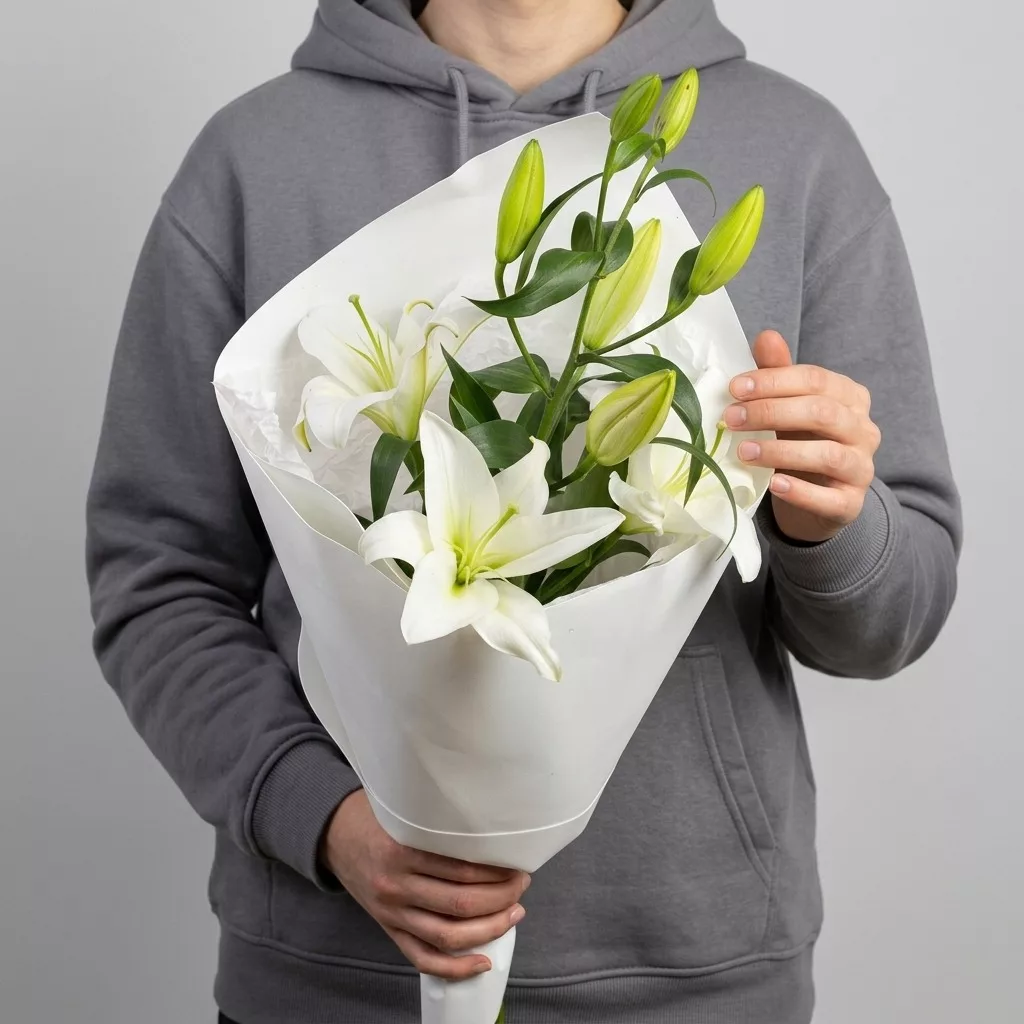
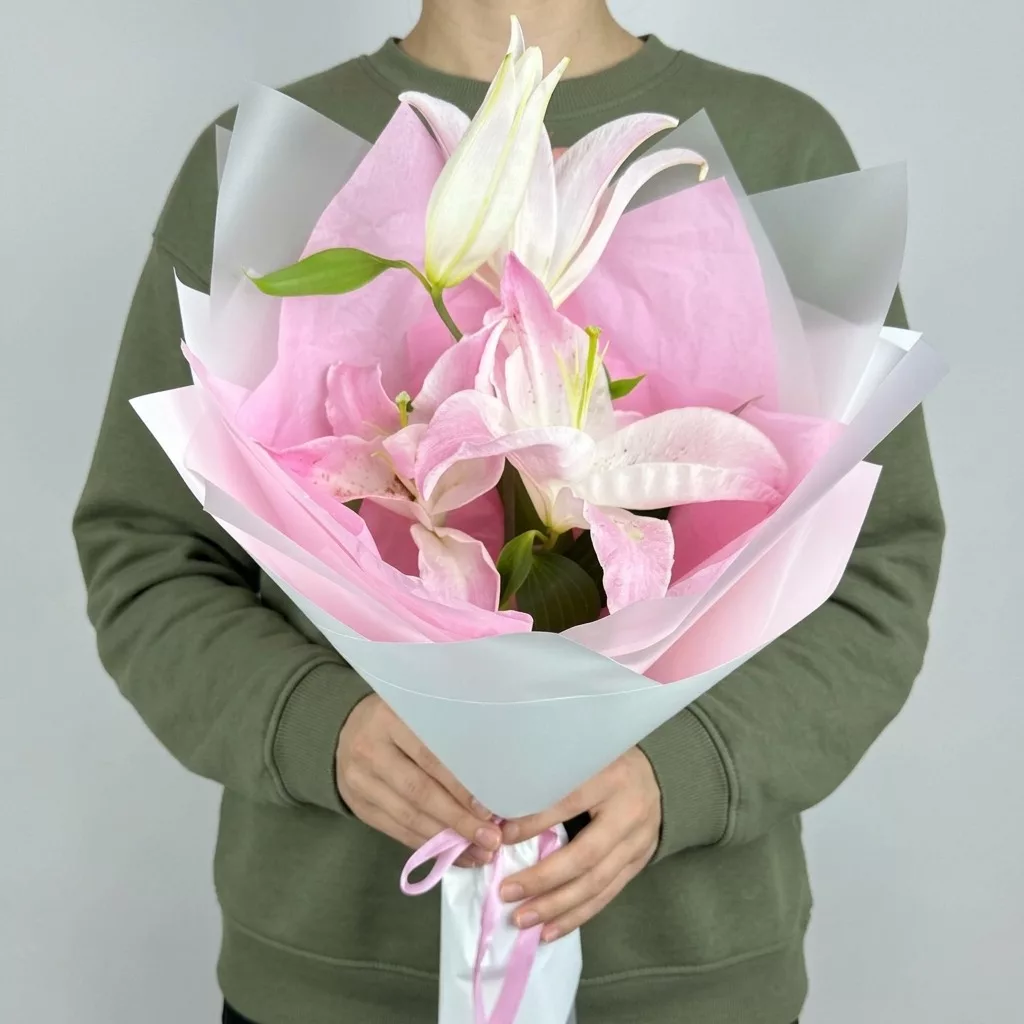

Delivery Timing and What the 1–2 Hour Window Really Means
When we say flowers arrive within one to two hours, that window begins from the moment your order is confirmed — not from when you first visit the website. Confirmation happens once payment is processed and the order enters our system. From that point, the bouquet is assembled and dispatched. In Cherkessk, where distances across the city are relatively short, deliveries frequently land closer to the one-hour mark during quieter periods of the day.
Peak times do affect speed. Mornings on the eighth of March, the first of September, and around major public holidays see a surge in orders across Russia, and Cherkessk is no exception. If you are ordering for a specific moment — a surprise at a birthday dinner, flowers before a guest arrives — place the order two to three hours ahead rather than one. That buffer absorbs any unexpected delay without ruining the plan.
Evening deliveries in Cherkessk work well because the city does not have the heavy traffic congestion of a large Russian metropolis. Orders placed before eight in the evening can typically still reach the recipient the same day. If you are ordering late and want morning delivery, scheduling it the night before gives you more control over the exact arrival time than placing it at dawn.
The recipient does not need to be home for the delivery to proceed. You can authorise us to leave the bouquet with a neighbour or building administrator, though for perishable arrangements we always recommend someone being present so the flowers go straight into water.
Choosing Flowers for the Cherkessk Climate
Cherkessk experiences warm, sometimes hot summers and cold winters, with the Caucasus Mountains influencing local weather patterns. That climate shapes which flowers travel best and which struggle. In July and August, when afternoon temperatures can climb well above thirty degrees Celsius, delicate varieties like sweet peas, anemones, and garden ranunculus are poor choices for delivery — they wilt rapidly once outside refrigeration. Roses, chrysanthemums, and alstroemeria hold up far better in the heat because their stems are sturdy and their petals dense.
In winter, the concern reverses. Temperatures in January regularly drop below freezing, and flowers exposed to frost for even a few minutes can suffer cell damage that shows up as blackened petals or collapsed stems within hours of arriving indoors. We wrap cold-weather deliveries carefully, but if you are ordering in January or February, choosing varieties with thick, waxy petals — like roses, gerberas, or carnations — gives the bouquet a better chance of arriving in perfect shape.
Spring and autumn are the most forgiving seasons for flower delivery in Cherkessk. Temperatures are moderate, humidity is reasonable, and a wider range of varieties travels well. This is when you can confidently order tulips in March, peonies in May, or dahlias in September without worrying about the journey. If you want something unusual or particularly seasonal, it is always worth asking when you place the order — we can tell you what is at its best that week and what is better saved for another time.
Reading the Occasion: What to Send and Why It Matters
In Karachay-Cherkessia, as across Russia, flowers carry clear social meaning and the choice of what you send communicates something beyond the gesture itself. An odd number of flowers is the convention for celebratory occasions — birthdays, anniversaries, promotions, graduations. An even number is traditionally associated with grief, so sticking to odd numbers for any happy event is a simple rule that ensures the bouquet reads correctly to the recipient.
Colour matters too. Red roses between adults carry romantic weight and are understood that way by most recipients, regardless of the sender's intention. If you are sending to a colleague, a teacher, or a family friend and want warmth without romance, white, peach, or yellow roses work beautifully and carry no ambiguity. Yellow flowers, sometimes considered unlucky in certain Russian regions, are increasingly popular in younger urban circles and are generally well received in Cherkessk today.
For a woman celebrating a birthday, a mixed bouquet combining two or three varieties tends to feel more personal than a single-variety arrangement. Roses with eucalyptus, or tulips with waxflower, create texture and depth. For a man — and yes, flowers for men are common in Russia, particularly on professional occasions — a clean, structured arrangement of sunflowers, tropical foliage, or bold gerberas reads as confident and considered rather than fussy. If you are celebrating a child's achievement, bright colours and simple shapes like sunflowers or daisies are universally delightful and easy for a child to receive and carry.
Budgeting for a Bouquet: Small, Mid-Range and Generous Options
Flower budgets in Russia vary enormously depending on the occasion and the relationship, and there is no single correct amount to spend. What matters is that the bouquet feels appropriate and arrives in good condition. A smaller budget does not mean a lesser gift if the composition is thoughtful — three stems of a beautiful seasonal flower, well wrapped, can outshine a large shapeless bundle.
At the lower end of the budget range, the strongest choices are single-variety bouquets: a neat bundle of spray roses, a group of bright alstroemeria, or a cluster of seasonal tulips in spring. These arrangements benefit from simplicity. Clean wrapping, a ribbon, and a handwritten card elevate them considerably. If you are sending to acknowledge a small kindness or mark a low-key occasion, this approach is entirely appropriate.
Mid-range budgets open up mixed compositions. A florist can combine a focal flower — a garden rose, a large-headed gerbera, or a peony in season — with supporting stems of waxflower, solidago, or ruscus foliage. The result has visual complexity without looking overstuffed. This is the range that works for most birthdays, anniversaries, and congratulatory moments.
For a generous occasion — a significant birthday, a wedding anniversary, a major professional achievement — the difference is volume and variety. Large bouquets with premium roses, seasonal statement flowers, and structured greenery make an immediate impression when the door opens. In Cherkessk as anywhere, a substantial arrangement signals that the sender put real thought and care into the moment, and that message lands before a single word is spoken.
Keeping Flowers Fresh After Delivery: Practical Care in Any Season
The bouquet arrives and looks wonderful. What happens next determines how long it stays that way. The single most important step is getting the stems into clean, cool water within thirty minutes of arrival. Before placing them in a vase, cut each stem at an angle — about two centimetres from the bottom — using sharp scissors or a knife. An angled cut increases the surface area available for water uptake and prevents the stem from sitting flat against the bottom of the vase, which would block absorption.
Water temperature is often misunderstood. Most cut flowers prefer cool or room-temperature water rather than warm. The exception is bulb flowers like tulips and hyacinths, which respond well to cold water. Change the vase water every two days and re-trim the stems each time. This simple routine removes bacteria that build up in the water and clog the stems, which is the main reason flowers fade faster than they should.
In Cherkessk's summer heat, placement matters enormously. Keep the vase away from direct sunlight, open windows, and any source of heat — including televisions and radiators. A cool interior spot, ideally away from fruit bowls (ripening fruit releases ethylene gas, which accelerates petal drop), extends vase life significantly. Roses and chrysanthemums kept this way last seven to ten days. Alstroemeria and carnations can go even longer. Tulips are shorter-lived at four to six days, but their movement and colour as they open make every day worth watching.
If the flowers came with a sachet of flower food, dissolve it in the vase water on the first day. It contains sugar for energy and a mild acidifier that keeps water clean.
Adding a Personal Touch: Cards, Packaging and Presentation Details
A bouquet without a card is a gift without a voice. In Russia, the card or message attached to flowers is taken seriously — recipients often keep them long after the flowers themselves are gone. When you order, take a moment to write something specific rather than generic. A line about why you chose this particular day, or what the person means to you, turns a beautiful object into a memory. Even a short message of two sentences does more than a standard greeting.
Packaging for Cherkessk deliveries is designed to protect and present simultaneously. The outer wrapping shields the flowers during transit, but it is also part of the first impression when the door opens. We use wrapping that holds its shape and keeps moisture in, so the bouquet arrives looking as it did when it left our hands. If you have a preference for a particular colour of wrapping or ribbon, note it when you order — we accommodate those requests where we can.
For special occasions, consider adding a small accompaniment to the bouquet. A box of good chocolates or a handwritten letter placed alongside the flowers makes the delivery feel like a curated gift rather than a single item. This is particularly appreciated in Cherkessk for celebrations like birthdays or promotions, where the gesture is meant to mark a meaningful moment.
Finally, if the delivery is a surprise, make sure the recipient will actually be home or that someone can receive it on their behalf. A surprise that sits in a stairwell for two hours in August is not the experience anyone intended. A quick check of the recipient's schedule — without giving away the plan — is always worth it.
Sending flowers to Cherkessk is straightforward when you understand the city, the climate, and the customs. Choose varieties suited to the season, match the bouquet to the occasion and the person, and give us the delivery details that make the final step smooth. The Caucasus foothills are a long way from Saint Petersburg, but a fresh bouquet that arrives on time and in beautiful condition closes that distance in an instant. That is what we are here for.
Frequently asked questions
Can I schedule a flower delivery to Cherkessk for a specific time of day?
Yes. When placing your order, you can request a delivery window — for example, morning or early afternoon. For time-sensitive moments like a birthday dinner or a workplace surprise, we recommend scheduling at least two to three hours ahead of the desired arrival time, especially on busy dates like the eighth of March or the first of September.
What happens if the recipient is not home when the flowers arrive?
You can authorise us in advance to leave the bouquet with a neighbour, a building administrator, or in a secure location. For fresh arrangements, we strongly recommend someone being present so the flowers go into water promptly. If no arrangement is made and no one answers, our driver will contact you to agree on next steps.
Are there flowers I should avoid sending in Cherkessk during summer?
In July and August, delicate varieties like sweet peas, anemones, and garden ranunculus are vulnerable to heat during transit. Roses, chrysanthemums, gerberas, and alstroemeria travel much better in warm conditions because their stems and petals are more robust. If you are unsure, our team can advise on what is performing well that week.
Is it true that even numbers of flowers are considered inappropriate for celebrations in Russia?
Yes, this is a widely observed convention. Even numbers of flowers are traditionally associated with mourning in Russian culture, so for any celebratory occasion — birthdays, anniversaries, graduations — an odd number of stems is the right choice. It is a simple rule that ensures your bouquet is received in the spirit it was intended.
How long will the flowers last after delivery in Cherkessk?
With proper care — fresh water every two days, trimmed stems, and a cool spot away from sunlight — roses and chrysanthemums typically last seven to ten days, carnations and alstroemeria even longer. Tulips have a shorter vase life of four to six days. Summer heat shortens these windows, so keeping flowers away from direct sun and warm rooms makes a real difference.
Ready to send flowers?
Pick the city, choose the bouquet, and a local florist takes it from there.
Choose a city →