Flower Delivery in Degtyarsk: Timing, Choices and What Arrives at the Door
Degtyarsk is a quiet Ural city, and sending flowers there from a distance can feel uncertain — you want to know the bouquet will arrive fresh, on time and looking the way you imagined it. This guide walks you through exactly what to expect: how delivery is organised, which flowers travel well in Ural weather, how to match a bouquet to the person and the moment, and how to keep it alive once it arrives.
Where in Degtyarsk We Deliver and How the Route Works
Degtyarsk sits in the Sverdlovsk Oblast, roughly forty kilometres south-west of Yekaterinburg, and our delivery covers the full city including the central districts, the residential areas along Lenina Street and the neighbourhoods closer to the lake. We do not rely on third parties — our own courier handles the route from the moment the bouquet is assembled to the moment it reaches the recipient's door.
The drive from our nearest preparation point to central Degtyarsk typically takes between forty-five minutes and an hour depending on road conditions on the Yekaterinburg–Degtyarsk highway, which can slow in winter or during morning traffic. We account for this in the delivery window we quote you, so the time you see at checkout already includes realistic travel time, not an optimistic estimate.
For addresses on the outskirts or in the private housing sector near the city's edge, add another ten to fifteen minutes. If you are unsure whether a specific street falls within our zone, the address check at the start of your order will confirm it immediately. We cover the full postal area of Degtyarsk, so most addresses work without issue. When you place an order, enter the full address including apartment number and floor — this helps the courier move quickly and avoids delays in large residential buildings where intercoms can be slow.
Bouquets we can deliver


Delivery Timing: What One to Two Hours Actually Means Here
Our standard promise is delivery within one to two hours of order confirmation, and that window applies to Degtyarsk the same way it applies to central Saint Petersburg. The difference is geography: the bouquet needs to be assembled, quality-checked and then travel the road to the Urals, so we are precise about when the clock starts. It starts when your order is confirmed and payment clears, not when you first open the website.
For same-day delivery, orders placed before early afternoon have the most flexibility. Evening orders can still be fulfilled, but the window shifts slightly later to account for reduced courier availability after dark. If you are planning a morning surprise — flowers waiting when someone wakes up, for example — placing the order the evening before and scheduling a morning slot is the most reliable approach.
Winter deserves a separate note. Degtyarsk winters are genuine Ural winters: temperatures regularly drop to minus fifteen or minus twenty Celsius between November and March. Flowers are wrapped in insulating kraft and placed in thermal sleeves for cold-weather deliveries, but very delicate varieties like garden roses with many open petals or tropical anthuriums are more vulnerable than sturdy stems like chrysanthemums or spray roses. If you are ordering in January or February, our florists will always suggest the most cold-resilient combination for that day's temperature. Trust that advice — it comes from experience, not from upselling.
Choosing the Right Bouquet for the Person, Not Just the Occasion
The occasion tells you the mood; the person tells you the bouquet. A birthday for a colleague calls for something bright and uncomplicated — sunflowers with solidago, or a mixed bouquet of alstroemeria and spray chrysanthemums in warm tones. A birthday for someone you know well can go deeper: garden roses in a single dusty colour, or a loose arrangement of ranunculus and eucalyptus that feels personal rather than generic.
For a romantic gesture, red roses remain the clearest signal in Russian culture, and recipients in Degtyarsk understand them exactly as they are intended. If you want something warmer and less formal, peach or coral roses mixed with white lisianthus read as affectionate without being as direct. Lisianthus is an excellent choice for long-distance orders because its petals are firm and it holds its shape well through transport.
For new mothers, soft colours work best — pale pink or white peonies in season, or white and blush spray roses with a little greenery. Avoid strongly scented flowers like lilies in a hospital or home with a newborn; the fragrance can be overwhelming in a small room. For a housewarming, think about what will look good in a new space: a tall arrangement of white snapdragons and green bells of Ireland gives height and freshness without clashing with unknown interior colours. Always think about where the bouquet will live, not just how it will look in the photograph.
Budget Ranges and What Each Level Gets You in Practice
Flowers have a real cost structure, and understanding it helps you choose wisely rather than just picking the middle option. At the entry level, you are working with hardy, high-volume stems: alstroemeria, standard chrysanthemums, carnations and seasonal greenery. These are not lesser flowers — carnations in particular have had an unfair reputation, but a tight bunch of deep red or burgundy carnations is striking and lasts ten to twelve days in a vase, longer than most premium options.
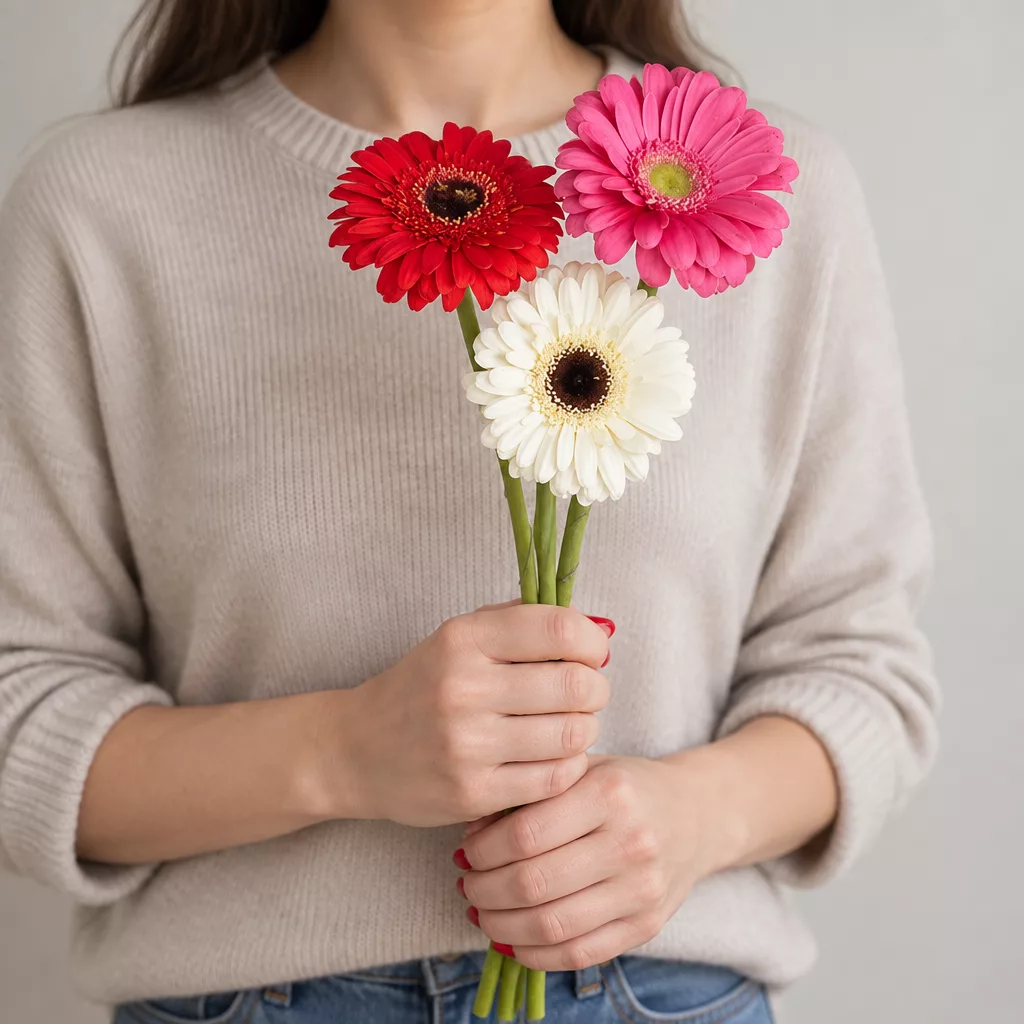
The mid range opens up spray roses, lisianthus, gerberas and mixed seasonal bouquets that include two or three focal flowers with complementary foliage. This is where most meaningful everyday gifts sit — enough variety to feel considered, enough stem count to look full and generous when unwrapped. A bouquet at this level typically contains seven to eleven stems depending on the flowers chosen.
At the upper end you are paying for garden roses with many petals per bloom, peonies when in season from May to June, ranunculus in spring, and Dutch tulips in large quantities. You are also paying for presentation: more deliberate colour palettes, hand-tied construction with exposed stems, and premium wrapping materials. For Degtyarsk delivery specifically, the upper end is best ordered with a small buffer in the schedule — these flowers need more careful handling during transport, and we never rush that process. If the occasion is important enough to spend more, it is important enough to give the courier an unhurried window.
How Ural Weather Affects Your Order and What We Do About It
The Sverdlovsk Oblast has four distinct seasons, and each one creates different conditions for flower transport. Spring and autumn are the most comfortable: temperatures between five and fifteen degrees Celsius are actually close to ideal for cut flowers, and bouquets arrive in excellent condition. Summer in the Urals can push above thirty degrees in July and August, and heat is harder on flowers than cold — a bouquet left in a warm car for twenty minutes wilts faster than one left in minus ten for the same time.
In summer we pre-cool bouquets before dispatch and use insulated packaging to slow heat transfer during the drive. Flowers like roses and peonies are particularly sensitive to heat; lisianthus, alstroemeria and chrysanthemums handle it better. If you are sending flowers in July and you want roses, order for morning delivery when the day is still cool.
Winter packaging is more elaborate. Each bouquet gets a paper inner wrap, then a thermal foil sleeve, then the outer decorative wrapping. The courier keeps the vehicle heated and moves quickly between the car and the building entrance. Despite all precautions, some tropical flowers — bird of paradise, anthurium — should be avoided below minus ten because they blacken at the cell level even with protection. We will tell you this clearly when you order; we would rather suggest a better option than send something that arrives damaged. Knowing the season you are ordering in is the single most useful piece of information you can bring to the process.
What Happens at the Door: Presentation and the Recipient's Experience
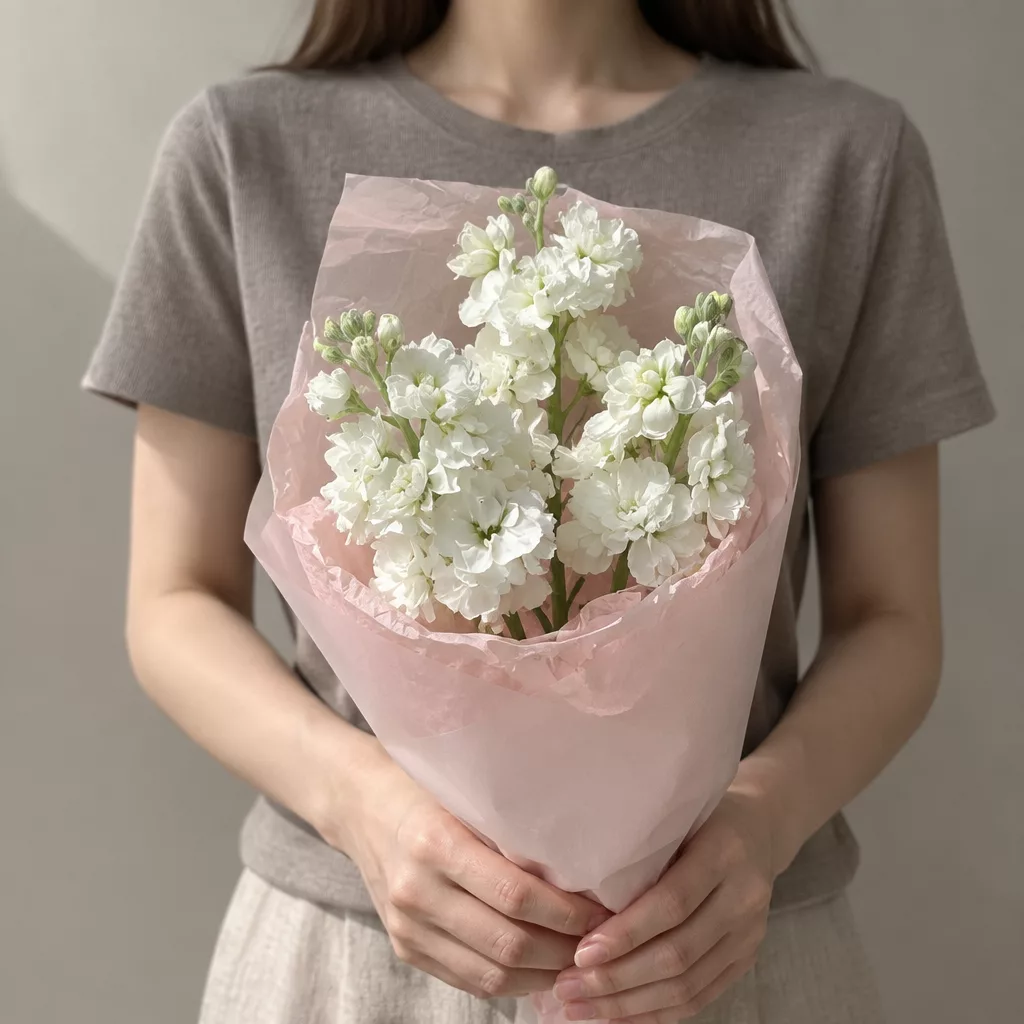
In Russian tradition, flowers are almost always given unwrapped or with minimal packaging — the bouquet is the gift, and elaborate boxes can feel like they are hiding something. We wrap our bouquets in kraft or tissue with a simple ribbon, leaving the flowers visible at the top. If you want a more closed presentation, a hat box arrangement is available and works well as a standalone decorative object once the flowers are removed for a vase.
The courier will ring the bell, confirm the recipient's name and hand over the bouquet. If you have added a card message, it is attached to the outer wrapping. We do not read messages aloud or make the delivery theatrical — the moment belongs to the recipient. If the recipient is not home, we will contact you immediately to decide whether to wait briefly, leave with a neighbour if you authorise it, or reschedule.
One thing that surprises people unfamiliar with Russian flower customs: it is polite to give flowers in odd numbers for celebratory occasions. Even numbers are traditionally associated with solemn or memorial events. We automatically account for this in our bouquet counts — a standard arrangement will have five, seven, nine or eleven stems rather than six or ten. You do not need to specify this; it is simply how we build every celebratory bouquet. If you notice the count and wonder why, now you know.
Caring for the Bouquet After It Arrives in Degtyarsk
A well-chosen bouquet can last seven to twelve days with basic care, and the first hour after delivery is the most important. The recipient should trim about two centimetres from each stem at a diagonal angle — diagonal cuts increase the surface area for water uptake. Use a clean, non-metallic vase if possible; metal can react with the water and shorten vase life. Fill with cool, clean water and add the small sachet of flower food that comes with every Turboflora delivery.
Change the water every two days and re-trim the stems each time. Keep the bouquet away from direct sunlight, heating radiators and fruit bowls — ripening fruit releases ethylene gas, which accelerates flower aging. In Degtyarsk's dry apartment heating during winter, a light misting of the petals once a day helps keep them from drying at the edges.
Different flowers in a mixed bouquet age at different rates. Alstroemeria and chrysanthemums often outlast roses by several days. As individual stems fade, remove them rather than leaving them in the vase — decaying stems release bacteria that shorten the life of the healthy ones. What remains can be rearranged into a smaller, still-beautiful display. Ranunculus and tulips continue to grow after cutting and will lean toward the light source, so rotate the vase daily if you want them to stay upright. These small habits add days to the bouquet's life and make the gift last well beyond the delivery day.
Sending flowers to Degtyarsk from a distance is simpler than it might seem when you know what to expect at each step. The delivery is real, the timing is honest and the bouquet is built for the actual conditions of an Ural city — its weather, its road and its recipient. Think about who you are sending to and what they will feel when the door opens, choose with that person in mind rather than the occasion alone, and trust the care instructions to make the gift last. A bouquet sent thoughtfully and received fresh is one of the most direct ways to close a distance.
Frequently asked questions
Can I schedule a specific delivery time in Degtyarsk rather than a window?
Yes. When placing your order you can select a preferred delivery slot. We recommend building in a fifteen-minute buffer around the exact moment you have in mind, since Ural road conditions can vary. Morning slots before noon are the most punctual because traffic on the Yekaterinburg–Degtyarsk highway is lighter than in the afternoon.
Which flowers hold up best during winter delivery to Degtyarsk?
Spray roses, chrysanthemums, alstroemeria and lisianthus are the most cold-resilient cut flowers. They tolerate brief exposure to low temperatures without cell damage. Peonies, open garden roses and tropical varieties like anthurium are more vulnerable below minus ten Celsius. Our florists will always flag this and suggest alternatives when temperatures are extreme.
What if the recipient is not at home when the courier arrives?
We contact you immediately by phone or message. You can authorise us to leave the bouquet with a named neighbour, ask the courier to wait up to fifteen minutes, or reschedule to a later slot the same day. We never leave flowers unattended outside a door in cold weather, as even brief exposure at low temperatures can damage open blooms.
Is it true flowers should be given in odd numbers in Russia?
Yes, this is a genuine and widely observed custom. Odd numbers — five, seven, nine, eleven — are for celebrations and gifts. Even numbers are traditionally reserved for solemn occasions. Every celebratory bouquet we build follows this automatically, so you do not need to specify it. If you order a set number of stems, we will gently flag it if the count is even.
Can I add a personalised card message to a Degtyarsk delivery?
Absolutely. There is a card message field during checkout where you can write whatever you like in Russian or English. The message is printed on a small card and attached to the outer wrapping of the bouquet before it leaves for delivery. The courier hands it over with the flowers and does not read it aloud — the moment is entirely between you and the recipient.
Ready to send flowers?
Pick the city, choose the bouquet, and a local florist takes it from there.
Choose a city →