Flower Delivery in Essentuki: Timing, Choices and What Arrives at the Door
Essentuki sits in the warm Caucasus foothills, and the people who live there take flowers seriously — a bouquet handed over at the door carries real weight, whether it marks a birthday, a first meeting or simply a Tuesday that deserves brightening. Ordering from another city can feel uncertain: will the stems be fresh, will the timing hold, will the arrangement still look like the photo? This article walks you through exactly what to expect when you place a flower delivery order to Essentuki through Turboflora, from the moment you choose a bouquet to the moment it lands in someone's hands.
Which Parts of Essentuki We Reach and Why It Matters
Essentuki is a compact spa city of roughly 100,000 people, known across Russia for its mineral springs and sanatorium culture. The city stretches along a relatively flat grid between the railway station in the north and the park zone in the south, which makes navigation straightforward for delivery. Turboflora covers the full municipal area, including the central streets around Semashko and Karl Marx avenues, the residential districts to the east near Pobedy Street, the sanatorium belt along Mezhevoy Lane, and the quieter southern neighborhoods close to the Podkumok river.
If you are sending to a sanatorium or a health resort — a common occasion here, since people travel to Essentuki for treatment and their families often want to send a greeting — the bouquet is delivered to the reception desk when the patient cannot come to the door themselves. We recommend noting the building name and ward or room number in the delivery comments so the courier does not lose time at the gate.
The city has no complicated industrial zones or restricted districts that would interrupt a standard route. This means the courier can move efficiently, and the delivery window we quote at checkout is realistic rather than optimistic. Knowing the layout also means we can pick the freshest stems from our preparation process and time the wrapping to match the actual journey length, so nothing sits in a warm car longer than necessary.
Bouquets we can deliver

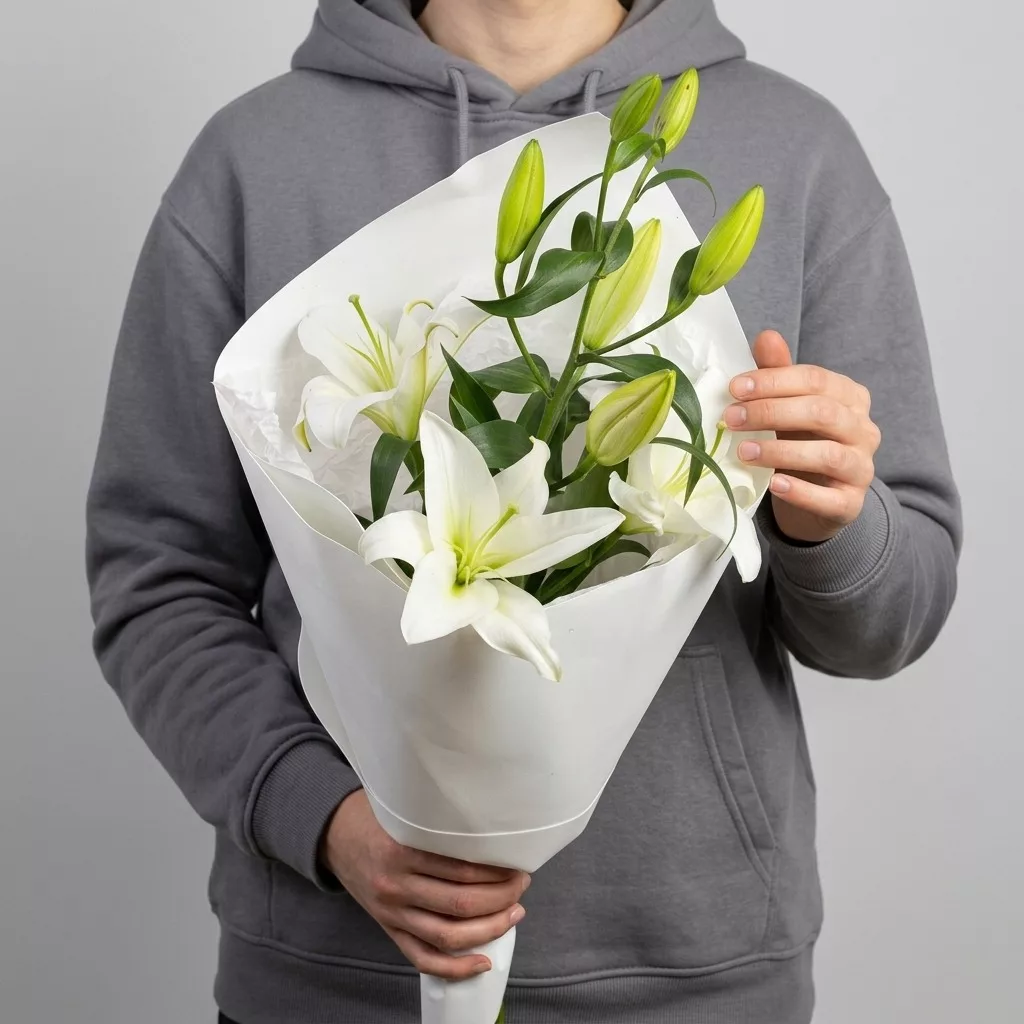
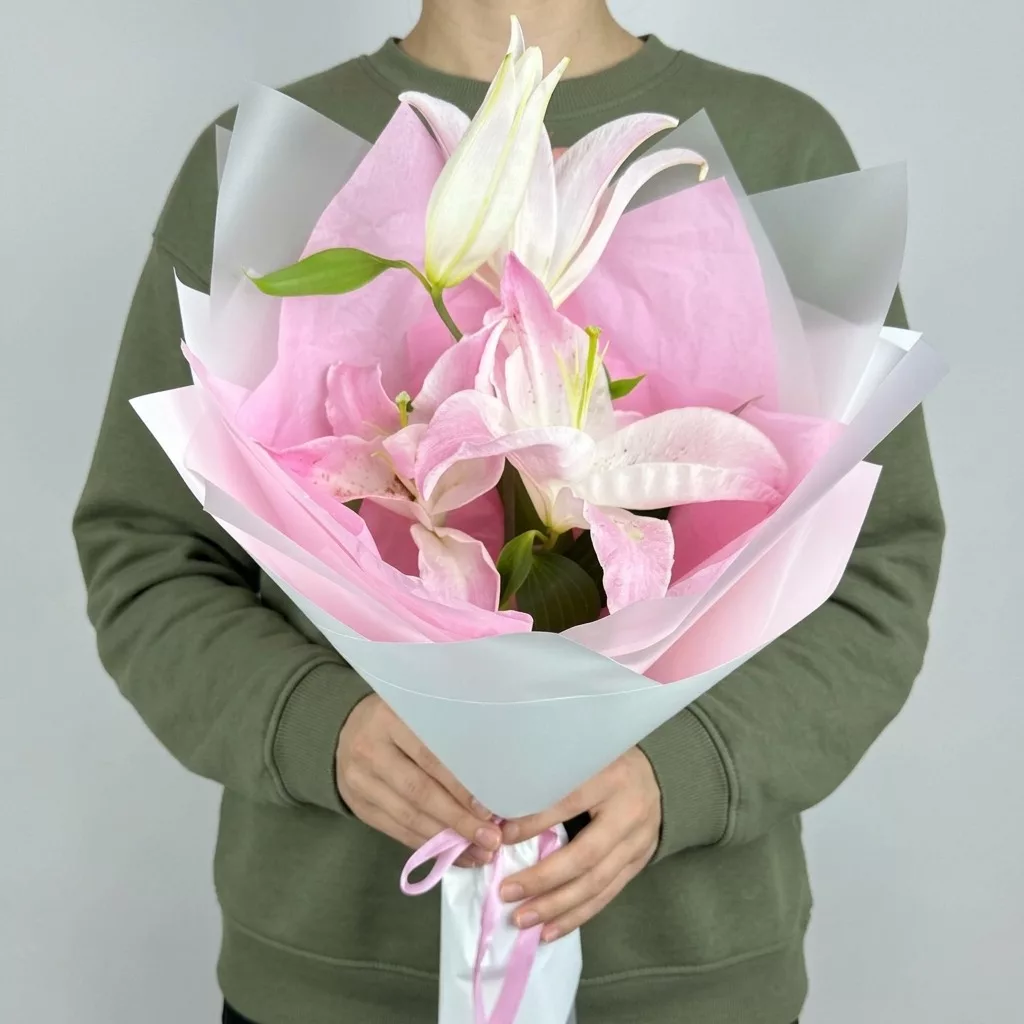

Realistic Timing: What One to Two Hours Actually Means Here
Turboflora operates on a one-to-two-hour delivery promise, and in Essentuki that window holds well under normal conditions. The city has no severe traffic congestion by the standards of larger Russian cities, and the distances between neighborhoods are short. In practice, deliveries to the central sanatorium district or the main residential streets land closer to the one-hour mark, while addresses on the outer edges of the city may take the full two hours.
There are moments when the window stretches slightly. Public holidays tied to spa tourism — particularly around New Year, the eighth of March and mid-summer — bring a surge of orders across the Caucasian Mineral Waters region. If you are ordering for one of these dates, placing the order the evening before or early in the morning gives you the strongest guarantee of the exact slot you want. Same-day orders placed before noon are reliably fulfilled on the same day.
Temperature is worth thinking about in Essentuki. Summer afternoons can reach 35 degrees Celsius or above. Roses, hydrangeas and ranunculus are particularly sensitive to heat during transit. Turboflora wraps bouquets in insulating kraft and uses water-retaining floral foam or wet cotton at the stem ends for longer summer routes. In winter, which is mild here but can dip to minus five or ten, the outer packaging adds a thermal layer to prevent petal shock when the bouquet moves from a warm vehicle into cold air. You do not need to arrange anything special — this is standard practice on every order.
Choosing the Right Flowers for the Essentuki Climate and Occasion
The Caucasus foothills have a warm continental climate, which means local recipients are surrounded by lush vegetation for most of the year. A bouquet that might look lavish in Moscow can feel modest against a backdrop of oleanders and roses growing in the street. This is not a reason to overthink — it is simply worth leaning toward generous volume and vivid colour when you want to make an impression.
For summer birthdays and celebrations, sunflowers combined with orange spray roses and eucalyptus branches create a warm, regional feel that suits the setting. Lisianthus, which resembles a ruffled peony but travels far better in heat, is an excellent choice between June and September. Chrysanthemums in deep burgundy or white are reliable year-round and hold their shape well in warm rooms.
Spring orders — particularly around late April and May, when Essentuki is at its most beautiful — suit tulips, ranunculus and seasonal peonies. Peonies are available from late May through June and are enormously popular for anniversaries and romantic occasions. If you are sending to a woman receiving treatment at a sanatorium, lighter arrangements with freesia or alstroemeria tend to be appreciated: they are fragrant without being overwhelming and do not shed pollen onto bedding.
For a host or hostess gift — a tradition in Russian culture when visiting someone's home for the first time — a mixed bouquet with an odd number of stems is the correct choice. Even numbers of flowers are associated with mourning, so all Turboflora arrangements follow the odd-number rule automatically.
Budgeting by Feeling, Not by Price Tag
Rather than listing figures, it helps to think in terms of what the bouquet needs to do. A small, well-composed arrangement of five to seven stems in a single colour family — say, coral spray roses with a few sprigs of waxflower — reads as a warm, personal gesture. It suits a thank-you, a get-well wish or a spontaneous hello. The stems are chosen for freshness over volume, and the wrapping does most of the visual work.
A mid-range bouquet is where presentation begins to shift. Fifteen to twenty stems, mixing two or three complementary varieties with textural foliage, creates something that looks considered and generous when handed over. This is the level that works well for birthdays, name days and anniversaries where the relationship is close but not formal. Eucalyptus with white lisianthus and soft-pink roses is a combination that photographs well and lasts ten to twelve days in a vase.
For milestone occasions — a significant birthday, a professional achievement, a romantic declaration — the arrangement moves toward a larger format with premium varieties. Garden roses, which have a denser petal structure and a stronger scent than standard hybrid roses, make an immediate impression. Peonies in season, or king protea for something more unusual, signal that real thought went into the order.
One common mistake is choosing the largest option and then skimping on the wrapping or add-on. A medium bouquet in beautiful kraft paper with a handwritten card often lands better than a large one in plain cellophane. Turboflora's default presentation already accounts for this, but you can always add a note specifying a colour preference for the wrap.
What the Recipient Experiences When the Bouquet Arrives
The delivery moment in Russian culture carries its own small ritual. The courier arrives, confirms the name, and hands over the bouquet — often with a card tucked into the wrap. If the recipient is not home, we contact them directly to arrange a new window rather than leaving the flowers with a neighbour without permission. This matters especially for sanatorium addresses, where schedules are structured and a missed delivery is more disruptive.
The bouquet arrives wrapped and ready to display. There is no assembly required. If the order includes a vase, it comes separately packed and is handed over at the same time. Recipients in Essentuki, particularly older ones who are there for a health stay, often do not have a vase on hand, so including one is a practical kindness rather than a luxury.
First impressions depend on temperature management during transit. A bouquet that arrives with firm, upright petals and a slight coolness to the stems is a sign that the cold chain was respected. If the stems feel warm and the outer petals are already beginning to relax, that is a sign of poor handling — something Turboflora avoids by timing the wrapping close to departure and not pre-building bouquets hours in advance.
If the recipient wants to extend vase life, the most important step is to recut the stems at a 45-degree angle immediately after unwrapping, place them in cool clean water and keep the vase away from direct sunlight and fruit bowls. Ethylene gas released by ripening fruit shortens the life of roses and tulips noticeably.
Occasions That Define Flower Giving in Essentuki
Because Essentuki is a resort city, it has a rhythm of occasions that differs slightly from a typical Russian town. Many visitors arrive for two-to-four-week treatment courses, and their families and friends send flowers to mark arrival, to celebrate a birthday that falls during the stay, or simply to say that someone is missed. These are some of the most emotionally meaningful deliveries, because the recipient is away from home and the bouquet is often the most personal object in the room.
Local residents celebrate the same calendar as the rest of Russia: the eighth of March is the largest flower-giving day of the year, when virtually every woman expects to receive something. Ordering by the seventh — or even the sixth if you want a specific morning slot — is strongly advisable. The first of September, when children return to school, is another peak day: teachers traditionally receive flowers from students, and carnations, asters and gladioli are the classic choices for this occasion.
Birthdays and anniversaries follow the same conventions as elsewhere in Russia, but in Essentuki there is a stronger culture of celebrating name days, which are tied to the Orthodox calendar. If you know someone's name day is approaching, a bouquet on that date is received as a more intimate gesture than a birthday gift, because it shows you remembered something personal.
Romantic occasions — first dates, reconciliations, declarations — work best with red or deep-pink roses, ideally long-stemmed. Single large blooms are fashionable among younger recipients, while older generations tend to appreciate a fuller, more traditional arrangement.
Keeping Your Bouquet Fresh in Essentuki's Warm Rooms
Essentuki's sanatoria and apartments are kept warm, often warmer than a typical city flat, because the guests are there for health reasons and drafts are discouraged. This means flowers face a more challenging indoor environment than usual. A few simple habits make a significant difference to how long the bouquet lasts.
Change the water every two days and recut the stems each time, removing another centimetre or so at an angle. This keeps the vascular tissue open and allows the stem to draw water efficiently. Tap water in Essentuki is mineral-rich due to the local geology, which can sometimes leave deposits on stems — rinsing the vase thoroughly at each water change prevents bacterial build-up that would otherwise shorten vase life.
Roses last seven to ten days with proper care. Lisianthus and alstroemeria are more forgiving, often reaching twelve to fourteen days. Tulips are shorter-lived, typically five to seven days, but they continue to grow and move in the vase in a way that many people find beautiful. Sunflowers last five to eight days and benefit from a very clean vase, as their stems release compounds that cloud the water quickly.
Keep the arrangement away from the windowsill in summer — direct afternoon sun in Essentuki is intense and will shorten petal life by days. A shaded table or a cool corner of the room is ideal. If the room has air conditioning, placing the vase near the cool airflow (but not directly in the draft) can extend freshness noticeably. Remove any wilting stems promptly so they do not affect the remaining flowers.
Sending flowers to Essentuki is straightforward when you know what to expect from the climate, the city's layout and the small cultural details that make a bouquet feel right rather than just correct. The warm foothills setting calls for generous colour and heat-resistant varieties in summer, and the sanatorium culture means that timing and presentation matter more than almost anywhere else. Turboflora handles the logistics — the wrapping, the transit temperature, the delivery window — so that what arrives at the door reflects the thought you put into ordering it.
Frequently asked questions
Can I send flowers to a patient staying at a sanatorium in Essentuki?
Yes. Turboflora delivers to sanatorium and health resort addresses across Essentuki. When placing the order, include the full name of the facility and, if possible, the room or ward number in the delivery comments. If the patient cannot come to the door, the courier hands the bouquet to reception staff and confirms delivery with you directly.
How should I order for the eighth of March to guarantee a morning delivery?
Place your order on the sixth or seventh of March and select a morning slot at checkout. The eighth of March is the busiest flower-giving day in Russia, and demand across the Caucasian Mineral Waters region is very high. Ordering a day or two ahead secures your preferred time window and gives us the best chance of including the specific varieties you have chosen.
Which flowers hold up best in Essentuki's summer heat during transit?
Lisianthus, alstroemeria, chrysanthemums and spray roses travel well in warm temperatures. Hydrangeas and garden roses are more sensitive and require careful insulated wrapping. Turboflora uses moisture-retaining packaging on all summer orders, but if you are ordering during a heatwave, choosing hardier varieties gives the bouquet the best chance of arriving in perfect condition.
Is it true that flower bouquets in Russia must have an odd number of stems?
Yes, this is a genuine and widely observed convention. Even numbers of flowers are associated with mourning in Russian culture and are not appropriate for celebratory or affectionate occasions. All Turboflora arrangements are composed with an odd number of stems as standard practice, so you do not need to specify this when ordering — it is already built into every bouquet.
What happens if the recipient is not at home when the courier arrives?
The courier contacts the recipient directly to arrange a new delivery window. Flowers are never left unattended outside the door or handed to a neighbour without explicit permission from the person who placed the order. If you would like to authorise an alternative handover arrangement, you can note this in the order comments and we will follow your instructions.
Ready to send flowers?
Pick the city, choose the bouquet, and a local florist takes it from there.
Choose a city →