Flower Delivery in Kaliningrad: Fresh Bouquets at Your Door in Hours
Kaliningrad sits in a geography all its own — a Russian city tucked between Poland and Lithuania on the Baltic coast, with a climate that behaves differently from Moscow or Saint Petersburg. When you are sending flowers here, whether to a colleague at an office on Leninsky Prospekt or to a friend in a quiet apartment block near the Fishing Village, the distance and the weather both matter. Getting a bouquet there fresh, on time, and looking exactly as it did when it left the studio is the whole point — and that is what this guide is about.
How Delivery Works Across Kaliningrad's Districts
Kaliningrad is a compact city by Russian standards, but its layout is layered. The central districts — Tsentralny and Moskovsky — are straightforward to reach, and deliveries there tend to move quickly. Areas closer to the waterfront, such as the Fishing Village and the Pregolya embankment, have their own rhythm of traffic, especially on weekends when the promenades fill up. Districts further from the centre, including Baltiysky and Leninsky, are fully covered but may sit at the outer edge of the standard one-to-two hour window.
When you place an order, you choose a delivery interval that suits the recipient's schedule. This matters more than people realise. A bouquet left on a doorstep in warm weather begins to suffer within twenty minutes. Roses close up in the cold; tulips droop if they wait too long in a warm hallway. Coordinating the handover so that someone is actually present is the single most useful thing you can do as the sender.
Kaliningrad's street numbering can be dense and buildings sometimes share courtyards, so adding a note with the entrance number or floor genuinely helps. If the address is a business — a clinic, a hotel, a restaurant — it is worth specifying the reception or the person's department. Florists who know the city read these details carefully and route accordingly. The goal is always a direct handover, bouquet to hands, not a box left in a corridor.
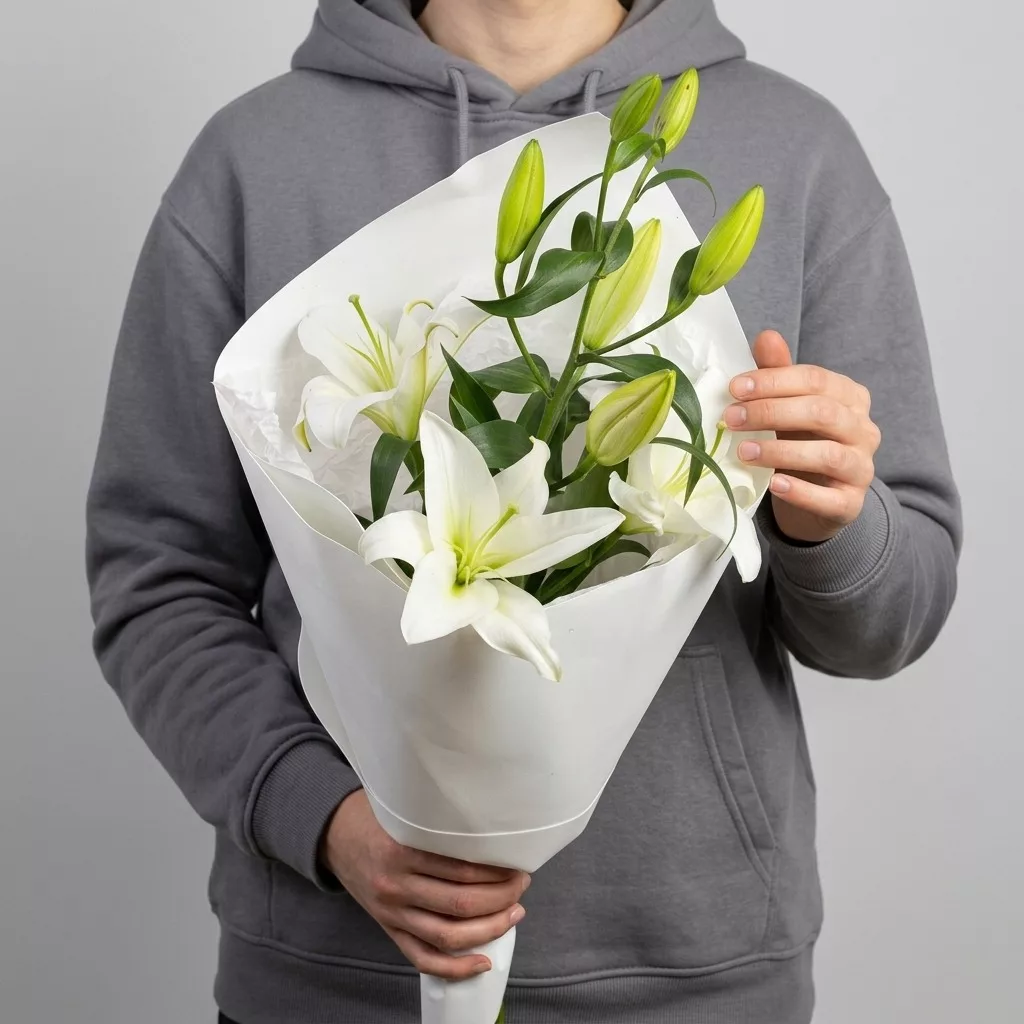
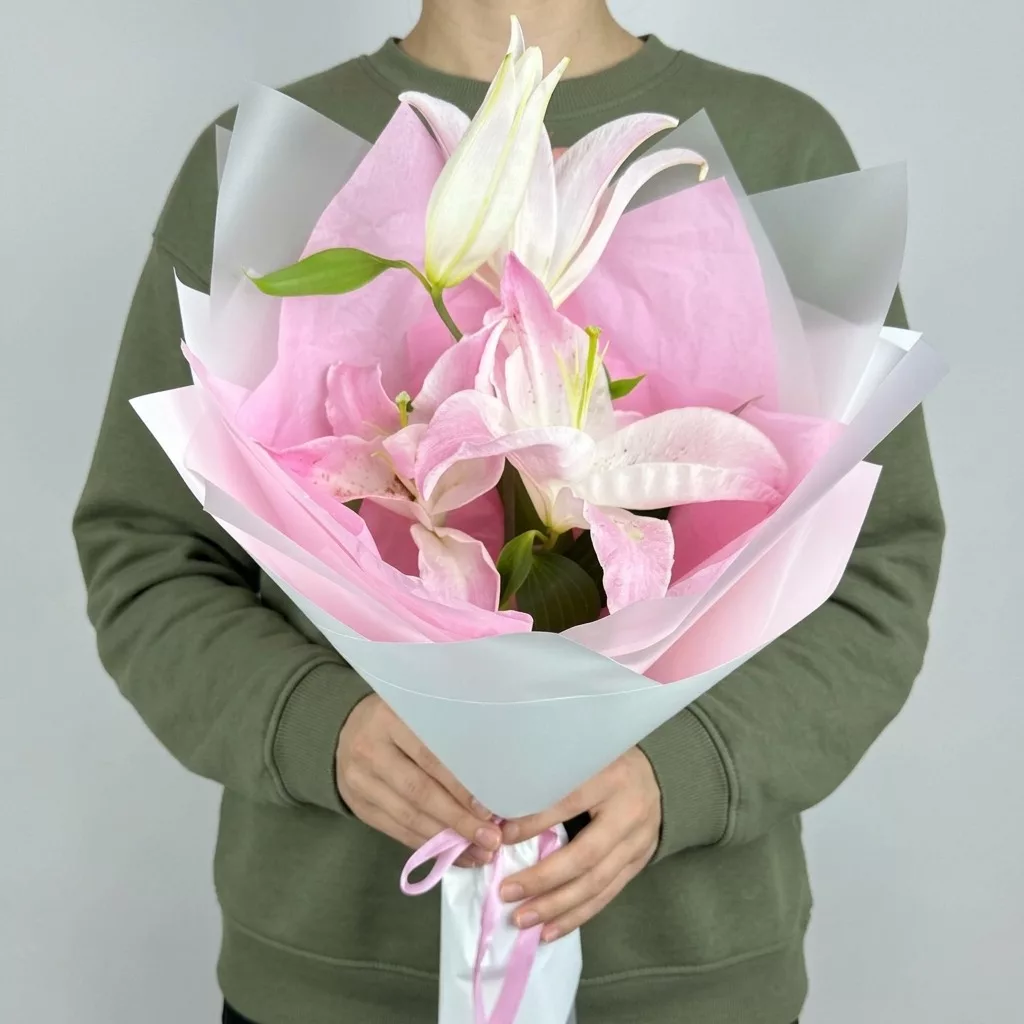
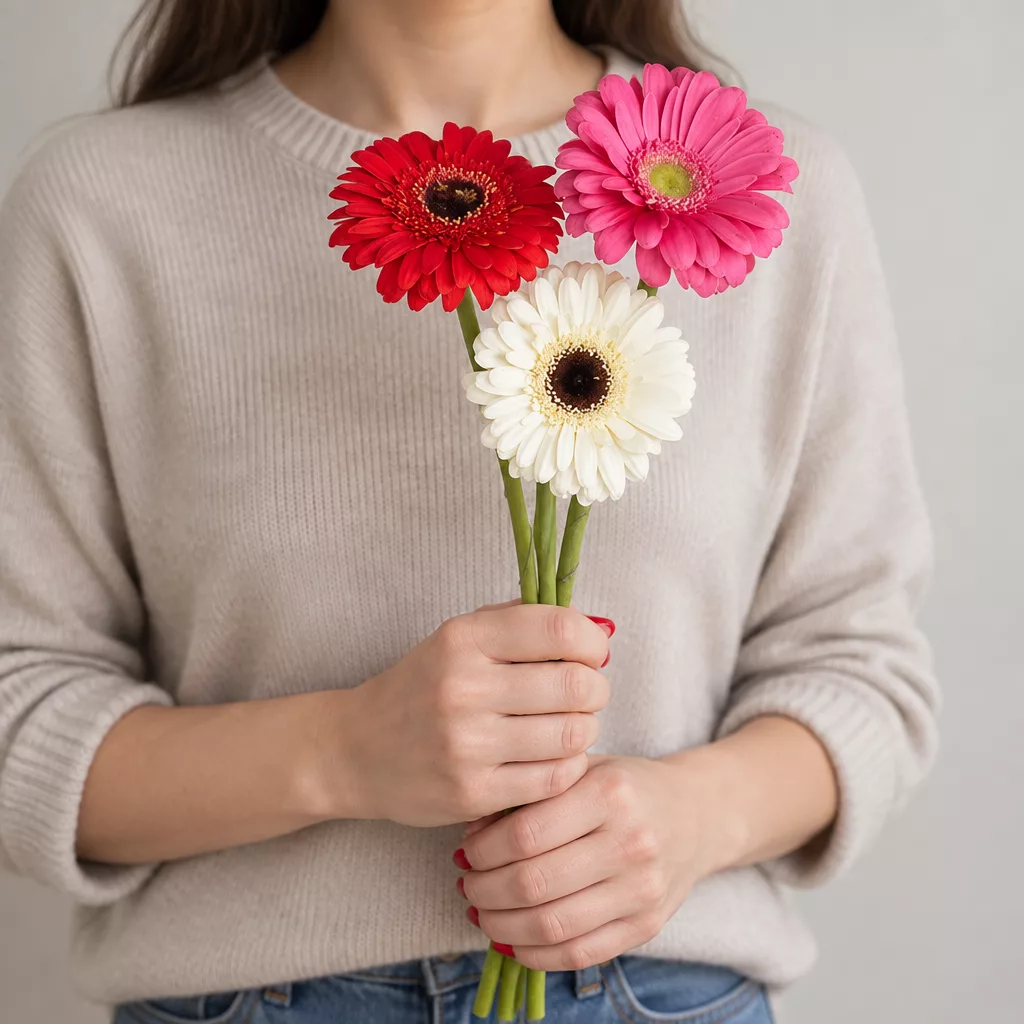
Bouquets we can deliver

Timing Your Order: The Baltic Climate Factor
Kaliningrad's weather is milder than most Russian cities but more unpredictable than its latitude suggests. The Baltic brings humidity and wind, and temperatures can swing ten degrees between morning and afternoon. This has a direct effect on flowers in transit. In summer, when the city regularly reaches twenty-five to twenty-eight degrees Celsius, delicate blooms like garden roses, sweet peas, and ranunculus need to travel in temperature-controlled conditions and be delivered without delay. Leaving them in a warm vehicle while the driver handles another stop is how petals bruise.
In winter, the challenge reverses. Kaliningrad rarely drops below minus five, but a sharp frost combined with sea wind is enough to blacken the outer petals of a peony or crack the stem of a calla lily if the bouquet is unwrapped too quickly in a cold entrance hall. Flowers should rest for a few minutes in a cool indoor space before being unwrapped — not placed immediately next to a radiator.
The optimal ordering windows for same-day delivery are mid-morning and early afternoon. Orders placed before noon on weekdays give the most flexibility for the florist to source the freshest stems and still deliver comfortably before evening. If the occasion is a birthday dinner at seven in the evening, ordering by two in the afternoon is a reasonable buffer. Last-minute orders are handled, but the selection of premium varieties narrows as the day progresses, and it is the recipient who notices the difference between a tight, fresh bud and a bloom that opened a day early.
Choosing the Right Bouquet for a Kaliningrad Occasion
Think first about who receives the flowers and what the moment means to them, not about what looks impressive in a photograph. A colleague celebrating a promotion at a Kaliningrad law firm will appreciate something structured and elegant — white or ivory spray roses with eucalyptus, or a clean arrangement of anthuriums. A grandmother in a quiet neighbourhood near the Amber Museum will likely feel more moved by something warm and garden-like: soft pink peonies in season, or a hand-tied mix of lisianthus and alstroemeria that reminds her of a dacha garden.
Kaliningrad has a strong European sensibility — the city's Prussian architecture and its proximity to the Baltic states give it a visual culture that leans toward restraint and quality over volume. Bouquets that are generous but not overwhelming, with clear colour stories and interesting textures, tend to land well here. A dozen red roses is always understood, but a mixed arrangement of garden roses, veronica, and matthiola in dusty pink and burgundy says something more considered.
For corporate deliveries to the city's offices and hotels, mono-bouquets in sophisticated colours — deep burgundy dahlias, white calla lilies, or architectural proteas — read as professional without being cold. For romantic occasions, layered compositions with fragrance matter: freesia, garden roses, and sweet peas together create a scent that fills a room. Always ask yourself what the recipient will feel when they open the door — that feeling is what you are actually ordering.
What Russians Typically Give Flowers For — A Plain Explanation
If you are not familiar with Russian flower-giving customs, a few things are worth knowing before you order. Flowers are given far more frequently in Russia than in many Western countries. They appear at birthdays, of course, but also on the eighth of March — International Women's Day, which is the single busiest flower day of the year — on anniversaries, on the first and last days of school, at graduations, when visiting someone's home for the first time, and simply as a gesture of affection with no occasion at all.
One custom that surprises newcomers: an odd number of flowers is the convention for celebratory gifts. Even numbers carry a different association in Russian tradition, so bouquets are typically composed of one, three, five, seven stems and so on. This applies to single-variety bouquets most visibly — a bouquet of eleven roses rather than twelve, for example. Mixed arrangements are less strictly counted because the variety of stems makes the rule harder to apply, but it is still observed by attentive florists.
Colour also carries meaning. White flowers are universally appropriate and widely loved. Yellow flowers were once considered unlucky in Soviet-era tradition, though this association has faded considerably among younger recipients in cities like Kaliningrad. Red is romantic and direct. Pastel tones — blush, lavender, soft coral — are versatile and rarely misread. If you are sending flowers to someone you do not know well, a soft, mixed palette is the safest and most generous choice.
Keeping Your Flowers Fresh After Delivery
The bouquet arrives. Now the recipient's job begins, and a little knowledge here extends the life of the flowers by several days. The first step is always to cut the stems — at least two centimetres, at a diagonal angle, ideally under running water or submerged in a bowl. This opens the stem's vascular tissue and allows water to travel upward immediately. Scissors crush stems; a sharp knife or proper floral shears make a clean cut.
Kaliningrad tap water is generally fine for most flowers, but adding a small sachet of flower food — usually included with the bouquet — makes a real difference. The food contains a mild acidifier, a sugar source, and a biocide that slows bacterial growth in the vase. Without it, bacteria accumulate at the cut end within twenty-four hours and block water uptake, which is why flowers wilt even in a full vase.
Place the vase away from direct sunlight and away from fruit bowls. Ripening fruit releases ethylene gas, which accelerates the ageing of petals — tulips and carnations are particularly sensitive to this. A cool room, ideally between fifteen and eighteen degrees Celsius, is where flowers last longest. In Kaliningrad's humid climate, this is often achievable near a window in autumn and spring.
Expected vase life by variety: alstroemeria and chrysanthemums last ten to fourteen days with proper care. Roses and lisianthus give you seven to ten days. Tulips and ranunculus are shorter — five to seven days — but they are vivid and worth it. Change the water every two days and re-cut the stems each time.
Common Mistakes When Ordering Flowers to Kaliningrad
The most frequent mistake is underestimating how much the recipient's schedule matters. Ordering for a specific time and then discovering the person is at a meeting, out shopping, or simply not answering the intercom turns a thoughtful gesture into a logistical problem. If you are not certain of their schedule, a morning delivery on a weekday is usually the safest bet — people are more reliably home or at their desk than in the middle of an afternoon.
The second mistake is choosing a bouquet based solely on the photograph. Flower photography is often done with blooms at their peak open stage, which looks beautiful on screen but means the flowers are already a day or two into their vase life. A good florist sends flowers in bud or just beginning to open, so the recipient gets to watch them bloom. If a bouquet arrives fully open, it is not a sign of generosity — it is a sign it was prepared too early.
A third mistake specific to Kaliningrad's geography: assuming that because the city is smaller, delivery is automatically faster. Kaliningrad has its own traffic patterns, particularly around the central market area and along Moskovsky Prospekt during rush hours. Ordering during the seven-to-nine morning rush or the five-to-seven evening peak adds unpredictability. Midday orders move most smoothly.
Finally, skipping the personal message is a missed opportunity. In Russian culture, the written word accompanying flowers carries weight. Even three sentences — who sent them, why, and what the sender wishes for the recipient — transform a beautiful object into a meaningful one. The florist can include a handwritten card if you provide the text.
Sending flowers to Kaliningrad is one of the more satisfying things you can do from a distance. The city has a particular character — coastal, considered, quietly European — and a well-chosen bouquet speaks directly to that. When the timing is right, the stems are fresh, and someone opens their door to find flowers that were clearly chosen for them rather than simply ordered, the effect is immediate and lasting. That is what flower delivery is actually for, and it is entirely achievable from wherever you are placing the order.
Frequently asked questions
Can I order flowers to Kaliningrad for same-day delivery?
Yes, same-day delivery is available across Kaliningrad. Orders placed before early afternoon give the widest choice of fresh varieties and the most comfortable delivery windows. Orders placed later in the day are still processed, though the selection of premium stems may be more limited as available stock narrows through the day.
What if the recipient is not home when the flowers arrive?
The courier will attempt contact by phone before and on arrival. If no one is reachable, we coordinate a new delivery window. This is why providing an accurate phone number for the recipient is important — it allows the courier to confirm timing and avoid a missed handover, which is hard on both the flowers and the occasion.
Are there areas in Kaliningrad that take longer to reach?
The central districts are reached most quickly. Outer residential areas and neighbourhoods further from the city centre may fall toward the two-hour end of the standard window, particularly during weekday rush hours. Specifying a precise address including entrance number and floor helps the courier plan the most direct route.
How should I store flowers overnight if the recipient gets them in the evening?
Trim the stems, place them in fresh water with the included flower food sachet, and keep the bouquet in the coolest room available — away from radiators and fruit. In Kaliningrad's mild climate, a cool hallway or kitchen works well. Avoid leaving flowers in a closed car overnight even in winter, as temperature swings cause damage.
Is it appropriate to send flowers to a man in Russia?
Absolutely. Giving flowers to men is entirely normal in Russian culture, particularly for significant birthdays, professional achievements, or as a warm welcome. Structured, bold compositions work well — think deep-toned roses, tropical varieties like anthuriums or birds of paradise, or architectural arrangements that feel substantial rather than decorative.
Ready to send flowers?
Pick the city, choose the bouquet, and a local florist takes it from there.
Choose a city →